


Agora Industry: Automotive sector could drive demand for green steel in Europe
According to Germany-based independent think tank Agora Industry, Europe’s transition away from coal-based steelmaking will depend not only on new low-emission production technologies but also on the creation of stable long-term demand for near-zero emissions steel.
The organization stated that despite support from the EU Emissions Trading System (ETS) and government incentives, many green steel projects are still struggling to reach final investment decision (FID) due to uncertain market conditions and weak demand visibility.
Europe has large pipeline of near-zero steel projects
Agora Industry noted that the EU currently has approximately 34 million mt of announced near-zero capable steel projects based on direct reduced iron (DRI) technology. According to the report, around 25 million mt of these projects are progressing through permitting, construction, and FID stages. The think tank stated that these volumes could theoretically satisfy the European automotive sector’s entire demand for near-zero emissions steel by 2035 if stronger market-support mechanisms are introduced.
The report identified the European automotive sector as a potential catalyst for accelerating demand for low-emission steel products. The sector consumes approximately 15 million mt of mainly flat and high-quality steel each year, most of which is currently produced through traditional coal-based blast furnace routes.
Four factors support automotive sector’s role
Agora Industry outlined four main reasons why the automotive industry could become a major driver of green steel demand.
First, the sector’s large and stable steel consumption could provide steelmakers with reliable long-term demand, helping de-risk investments in hydrogen-based DRI projects. Second, due to strict quality requirements for automotive-grade steels, scrap-based electric arc furnace production alone will not be sufficient to meet decarbonization targets. According to the report, the sector will require DRI-based ironmaking combined with electric arc furnaces or existing blast furnace infrastructure. Third, the organization stated that low-emission steel would have only a limited impact on final vehicle costs, since steel represents less than one percent of total car production costs. Fourth, the report highlighted that steel production currently accounts for between 16 percent and 27 percent of total vehicle lifecycle emissions, meaning decarbonizing steel supply chains could significantly reduce automakers’ Scope 3 emissions.
Regulatory uncertainty remains major obstacle
At the same time, Agora Industry warned that uncertainty surrounding definitions and standards for low- and near-zero emissions steel continues to represent a major obstacle for investment decisions. According to the organization, several competing international standards and ongoing EU legislative processes have yet to establish a harmonized framework.
The report also cautioned that some projects currently categorized as low-carbon could continue relying on fossil gas beyond 2035 unless stricter future regulations aligned with net-zero pathways are introduced.
Agora Industry concluded that Europe already has a substantial pipeline of clean steel projects but stressed that stronger lead-market policies, harmonized standards, and broader support for upstream sectors such as green hydrogen production will be necessary to transform announced projects into bankable investments and accelerate deployment of climate-neutral steelmaking technologies across the EU.
Author: SteelOrbis Editorial Team

European longs market cools down amid holidays, production stoppages, and weak demand; safeguard measures also in focus
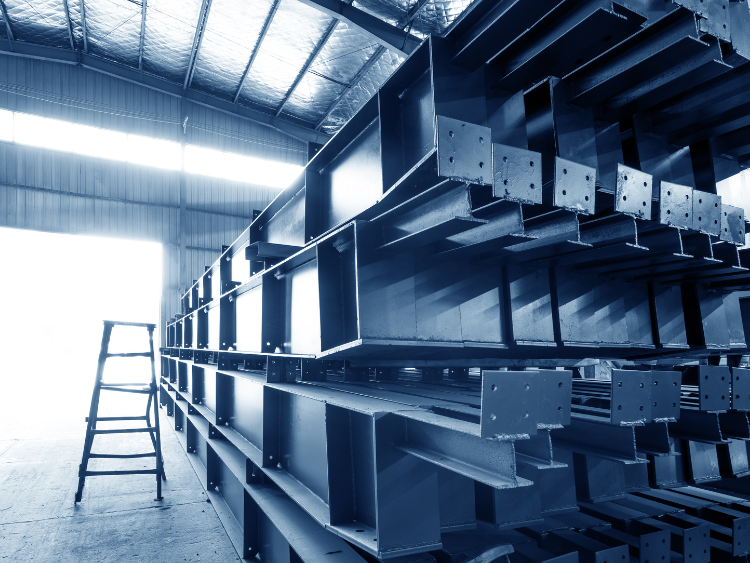
The main topics shaping discussions in the European longs market this week have largely focused on the approval of new European Union safeguard measures earlier this week, the widespread weakness in demand, and the first rumors regarding producers’ summer shutdowns.
In the Italian market, prices have remained unchanged, with rebar deals still being concluded at €440/mt ex-works base (€700/mt ex-works including regular extras) against offers at €460/mt ex-works base (€720/mt ex-works including regular extras). Producers’ inventories remain at high levels, while sales – at least in the domestic market – are reported at very low levels.
However, several sources have noted that, at the same time, the Balkan region, particularly countries such as Bulgaria and Romania, is emerging as an outlet market for producers who are struggling to place material domestically.
The situation is also stagnant in the wire rod segment, where prices are becoming increasingly unattractive due to their high levels. At the same time, some sources have reported that wire mesh prices have reached up to €775/mt ex-works, albeit with negligible sales volumes.
EU safeguard measures, approved earlier this week, have also been a key topic among market participants. Several market players consider them too restrictive and still incomplete. According to others, these measures could structurally alter the dynamics of European import markets, as some countries that were previously relying on imported material – particularly from Turkey – may now face increasing difficulties.
As for Germany, it is worth noting the ongoing maintenance shutdown at a major rebar and wire rod producer, which had already been announced and is expected to last approximately 2–3 weeks. Another factor weighing on the German market is logistics, as steelmakers appear reluctant to accept transport cost increases requested by haulers in order to protect their margins, resulting in slower delivery times.
Finally, import markets have remained broadly stable, as several exporting countries are preparing for the Eid al-Adha holiday (May 26–30). As a result, offers from Turkey have remained unchanged amid stable exchange rates, standing at €565/mt CFR for rebar and €570/mt CFR for wire rod, while offers from Egypt have been reported at €550-560/mt CFR for rebar and €570-575/mt CFR for wire rod. In addition, a Northern European processor is said to have purchased a 10,000 mt wire rod cargo from Algeria for delivery in early July.
€1 = $1.16

Muted activity caps European HRC prices; no near-term recovery seen
Muted trading in the European hot-rolled coil market kept prices broadly stable on Friday May 22, with scarce demand undermining sentiment and limiting expectations for any near-term recovery.
A buyer source from Northern Europe mentioned “nervousness about the global economy, reduced number of working days in the region in May and June due to holidays as well, overcooked market in the previous months and high stocks” as the key reasons for the lack of activity.
The most recent bookings in Germany took place at €660-675 ($773.67-791.26) per tonne EXW, which is well below offers coming in at €690-700 per tonne ex-works.
There were no mentions of any significant sales on Friday.
Fastmarkets’ daily steel hot-rolled coil index domestic, exw Northern Europe was calculated at €680 per tonne on May 22, down by just €0.42 per tonne from €680.42 per tonne on Thursday May 21.
The Italian HRC market remained similarly quiet. Weak demand and comfortable inventory levels at buyers continued to dampen trading activity, with offers heard at €700 per tonne delivered (€685 per tonne ex-works), whereas most recent estimates of tradeable levels came at €665-675 per tonne ex-works.
Fastmarkets’ daily steel hot-rolled coil index domestic, exw Italy was calculated at €677.50 per tonne on May 22, stable day on day.
The import market was equally sluggish, with buyers unwilling to take any additional risks in the conditions of the uncertainty over the quotas distribution under the upcoming new safeguard, which is to come into force on July 1.
Most recent offers of Turkish material were heard within the range of €590-600 per tonne CFR Italy excluding anti-dumping duties.
Indian coil was heard available at $685-705 per tonne CFR, which is equivalent to €590-605 per tonne CFR Italy.
Additionally, sources reported new offers of Algerian coil coming at the equivalent of €670 per tonne CFR, which was considered too high by customers.


Europe green steel premiums flat amid thin demand; China green slab sold into Europe at near-zero premium again
European green steel premiums have remained unchanged over the past week amid thin demand, Fastmarkets heard on Thursday May 21, with China-origin green steel slab booked to Europe again without a premium.
Trading in Europe’s green steel spot market was virtually at a standstill in the week to May 21, with price differentials holding steady, according to industry sources.
Deal-making remained elusive while the gap between sellers’ expectations and buyers’ appetite showed no signs of closing.
Fastmarkets defines green steel as material with combined Scope 1, 2 and 3 carbon emissions not exceeding 0.8 tonnes of CO2 per tonne of steel produced.
Suppliers continued to seek premiums in the range of €180-200 ($211-234) per tonne, with one Scandinavian steelmaker pushing as high as €300 per tonne.
Buyers in the spot market, meanwhile, were reluctant to go beyond €100 per tonne. Some buyers estimated the premium for a spot market deal at nil, claiming that premiums were confined to project-based transactions, rather than open-market deals.
The bulk of green steel trade continued to flow through bilateral, long-term offtake agreements tied to sectors with established sustainability commitments – including construction, wind energy, automotive manufacturing and home appliances – leaving the open market thinly traded.
“Steel accounts for a relatively small share of the final cost of a car or a washing machine, so absorbing a green premium is manageable for those end-users,” one Germany-based buyer said. “But for distributors and service centres, buying green steel for inventory is essentially tying up capital for no immediate return.”
Estimates of the premium achieved for project business were heard at €150-170 per tonne.
Automotive end-users were securing future green steel supply through offtake deals struck directly with DRI-EAF producers currently in development, arguing that scrap-based green steel – the variety most readily available today – did not meet the definition of genuinely low-carbon material.
Fastmarkets’ weekly assessment of the green steel domestic, flat-rolled, differential to HRC index, exw Northern Europe, was stable at €100-170 per tonne on Thursday.
Green slab bookings
Chinese green slab has been finding its way into European hands, although buyers were securing the material without paying any meaningful premium over conventional alternatives, trade sources told Fastmarkets.
In May, around 40,000-50,000 tonnes of green slab from China was sold to Europe, notably to Italy, with prices reported around $590-600 per tonne CFR. But some offers were reaching slightly above that level.
Chinese mills – including HBIS, which has been among the more active suppliers of lower-emission slab – carry a modest premium on an FOB basis compared with standard grey slab exported from China, but that differential effectively disappears once the cost of freight is factored-in.
The calculation is complicated further by the fact that HBIS and similar producers do not operate exclusively on green production routes, meaning that the actual emissions intensity of any given cargo requires scrutiny before a green classification can be confirmed.
Produced from conventional routes, export slab prices in China were around $500 per tonne FOB, trade sources said.
Assuming a freight cost of at least $70 per tonne, the green slab cargoes were booked at roughly $520-530 per tonne FOB, so with around 4-6% premium compared with “grey” material.
At CFR Europe prices broadly in line with conventional Chinese slab, buyers have shown little appetite to stretch further.
Fastmarkets’ weekly price assessment for steel slab, import, cif Italy, was $600-620 per tonne on May 21, narrowing upward from $590-620 per tonne seven days earlier.
“Nobody is willing to pay extra for green slab here. We simply cannot pass that cost on,” one European re-roller said.
“Buying green [semi-finished steel materials], however, allows for some Carbon Border Adjustment Mechanism [CBAM] cost savings,” another source said.
The dynamic mirrors the broader pattern seen in finished green steel markets, where premiums remain largely a project-driven phenomenon and spot buyers consistently resist paying above grey-equivalent prices.
The latest green slab bookings from China to Europe, heard in April, were also made without any substantial premium.

Local European steel heavy plate prices stable in Italy on weak demand; wider deal range heard in Germany
Prices for European domestic steel heavy plate in Italy remained stable in the week to Thursday May 21, with indications of weak demand in the market, while prices in Germany increased slightly week on week, market participants told Fastmarkets.
Italy
Tradeable levels for base-grade steel plate in Italy were heard at €740-775 per tonne ex-works, unchanged week on week.
Sources linked the lower end of the range at €740-755 per tonne ex-works to larger volumes, and the higher end at €755-775 per tonne ex-works to smaller volume-orders, all for end-June delivery.
One trader said that restocking for July deliveries was “still absent”, while several sources quoted weak demand in the market.
“Sales/processing in Europe stays on a low level and on top, May has a lot of bank holidays, so output is less during this month,” a second trader told Fastmarkets.
Fastmarkets’ weekly price assessment for steel domestic plate 8-40mm, exw Southern Europe, was €740-775 per tonne on Thursday, unchanged week on week.
Germany
Tradeable prices for steel plate in Germany were reported in a wider range of €800-850 per tonne ex-works, increasing from deals heard a week earlier at €800-830 per tonne ex-works.
One offer was reported within the same range as deals, at €810-825 per tonne ex-works.
One producer source in Italy reported lower tradeable levels for German plate at €800-810 per tonne ex-works, saying they were “confirmed by re-rollers” and should not be higher. However, a trader in Germany said deal prices were above €820 per tonne ex-works.
Prices for plate in the country differ by suppliers, accounting for the wider range of deals, sources said.
“They [suppliers] are completely different and have different production lines with different product portfolios, therefore the price is not so easy to set and the price range is quite big,” the Germany-based trader said.
A second source in Germany said the difference was due to “different segments: war zone grades and sizes, which all mills can offer, and grade/size combination only available at a few mills”.
Fastmarkets’ weekly price assessment for steel domestic plate 8-40mm, exw Northern Europe, was €800-850 per tonne on Thursday, widening upward by €5 per tonne from €800-845 per tonne a week earlier.
Global production drops again, India growth slows
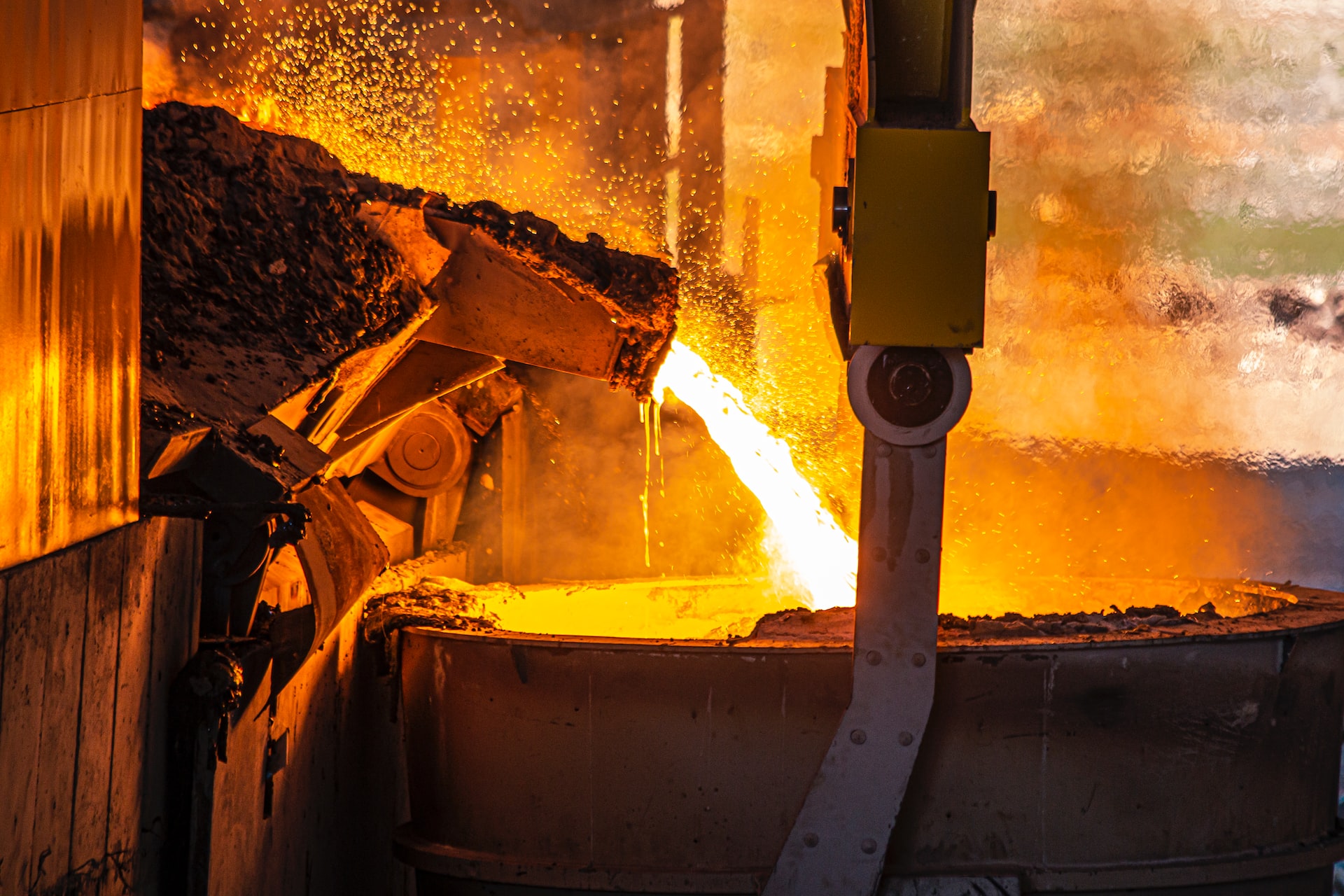
Global crude steel production dropped 1.9% on-year in April to 153.45 million tonnes, the eight consecutive month of decline, despite continued strength from the US, Korea, Germany and Turkey. India’s growth rate slowed, according to worldsteel data seen by Kallanish.
Chinese crude steel production fell 2.8% on-year in April to 83.63mt. Indian production grew 3.9% to 13.83mt, slowing from previous months, while Korean output jumped 4.8% to 5.25mt. Japanese production inched up 0.3% to 6.6mt.
EU27 production fell 1.8% in April to 10.95mt, due to estimated slumps in France, Spain and Poland, although German and Italian production grew 9.5% and 7.2% respectively to 3.2mt and 1.9mt.
Turkish production surged 9% to 3.29mt.
US output grew 9% to 7.16mt, while Brazil was estimated to have seen production rebound after a long streak of falls, rising by 2.8% to 2.7mt.
Russian production was estimated down 12.4% to 5.02mt and Ukrainian output was confirmed to have plunged 25% to 517,000t.
January-April global crude steel production thus fell 2% on-year to 613.3mt, with India, the US, South Korea, Turkey and Germany bucking the trend.


New models, uneven exports hit Spain car production
Spanish automotive production remains dependent on adapting to new lines and external demand, Kallanish notes. Output slipped month-on-month but was higher year-on-year in April, whilst exports remained stable.
“Although figures are improving compared with the same period last year, our factories continue to adapt their lines to new models and external demand, which is recovering unevenly across the main export markets in Europe,” says José López-Tafall, general director of Spanish automobile association Anfac.
Spain’s April production reached 209,571 units, compared with 211,028 vehicles in the previous month. This volume, however, was up 8.4% from the same period in 2025.
Four-month output totalled 783,100 units, a decline of 0.2% y-o-y. Of the total, 57.5% were gasoline and diesel-powered automobiles.
The Iberian country’s vehicle exports rose to 180,735 units in the month, from 176,765 units in March, and were 8.6% higher year-on-year. European markets had a 92.6% share in Spanish deliveries in April, down 1.1 percentage points on-year.
The main export destination during the month was Germany with 29,344 units, followed by France (26,519 units) and the UK (23,449 units), according to Anfac data.
Cumulative exports remained weaker at 661,396 vehicles, a fall of 1.4% y-o-y.
Italian rebar producers mull June price increases
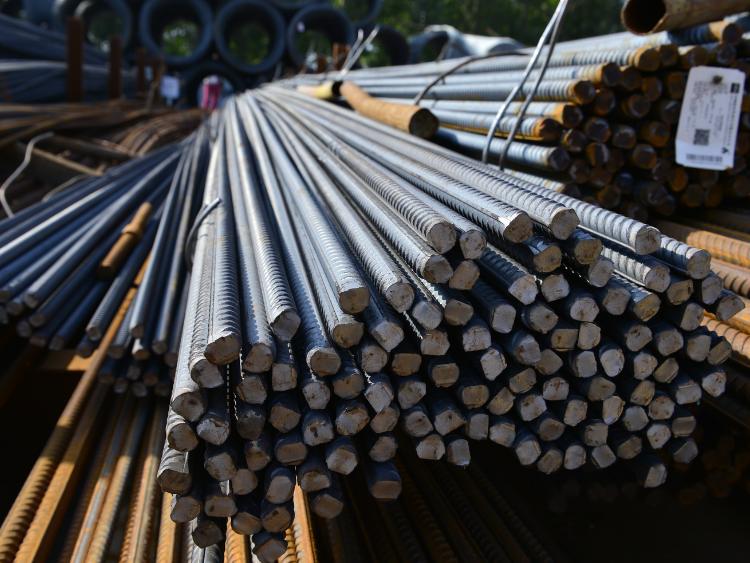
Italian rebar prices could rise in June as producers consider increases to cover rising costs and an additional energy-related charge that is due during the month.
Large volume orders remain absent, with buyers continuing to purchase moderate quantities frequently.
Producers are seeking €460/tonne ($535.19/t) base ex-works and transacting at this level, though only in very small volumes. They expect to consolidate at this level in the coming weeks. The majority of transactions, however, remain at around €440/t base ex-works.
Although elevated prices allow for some margin, low volumes are forcing producers to implement several days of stoppages this month, which will push up their costs.
Despite the high prices, one buyer tells Kallanish that the construction season is under way and that May has been busier than April.
A distributor sees continued weak consumption overall, with the construction sector supported by infrastructure projects funded by the European post-pandemic recovery fund. An agent reports demand from the railway sector, which is carrying out works across the country.
Including size extras of €260-270/t, effective transaction prices for Italian rebar are currently assessed at €700-730/t ex-works, up from around €540/t at the start of March. Mesh is at €530-540/t ex-works, before size extras of around €300/t.

Feralpi Stahl to increase Riesa plant capacity to 1.3 million mt
Italy-based steelmaker Feralpi Group’s German rebar subsidiary Feralpi Stahl has announced plans to increase annual steel production capacity at its Riesa plant from approximately 1 million mt to as much as 1.3 million mt. The expansion comes one year after the commissioning of the company’s new spooler rolling mill, which is gradually ramping up operations.
New spooler mill supports capacity growth
According to the company, the new spooler rolling mill is enabling Feralpi Stahl to enter a new product segment focused on automated applications. The facility was officially inaugurated on May 15, 2025. After initially operating with a single shift, production has now moved to a two-shift system.
At the same time, performance testing continues together with Italian plant supplier Danieli, while final acceptance certification for the facility is targeted for this summer. Feralpi Stahl stated that the ramp-up process is progressing according to schedule, with ongoing improvements in product quality and process stability.
Total capacity could reach 1.3 million mt
The Riesa site currently operates an existing rolling mill with annual production capacity of around 850,000 mt of structural steel products. The new spooler rolling mill is expected to gradually contribute an additional 400,000-450,000 mt of annual production capacity as operations continue to scale up. As a result, total annual steel production capacity at the site is projected to increase to as much as 1.3 million mt.
Three-shift operations planned from 2027
Feralpi Stahl stated that it intends to support the planned capacity increase through a transition to three-shift production operations beginning in 2027, depending on market conditions and operational progress. The company also noted that additional investments in scrap processing infrastructure are planned as part of the broader expansion strategy. In addition to rolling mill expansion, the program includes investments in scrap processing systems, energy infrastructure, and broader site modernization projects.
Author: SteelOrbis Editorial Team