


Kloeckner Kassel starts leveller for precision sheet parts
Kloeckner Metals Germany has started operating a new roller levelling machine at its service centre in Kassel-Kaufungen, Kallanish hears from the distribution group.
The new facility enables high-precision correction of flatness of sheets in thicknesses from 2 millimetres to 45mm, a width of 2,000mm, and a length of 6,000mm. The roller-leveller is complemented with a flatness measuring system, to allow for repeatable results at minimum tolerances, the company says.
Along with the new facility, the company announces a TL certification for cold-forming by the German Federal Armed Forces (Bundeswehr).
The Kassel-Kaufungen location specialises in high-strength, wear-resistant and ballistic steels, and is one of the most modern-equipped sites of the group. Together with the houses in Bremen, Velten, Landsberg, Cologne and Duisburg, it forms a network of production systems for processing, the company notes.


Serbian president supports green steel development at HBIS
Serbian President Aleksandar Vucic met with HBIS Group chairman Liu Jian in Beijing last week, with Vucic reaffirming his support for joint projects in green energy and low-carbon production, Kallanish learns from media reports.
Vucic noted that the modernisation of the Smederevo steel plant, acquired by HBIS in 2016, has benefited the Serbian economy and strengthened cooperation between the two countries. He pledged further support for environmental initiatives at the plant, according to China Daily.
Liu Jian, in turn, thanked the Serbian side for its continued support and stated that the HBIS Serbia project will continue to develop with a focus on green technologies and production modernisation.
The two sides acknowledged the progress of the Chinese-Serbian joint laboratory on green steel, established as part of the Belt and Road Initiative and operating jointly with the University of Belgrade. It has already achieved results in hydrogen metallurgy, including processing ore into direct-reduced iron (DRI) with 99.74% efficiency, as well as developing high-strength steels for the automotive industry, the media report noted.
In January, Serbia introduced a six-month quota scheme for imports of certain steel products. The country has passed new laws on greenhouse gas emissions and carbon-intensive import taxes, which came into force from 1 January. Both levies will be at a rate of €4/tonne ($4.66/t) of CO2 equivalent.
This is the country’s answer to and equivalent of the European Union’s recently implemented Carbon Border Adjustment Mechanism (CBAM). The proposal of the commission to increase tariffs on imported steel will directly impact the Chinese-owned steel plant in the country – HBIS Group Serbia Iron & Steel.
HBIS can produce about 2.2 million t/year of steel with its two furnaces, while No.1 alone has a capacity of about 900,000t/y. Its product range comprises hot and cold rolled coil, pickled coil and electrolytic tinplate.
Serbia’s production of crude steel was down 23.7% year-on-year at 388,200t in January-April, according to wordlsteel data.
German fabricators see slight recovery, but concern prevails
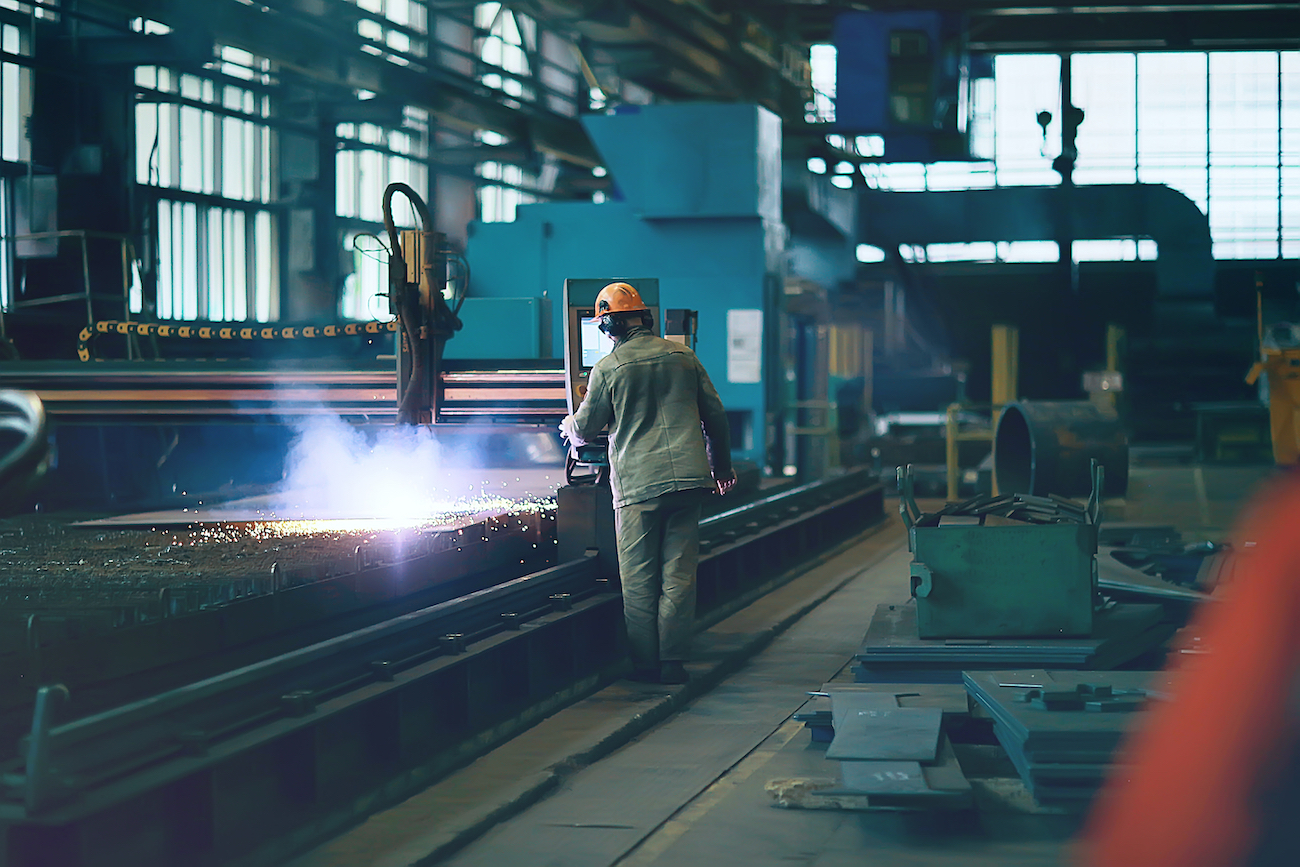
Production activity at Germany’s steel and metals fabricators has not nudged upward this year so far, although January and February was on par with the corresponding 2025 months, says their association WSM.
The initially flat activity year-on-year was a bit of a relief, given that the industry saw four years of recession. But then March was down 5.6% on last year’s corresponding month. The first quarter in total saw an on-year dip of 2.3%. That downward twist should at least be partly attributed to the conflict in the Middle East, the association explains.
Figures were more promising for the order intake, which in Q1 rose by 1.6%, and most recently in March was up a noteworthy 6.7%. While this contradicts the explanation for the drop of production, the Middle East conflict so far has caused mainly supply bottlenecks for production, and not necessarily discouraged orders, chief economist Holger Ade tells Kallanish.
The increase of orders is not necessarily a signal for sustained optimism, he notes. According to a sentiment survey, April did see some more positive sentiment for businesses than the preceding month, and was the first month-on-month return of optimism since September. This is backed by a better utilisation of capacities, up by 3 percentage points to 75%.
But then, the outlook for the coming six months has become slightly bleaker than in the previous survey. Ade attributes that apparent contradiction to a concern about profitability. Although businesses enjoy some recovery in orders and utilisation, they are worried about rising production costs, he says.
Polish steel rebar price range widens in slow market; wire rod prices stable
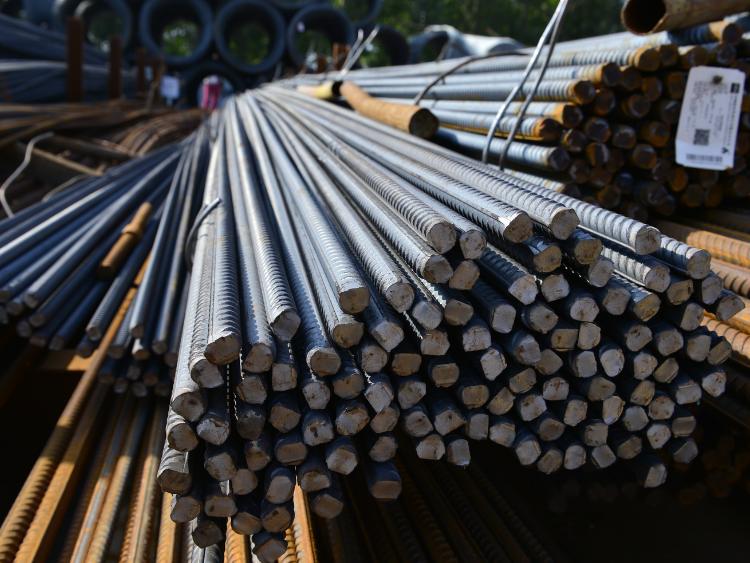
Polish domestic wire rod prices remained steady in the week to Friday May 29, while rebar prices widened, with slow market activity due to weak demand.
Market participants reported reduced activity, with fewer offers and indications heard during the week due to the holiday season in Europe.
“Demand is rather average; worse than last week,” one distributor source told Fastmarkets.
The tradable price for wire rod was said to be around 3,000-3,050 zloty ($828-841) per tonne delivered.
Fastmarkets’ weekly price assessment for steel wire rod (drawing quality), domestic, delivered Poland, was 3,000-3,100 zloty per tonne on Friday, unchanged week on week.
In contrast, rebar prices widened over the same period.
Tradable prices were reported within the range of 2,830-2,950 zloty per tonne CPT, compared with 2,850-2,900 zloty per tonne CPT on May 22.
Market participants said that higher offers of 2,950 zloty per tonne had been heard, although trading at those prices was limited.
“There is low demand and high inventories,” a seller source told Fastmarkets.
Fastmarkets’ weekly price assessment for steel reinforcing bar (rebar), domestic, cpt Poland, widened to 2,830-2,950 zloty per tonne on Friday, from 2,850-2,900 zloty per tonne the previous week.
