

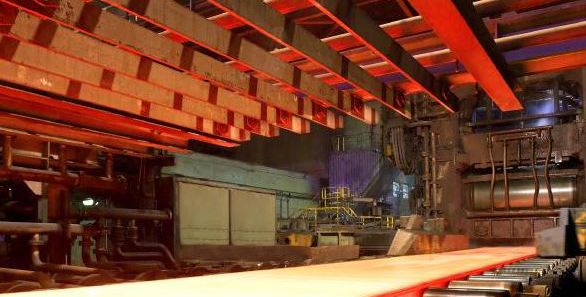
thyssenkrupp Steel resumes production at No. 4 hot strip mill in Duisburg

UK to cut steel import quotas by 60% to protect domestic steel industry
Author: SteelRadar Editorial Team


UK to maintain net zero target, plans to cut emissions by 87%

One question ran through EUROMETAL’s Helsinki meeting: who pays for the green transition — and who acts?
From carbon borders to expiring safeguards to the unresolved definition of “green steel” itself, the 2026 Nordics meeting kept returning to a market reshaped by regulation arriving faster than it can be absorbed, and to a transition no link in the chain feels able to start alone.
The EUROMETAL Nordics meeting in Helsinki on 3 June 2026 gathered analysts, economists, lawyers, producers, distributors and end users at a moment of unusual regulatory turbulence for the European steel sector. Opened by Markku Uitto of the Finnish Technical Traders’ Association and EUROMETAL board member Piotr Sikorski, the day moved from an international session on the European market, CBAM and trade law, through a Nordics session on the regional economy and distribution, to a cross-value-chain round table on decarbonisation. Across six presentations and that closing panel, one picture recurred: a market in suspended animation, waiting on rules still being written, and a green transition stalled not only for want of demand but for want of an agreed definition of what it is even selling.
A market holding its breath
The international session opened the analytical case. Maria Tanatar, associate director at McCloskey by OPIS, described Northwest European hot-rolled coil down some 40 €/t since March, with buyers pausing restocking ahead of the new quotas due on 1 July. Her survey ranged across CBAM cost mechanics, anti-dumping cases, more than 20 million tonnes of idled EU capacity and a sprawling global map of green steel projects and premiums. The consensus she reported, that any real price recovery would arrive only in the second half of the year, set the tone for a day defined less by present conditions than by impending change.
CBAM as a moving target
If one acronym dominated, it was CBAM. Alexander Siryk, founder of Metals Consulting International, devoted an entire session to it, and his core point was that the mechanism, though now in its definitive phase, remains under active development. Verification does not begin until 2027, certificate purchases follow in February of that year, free allocations discount to zero by 2034, scope may expand to downstream products, default values may yet be corrected, and pricing is shifting to a weekly cadence. The practical consequence, he argued, is that importers must manage risk now, against rules that have not settled.
“CBAM regulations and framework is still under active development, creating a challenging business environment for buyers.”
Safeguards: a legal cliff-edge
The international session closed on trade defence. Lars Hillmann, counsel at Cattwyk law firm, set out the legal architecture of the EU’s expiring safeguard regime and its “Post-Safeguards” replacement, questioning whether the new measure, which the Commission calls an additional tariff, is in fact a “safeguard in disguise” that would breach the WTO’s eight-year limit. He flagged a cascade of unresolved problems: the retroactivity of rules applied to goods ordered months earlier, the coming melt-and-pour origin test, inconsistencies between member states at customs, and a potentially cumulative overlap with anti-dumping duties. The measure’s headline parameters, a 47 % quota cut and 50 % duties from 1 July as reported through the day, only sharpened the stakes.
The Nordics session: a brighter backdrop
The Nordics session opened with the regional economy. Penna Urrila, chief economist and director at the Confederation of Finnish Industries (EK), offered a Finnish and Nordic economic outlook that was cautiously constructive. Citing the IMF’s April 2026 forecast, he noted that the world economy had been only moderately affected by the war in the Persian Gulf under the baseline scenario, though adverse and severe oil-price scenarios pointed to wide variation in the global outlook. Companies’ short-term expectations were positive, and the Finnish economy, long sluggish and hit through the foreign-trade channel, was showing signs of an upturn, with improving confidence and forecasts revised up toward GDP growth of around 1,1–1,5 % in 2026.
Urrila’s most striking theme was the investment boost underway in the EU, and especially in Germany, tied to defence upscaling and the rebuilding of Ukraine. He put the programme at 500–1.000 billion € and described it as potentially larger in impact than Marshall Aid or German reunification spending. Analyst estimates, he noted, suggested a Ukraine ceasefire could lift EU GDP by around 0,2 %, and a credible peace agreement by 0,5 % or more, while the post-Cold-War era of European “peace dividends”, cumulative defence savings he put at some 4.200 billion €, was over. For Finnish and Nordic businesses, including steel, the message was that the demand backdrop carried clear upside, even as Finland had fallen behind its Nordic peers.
The distributor’s reality: CBAM, safeguards and absent buyers
The session then turned to those who must deliver it. Feon’s CEO Petri Kalliokoski described CBAM principles and formulas published “drop by drop” after steel for the first half of 2026 had already been bought, forcing wholesale changes to contracts and pricing. Long-term reliance on default values, he warned, would be a disaster for distributors and their customers alike. On the coming safeguards he was blunt, calling them dark clouds on the horizon: in a small, customer-specific market like Finland, where suppliers are chosen for reliability before price, the quota cuts narrow supplier choice exactly when availability has to be secured, with the cost landing ultimately on customers and, through them, on their global competitiveness.
The green steel thread ran through both distribution talks. Kalliokoski and BE Group’s managing director Petteri Korpioja each described customers who ask about EPDs, availability and price but rarely buy. Korpioja gave the deadlock its sharpest expression: a chicken-and-egg problem in which supply cannot be built before demand, yet demand will not form without reliable supply, leaving the market “still stuck.”
The round table: the deeper problem of definition
The closing round table, moderated by McCloskey by OPIS analyst Benjamin Steven, brought producers, distributors and downstream end users to the same table: Madhu Sayeenathan of SSAB Europe and Heidi Peltonen of Outokumpu for the producers; Sami Aro of Sten Teräs and Michael Andersson of Tata Steel Scandinavian Distribution SSC for the distributors; and Sinikka Lieho of Skanska and Sami Sivuranta of Componenta for the end users. Together they pushed that diagnosis a step further. The market cannot price what it cannot define. The European Commission, one producer noted, was expected to set out a definition of low-emission steel, for both carbon and stainless, by year-end, with two rival methodologies competing to shape it. A “sliding scale” ties classification to recycled (scrap) content and is largely backed by carbon steelmakers, on the logic that scrap is a finite resource; critics on the panel argued it quietly favours primary and direct-reduced-iron production while penalising high-scrap stainless and circular, secondary producers. A product carbon footprint approach covering scope 1 to 3 emissions, preferred by European stainless producers, was offered as the alternative. More than one participant called the EU’s draft green steel label a disappointment, warning that its thresholds risk being less ambitious than China’s.
Producers on the panel stressed credibility through transparency, presenting EPDs as the most robust evidence available today and distancing themselves from offsetting and mass balancing. Distributors returned to the economics: carrying a parallel “green” inventory across thousands of stocked items would push working capital to unacceptable levels. Borrowing a new-product-development analogy, one argued the sector cannot sell green steel until its definition, cost and sales channels are settled, with the cost of carrying the transition sitting with the mills rather than the middle of the chain. From the demand side, a construction procurement director described embodied-carbon limits in building permits tightening year on year, and a pressing need for verifiable, permit-usable emissions data that survives the journey through subcontractors and steel-frame package suppliers, without which buyers face accusations of greenwashing. An industrial OEM supplier countered with a warning about regulatory unpredictability, describing EU rules that arrive late and run to “180 pages that nobody can understand,” so that those quicker to move, often outside the EU, find a way round them first. Summing up, the moderator spelled out the practical near-term bind: steel already booked to arrive in 2027 faces quota exposure, CBAM costs and 50 % coverage on default values, with verification burdens stretching across unfamiliar parts of the supply chain.
On what mattered most right now, the panel was united in a few priorities: make the carbon cost predictable, start pricing carbon into decisions today because it is coming, protect the whole European industry rather than steel alone, and treat the carbon price as an opportunity to differentiate, not a threat to competitiveness.
A closing call to action
Drawing the day together, Piotr Sikorski, EUROMETAL board member and PUDS president, used his closing remarks to reframe what the meeting had been about and what the sector should do next. Its value, he suggested, lay in whom it chose to listen to. Distributors and processors had long taken their cues from producers, sitting “just in the middle” of the value chain, but that had changed: now they had to stand on the side of their clients and put the emphasis on the customer’s situation in order to protect their own.
“Not every conference is dedicated to give a voice to the giants, but listening to the users and customers is vital.”
He drew a pointed contrast with the last great dislocation. During the financial crisis of 2007–2009, the industry had debated the economy, demand and the real things; now the conversation was dominated by three regulation-driven challenges, CBAM, safeguards and green steel, a measure of how much had changed. That, he observed wryly, made the moment every lawyer’s dream, but the substance demanded more than commentary. The mood across the day had been one of caution: a market that has done what it can to prepare, from re-sourcing to low-emission mills to rewriting contracts, and is now waiting to see what the rules finally say. His answer was less about who pays for the transition than about who acts, and his message to the middle of the chain was to stop waiting and start pushing.
“If the situation is what it is, we have to be active. We have to put pressure on our governments and on the Commission, because we are fighting for our market. Let’s take this opportunity to make a change.

German steel industry warns rail disruptions threaten raw material supplies
Germany’s steel industry has warned that persistent disruptions to rail freight traffic are threatening the supply of critical raw materials to steel plants, raising concerns about production stability across the sector.
In a statement addressing the current condition of Germany’s rail network, the German Steel Federation (WV Stahl) said the transportation of iron ore and coal by rail has become increasingly problematic due to infrastructure works and operational disruptions.
Steelmakers face growing supply chain risks
According to Kerstin Maria Rippel, managing director of the WV Stahl, the current situation surrounding rail deliveries of iron ore and coal has become “extremely critical” for the steel industry. She stated that ongoing construction projects, operational disruptions and inadequately prepared diversion routes are undermining the reliable supply of raw materials to steel plants.
The association warned that the problems have already begun affecting production at some facilities.
Industry supports rail network modernization
Despite the concerns, the steel association reiterated its support for the modernization and rehabilitation of Germany’s rail infrastructure. However, the association stressed that network upgrades should not come at the expense of maintaining reliable freight transportation for key industrial sectors.
Call for improved construction management
The association called on rail infrastructure operator DB InfraGO to improve the management of construction works and ensure that industrial supply chains remain functional during network upgrades.
According to the WV Stahl, reliable access to raw materials is crucial for maintaining steel production and safeguarding Germany’s industrial competitiveness.


Italy’s Assofermet warns safeguard measures and CBAM could damage processors and distribution
After years of progressive tightening of the European Union’s regulatory framework to protect the steel market, the first critical issues of the EU systems limiting steel imports are beginning to clearly emerge. In an official note, Assofermet – the association representing the Italian metallurgical and steel sector – expressed strong concern over the lack of protection for downstream sectors of the supply chain, calling for a radical and timely change of approach by European institutions.
According to the association, the public debate has remained focused almost exclusively on the needs of upstream steel producers for too long, ignoring the side-effects that duties, quotas and increasing bureaucratic compliance generate for processors, distribution and end-users, starting with the metalworking sector.
As previously reported by SteelOrbis, on July 1, 2026, with the expiration of the current steel safeguard regime, new and significantly more restrictive provisions for imports into the European Union will come into force. The measures approved by the European Parliament and the Council – currently awaiting publication in the Official Journal of the EU – will introduce an annual duty-free quota of approximately 18.3 million mt of steel products. Volumes exceeding this quota will be subject to a 50 percent duty. Added to this revision are the obligation to trace the country of origin of steel melting and pouring, and the economic effects of the CBAM, which entered into full force on January 1, 2026.
The risk of unbalanced protection
Assofermet said it recognizes the need to protect the European steel industry as “understandable and legitimate” in an international context altered by marked global production overcapacity and distortions generated by the Chinese production system, but it noted that the real core issue lies in the imbalance of the measures adopted.
Protecting only upstream producers without supporting the companies that process and purchase that steel is penalizing processors and distribution with:
- a sharp increase in raw material costs;
- a progressive reduction of sourcing options in international markets;
- a massive bureaucratic and administrative burden that is increasingly difficult to sustain.
The association stressed that processing and distribution represent the primary industrial value added of the European system, as well as the link most exposed to global competition: “If the EU loses shares in the global manufacturing market and if the continent’s competitiveness is further squeezed by the accumulation of massive regulatory constraints, in the medium to long term upstream steel producers themselves will inevitably suffer as well, as they will see orders from their customers inexorably decrease, leading to yet another drop in steel consumption and demand. An unbalanced protection, therefore, risks failing to protect even those for whom it is formally designed and intended,” the note reads.
Call on EU legislators to adopt support tools for downstream supply chain
To prevent the competitiveness of European manufacturing from being sacrificed, Assofermet is calling on EU legislators to immediately accompany trade defense mechanisms with support tools for the downstream supply chain. The priorities indicated concern “important and substantial simplifications in documentary obligations, guarantees of adequate supply options and, above all, a serious and far-sighted impact assessment on the cumulative effects of quotas, duties and CBAM along the entire industrial supply chain.”

Marcegaglia raises investment in Fos-sur-Mer low-carbon steel project to €1.2 billion
Italian steel producer Marcegaglia has awarded Italy-based plantmaker Danieli the contract for the construction of its new steelmaking site in Fos-sur-Mer in the south of France, as part of its “Mistral Project.” The agreement, announced in a joint press release issued on April 13, has a total value of approximately €450 million, including upgrades and spare parts.
Italian steel group Marcegaglia, one of Europe’s leading steel processors and a major producer of welded tubes, flat products and stainless steel products, has announced an additional €600 million investment for the development of its Fos-sur-Mer production site in southern France, as part of its Mistral project. With this new allocation, unveiled during the Choose France summit, the total planned investment in the French industrial complex will rise to around €1.2 billion.
The project involves the transformation of the former Ascometal site, acquired by Marcegaglia in 2024, into an integrated steelmaking and hot rolled coil production facility. The investment is expected to significantly increase the site’s output, with annual liquid steel production planned to rise from the current 100,000-150,000 mt to around 2.1 million mt by mid-2028. Rolling capacity is expected to reach up to 3 million mt per year.
According to market sources, the project includes the modernization of the existing electric arc furnace and the installation of new technologies for the production and rolling of carbon and stainless steel. Once completed, the new industrial setup is expected to allow Marcegaglia to cover a significant share of its internal requirements for coils and slabs, with the material mainly intended to supply the group’s downstream plants in Italy.
As previously reported by SteelOrbis, in April Marcegaglia awarded Danieli a contract worth approximately €450 million, including implementations and spare parts, for the supply of the main technologies for the new Fos-sur-Mer steel complex. The agreement is part of Marcegaglia’s broader strategy to strengthen upstream integration, improve control over its supply chain and support the decarbonization of its production process. On the energy side, the project will be supported by the agreement signed with French energy company EDF for the supply of nuclear-generated electricity at competitive conditions for at least 10 years. The use of decarbonized electricity, together with scrap and low-carbon raw materials such as DRI and HBI, is expected to significantly reduce emissions compared to traditional integrated steelmaking routes.
The Fos-sur-Mer site will also include advanced automation solutions and digital systems aimed at optimizing energy consumption, productivity and resource use. The group’s stated objective is to develop a cost-competitive industrial asset aligned with the strictest European environmental and safety standards.
The project is also relevant for France’s industrial strategy, as it supports the country’s efforts to rebuild manufacturing capacity and develop low-emission industrial supply chains. The site’s location at the Grand Port of Marseille is also considered a key logistical advantage for raw material supply and the distribution of finished products.
The final investment decision is expected by the end of 2026, subject to the completion of the permitting process and the definition of conditions that are still under negotiation with the relevant French authorities. Once completed, the Mistral project will strengthen Marcegaglia’s position in the European flat steel market and increase the group’s self-sufficiency in upstream steel supply.

EU debates steel measures’ downstream coverage, Ukraine support
Several EU member states have called for broader coverage of downstream steel-containing products and special consideration for Ukraine under the bloc’s new steel trade defence regime, as the legislation moves towards formal adoption by the Council of the European Union, Kallanish notes.
Spain argues that the scope of the new measure remains insufficient to protect European industry, warning that steelmakers in third countries could circumvent restrictions by exporting downstream products with a very high steel content. The country urged the European Commission to prioritise the planned review of the regulation and ensure that downstream sectors are adequately covered.
Estonia, Latvia and Lithuania have expressed concern that Ukraine’s exceptional wartime circumstances had not been sufficiently reflected in the regulation. The three countries say Ukraine should have remained exempt from the measure, in line with the current steel safeguard framework, and call for its situation to be fully considered when allocating country-specific quotas. They note that Ukraine’s steel sector remains a critical source of export revenue despite the destruction, damage and occupation of production facilities caused by the war.
In a separate joint statement, Sweden, Finland, Denmark, Estonia, Latvia and Lithuania support action against global steel overcapacity but stress the need to balance protection for EU steel producers with the competitiveness of downstream manufacturing industries. The group emphasises the importance of reflecting Ukraine’s circumstances in future implementation and quota allocation decisions.
The comments were submitted as statements to be entered into the council minutes ahead of the formal adoption of the regulation addressing the negative trade-related effects of global overcapacity on the EU steel market. The legislation, which will replace the current steel safeguard regime from 1 July, was approved by the European Parliament on 19 May and is expected to be formally adopted by the council shortly. Estonia voted against the compromise, while Portugal abstained.


Germany’s manufacturing sector came to a near standstill in May

Trump’s latest Section 232 adjustments spark mixed reactions in steel industry
US President Donald Trump’s latest amendment to Section 232 tariffs on Monday June 1 sparked mixed responses from the steel industry, Fastmarkets learned.
The president signed the proclamation on Monday, adjusting the country’s Section 232 tariffs on steel, copper and aluminium by temporarily reducing the duty rate to 15% for certain agricultural equipment, such as combines and harvesters, and residential-use heating, ventilation and air-conditioning (HVAC) systems from 25%.
The tariff changes are temporary, according to the White House, lasting until December 31, 2027. The adjustments will become effective for goods imported or withdrawn from bonded warehouses after 12:01am US Eastern time on Monday June 8.
“These temporary reductions show that the administration continues to refine the [Section] 232 derivatives list to ensure the tariffs effectively strengthen domestic steel production while minimizing unintended consequences,” Brandon Farris, executive vice president of the Steel Manufacturers Association (SMA), told Fastmarkets on Tuesday June 2, characterizing the tariffs as Trump’s “signature trade achievement.”
The US steel industry is committed to “maintaining the Section 232 steel tariff program,” the American Iron and Steel Institute (AISI) said; according to AISI, the program has resulted in spurring domestic investment and been crucial in curbing the negative impacts of global steel excess capacity due to foreign subsidies and other trade-distorting practices.
“We look forward to continuing to work with the administration to maintain strong demand for American-made steel throughout the economy,” Kevin Dempsey, AISI president and chief executive officer, told Fastmarkets on Tuesday.
“The real significance here is that Washington is reducing investment risk for domestic steel producers,” Samir Kapadia, managing principal of the Vogel Group, told Fastmarkets on Tuesday.
Kapadia added: “When a company evaluates a billion-dollar expansion, it now has greater confidence that US policy will support domestic production for years, not months.”
But Trump’s latest tariff actions sparked some skepticism from other members in the industry.
“With several Section 232 decisions on the horizon, we remain concerned with the effects that broad, and potentially stacking, tariffs that could be prescribed through these national security investigations would have on domestic manufacturing,” Jeannette Chu, vice president of national security policy at the National Foreign Trade Council (NFTC), said in a statement on Monday.
The NFTC executive added: “Tariffs on industrial equipment, parts and components for robotics, medical devices and derivative semiconductor products would threaten the competitiveness of America’s most dynamic industries at a time when many companies are building factories and investing in capital equipment.”
The tariff adjustment is “going to be complicated for importers of products containing steel or copper,” a trader told Fastmarkets. “The end result will be a reduction of indirect steel imports such as appliances and agricultural products and increased steel consumption in the US.”
Section 232 tariffs on steel imports
Section 232 tariffs on steel were raised to 50% from 25% on June 4, 2025, shrinking the volume of steel shipped to the US.
The US imported 1.70 million tonnes of steel in April, down by 184,236 tonnes, or 9.77%, from 1.89 million tonnes imported in April 2025, preliminary data from the International Trade Administration showed.
The volume of steel that entered the US in April was also lower by 841,843 tonnes, or 33.10%, imported in April 2024, at 2.54 million tonnes, the data showed.
