


Magona gets closer to resuming activities
The sale of Italian service centre Magona in Piombino, Tuscany, is progressing, sources close to the matter tell Kallanish.
At a meeting between the authorities, unions and Trasteel chief executive Gianfranco Imperato, the company “gave very positive signs,” a source says. While a verbal agreement has been reached between Trasteel and the Greensill receiver for the sale of Magona, Trasteel is said to be proceeding with the lease of the business while the formal sale agreement is being drafted and all documents are signed.
Trasteel is said to have offered €36 million ($41.9m) over eight months from the date of signing as a lease payment to be deducted from the purchase price. Trasteel expects to begin leasing Magona from 1 July, though a second informed source believes that drafting the formal agreement may take longer and that the 1 July date is an optimistic forecast.
Trasteel has reassured stakeholders that it will secure a buying option on 40,000 tonnes of hot rolled coil to keep Magona operational in the fourth quarter, and will purchase around 4,800t of HRC for re-rolling at the facility between end of June and July.
Unions have welcomed these steps, with one union source saying the moves will give Magona “some oxygen” to cover worker salaries in June and July. Workers are currently on temporary layoff.
A further meeting with all stakeholders has been scheduled for 25 June at the Ministry of Enterprises and Made in Italy in Rome.
Trasteel was not available to comment before press deadline.


EU steel trade regime enacted into law
The European Council has formally adopted the EU’s new steel trade defence framework, which will apply from 1 July and replace the current steel safeguard measure. This aims to protect the bloc’s steel industry from persistent global overcapacity, Kallanish notes.
The European Parliament plenary voted in favour of the regulation last month.
The regulation introduces a revised tariff-rate quota (TRQ) system, including reduced import quotas and higher duties on imports exceeding those quotas. It also incorporates a “melt and pour” requirement to improve transparency and help prevent circumvention by identifying the country where steel was first melted and poured.
The framework includes a strengthened review mechanism, allowing the European Commission to assess the scope and effectiveness of the measure and propose adjustments in response to market developments and evolving global overcapacity conditions. Unused quotas may be carried over from one quarter to the next during the first year, “ensuring adequate supply for downstream industries and maintaining compatibility with the EU’s international trade obligations”, the Council says.
Global steel overcapacity is projected to reach 721 million tonnes by 2027, more than five times the annual EU steel consumption. “This overcapacity, combined with trade-restrictive measures from third countries that limit imports into their markets, has made the EU market the primary recipient of global excess steel. This has led to increasing imports, low-capacity utilisation (67% in 2024), high EU manufacturing costs, and ultimately threatens the industry’s long-term ability to invest in decarbonisation,” the Council writes in a statement.
“Steel is indispensable to Europe’s industrial base, its green transition and its security. With today’s adoption, the EU is putting in place a stronger framework to respond to global market distortions, protect fair competition and provide greater certainty for both steel producers and downstream industries,” says Michael Damianos, Minister for Energy, Commerce and Industry of Cyprus, which currently holds the six-month rotating Council presidency.
In a joint declaration accompanying the regulation, the Council, European Parliament and Commission reaffirmed their commitment to reducing economic dependencies on Russia through the gradual phase-out of Russian steel products and continued diversification of steel imports.
Meanwhile, last week, the European Commission launched a four-week melt-and-pour consultation, from 4 June to 2 July.

Downstream uncertainty hits Italian distribution
Both the long and flat steel product sectors are stagnating in Italy, with tube prices edging lower while sheet prices are holding stable, Kallanish notes.
The first quarter was distorted by some restocking among distributors due to rising prices linked to the Middle East conflict. From April, however, the distribution sector has slowed its purchases significantly, continuing to sell only small volumes. Buying throughout the value chain has been limited to immediate needs and often the bare minimum.
Some products are seeing stronger activity, sources report, particularly sections and welded tube. Tube demand is holding up but prices continue to lag behind hot rolled coil increases. Tube discounts remain stable compared to May at 41-43 points. Hot rolled sheet prices are also holding at €760-780/tonne ($885.6-908.9/t) ex-works, though lower prices have been heard in the market.
“We are working little and badly. There is no visibility; one day we sell, the next we sell nothing. The first four months of the year were fine but from May the market has really slowed downstream. Now it seems completely stuck,” a distributor tells Kallanish.
Two more distributors confirm prices for both long and flat products are mostly stable. “Mills would like to increase prices, but the market does not absorb [this], and often distributors lower their selling prices as they need to generate cash flow,” one adds.
Margins have generally improved on the back of the price increases, but volumes for both products remain absent, and no significant change is expected in the near term. Uncertainty persists downstream, with customers avoiding volume purchases and combining different grades in a single truckload. One source says stocks remain relatively high as current demand does not allow for swift depletion, adding that he will not restock at current prices but will continue to buy moderately.

Polish rebar prices decline due to slow holiday market; wire rod stable
Polish domestic rebar prices declined in the week to Friday June 5, while wire rod prices remained stable amid weak demand due to bank holidays and high prices.
“The week to June 5 was very slow because 80% of companies are closed on Friday due to the bank holiday”, a trader source told Fastmarkets.
Rebar transactions were reported at 2800-2900 zloty ($767.13-794.53) per tonne CPT, sources said, with larger buyers securing shipments at the lower end of the range.
Mill offers were heard at around 2,850-2900 zloty per tonne CPT.
Tradable levels were reported at 2,800-2,900 zloty per tonne CPT, according to market participants.
Fastmarkets’ weekly price assessment for steel reinforcing bar (rebar) domestic, cpt Poland was 2,800-2,900 zloty per tonne on Friday, down by 30-50 zloty per tonne from 2,830-2,950 zloty per tonne on May 29.
Wire rod prices remained unchanged over the same period, with tradable price indications reported at around 3,000-3,100 zloty per tonne delivered Poland.
“Wire rod segment in Poland is generally stable,” a seller source told Fastmarkets.
Fastmarkets’ weekly price assessment for steel wire rod (drawing quality), domestic, delivered Poland was 3,000-3,050 zloty per tonne on Friday, unchanged from a week earlier.

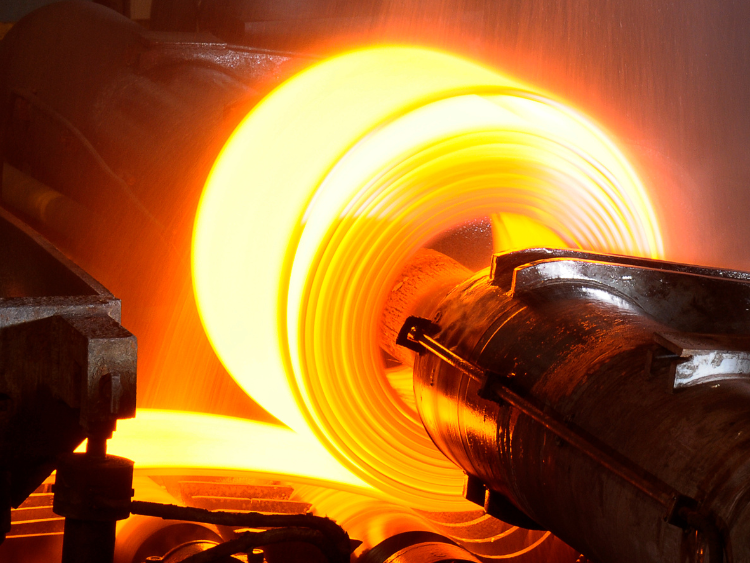
European HRC prices rise slightly; weak demand keeps market subdued
European prices for steel hot-rolled coil increased slightly on Monday June 8, but market activity remained slow in both Northern Europe and Italy, with sentiment weighed down by upcoming safeguard measures set to come into force on July 1, sources told Fastmarkets.
In Northern Europe, sources reported that weak demand, under-utilized competition and low consumption continued to weigh on market sentiment.
One buyer reported an offer at €700-705 ($806-812) per tonne ex-works, with workable prices indicated at €680-685 per tonne ex-works on Monday.
A second buyer source reported an indication for achievable prices at €660-680 per tonne ex-works for July-August delivery, which was given zero tonnage due to a lack of selling interest at that level.
No significant trading was reported during the day.
“Everyone is waiting for the [country-specific allocations under new import] quota clearance, so activity would pick up from July 1,” the first buyer source told Fastmarkets, adding that current demand was “pretty poor.”
The new safeguard measures include lower steel import quotas to the EU and higher out-of-quota duties, aimed at shielding the local steel industry from global overcapacity and unfair trade practices.
An offer at €700 per tonne ex-works and indications at €670-700 per tonne ex-works reported on Friday June 5 were carried over to Monday’s index due to a lack of fresh input from market participants.
Fastmarkets’ daily steel hot-rolled coil index domestic, exw Northern Europe was calculated at €692.00 ($796.99) per tonne on Monday, up by €0.33 per tonne from €691.67 per tonne on Friday.
The index was up by €2.00 per tonne week on week and up by €2.42 per tonne month on month.
In Italy, one buyer source reported a fresh offer for HRC at €700-710 per tonne delivered (€685-695 per tonne ex-works) announced on Monday morning, while indications for achievable prices were heard at €665-680 per tonne ex-works, in line with the latest transactions reported on Friday.
“Generally, very little is happening due to the wait-and-see mood, linked to the lack of information regarding the new safeguard [measures],” the buyer said.
A second buyer said offers were at €655-670 per tonne ex-works for end-August delivery, which were given zero tonnage due to the longer delivery window, which exceeds Fastmarkets’ methodology period of up to six weeks.
“[There is] still no real demand and stockholders are very skeptical placing orders now,” the second buyer said, adding that high steel slab feedstock costs were the biggest problem for re-rollers and were expected to “limit discounts on the strip side.”
Meanwhile, a third buyer in Italy said they had heard the lower HRC offers at €655-670 quoted by the second buyer, but was not sure whether these levels were “completely true.”
Fastmarkets’ daily steel hot-rolled coil index, domestic, exw Italy was calculated at €680.83 per tonne on Monday, up by €1.25 per tonne from €679.58 per tonne on Friday.
The index was up by €3.33 per tonne week on week, but down by €5.52 per tonne month on month.
The latest import activity in Southern Europe was reported on Friday, when Indian HRC was heard sold at $650-690 per tonne CIF, with the higher end linked to deliveries to Spain, according to a mill source.

Italian plate prices stabilise amid quiet market
Italian heavy plate prices are stable compared to May with uncertain demand and a slow market, Kallanish hears.
Producers, however, are confident that prices will continue to increase in the coming months, particularly when the new trade measures are implemented next month.
Imports of plate will fall from 2.2 million tonnes/year to about 1.3mt/y from July which will inevitably boost European sales, sources believe. Import prices are not disrupting the market at present.
Material already at port is offered at €770/tonne ($897.3/t) ex-works for S275 grade and €790/t for S355 which is not particularly attractive for buyers, as Italian mills offer similar prices. No imported material is expected in the short term.
Thanks to stronger EU protection measures, mills are reporting acceptable results in the first four months of the year and expect 2026 to be a relatively good year overall, supported by protectionism and ongoing infrastructure projects funded by the post-Covid European recovery fund.
Slab prices, however, continue to climb, partly driven by CBAM charges, with Asian slab prices reaching $600/t cfr Italy and above, sources say.
Mills have filled or almost filled July order books and are quoting €800/t base ex-works for S275 grade. Current contracts for S275 remain at €760-780/t base ex-works.
Meanwhile, prices for plate in northwestern Europe have not moved noticeably for weeks. Following the general steel price surge since last autumn, some mills had to take back targets they gave April of above €850/t ex-works for S355 grade. Observers in Germany and Benelux, buyers as well as mills, see S355 in a range of €800-850/t delivered, and they see concessions made at the higher end (see Kallanish 2 June).

France Hydrogène seeks automotive green steel rules
Industry association France Hydrogène is recommending that green steel used in the European automotive sector be defined as produced from direct reduced iron (DRI) using a high share of renewable or low-carbon hydrogen, with strict emissions thresholds enforced by the EU.
The association argues that hydrogen-based DRI combined with electric arc furnace (EAF) technology is the essential production route for Europe to maintain competitive steel production in the medium and long term. Replacing blast furnaces with EAFs without securing European DRI production would risk relocating a major part of the steel value chain outside the continent.
European H2-DRI projects already exist, France Hydrogène says in a note seen by Kallanish. The regulatory framework must now reflect the importance of this production route, it warns.
The Corporate Average Fuel Economy (CAFE) norms, the EU regulations setting CO2 emissions targets for carmakers, are currently under revision and include a steel flexibility mechanism letting carmakers offset their emissions targets with their green steel purchases.
France Hydrogène says this represents a unique opportunity to drive demand for low-carbon steel, but warns that it depends on how it is designed. “Depending on how this flexibility is sized and designed, it could equip the European steel base for reinvestment and transformation,” the note states.
The association wants the Ecodesign regulation (ESPR) to lower the emissions ceiling for Class A eligibility to 0.7 tonnes of CO2/t of finished hot rolled coil, and the CAFE regulation to specify that only Class A steel qualifies for the automotive pilot market. It also recommends that DRI production must take place in Europe for steel to qualify as “Made in EU” under Article 7 of the Industrial Accelerator Act.
France Hydrogène calls for the steel flexibility in the automotive pilot market to be maintained at 7% and for the pilot market to be brought forward to 2030, starting at 2% flexibility and rising progressively to 7% by 2035, accelerating demand for hydrogen-based green steel.
The steel industry, however, tends to view hydrogen sceptically as a reliable and cost-effective energy source. Last year, Alain Le Grix de la Salle, ArcelorMittal France chief said the company is suspending its DRI and hydrogen plant to decarbonise the Dunkirk site. During a hearing at the Senate in Paris he noted that hydrogen produced via electrolysis derives approximately 70% of its cost from electricity. For hydrogen to be economically viable in DRI-based steelmaking, the target price is €2/kg, compared to current market levels of around €7/kg.
Achieving this would require electricity prices to reach around €25/MWh. Meanwhile, wire specialist Bekaert announced a production halt of green hydrogen electrolyser components at its Bekintex site in Wetteren, Belgium, due to slower-than-expected hydrogen market development (see Kallanish passim).

