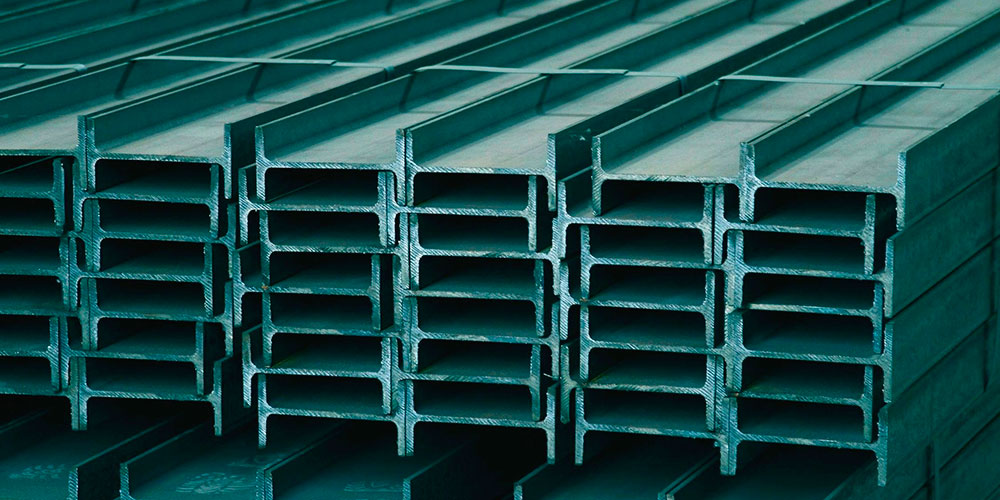
Polish domestic long steel prices fall on weak demand
Sources said sentiment was bearish, with demand mirroring the broader trend in European long steel, with buyer resistance to higher prices contributing to the downturn.
“This week we have seen sharp price decreases from the mills,” a distributor source told Fastmarkets.
Rebar offers were reported to Fastmarkets at 2,700-2,750 zloty ($716-729) per tonne CPT, while the tradable level was around 2,760-2,820 zloty per tonne CPT, according to market participants.
Fastmarkets’ weekly price assessment for steel reinforcing bar (rebar) domestic, cpt Poland was 2,700-2,820 zloty per tonne on Friday, down 3.16% from 2,800-2,900 zloty per tonne.
Wire rod prices also declined over the same period.
Offers were reported at 3,190 zloty per tonne delivered, while the tradable level was said to be around 2,980-3,050 zloty per tonne delivered.
Fastmarkets’ weekly price assessment for steel wire rod (drawing quality), domestic, delivered Poland was 2,980-3,190 zloty per tonne on Friday, down from 3,000-3,200 zloty on June 19.
Author: Nia Radenkova


European steel HRC prices ease in quiet trade as market awaits safeguard quota details
Domestic steel hot-rolled coil (HRC) prices softened slightly in Northern Europe and Italy due to limited market activity and uncertainty over upcoming EU safeguard measures, sources told Fastmarkets on Monday June 29.
In Northern Europe, trading activity has stalled due to uncertainty surrounding the new country-specific import quotas, which have yet to be announced by the European Commission despite the measures being due to take effect on July 1.
Sources said there was sufficient material available in the market, but buyers were awaiting further details on the quotas and expected greater clarity by the end of the week.
“I expect a very calm summer, which is actually good, because there is enough material available now,” a buyer said on Monday, also providing an indication of workable levels at €675-685 ($768-780) per tonne ex-works.
A second buyer reported an indication at €660-675 per tonne ex-works on June 29, which was assigned zero tonnage due to a lack of supplier interest at the lower end of the range.
A third buyer said larger-volume orders, above 10,000 tonnes, might receive a further €5-10 per tonne discount, but declined to consider €660 per tonne ex-works a representative market level at present, and had not heard any deals done at this price.
Other sources could not indicate workable levels for HRC because of the limited trading activity.
Due to a lack of fresh input, price points received on Friday June 26 were carried over to June 29. On Friday, an indication of workable levels was reported at €680-685 per tonne ex-works.
Fastmarkets’ daily steel hot-rolled coil index domestic, exw Northern Europe was calculated at €681.25 per tonne on June 29, down by €1.25 per tonne from €682.50 per tonne on June 26.
The index was unchanged week on week, but down by €9.67 per tonne month on month.
In Italy, market activity was also quiet, driven by uncertainty over the new safeguard measures and the approaching summer period, normally slowing demand.
Sources said indications of workable levels were in the range of €655-675 per tonne ex-works, but they could not provide any fresh trading data.
One supplier reported HRC offers for September delivery at €690 per tonne ex-works on Monday, which were assigned zero tonnage due to longer delivery period, exceeding Fastmarkets’ six-week methodology window.
“The offer [at €690 per tonne ex-works] is quite ambitious. Maybe it will be completed, but this is not the normal number now,” a buyer said on Monday regarding the material offered for September shipment.
Fastmarkets’ daily steel hot-rolled coil index domestic, exw Italy was calculated at €666.25 per tonne on June 29, down by €1.88 per tonne from €668.13 per tonne on June 26.
The index was down by €8.13 per tonne week on week and by €5.42 per tonne month on month.
Meanwhile, the Italian steel trade association Assofermet published a statement on Friday criticizing the European Commission for the delay in the announcement of the new import quotas ahead of July 1, saying it was directly affecting EU steel companies.
“Negotiations with partner countries within the framework of free trade agreements are still ongoing with an incomprehensible and unjustifiable delay,” the organization said, adding that the consequence was clear: “Less than a week before the new regime starts, no one can know for sure how the quota system will actually work from day one.”
UK steel market in quota limbo as market anxiety builds
The UK’s steel market is undergoing a period of significant change: dominant domestic steelmakers are in the process of moving toward a low-carbon, or state-owned future, backed by policy mechanisms to help maintain their competitiveness in an increasingly contested global industrial context.
The most significant of these mechanisms is the upcoming replacement of the UK’s existing steel safeguard system with a long-term replacement, which as McCloskey first reported in March, indicates far more dramatic cuts to duty-free steel import volumes than most in the UK market anticipated.
Originally spurred by US President Donald Trump’s efforts to protect the US’ own steel and manufacturing industries across his first and second terms, both the UK and EU are under the same 1 July deadline to maintain trade protections for their own steel industries – due to the maximum 8-year term for emergency safeguard protections, as per World Trade Organization (WTO) rules. The two jurisdictions are commonly taking the opportunity to significantly tighten their steel trade regimes, cutting volumes and doubling the out-of-quota duty rate to 50%.
Scarce few in the market argue that these jurisdictions should allow their existing market protections to lapse given still-growing global steel overcapacities, its injury to the competitiveness of domestic steelmaking, and the need to preserve at least some form of domestic production as an onshore industrial input, especially as the effectiveness of national defense sectors gain increased attention amid increased global conflict.
However, as the UK market comes closer to July’s implementation of its new import reality, voices from the UK’s steel trade, manufacturing, and wider steel-consuming sectors are sounding the alarm at a potentially existential blow to their own operations – or sector as a whole – if the new quota levels come to pass in restricting the accessibility of international steels into established domestic supply chains.
While European voices of a similar tone are largely calling for an extension of these upstream steel protections to downstream steel industries – to prevent the bypassing of manufacturing chains entirely with substitutive steel-containing goods as a result of steel price inflation – resistance in the UK largely concerns new barriers to steel imports that the UK itself does not produce, or produces in insufficient quantities to serve the full portfolio of demand from domestic manufacturing.

A ‘negotiating strategy’?
The outcry at the Department of Business and Trade’s (DBT) ‘provisional
’ steel quota balances – which in some product categories permits origins as little as a single container of duty-free steel a quarter, and can entail as much as a 97% reduction in product category quota volumes – appears to have brought the government back to the drafting table, with meetings with industry stakeholders taking place throughout the past week.
McCloskey’s sources are fairly certain that the provisional volumes will now be adjusted in some capacity to better match demand realities – especially where larger end-users have material dependencies that cannot be fully sourced from domestic production – but arguably sensationalist expectations that the government will make a full “U-turn” on its trade defense intensifications within its Steel Strategy, or introduce significant last-minute amendments seem at odds with the government’s published intentions, the short notice period of previous trade protection intensifications, and the conversations McCloskey has had with those close to the consultations and wider drafting process.
For example, narratives are emerging in the UK market that the UK’s provisionally published quota levels are nothing more than a hardline ‘negotiating strategy’ with the EU as it sets its own framework for steel market access, designed to pressure the EU into giving the UK preferential weighting in the allocation of the EU’s duty-free volumes by product category (subject to an overall lesser 47% reduction, to the UK’s 60%), before being relaxed post-negotiation.
While the UK government is of course very likely to be leveraging access to its own market in its negotiations with the EU, the UK Steel Strategy is also its own entity, backed by commissioned sector analysis, and cannot as such be reduced to mere political theatre. Additionally, the EU already has a substantial 60% allocation to the UK’s provisional division of quota volumes to specific origins – consistent with its historic import share – and the UK’s more substantial cut to overall volumes is arguably necessary given the smaller market share of domestic steelmaking vis-a-vis the EU.
The EU is yet to publish its own allocations of quota volumes to specific categories, with publication expected week beginning 22 June following its WTO-aligned negotiations with trading partners, and McCloskey understands that the UK is the last country to finalize its trade access with the bloc.
The UK is focused on maximising its country-specific quota allocation, which is not necessarily easy in the context of the EU’s indicated design for its quota regime. The EU’s replacement quota structure suggests it will create tiers of market access between country-specific quota holders, and separate residual quota pools between the EU’s FTA and non-FTA trading partners. UK steelmakers are concerned that they will be unable to compete against other FTA origins due to crowding out effects from their comparatively low export volume, representing only just under 5% of EU steel imports in 2025 (on CN codes covered by the EU’s revised quotas) and traditionally falling short of filling its existing EU safeguard quota allocations.

Some market participants also highlight that the UK has more power in negotiations than narratives would suggest, representing one of the EU’s core export markets. The UK holds the highest EU export share of 20% in 2025 (exceeding it on 2026 imports to-date), and is second only to the US in export value at a 16% share. Additionally, UK traders argue that the UK could meet its material requirements outside of the EU were the bloc’s provisional quota allocations to be globalised, with only a few products – like specific grades of galvanised steel – showing EU dependency on behalf of the UK. While this is technically possible, the traditional reliance of UK manufacturing on ‘just-in-time’ procurement models make the EU a highly attractive, reliable, and low-lead time source for the UK’s industrial requirements; though academic and industry research collated by the UK government in its recent report on global supply chain “risk and resilience” does demonstrate a contemporary shift toward “hybrid resilience” strategies, including increased stockpiling of critical materials, and supply chain diversification, which could see firms broaden at least part of their horizons beyond EU suppliers.
This proximity is also potentially threatening to the revival of UK steelmaking if the EU were to be granted completely unrestricted access, as production costs (mainly energy) are comparatively lower on the continent, and EU capacities dwarf those of the UK.

The EU’s dominance in UK import market share (for goods covered by the UK’s measures) has also declined from highs of almost 70% in 2023, to 64% in 2025 (and 57% for current 2026 imports), with origins like Japan and South Korea said to be increasingly present in UK manufacturing supply chains, such as automotive. Additionally, earlier in June the UK government rejected the Trade Remedies Authority’s recommendation that provisional anti-dumping duties be applied on South Korean heavy plate imports, directly citing the incoming quota intensifications and UK-South Korean relations as negating the need for provisional dumping protections. This suggests that the DBT is at least committed to the general scale of its new import restrictions, beyond mere negotiating strategies.
Sources close to the matter say that the EU is keen to establish a “steel club” with likeminded trading partners such as the US, Canada and UK to preserve export market links while shielding against low-cost global overcapacity pressures – but US positioning makes any mitigation or exemption of its own steel trade protections seem very unlikely, leaving the UK as an attractive close-to-home market to absorb said volumes. The preferred boundaries of said ‘club’ are also likely to differ for each jurisdiction and end-market, with duty-free treatment for exporters like Japan and South Korea advantageous in some sector supply chains, but a pressure on domestic competitiveness in others.
The EU should generally be resistant to fully welcoming the UK into its steel market post-Brexit, as allowing geopolitical developments to validate the UK’s departure to leave the bloc arguably undermines the unity the EU’s member states seek to project in dealing with these same geopolitical pressures.
Positioning within the EU’s steel sector is not harmonised either, with frictions heard among the European steel lobby as to the special treatment of the Tata Steel group as relates to US steel tariff protections, which operate under a ‘melted and poured’ rule. US Customs authorities published guidance in early May clarifying that steel originally produced in Tata’s Netherlands operations, further processed and exported from Tata Steel UK, can count toward the minimum ‘melted and poured’ steel content requirements such to benefit from the UK’s negotiated 25% steel tariff rate on its exports to the US, competitive against the EU’s 50% duty. The UK’s preferential treatment under the US steel tariff framework lends further strength in negotiations.
Ultimately, the UK and EU are structurally opposite in the context of their protectionist efforts: the EU is seeking to increase its domestic market share from historic lows of 70%, while domestic market share in the UK lags at a much lower 30% of national demand.
Negotiations between the UK and EU are also not limited to just steel access, with mandates to agree linkages between their respective Emissions Trading Systems (ETS) and reduce barriers to agricultural trade. The next EU-UK summit is set for 22 July, post-publication of both jurisdictions’ revised quota balances, but sources confirm that negotiations are “of course” being considered holistically.
HMRC analysis of primary export dependencies on the UK market included in previous consultations on its CBAM design demonstrates the benefit of ETS linkage for the EU, as it would facilitate mutual CBAM exemptions on over GBP12.5bn of EU exports to the UK across CBAM-covered sectors. The EU’s share of total in-scope imports was estimated at 61% by HMRC on 2023 import data – six times that of China – with an “Overall Country Dependency” of 15.7% across all CBAM sectors, or 13.8% for Iron and Steel goods specifically. Beyond the EU, HMRC considers the iron and steel sector as representing almost 60% of the value of all in-scope goods under the UK’s proposed CBAM, based on 2023 import data.
Export Dependency of top 10 (value) exporters of CBAM goods to UK
| Markets | Aluminium | Cement | Ceramics | Fertiliser | Glass | Hydrogen | Iron and Steel | Overall Country Dependency |
| European Union | 22.3% | 34.1% | 13.0% | 17.7% | 16.8% | 49.2% | 13.8% | 15.7% |
| Egypt | 1.0% | 0.0% | 8.3% | 10.7% | 1.8% | 0.0% | 2.4% | 5.8% |
| Turkey | 4.2% | 0.2% | 9.1% | 1.8% | 5.5% | 0.6% | 3.7% | 3.9% |
| Norway | 1.7% | 0.0% | 2.8% | 4.6% | 1.5% | 0.0% | 12.6% | 3.5% |
| UAE | 0.9% | 0.0% | 10.4% | 0.0% | 1.8% | 0.0% | 3.8% | 2.2% |
| India | 0.9% | 0.5% | 2.4% | 0.2% | 1.6% | 0.0% | 2.5% | 2.0% |
Top 10 origin markets of CBAM imports
| Markets | Total value of CBAM sector imports (£m) | Proportion of total |
| EU | £12,510 | 61.1% |
| China | £2,069 | 10.1% |
| Turkiye | £840 | 4.1% |
| United States | £803 | 3.9% |
| India | £610 | 3.0% |
| Taiwan | £382 | 1.9% |
Source: HMRC, UK government, UK CBAM Consultation (March 2024)
Downstream impact: unclear, but probably bad
While it seems near-certain that the general intensity of the UK’s new quota regime will be sustained once implemented from July, the steel sector is fairly unanimous in fearing what this could mean for the UK’s steel price inflation and its impact on the competitiveness (or survival) of downstream steel-consuming industries, especially where steel goods dependencies on international supply cannot be quickly sourced domestically.
Market participants across the steel value chain warn that many smaller manufacturers and fabricators will be unable to absorb the significant price increases already being quoted in the market given the near-term rush to secure domestic supply, and that the threat of deindustrialisation looms from the UK’s larger or more agile multinationals offshoring their production to more affordable jurisdictions such as Poland, or India.
Various industry associations are sounding the alarm, such as domestic manufacturing association Make UK – “warning ministers that manufacturer’s patience has run out and that member companies are taking action to move production elsewhere” – backed by the Trades Union Congress. Make UK’s main target is the UK’s sky-high industrial energy costs, but the association has also called for the incoming quota changes to be adjusted where domestic supply is insufficient to meet perceived demand.
The Construction Leadership Council (CLC), with contribution from the UK Construction Products Association, states that the published quota levels are “already affecting scheme viability,” citing cost increases of 14-18% on large projects, and per-unit increases of up to GBP4000 on residential developments.
McCloskey spoke with architects in the UK construction space to learn more about the potential impacts on the ground, finding variable effects depending on project characteristics. For some projects, the cited material cost inflation was deemed less significant in the context of wider construction financing, but sources did identify less evident impacts as relates to residential developer margins and existing planning approvals:
“Usually, to make a project viable against cost you would increase the number of homes in an efficient chassis,” said one architect. “This could force existing projects back to the planning stage where the overall block has stricter constraints [that limit unit expansion] on height, for example – then it could be a big problem.
“For new projects, you could see similar issues, where developers will want increased density which can be at odds with local policies, or the overall site’s capacity,” the source said.
The capacity of individual projects to absorb material cost inflation was considered a matter of scale, much easier for urban developments representing the greatest densities.
Market participants have also commented on the unexpected inclusion of new product categories within the UK’s revised quota framework from July, such as new stainless and cold-rolled product categories, and the unexpected impact this has on aerospace and advanced manufacturing supply chains.
To mitigate the impact of the intensified barriers, the government will implement a temporary transitional exemption for in-scope steel goods under contract before 14 March, which can be imported duty-free between 1 July and 30 September.
The UK’s International Steel Trade Association (ISTA) pressured the government for the exemption, having previous experience of last-minute quota intensifications from the DBT under the UK’s existing steel quota framework. ISTA has provided guidance to its importing members as to how to meet the exemption’s documentary evidence and verification requirements, and told McCloskey that it would be extremely strict in identifying and reporting perceived circumvention efforts under the new measures, such as the backdating of contracts to qualify for the scheme. ISTA – among other Trade Associations – will cooperate with HMRC to share their industry insight and logistical expertise to ensure the true impact and effectiveness of the measure cannot be disguised or undermined by falsified entries.
Overall, while the true impact on downstream manufacturing will not be seen until the market enters its new reality from July, the market is generally united in its desire for more transparency on the government’s process, and an earlier and more detailed investigation into the potential effects of protecting upstream domestic steelmaking beyond what it can actually produce in the short-term, rather than “setting levels and hoping for the best” – as described by one steelmaker.
Supply availability, today and tomorrow
The call for adjustments to the new quota balances are also by no means unified, influenced by consumers’ specific material needs, established trade flows, and geopolitical sensitivities. It is likely accurate – again summarised by a UK steelmaker – to say “nobody is happy,” with producers calling for further tightening of some product categories such as category 4 coated sheets, and importers’ expressing confusion over the drastic cuts to duty-free hot-rolled coil and sections volumes.
Issues at the UK’s largest steelmakers over the last month have compounded skepticism that domestic suppliers will be able to meet imminent downstream demand once import sources are restricted, as British Steel – in the process of moving returning to national ownership against financial contestation from China’s Jingye – experienced outages at one of its blast furnaces, and Tata Steel UK suffered a fire at its Port Talbot operations.
These producers have since expressed their belief in their ability to meet market requirements due to sufficient capacity or stocks, seeing Tata realign its production to restart its mothballed cold mill at Llanwern, among other “supply chain arrangements” across the wider Tata Steel Group.
As such, the UK’s quota restrictions must also be viewed in the wider context of the UK’s published Steel Strategy in its aim to revive domestic steelmaking via private investment channels. The UK government has a financial interest in both British Steel via its ongoing state control and nationalisation, and Tata Steel due to state financing awarded to decarbonise its domestic operations. McCloskey has also been closely monitoring new investment signals in the UK market, particularly as relates to Speciality Steel UK (SSUK) in its state-managed compulsory liquidation process.
McCloskey understands from informed sources that Norwegian greenfield steelmaker Blastr has had its preferred bidding period extended, and is in the process of finalising the transfer of SSUK to its new ownership. This process is reportedly at an advanced enough stage that the Official Receiver has started to release funds consistent with timelines necessary to restart furnaces at SSUK by end-of-year, with the company approaching UK distributors to discuss demand requirements and forward agreements upon the steelmaker’s returns to market. SSUK has already been performing processing for Marcegaglia UK on stainless products, who have themselves invested in UK steelmaking and are speculated as the reason for the government’s new inclusion of stainless steel products under the scope of the new quotas.
Sources suggest that significantly relaxing the provisional quota levels could undermine the market conditions that have informed Blastr’s investment case, and the Official Receiver’s release of funds, in addition to other possible financing to restart or modernise the UK’s incumbent steelmaking assets.
The Insolvency Service in reply to McCloskey confirmed that “a period of exclusivity was entered into with a preferred bidder, and we now continue to pursue the sales process.”
The Department of Business and Trade referred to the Insolvency Service’s statement when questioned directly on SSUK’s potential return to market, but did respond on the potential for quota adjustments as a result of additional stakeholder engagement in the wake of the public outcry at the published provisional quota volumes.
“We want a thriving steel sector in the UK, which is why our new steel trade measure aims to strike the right balance between protecting domestic production and maintaining a secure supply,” a DBT spokesperson said.
“We always said we would take feedback from industry about the measures and conduct a review after 12 months to ensure it remains effective and that’s exactly what we’re doing.”
McCloskey subsequently clarified with DBT that the published quota volumes are still provisional, and can be varied in advance of their implementation 1 July, without waiting for the 12 month review.
Author: Benjamin Steven


EU’s steelmakers form battle lines over July ETS review
The EU’s steel producers are making their positions known on their desired outcomes for the European Commission’s upcoming review of the Emissions Trading System (ETS), with relevant policy proposals currently scheduled for mid-July.
Challenges to the ETS – and the carbon costs it imposes on in-scope operators – have grown louder and more frequent as the instrument follows its scheduled development, imposing gradually higher costs on industrial producers as an incentive to decarbonise their operations. This is especially relevant to global steelmaking, which itself accounts for around 10% of global carbon emissions.
For a contingent of European industrials, represented heavily (but not entirely) by integrated blast furnace route steelmakers, these rising costs are argued to be beyond their capacity to bear, undermining the investment case for the future decarbonisation of their operations and existentially threatening their continued operation within EU borders.
On the other side are those producers that have already developed, defended, and started implementation of their decarbonisation strategies, now facing a potential undermining of their investment case and low-carbon competitiveness by ETS policy reversal.
McCloskey tracks global developments in steel decarbonisation through its Green Steel Profiles, demonstrating that the world’s producers are generally transitioning toward the replacement of integrated blast furnace route production with direct-reduced iron-fed electric arc furnace (DRI-EAF) steelmaking, including an increased decoupling of iron and steelmaking where green ironmaking components can be based closer to low-carbon renewable energy sources.
The ETS debate has also broadened its relevance beyond its incumbent in-scope industrial operators; as downstream consumers, industrial importers, and arguably the entire world’s energy-intensive production have recently become exposed to the EU’s carbon cost engine via the Carbon Border Adjustment Mechanism (CBAM), and its mirroring of ETS costs at customs.
July’s review is thus a very important point of contention for a core portion of European industry, be it via desired outcomes for direct carbon cost burdens, or indirect exposure to material price movements as EU carbon policy weathers this new volatility to a potentially new, softer form.
ArcelorMittal, thyssenkrupp and voestalpine urge ETS pause
In a rare joint statement, three of Europe’s largest integrated steelmakers last week called for “a temporary pause in ETS cost escalation,” recommending that EU authorities freeze current cost burdens “until the key enablers of economically viable decarbonisation are in place.”
ArcelorMittal Europe, Germany’s thyssenkrupp Steel, and Austria’s voestalpine see a non-adjusted ETS as potentially “destroying Europe’s industrial base,” requiring “urgent, pragmatic reform.”
For the group, these insufficiently developed enablers include: competitive electricity prices; affordable green hydrogen; Carbon Contracts for Difference; carbon capture and storage; and lead markets for low carbon steel.
ArcelorMittal’s executive chair Lakshmi Mittal also published an opinion piece in the media, describing the ETS as a “foundational pillar of the EU’s ambition to lead the world on the energy transition” and celebrating its role in driving down power producer emissions over its 20+ year lifecycle.
Mittal argues this incentive does not work for energy-intensive industries (EIIs), however, directly citing the European steel sector as an example of the incompatibility of carbon cost incentives with “commercially scalable” decarbonisation levers.
Mittal states “no company can afford to invest without a credible path to competitiveness,” which seems a bit of a generalisation considering the companies within Europe already investing in their transition to low-carbon production, and ArcelorMittal’s strong financial performance in the wake of protectionist efforts within the EU trade framework.
While the ETS is viewed as a positive for decarbonising the EU’s energy supply, EIIs have in many cases (in around half of member states, according to EU communications) been shielded from the passing on of these costs via indirect cost compensation: an EU state aid mechanism allowing member states to financially support their industrial energy consumers to cope with rising electricity costs.
Due to its intended mirroring of industrial ETS costs, the CBAM methodology also includes this accommodation, meaning the embedded emissions of nearly all in-scope CBAM goods are assessed exclusive of the indirect emissions of their production.
First-movers and greenfields – SSAB, outokumpu, Stegra, Hydnum
Separately, steelmakers primarily focused in North Europe and the Nordics that represent either greenfield projects due to enter the market in the coming years, or incumbent steelmakers further ahead in their investments have called to defend the ETS in its current framework. In a joint policy brief, these companies argue that weakening the system would likely undermine their existing investment case, which requires some certainty that low-carbon production eventually becomes more competitive than carbon-intensive equivalents within EU borders.
“In the worst case,” the brief argues that a relaxation of structured ETS costs would see investment flow to revitalising “old polluting” BF-BOF capacities, as opposed to supporting Europe’s industrial transformation.
Attacking the ETS also stands at odds with the geopolitical reality facing Europe’s industry, says the group – “intensifying global competition, mounting geopolitical uncertainty, and high energy costs provoked by reoccurring conflicts” – instead viewing the “credible long-term, technology-neutral price signal” that the ETS provides as fundamental to remedying the bloc’s climate and competitiveness problems.
The preservation of the existing 2026 phase-out schedule of free allocation allowances is considered particularly vital, which escalates to remove a significant portion of freely awarded EUAs in the early 2030s, before fully extinguishing free allocation in 2034. The ETS-supporting group highlights that “generous free allocations” in the past has often manifested as a lack of decarbonisation incentive, and also the link to CBAM, which phases-out equivalent import cost deductions in tandem with the domestic loss of free allowances.

Market Reaction
Where both sides agree is on the need to bring down the EU’s energy costs, and better dedicate ETS revenues to support industrial decarbonisation needs in that context.
Ultimately, McCloskey’s market and policy sources see the joint statement from ArcelorMittal, thyssenkrupp, and voestalpine as an attempt to secure what they can from the opportunity that the ETS review provides, potentially seeing attempts at reducing true cost drivers – the EU’s high energy costs – as a futile battle.
As described by Mittal, integrated steelmakers have long considered suggestions to relax the ETS as “something that previously would have been rejected as politically impossible” – with the July ETS review therefore like ‘blood in the water’ for those producers more heavily exposed to increasing carbon cost burdens.
Earlier this year, ArcelorMittal in its financial reports presented energy costs as the final barrier to competitive steelmaking in the EU (assuming an effective CBAM, and reduced import pressure from revised trade protections), yet now it is ETS reform that the trio of steelmakers reframe as the “final piece in the puzzle” required to realise a competitive low-carbon steel sector in Europe.
The EU’s electricity market operates on a merit order system that sets the relevant electricity price to the highest cost within the required generation mix. As renewable energy sources are inherently volatile; the EU energy market lacks strong supplies of alternative energy sources; and its energy grid and storage capacities are largely deemed as inefficient in accommodating the increasing share of renewable generation, no alternative framework has yet emerged to mitigate the impact this has on electricity bills at scale.
It is also a bit of a misnomer to refer to the ‘EU energy market’ at all, which operates more as a fragmented complex of interconnected national energy markets. Illustrating this friction, member states like Portugal and Spain have in the past effectively subsidised neighbouring French energy prices in their attempt to grant state support to national energy consumers via adjusting the merit order – the so-called ‘Iberian exception”.
A source at an Italian steelmaker said that the recent approval of EUR23bn of Italian state aid to support renewable energy production and prices, as well as the rising visibility of challenges to the ETS gave the integrated steelmaking trio confidence to call for a complete ETS cost freeze, viewing the statement as a “political move for cheaper energy.”
“Those steelmakers have gone nuts,” the source said. “They already enjoy comfortable margins, and aren’t struggling – they saw leniency toward Italy on the ETS and decided they need special treatment.
“You cannot have CBAM without the ETS,” the source continued. “These mills have new quotas, CBAM, state support – as soon as something is settled they ask for something else – its pure greed.”
The source cited Slovakia’s United States Steel Košice – to be restructured under the direct ownership of Japan’s Nippon Steel later this year – as an example of an operation unable to fully restart capacities due to the need to buy ETS emissions allowances, considering the positions of ArcelorMittal, thyssenkrupp, and voestalpine to be comparatively advantageous on their historical free allowance allocations.
A source at a northwestern steelmaker expressed a similar sentiment to McCloskey, believing the call to be “an energy cost, rather than ETS issue.”
“The timing of the statement is pretty bad, we just got new quotas and they cannot really demand more until these new measures come into place,” the source said. “It’s also unclear what they propose to do with CBAM [if the ETS is adjusted].”
A source at an incoming greenfield steelmaking project said that “these mills are attacking the ETS just to get cheaper energy for DRI production, and lower their costs – but CBAM was built to level those costs, so the request is excessive.”
As much of the positioning around the EU’s existing and incoming climate and trade protection regulations is focused on extending these measures to downstream manufacturing supply chains, the perception of these steel-consumers is also highly relevant in assessing any changes to the ETS framework, and its costs. For example, construction permitting at the local level (especially in Scandinavia) increasingly expects efforts toward low-carbon material sourcing, which upstream industry may not be ready to match without sufficient cost incentives. Response tracking from environmental think tank E3G finds more corporate voices in support of maintaining the existing ETS, than to weaken it, suggesting that EII’s attacking the ETS could be argued as a very vocal minority.
McCloskey tracks the emergence and status of low-carbon steelmaking projects globally via its Global Green Steel Profiles, and recently incorporated an assessment of the “likelihood” that a project successfully comes to market.

For Europe, McCloskey’s research estimates that European companies could add over 32 mt/y of DRI and more than 72 mt/y of green steel by 2045, with the majority of these volumes planned for the next five years. Steelmaking projects are considered as having a higher probability of realisation than DRI projects due to investment factors in line with the ETS challengers’ complaints around supportive market conditions.
As such, only 38% of currently announced DRI volumes in Europe are considered “certain” or “likely” – rising to 48% for steelmaking-specific projects such as BF-BOF replacements toward EAF-based decoupling of green iron and steelmaking. The majority of low-carbon development projects in both DRI and steelmaking fall into the “possible” category (56%/39%) with starting timelines beyond 2030, with the ETS review thus directly relevant to both the potential profitability of these future projects, and the survivability of their traditional operations in the meantime.

EU steel imports fall in Q1 2026 after record surge at end of 2025
According to the Economic and Steel Market Outlook 2026-2027/Q2 2026 Report from the Economic Committee of the European Steel Association (EUROFER), EU steel imports declined sharply in the first quarter of 2026 following an exceptional surge in the final quarter of 2025, when imports reached an all-time high share of the EU steel market.
EUROFER stated that total steel imports into the EU fell by 23 percent year on year in the first quarter of 2026, after recording a 53 percent increase in the fourth quarter of 2025. In the same period, imports of finished steel products decreased by 17 percent, reflecting lower shipments of both flat and long steel products. Flat product imports were down by 17 percent, while long product imports fell by 19 percent and accounted for 21 percent of total finished steel imports.
According to EUROFER, imports had played a key role in meeting EU steel demand in 2025, with imported steel accounting for 30 percent of apparent steel consumption over the full year. In the fourth quarter alone, imports represented 37 percent of apparent steel consumption, compared to 29 percent in the third quarter, marking an exceptional all-time peak.
In the first quarter of 2026, the main sources of finished steel imports into the EU were Turkey, South Korea, China, India, Ukraine, Indonesia and Vietnam. The five largest exporting countries accounted for 54 percent of total EU finished steel imports in the given period.
Turkey remained the largest source of EU finished steel imports, with a share of 17.2 percent, followed by South Korea with 11.5 percent, China with 9.9 percent, India with 8.9 percent, Ukraine with 7.3 percent and Indonesia with 6.4 percent.
Import trends varied significantly by country in the first quarter. EU finished steel imports increased from Indonesia by 19 percent and from India by 12 percent, while imports from Turkey declined by 13 percent. Shipments from China decreased by two percent, while imports from Ukraine, South Korea and Vietnam fell by 17 percent, 31 percent and 49 percent, respectively.
EUROFER indicated that, despite the correction in import volumes in early 2026, the record import share reached at the end of 2025 underlined the EU steel market’s increasing reliance on foreign steel, while domestic producers continued to face weak underlying market conditions and subdued capacity utilization.
Author: SteelOrbis Editorial Team