


Hydnum Steel’s Puertollano green steel project wins €60 million under PERTE program
Spanish green steel producer Hydnum Steel has been officially awarded €60 million under the second call for proposals of Line 4 of Spain’s Strategic Project for Economic Recovery and Transformation (PERTE) for Industrial Decarbonization for its planned clean steel plant in Puertollano, according to Spanish media reports.
The company stated that the funding, granted by the Spanish government through the Ministry of Industry and Tourism with support from the EU NextGenerationEU program, reinforces institutional backing for what is expected to become the first clean steel plant on the Iberian Peninsula.
€1.65 billion project advances toward implementation
The project is expected to mobilize a total investment of €1.65 billion and create more than 5,000 jobs, including 1,000 direct positions. Hydnum Steel stated that the facility will replace fossil fuel imports with green hydrogen and locally generated renewable energy, demonstrating the feasibility of producing strategic raw materials in Europe in a competitive and sustainable manner.
Since the project was announced in 2023, Hydnum Steel has secured 500 MW of grid connection capacity at the Brazatortas node in Ciudad Real and signed sales agreements covering 100 percent of its planned clean steel production during the plant’s first five years of operation.
Project gains institutional recognition
The project has also been designated a Project of Singular Interest (PSI) by the regional government of Castilla-La Mancha and has been recognized by the World Economic Forum as one of the most innovative steel decarbonization projects.
Commenting on the funding, Hydnum Steel CEO Eva Maneiro said the PERTE award validates both the scale of the project and its role in Europe’s reindustrialization and strategic autonomy, adding that the support demonstrates the project’s readiness for implementation and its alignment with Spain’s and the EU’s industrial, energy and decarbonization objectives.


France’s metal industry output down 0.3 percent in May 2026 from Apr
France’s manufacturing output in May this year increased by one percent month on month, after dropping by 0.1 percent in April this year, according to the statistics released by France’s National Institute of Statistics and Economic Studies (INSEE). In the March-May quarter, France’s manufacturing output increased by 1.2 percent year on year and by 0.3 percent quarter on quarter.
In May, France’s production in manufacture of basic metals and fabricated metal products, except machinery and equipment, declined by 0.3 percent month on month, after rising by 0.5 percent in the previous month.
On the other hand, in May production of France’s motor vehicles, trailers and semi-trailers industry fell by 4.7 percent on month-on-month basis after increasing by 1.4 percent on month-on-month basis in the previous month, while the output of the domestic construction industry rose by 1.2 percent month on month in the given month after going down by 0.1 percent in April compared to March. In the March-May quarter, output of the domestic construction industry decreased by one percent compared to the previous quarter.

Afarak evaluates ABS Sisak acquisition for rebar output
Finnish ferroalloy producer Afarak Group is evaluating the potential acquisition of the facility of Italian long producer ABS Sisak in Croatia, Kallanish notes from a stock exchange release.
Discussions are being held with ABS, part of the Danieli Group’s steel division, with the aim of acquiring the plant to resume production and install a new rebar line with a capacity of approximately 500,000 tonnes/year.
“Today, Croatia imports nearly all of its construction steel—about 400,000t/ — so domestic production would directly reduce dependence on imports. The total value of the deal, including the installation of the mini mill developed by Danieli, a compact and energy-efficient production model that transforms ferrous scrap into rebar, wire rod, and bars for the construction industry, is in the order of €200 million [$228.9m],” the note states.
Afarak says no binding obligations exist between the parties at this stage. The release was issued in response to reporting by Croatian media, some of which the company describes as incorrect or inaccurate, Kallanish observes.
In 2024, ABS announced it would enhance its sales volumes by optimising production at both the ABS Sisak facility in Croatia and the newly developed wire rod and ore grinding ball rolling mills in Italy.


German plate buyers eye attractive Italian offers
Some German plate buyers are taking advantage of the pre-summer dip at Italian re-roller mills, especially those in the south, while others see such purchases as opportunistic.
Italian domestic prices have been heard dipping to €720/tonne ($820/t) for S275 ex-works. While in theory this could mean €20/t more for S355, offers to foreign customers can differ quite a bit from domestic offers.
A manager of a German distributor on the northern coast states that Italian offers for him do not make sense with transport prices of €100/t. However, he is aware of some who have concluded such deals. For some machinery-builders, flame-cut material in Italy is offered without extra processing charges, and therefore is workable in some cases.
“They will do that once or twice, but then they are back with us,” the manager tells Kallanish, describing the purchasing behaviour as short-term opportunism. “The Italians yearn to fill their order books before their summer break, and thereafter they will be back at €100/t more,” he says.
The observation is shared by a northwestern European mill source, who notes that the Italian bargain offers do take influence on northern mills. These mills “need to adjust somewhat in order not to leave the market to the Italians too much,” he says.
For most of June, offers of northwestern European mills ranged widely between €800-€850/t for S355. Last week, those mills were heard striving for a notable increase of €50-70/t, despite the continued lull of demand. Hence, those hike efforts will not be proven in transactions for a while.
For the moment, the pre-summer effect has actually some offers go the other direction, dipping below the €800/t mark.
That could compete with Italian offers to Germany, which, according to a Bavarian Buyer, are at €750/t plus €60/t for transportation. But he notes that “we in the south are pretty much oriented towards Italy, and hardly buy German”.
Italian rebar prices stabilise, some producers mull increases
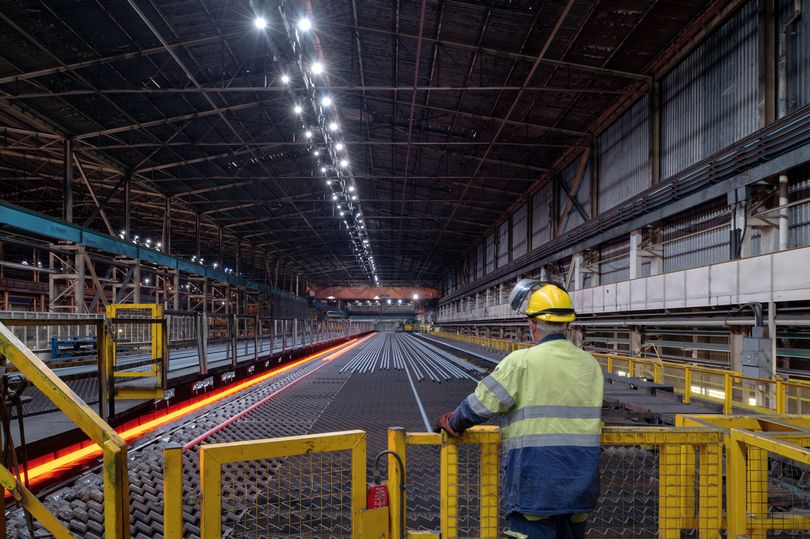
Italian rebar prices are seen stabilising week-on-week after falling by around €30/tonne ($34.3/t) in June. Buyers expect values to continue declining this month, though producers appear to be resisting low bids, Kallanish notes.
Some steelmakers are considering increasing prices this month before the August maintenance stoppages, but this is viewed as an attempt to halt the decline.
The drop in volumes since mills began raising prices in March has been significant, and higher prices cannot offset lower selling volumes in the longer term. Last month several long product mills implemented production stoppages to balance supply and demand, with more stoppages planned this month, impacting scrap demand and pushing domestic raw material prices down.
Rebar prices this week are steady at €420-430/t base ex-works amid subdued demand. Including size extras of €260-270/t, effective transaction prices are assessed at €680-700/t ex-works. Mesh is at €530/t base ex-works, excluding size extras of around €300/t, sources suggest.
A construction company reports that activity in June was limited and that it is being managed on a day-to-day basis. A distributor also describes consumption as highly uncertain, while another buyer confirms he continues to purchase a few truckloads per week to cover immediate needs only.
Polish rebar prices fall amid quota uncertainty and import pressure
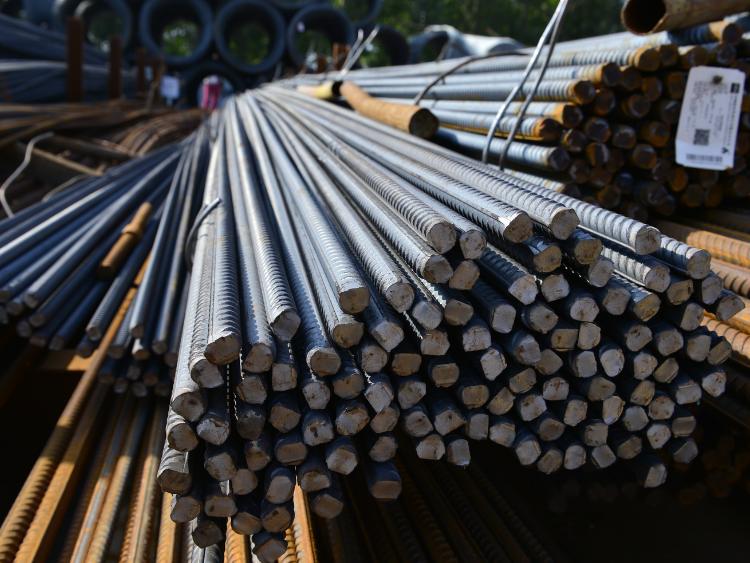
Polish domestic long steel showed diverging trends in the week to Friday July 3, with rebar prices falling and wire rod prices widening amid subdued trading activity and a wait-and-see approach among market participants.
Uncertainty surrounding the European Commission’s newly introduced country-specific steel import quota allocations, combined with large volumes of imported material, weighed on buying activity in the domestic market.
“The market is paralyzed with new quotas and big volumes of import,” a producer source told Fastmarkets.
Rebar deals were reported to Fastmarkets at 2,700 zloty ($718) per tonne CPT, while the tradable level was around 2,650-2,790 zloty per tonne CPT, according to market participants.
Fastmarkets’ weekly price assessment for steel reinforcing bar (rebar) domestic, cpt Poland fell to 2,650-2,790 zloty per tonne CPT on Friday, from 2,700-2,820 zloty per tonne a week earlier.
Wire rod prices widened over the same period.
Offers were reported at 2,920-2,960 zloty per tonne delivered, while tradable levels were reported at 2,950-3,200 zloty per tonne delivered.
Fastmarkets’ weekly price assessment for steel wire rod (drawing quality), domestic, delivered Poland widened to 2,920-3,200 zloty per tonne delivered on Friday, from 2,980-3,190 zloty per tonne in the previous week.


ENVI adopts draft reports on CBAM extension, decarbonisation fund
On 6 July, the environment committee, ENVI, adopted compromise amendments to the legislative proposal to extend the CBAM carbon border levy to new sectors along the steel and aluminium supply chains.
The report, led by Dutch S&D MEP Mohammed Chahim, was adopted by 56 votes in favour, eleven against, and twelve abstentions.
The adopted text scraps a controversial, temporary CBAM suspension clause, expands the Commission’s list of sectors to bring under the levy’s scope, and seeks to toughen anti-circumvention measures.
ENVI also adopted its stance on a temporary decarbonisation fund to compensate certain CBAM-covered sectors. The draft report, prepared by French Renew MEP Pascal Canfin, was adopted by 59 in favour, sixteen against, and twelve abstentions.
The adopted draft says the fund should offer support to certain EU exporters. Both drafts are due for adoption in the 14–17 September plenary, after which trilogue negotiations with the EU Council can begin.
While member states have already set their stance on CBAM’s extension, negotiations on the fund are stalling. On 6 July, ENVI also endorsed a June trilogue deal on the emission allowance reserve of the future carbon market for roads and buildings, ETS2.


Made in EU: Member states want to cut Commission ability to exclude non-EU countries from public contracts
Member states want to pare back Commission powers to exclude non-EU countries from gaining favourable terms under the Industrial Accelerator Act (IAA) in a Council revision obtained by Contexte.
Under the Commission’s March proposal, products from countries with free trade or public procurement agreements with the EU would automatically qualify as ‘Made in Europe’.
The Commission could later remove some countries through a delegated act if inclusion risks increasing EU trade dependency or if the other countries fail to reciprocate. In the 3 July revision, EU countries instead want to use implementing acts — a legal basis that requires their involvement and increases their control.
Their changes also “specify the repeal of implementing act when criteria are no longer met”, read an explanatory note attached to the redraft, prepared by Ireland, which took over the Council presidency on 1 July.
The redraft added a new article to define the IAA’s scope regarding low-carbon goods such as steel and concrete in public projects. The ‘Made in EU’ policy has rekindled a battle between advocates of industrial sovereignty and defenders of open trade.