


EU’s new steel import quota system reshapes sourcing strategies for Belgian traders
The European Union’s new steel import quota system officially entered into force on July 1, 2026, introducing a revised tariff-rate quota regime that significantly changes how steel imports are managed across the bloc, with important implications for Belgian steel traders, according to the statement of Belmetal, Belgian association of metal distribution.
The European Commission set country- and product-specific quota allocations and making the EU’s new steel market protection mechanism fully operational.
Twelve FTA partners receive preferential treatment
Before finalizing the quota allocations, the European Commission held negotiations with several countries that have free trade agreements (FTAs) with the EU. Under the final allocation, 12 FTA partners received more favorable treatment than initially proposed. These include the UK, Ukraine, Switzerland, Serbia, North Macedonia, South Korea, and Turkey, among others.
According to the Commission, the approach is intended to preserve security of supply, respect existing trade agreements and maintain diversified import sources. Ukraine also benefits from a dedicated preferential regime reflecting its exceptional security situation.
The new quota regime introduces several allocation mechanisms, including:
Country-specific quotas for major exporting countries;
Separate quotas for FTA partners;
Residual quotas for “Other countries”;
Additional FTA quotas that become available after country-specific quotas have been exhausted.
As a result, importers will need to monitor quarterly quota availability more closely and adjust sourcing strategies according to the country of origin.
Belgian traders face greater monitoring requirements
Belgium is one of Europe’s largest steel distribution and processing hubs, making the new quota system particularly significant for local traders. The revised framework is expected to influence product availability, sourcing strategies, steel prices and delivery lead times.
Although the new system provides greater predictability, it also increases the administrative complexity of importing steel into the EU. Companies importing steel into Belgium will need to closely monitor quota utilization throughout each quarter to avoid the 50 percent out-of-quota duty.

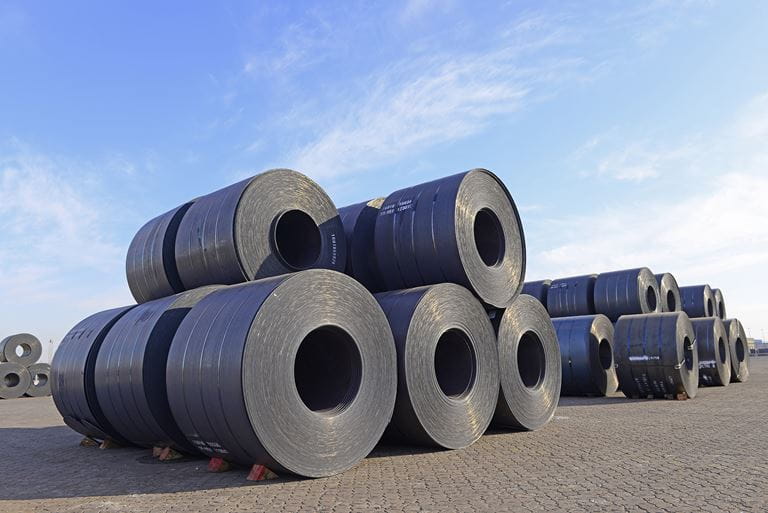
Thin trading persists in European HRC market; select deals reported
Trading activity picked up somewhat in the European domestic hot-rolled coil market in the middle of July, albeit from low levels. Demand remains generally low, as buyers still have sufficient stocks to thaw from the shock after the unveiling of the new import quotas and going through the summer holiday period.
In Northern regions tradeable levels were said to increase to €710-720 ($811-823) per tonne ex-works, with some bookings heard recently at the lower end of the range, while market participants underlined that trading remained quite thin.
“Customers are waiting to order, because they feel that the €740-750 per tonne ex-works which was announced, will not be reached in August-September,” one service center from the Benelux area said.
“I do not think there is enough demand in the market to make any market price,” a buyer from Germany said, adding that it will only be seen after mid- or end-August, when the mills start to offer for real purchases.
Fastmarkets’ daily steel hot-rolled coil index domestic, exw Northern Europe was calculated at €710 per tonne on Tuesday July 14, up by €1.67 per tonne day on day versus €708.33 per tonne on Monday July 13.
The index was up by €18.75 per tonne week on week and by €24.79 per tonne month on month.
The corresponding daily steel hot-rolled coil index domestic, exw Italy was €699.38 per tonne on July 14, up by €4.17 per tonne day on day from €695.21 per tonne on July 13.
The index was up by €20.63 per tonne week on week and by €11.88 per tonne month on month.
Deals in the country were heard within the wide range of €680-710 per tonne ex-works on July 14 with mills targeting above €700 per tonne ex-works.
On the import side, 30,000-40,000 tonnes of Indian HRC were heard booked for Southern Europe at €570 per tonne CFR.
There was also information circulating in the market about a booking of Vietnamese cargo at $730-735 per tonne to the region, but it could not be widely confirmed by the time of publication.


Volkswagen restructuring faces worker protests
Volkswagen’s restructuring plans in Germany, accompanied with reports of major job cuts and plant closures, last week triggered workers’ demonstrations at all the group’s domestic plants.
The campaigns, organised by union IG Metall and the works councils, came in reaction to press reports that hundreds of thousands of jobs at the carmaker could be at stake. Worldwide, the group employs 657,000 people. Four German plants are threatened with closure – Neckarsulm, Emden, Hanover and Zwickau.
Over the weekend, IG Metall’s VW department used its international newsletter to attack company chief executive Oliver Blume for failing to communicate details on the plans before the end of the week. “He has allowed a deadline to pass by within which he was due to finally provide employees with details of his plans for several site closures in Germany and large-scale job cuts,” Kallanish reads in the newsletter.
The group’s works council had issued the ultimatum on Thursday after it became clear that there was still no clarity regarding the speculation. “During management briefings on Friday, Blume discussed both the likely closure of German factories and a massively expanded job-cutting target. We strongly condemn the fact that, at the same time, he continues to keep this information from the tens of thousands of affected employees outside management,” the union writes.
In fact, management makes no literal mention of job cuts and closures in the “Future Plan” it communicated last week. It does, however, declare a cutback of units produced, Kallanish notes.
Production capacities “are being adjusted to the changed global market environment and the sharply intensified competition, targeting 9 million vehicles per year,” VW’s announcement says. By comparison, prior to the Covid-19 pandemic, the company had guided for approximately 12m vehicles and has since cut back to 10m units.
The model lineup will be gradually concentrated on the most attractive market segments and streamlined by up to 50%, the company states. “We can only achieve this by substantially reducing complexity – in our product portfolio and technology platforms, in the number of units and decision-making levels,” says chief financial officer Arno Antlitz.

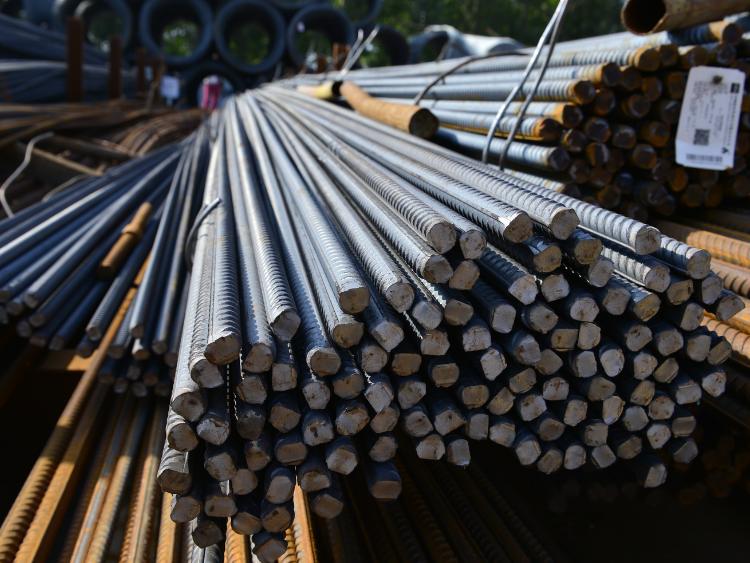
EU rebar quotas remain open except for Türkiye
Türkiye is the only rebar supplier into the EU to oversubscribe its Q3 Category 13 country-specific quota as of Friday under the bloc’s new steel import regime, which entered into force on 1 July, Kallanish notes.
Turkish origin rebar volumes awaiting allocation reached 106,664t against a quota of 59,919t, exceeding the available volume by 46,745t, or 78%.
All other country-specific quotas remain open, with 53-100% of their allocations still available.
Egypt has utilised 31% of its 36,092t quota, leaving 24,779t (69%) available. Algeria has recorded the second-highest utilisation rate after Türkiye, with 7,461t awaiting allocation against a quota of 15,940t, leaving 8,480t (53%) still available.
Ukraine has utilised 16% of its 16,928t allocation, leaving 14,195t (84%) available, while China has used just 81t of its 5,054t quota, with 98% remaining. Moldova has its entire 9,930t allocation available.
The residual “Other countries” quota remains largely untouched, with only 272t awaiting allocation, leaving 15,559t (98%) still available.
Notably, the 39,701t of the additional pool for free-trade-agreement (FTA) partners holding country-specific quotas (FTA Quota-CSQ), remains fully available. It is allocated on a first-come, first-served basis and provides further tariff-free access for eligible suppliers from Egypt, Türkiye and Ukraine.
The FTA quota for other countries remains entirely unused at 9,575t.
Q3 EU TRQ rebar (category 13) allocation (tonnes)
| Origin | TRQ volume |
Balance | Awaiting allocation |
Available TRQ tonnes |
Available TRQ % |
| Türkiye | 59,919 | 59,919 | 106,664 | -46,745 | -78 |
| Egypt | 36,092 | 36,092 | 11,313 | 24,779 | 69 |
| Algeria | 15,940 | 15,940 | 7,461 | 8,480 | 53 |
| Moldova | 9,930 | 9,930 | – | 9,930 | 100 |
| China | 5,054 | 5,054 | 81 | 4,973 | 98 |
| Ukraine | 16,928 | 16,928 | 2,732 | 14,195 | 84 |
| FTA Quota – CSQ (Egypt, Türkiye, Ukraine) | 39,701 | 39,701 | – | 39,701 | 100 |
| Other countries | 15,831 | 15,831 | 272 | 15,559 | 98 |
| FTA Quota – other countries | 9,575 | 9,575 | – | 9,575 | 100 |
| United Kingdom to Northern Ireland | 2,162 | 2,162 | 9 | 2,154 | 100 |
Source: EU Taric, as of 10 July. Complied by Kallanish
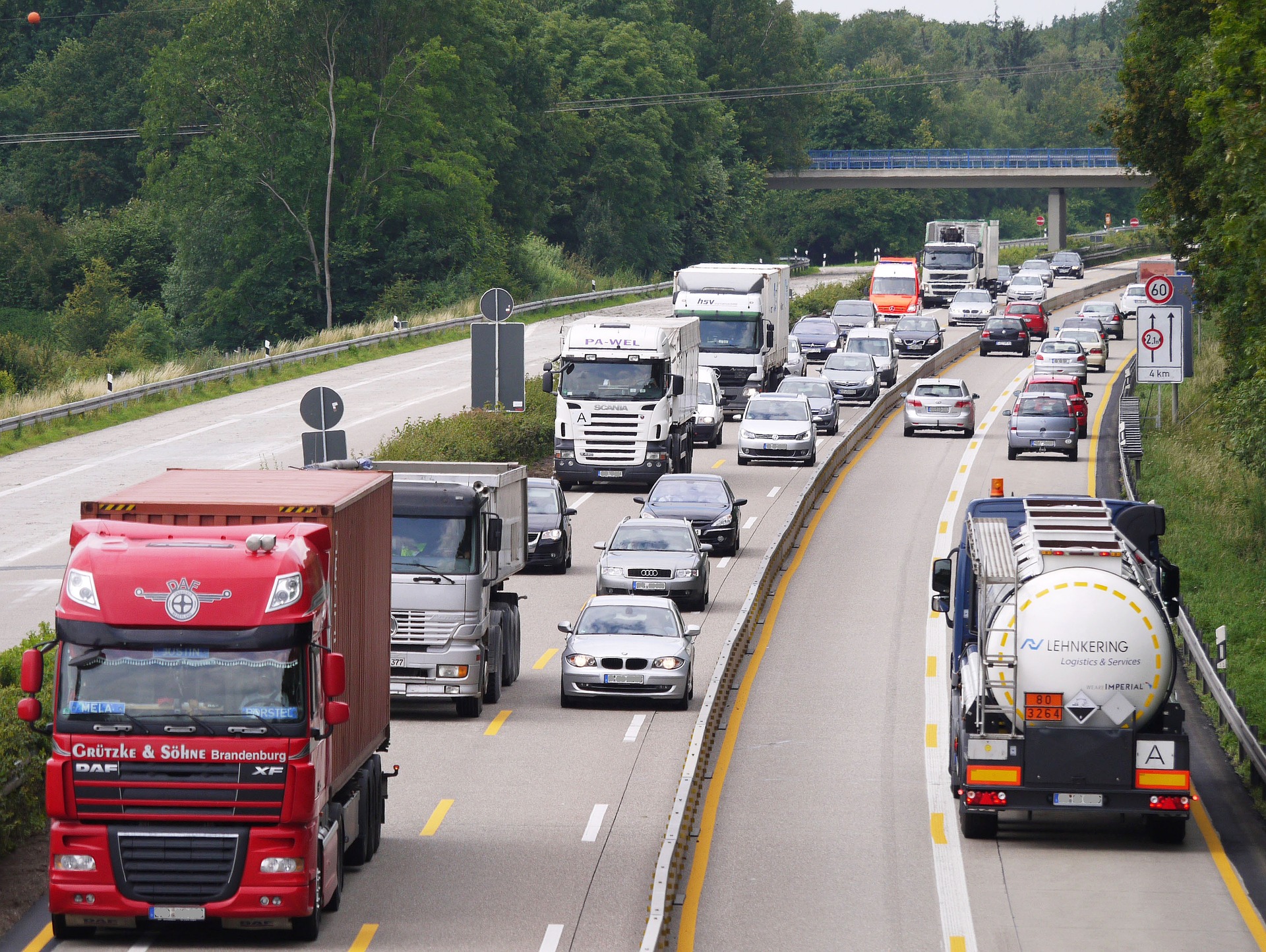
Belgian CO2 tolls will lift truck transport prices
Belgium’s Flanders region introduced a CO₂-based surcharge to its kilometre-based toll system as of 1 July, increasing toll costs by about 40%, according to Belmetal, the Belgian federation representing steel and metal distributors.
Previously, kilometre charges have been calculated based on the vehicle’s maximum authorised weight, its Euro emission standard and the region in which it travels.
For a typical Euro VI articulated truck above 32 tonnes, which in most cases falls into CO₂ Class 1, the Flemish tariff is now €0.285/km ($0.33). The previous tariff was €0.204/km, so the actual increase amounts to around €0.081/km, or roughly 40%, Kallanish hears from Belmetal’s director Chetan Corten. The increase adds roughly €8/100km in transport costs.
Although transport operators pay the toll directly, the cost is typically passed through higher freight rates or dedicated surcharges.
“The ultimate cost therefore falls on whoever contracts the transport,” Corten states. “Depending on the agreed delivery terms, that could be the mill, a distributor or the end customer.”
He notes that the measure will increase delivered steel costs.
Belgium already operates separate kilometre-based toll systems in Flanders, Brussels and Wallonia. The new CO₂-based component applies only to Flanders.
Brussels has indexed its rates, while Wallonia adjusted its tariffs. Belmetal says the changes mark a growing divergence in how Belgium’s three regions manage road tolls.