

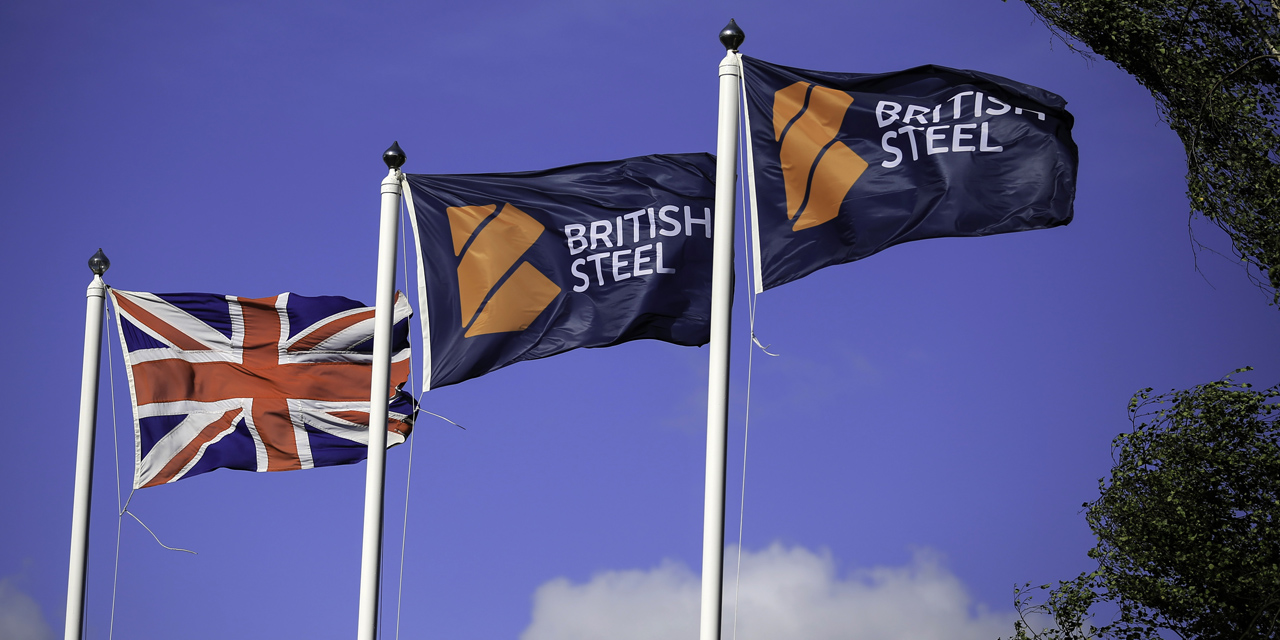
British Steel nationalized by the UK government
The UK government has brought British Steel into public ownership as of July 16, aiming to secure the future of domestic steel production in the country.
The decision came into effect after the Steel Industry (Nationalisation) Act received Royal Assent, with the government concluding that bringing the company into public ownership was necessary in the national interest of the United Kingdom.
The government stated that the nationalisation would protect thousands of jobs, support industries that rely on UK-made steel, safeguard supply chains, major infrastructure projects, and national security. A new leadership team has also been appointed to stabilise the company and prepare it for a commercially sustainable, low-carbon future.
Scunthorpe plant and domestic production to be preserved
The government emphasized that steel plays a critical role in the UK economy, supporting major construction projects, transport networks, energy infrastructure, the defence industry, and the Modern Industrial Strategy. It added that maintaining production at British Steel’s Scunthorpe plant is vital to preserving the UK’s domestic steelmaking capacity.
After assessing the company’s importance to the economy, critical infrastructure, and national security, the Business Secretary concluded that public ownership was the most appropriate way to secure British Steel’s future and protect the country’s steelmaking capability and supply chains.
Billions of pounds in support for the steel sector
The nationalisation follows the government’s steel support programme announced in March, which includes up to GBP 2.5 billion in investment. Under the programme, the government aims for 50% of the steel used in the UK to be produced domestically.
The government also highlighted the introduction of new trade measures that restrict duty-free steel imports and reduce total quota volumes by 51%, a GBP 500 million support package for Tata Steel’s green steel transition at its Port Talbot plant, and annual support worth hundreds of millions of pounds to steelmakers through the Supercharger scheme and the British Industrial Competitiveness Programme.
Starmer: “We are securing the future of British steel”
Prime Minister Keir Starmer described British steel as one of the foundations of the country’s industrial strength, stating: “Today’s decision secures the future of steelmaking in the UK, protects skilled jobs, and preserves a nationally important capability. Our government will continue to act in the national interest to support British industry, strengthen our economy, and ensure the sectors our country depends on can thrive for years to come.”
Trade Secretary Peter Kyle said British Steel, one of the country’s largest steel producers, was nationalised to protect its production capacity and safeguard national interests.
“British Steel now belongs to the British people. Our priority is to stabilise the business, support the communities connected to it, and build a sustainable, competitive, low-carbon steel sector,” Kyle said.
No agreement reached with Jingye
The government recalled that it intervened in April 2025 to ensure the continued operation of British Steel’s blast furnaces, preventing a disorderly closure that could have jeopardised steel production, supply chains, and thousands of jobs.
According to the statement, extensive efforts were made to find a long-term solution for the company. However, no agreement could be reached with its former owner, Jingye, that would both secure the company’s future and provide value for taxpayers.
Following parliamentary approval of the necessary legislation, the government determined that public ownership was the right and necessary course of action.
After Royal Assent, the public interest test was completed and the company officially entered public ownership.
Under the Act, an independent valuer will be appointed to determine whether compensation should be paid. Details of any compensation arrangements are expected to be clarified through regulations due to come into force this autumn.
New management prioritises maintaining production
The newly appointed management team, consisting of independent board members, will focus on stabilising plant operations, ensuring effective health and safety management, maintaining uninterrupted production, and working closely with management, trade unions, and employees to transform British Steel into a commercially sustainable, low-carbon business.
The government also stressed that a strong domestic steel sector is essential for Britain’s reindustrialisation, strengthening national resilience, and reducing dependence on overseas supply chains for strategically important raw materials.
While public ownership is expected to provide the foundation needed to stabilise the company in the short term and shape its long-term future, the government noted that various options, including private sector investment, will continue to be considered.
Reeves: “The right decision”
Chancellor Rachel Reeves said bringing British Steel into public ownership was the right decision to secure the company’s future, protect UK steel production, and support the communities that depend on the sector.
Reeves added that the government would continue supporting British industry and investing in sectors that drive growth, noting that steel remains vital to the country’s security, resilience, and economic strength.
British Steel Interim CEO Allan Bell described the move as a historic day for employees, customers, suppliers, local communities, and the wider UK manufacturing sector. He said government support had secured the company’s future and would enable it to continue producing world-class steel for the country’s needs.
Community General Secretary Roy Rickhuss CBE said the new legislation would secure the long-term future of the UK steel sector and protect thousands of jobs. GMB National Secretary Charlotte Brumpton-Childs added that the government had intervened in a timely and decisive manner and that the next step should be increasing the use of UK-made steel in public infrastructure projects to strengthen the sector permanently.
The government emphasized that the nationalisation forms an important part of its long-term steel strategy announced in March, which aims to revitalise the UK steel industry, increase domestic production to sustainable levels, and strengthen steel’s role in critical sectors such as infrastructure, defence, and clean energy.


German flat steel prices continue to rise
UK Steel welcomes nationalization of British Steel

European Steel Technology Platform appoints new secretary general
The European Steel Technology Platform (EStep) has appointed Wim Van der Stricht as its new secretary general, Kallanish learns.
Van der Stricht will serve as acting secretary general with immediate effect and will formally take up the position of secretary general on 1 August. He is succeeding Klaus Peters, who has served as secretary general since 2015. Peters expanded collaboration amongst industry, research organisations and policymakers while supporting landmark initiatives including the Clean Steel Partnership.
Van der Stricht brings more than 25 years of experience in industrial research, technology strategy and innovation, with particular expertise in low-carbon steelmaking, circular economy and European research programmes, EStep notes.
He joins EStep from ArcelorMittal, where he served as corporate chief technology officer for technology strategy – CO2 and circular economy.
As secretary general, he will lead EStep’s day-to-day activities, coordinate research and innovation priorities, and strengthen collaboration with the European institutions and stakeholders. He will play a central role in implementing the Clean Steel Partnership, promoting its continuation in the framework of a Clean Steel and Metals Partnership as of 2028.


Celsa Atlantic develops energy recovery project
Celsa Atlantic, the rolling and processing mill in northern Spain controlled by Celsa Steel, is working on a new energy efficiency plan for its A Laracha plant, Kallanish notes.
The steelmaker is updating its environmental permit and is looking into reusing the hot gases from the main electric arc furnace to reduce natural gas consumption, cut carbon emissions, and harness the energy potential of its existing infrastructure.
“We are carrying out tests and calculations to implement a system that will redirect the hot gases emitted by furnace No.1 and use them to preheat billets before they enter the rolling mill,” the company says in its Integrated Environmental Authorisation (AAI) report.
“Under this measure, the gases would no longer be discharged directly but would instead pass through a preheating chamber before being released through the chimney of furnace No.2,” it adds.
The A Laracha plant is currently operating well below its installed capacity. The facility has two rolling mills and two furnaces with a combined steelmaking capacity of 1 million tonnes/year. However, due to weak market conditions, furnace No.2 has been idled, reducing the plant’s utilisation to around 28%, according to the report.
Celsa Atlantic produces light long products for the construction sector, rolling mainly billet sourced from the group’s EAF mill in France.
UK nationalisation bill heads for final Commons consideration
The UK’s Steel Industry (Nationalisation) Bill has passed the third reading in the House of Lords and will now go to the House of Commons for its consideration before obtaining Royal Assent and being enacted into law, Kallanish notes.
The amendments to the bill include a “more credible” sunset mechanism, according to Lord Hunt of Wirral. Any extension of the principal transfer powers will be limited to two years and will require the affirmative approval of both Houses. The Secretary of State will be required to consider the likely costs before exercising the share transfer power or the property transfer power. The relevant environmental, pension, and health and safety liabilities will also have to be properly reflected in the independent valuation process.
“This House has sent a clear message,” Lord Leong said during Monday’s bill debate in the House of Lords. “The United Kingdom must be able to act when a strategic industry is at risk. We must protect steel-making capability, support workers and communities, and safeguard the critical supply chains on which our national resilience depends.”
Lord Hunt of Wirral added: “Nationalisation may provide the Government with an emergency power, but it is not an industrial strategy. It cannot substitute for commercially viable businesses; for competent, market-aware management; and, above all, for sustained private sector investment.”
“The long-term future of British steel depends on the United Kingdom once again becoming an attractive and affordable place in which to invest, to produce and to employ people,” he continued.
“Ministers have to address our internationally uncompetitive industrial electricity prices. They must examine the cumulative burden of the emissions trading scheme and the carbon border adjustment mechanism. They must consider the costs imposed by their employment policies as well as the ever-expanding burden of regulation, reporting and compliance,” he concluded.
Earlier this week, Chinese steelmaker Jingye Group renewed its demand for compensation from the UK government over its intervention in British Steel last year.