


EU steel safeguards set to buoy domestic flat steel market in H2
The EU’s new safeguard mechanism, designed to tackle the negative effects of global excess capacity on the bloc’s steel market, is expected to support domestic flat steel prices in the second half of the year, according to market sources.
The mechanism is far more restrictive than the safeguard system first introduced in 2018, slashing import volumes by 47% and imposing a 50% duty on any material exceeding quota allowances. Sources say the tougher limits represent a major shift and are already reshaping buyer behavior.
“Imports are dead in my opinion,” one Italy-based service center said. “We will see some big increases in European prices in the coming weeks,” he said, noting that imports could become viable again if the price gap between Europe and Asia widens further.
One Italy-based producer said the new environment had already set a higher price floor. “I see a new target price up by a minimum of Eur50/mt. If buyers are not ready, producers will simply wait. Imports are out of any discussion at the moment.”
Platts, part of S&P Global Energy, last assessed domestic hot-rolled coil in Southern Europe at Eur695/mt ex-works Italy July 15, up Eur145 since the new measures were proposed on Oct. 7, 2025. Imported HRC in the region was assessed at Eur580/mt CIF Southern Europe, up Eur95 across the same period.

Import availability has tightened further for cold‑rolled coil and hot‑dipped galvanized steel, as Europe’s downstream capacity remains constrained by fewer cold‑rolling and galvanizing lines, in contrast to the overcapacity seen in HRC. European Commission data shows that three HDG 4B quotas — China, Turkey and “Other countries” — have already been exhausted, a shift that could force traditional importers to source material domestically.
Availability has also been squeezed by the EU’s antidumping investigation into CRC imports from India, Japan, Taiwan, Turkey and Vietnam, adding another layer of pressure to the downstream market.
“Some of my customers have stopped importing for months,” one Germany-based mill source said. “HRC, we have an overcapacity in Europe, but [galvanized] and cold-rolling lines are limited.”
Prices in the first half of the year rose sharply as a result, with many participants expecting further increases as the year progresses. Platts last assessed domestic CRC in Northern Europe at Eur820/mt ex-works Ruhr on July 15, up Eur160 since Oct. 7. Domestic HDG was assessed at Eur820/mt ex-works Ruhr July 15, up Eur145 over the same period.
“Two or three weeks ago, customers would have been reluctant to purchase, but now they aren’t, as they are anticipating price increases,” one Northern Europe-based mill source said.

Turkish exporters left unhappy with changes; seek new markets
The tighter quota structure is also reshaping trade flows outside the bloc, with some exporting nations like Turkey facing sharply reduced access to the EU market, despite having a free trade agreement with the EU that grants additional duty‑free volumes.
Market participants in the region said the revised system still leaves Turkey at risk of losing market share, as lower quota allocations limit its ability to supply the EU. For example, the quota for Turkish HRC was reduced by almost 60% to just 160,573.74 mt per quarter and was exhausted within one day, with entries surpassing the allowance, signaling the impact the new quotas are having.
“I think the regulation is unfair for Turkey, especially the quota for hot‑rolled coil,” one Turkey‑based reroller source said. “We already see prices are moving down and we need to find other markets to export to.”
Platts, part of S&P Global Energy, last assessed export HRC in Turkey at $590/mt FOB July 10, stable week over week, but down $35 since the start of June.

High stocks, weak demand to weigh on price increases
Imports into the EU rose sharply in 2025 as buyers stocked material ahead of both the safeguard overhaul and the bloc’s Carbon Border Adjustment Mechanism. As a result, inventory levels remained high through the first half of the year, though several sources said these could begin to ease once the summer slowdown passes and restocking patterns normalize.
Since Jan. 1, under the CBAM regulation, many imported iron and steel goods have become subject to a carbon cost, further narrowing the price advantage of overseas supply and reducing the incentive to continue building stocks. Market participants have said the added charges have made imports from many origins less competitive and too risky compared with domestic material.

Despite the regulatory pressure on imports, participants across the supply chain said weak real demand in key end‑use sectors, particularly construction and automotive, is likely to cap domestic price increases in the coming months.
Data from the European Steel Association, or EUROFER, also points to a fragile outlook, with apparent steel consumption still about 10 million metric tons below pre‑pandemic levels and growth expected to slow sharply to just 0.4% in 2026.
In its most recent Economic and Steel Market Outlook published June 25, the association said modest improvements in demand should not be mistaken for a genuine recovery, citing continued weakness in manufacturing and cost pressure on steel‑using sectors.
Participants voice concern over imports of steel derivatives
While the safeguard system targets primary steel products, several participants said it leaves a gap around imports of manufactured, steel-derived goods, which could undermine the effectiveness of the new regulation.
“Products like washers, springs and refrigerators are coming in without any duty,” one Germany-based trader said. “Imports have increased dramatically year on year from Asia. This is a big risk for steel processors in Europe.”
A Benelux-based producer welcomed the quota changes but also highlighted that the system should be expanded to cover steel products further downstream.
It is not the first time participants have called for the extension of regulation. Many called for the scope of CBAM to be expanded to cover downstream goods, prompting lawmakers to consider strengthening the regulation from 2028.
Even with expectations of price increases in the second half of the year, high stocks, weak demand and ongoing regulatory uncertainty mean the path upwards remains far from guaranteed.

Several EU steel quotas near exhaustion within first 15 days of new quota period
In the first 15 days of the new EU quota period from July 1 to September 30, some of the import quotas for certain steel products allocated for China and “other countries” have been exceeded, while over 70 percent of quotas for some steel products have been used up, according to the European Commission’s data.
In the table below, you can see the products for which quotas have already been exhausted and also those for which more than 70 percent of quotas have been used up.

Author: SteelOrbis Editorial Team


EU submits proposals to reform WTO to reflect global economic realities, face distortive state interventions
The European Union (EU) has submitted three papers on how to reform the work of the World Trade Organization (WTO) as part of a reform process currently continuing within the organization, the European Commission’s Directorate-General for Trade and Economic Security (DG Trade) said in a statement on Tuesday July 15.
The EU is calling for discussions on balancing rights and obligations that reflect today’s global economic realities, updating WTO rules to better address distortive state interventions through greater transparency, stronger discipline and more effective remedies, as well as putting forward ideas for tools and instruments to facilitate decision-making and overcome blockages.
“The EU is determined to work constructively with all WTO members to advance reform and ensure the organization remains strong and capable of supporting an open, rules-based multilateral trading system,” DG Trade said. “With the status quo no longer an option, all major players must assume their responsibility for delivering deep and comprehensive reform.”
In the papers, the EU highlighted how far-reaching state interventions leading to overcapacities and structural market imbalances are increasingly impactful, with negative spillovers on other WTO members. “To ensure fairness, openness needs to come hand in hand with stronger rules ensuring a level playing field,” the EU said in a communication to the WTO on Monday July 13.
These requests came in the context of rising trade tensions between the EU and China in recent months due to the increasing threat posed by the Asian nation to the continental economy and industrial system.
European businesses and institutions are increasingly concerned about overcapacities in several Chinese industrial segments and consequent exports at very low prices into the EU.
According to media reports, the EU Council recently asked the Commission to create new trade instruments to deal with the industrial threat posed by China.
“At the moment there are no proposals on the table, but it’s an issue that is currently being addressed,” a spokesperson at the Council told Fastmarkets on Monday June 29.
The issue is particularly relevant for the European pulp and paper (P&P) industry, especially when it comes to the cartonboard, tissue and woodfree paper segments, which see more and more imports of paper from China and other countries, including Indonesia and Turkey, at very low prices.
In recent months, European P&P industry association Cepi raised concerns regarding unfair trade practices and also joined AEGIS Europe, an industry alliance with over 25 European manufacturing associations, to call for stronger trade defense instruments.
“We have to be more vocal about trade defense instruments,” Bernard Lombard, Cepi’s director of trade and industrial policy, said during a press briefing on Thursday July 2.
The issue is also particularly relevant to the European aluminium industry, where concerns about low-priced imports, the competitiveness of domestic manufacturing and supply-chain security have become increasingly prominent.
Recent disruptions in the Middle East highlighted the bloc’s reliance on external suppliers, with Europe previously sourcing around 20% of its primary aluminium imports from the region. At the same time, the European market continues to receive significant volumes of lower-priced imported aluminium.
Industry association European Aluminium has called for stronger trade measures to support the sector. On June 25, the association urged the European Commission to include an indirect ban on Russian aluminium in the EU’s next sanctions package, arguing that Russia-origin metal continues to enter the bloc through third countries such as Turkey and China at discounted prices.
The issue comes as Europe seeks to rebuild domestic aluminium production capacity. Slovalco, the Slovak aluminium producer jointly owned by Norway’s Hydro and domestic group Penta Investments, announced on Tuesday July 1 that it will restart the first 75,000 tonnes per year of its 175,000 tonnes-per-year primary aluminium capacity from the fourth quarter of 2026. Meanwhile, Alcoa’s San Ciprián smelter in Spain has returned to near-full production after curtailments linked to high energy costs.
The European steel industry might also benefit from possible improvements in the WTO rules.
Between 2025 and 2026, the EU has been taking stronger measures to protect its domestic steel industry, which has faced growing pressure from lower-priced steel imports in recent years, largely originating from Asia.
A major turning point came in 2018, when the US imposed 25% tariffs on most imported steel under Section 232, prompting a redirection of steel volumes originally destined for the US market toward Europe, increasing pressure on local producers. In response, the EU introduced steel safeguard measures, which have remained in place since 2018.
While steel demand showed signs of recovery in 2025, crude steel production in the EU fell to a record low of 125.8 million tonnes in the same year, according to a report from the European steel association, EUROFER, published in early June 2026. Imports continued to gain market share, prompting the use of tighter trade measures, the association said.
In response to this trend, the European Commission decided to extend its steel safeguard measures beyond their original expiry date of June 30, 2026, and unveiled a new import quota regime on the same day, just ahead of its entry into force on July 1.
Under the revised system, the Commission significantly reduced tariff-free volumes for finished steel products to 18.3 million tonnes per year, while increasing the out-of-quota import duty to 50% from 25%.
The new framework also introduced a two-tier quota structure, dividing allocations between countries that benefit from an existing or future free-trade agreement (FTA) with the EU and countries covered under the Most Favored Nation (MFN) regime. MFN quotas were allocated according to each country’s average share of EU imports within each product category over the 2022-24 period.
The changes have created significant uncertainty across the European steel market. While some countries, including Turkey, saw their quota volumes reduced by more than 50%, some market participants were questioning the effectiveness of the new regime, describing the measures as another layer of bureaucracy.

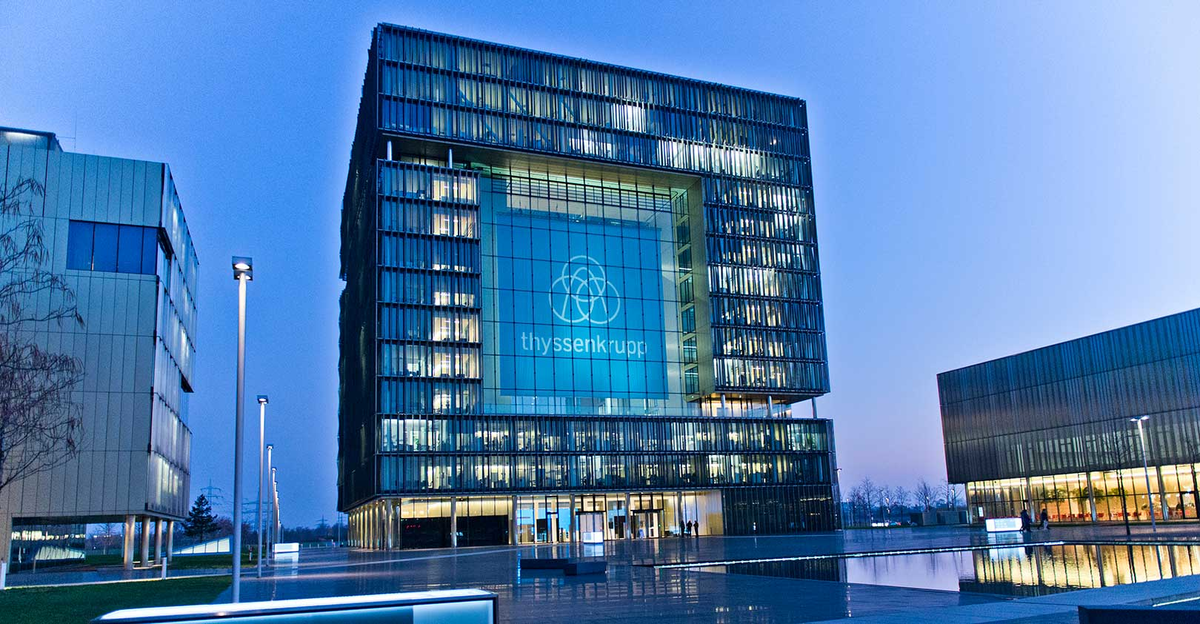
German steelmaker thyssenkrupp reduces production when low Rhine water levels disrupt materials supplies
German steel producer thyssenkrupp Steel has faced constraints to raw materials supplies to its Duisburg site due to low water levels in the River Rhine waterway, and has reduced its hot metal production as a consequence, a spokesperson at the steelmaker told Fastmarkets on Thursday July 16.
The recent heatwave in Western Europe has lowered water levels on the Rhine, affecting inland waterway transport and increasing logistics costs, according to market participants and media reports.
“The persistent and worsening low-water situation on the Rhine is now affecting the supply of raw materials to thyssenkrupp’s Duisburg site,” the company said on Thursday.
According to the steelmaker, the delivery disruption has prompted it to adjust its hot metal production.
“The current development is leading to constraints in our raw material supply. We have therefore adjusted our hot metal production accordingly,” thyssenkrupp told Fastmarkets, adding that customer supply was currently not at risk.
Thyssenkrupp said that its own push-barge fleet has been taken out of service because of the low water levels, and that it was currently using externally chartered vessels, secured as a precautionary measure. These can continue to operate due to their smaller depth of draught.
The company said that developments in the situation and their effects on supply and production were being monitored by a dedicated low-water task force.
Fastmarkets asked thyssenkrupp Steel about the change in raw materials supply volumes, the expected decline in steel production and the likely consequences of higher logistics costs on steel prices, but had not received a response at the time of publication.
The announcement about delivery disruptions came just weeks after the steelmaker resumed trial operations at its Hot Strip Mill 4 (HSM4) in Duisburg in early June, following repairs after a fire in October 2025.
Thyssenkrupp’s hot strip mill in the Bruckhausen area has an installed capacity of 3 million tonnes per year of HRC, according to Fastmarkets’ information.
The Duisburg site has a designed production capacity for around 11.7 million tpy of pig iron from four blast furnaces, and around 11 million tpy of crude steel, although shipments from its steel assets have remained below full capacity in recent years, according to company data.
Market reaction, HRC trends
A source familiar with the matter told Fastmarkets on Thursday that there was no immediate risk of a production stoppage at the Duisburg site, and that the output had only been reduced for the time being.
The source said that the steelmaker might “use this narrative” to support price increases, but added: “Of course, if [the] drought continues, [thyssenkrupp] would have real problems” – because transport by rail or truck was at a much higher cost.
The same source said that the producer received most imported raw materials via Rotterdam in the Netherlands, where large ocean-going vessels discharge cargoes of about 100,000-200 000 tonnes, before iron ore and coal are shipped by barge along the Rhine to Duisburg.
Meanwhile, a trade source said that there was “nothing too controversial” about the situation, describing it as a consequence of the summer heatwave and the resulting low water levels on the Rhine.
“The Rhine not having water in July and August is not controversial. There is a far bigger disaster going on,” the trade source said on Thursday, in reference to to the reduction in steel import quotas under the new EU safeguard measures from July 1 and the additional costs related to the Carbon Border Adjustment Mechanism (CBAM), increasing the final prices for imported material that European buyers would have to pay.
Meanwhile, HRC trading activity in Northern Europe showed some signs of recovery in the week to July 13, but market participants said that demand was still soft.
Mills started to quote offers for September-October delivery after the new EU steel import quotas were announced, but buyers were resisting the large price increases announced by some producers.
Fastmarkets’ daily steel hot-rolled coil index, domestic, exw Northern Europe, was calculated at €710 ($810) per tonne on July 15, stable day on day.
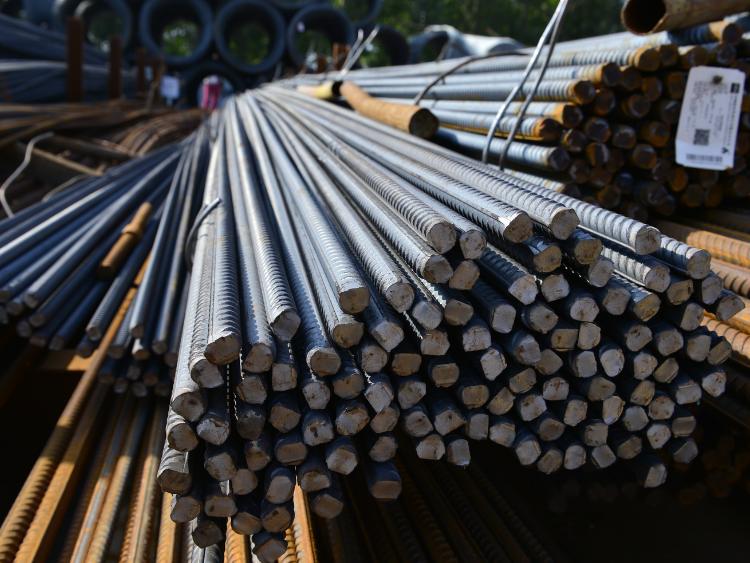
Italian rebar prices drop on weak demand, low buyer appetite
European domestic long steel prices remained largely stable in the week to Wednesday July 15 amid weak demand and limited buying interest, though Italian domestic rebar prices moved lower as mills sought to stimulate demand.
“Weak demand is prompting steel mills to lower prices in an effort to stimulate the market,” a buyer source told Fastmarkets.
Market participants reported limited trading activity, which sources described as unusually subdued even for the summer lull.
“In Italy, construction sites were shut down in the afternoons due to the heat, resulting in production being cut by half,” another buyer source told Fastmarkets.
In northern Italy, market participants reported tradable levels at €690-730 ($787-833) per tonne ex-works, while in the south transactions were reported at €730-760 per tonne ex-works, with only minor tonnages traded at the upper end of the range.
Fastmarkets’ weekly price assessment for steel reinforcing bar (rebar), domestic, exw Italy, was €690-750 per tonne on July 15, down from €710-750 per tonne the previous week.
Fastmarkets’ weekly price assessment for steel reinforcing bar (rebar), domestic, delivered Spain, remained unchanged at €750 per tonne.
Meanwhile, German domestic rebar prices remained stable, with tradable levels reported at €710-730 per tonne delivered.
Fastmarkets’ weekly price assessment for steel reinforcing bar (rebar), domestic, delivered Northern Europe, was €710-730 per tonne on July 15, unchanged from the previous week.
Wire rod prices showed mixed trends across Europe during the week.
In Southern Europe, tradable levels for wire rod (mesh quality) were reported at €670-700 per tonne delivered.
Fastmarkets’ weekly price assessment for steel wire rod (mesh quality), domestic, delivered Southern Europe, was €670-720 per tonne on July 15, down from €690-720 per tonne the previous week.
Fastmarkets’ weekly price assessment for steel wire rod (mesh quality), domestic, delivered Northern Europe, was €705-715 per tonne on July 15, unchanged week on week.
European sections and beams
European domestic section prices increased month on month, supported by higher transaction levels across the region.
Deals for steel sections (medium), domestic, delivered Southern Europe, were reported at €865 per tonne.
Fastmarkets’ monthly assessment for steel sections (medium), domestic, delivered Southern Europe, was €800-865 per tonne, up from €800-840 per tonne the previous month.
Domestic beam prices also increased month on month, with tradable levels reported at €800-840 per tonne delivered across Europe.
Fastmarkets’ monthly assessment for steel beams, domestic, delivered Northern Europe, was €800-840 per tonne, up from €790-820 per tonne the previous month.

CRC, HDG prices rise in Europe; trading muted
Local cold-rolled coil and hot-dipped galvanized coil prices increased in Europe by the middle of July following the announcement of the new, tighter import quotas.
Market participants noted that the most dramatic effect will be on CRC due to limited local capacities, while interest in import material is limited now due to safeguards, the Carbon Border Adjustment Mechanism (CBAM) and an ongoing anti-dumping investigation.
In Northern Europe, new CRC offers came at €830-850 ($947-970) per tonne delivered or €815-835 per tonne ex-works, while tradeable levels were estimated at €800-820 per tonne ex-works, moving up from €780-800 per tonne ex works last week.
One buyer source from Germany said that they were buying only limited volumes due to rather restricted demand.
At the same time another buyer source from Germany said that €800 per tonne would already be less likely achievable for primary material and estimated the tradeable level closer to €820 per tonne ex-works.
Fastmarkets’ weekly price assessment for steel cold-rolled coil domestic, exw Northern Europe was €800-820 per tonne on Wednesday July 15, up from €780-800 per tonne on July 8.
In Southern Europe new CRC offers came at €840-850 per tonne ex-works, with sellers indicating €830-840 per tonne ex-works could be potentially achieved in new deals.
Nevertheless, no transactions had been confirmed at these levels by the time of publication.
Thus, Fastmarkets’ weekly price assessment for steel cold-rolled coil domestic, exw Southern Europe increased to €800-830 per tonne on July 15, up from €790-800 per tonne on July 8.
HDG offers in Northern Europe varied within the range of €805-825 per tonne ex-works, slightly below asking prices for CRC, which is an unusual situation as HDG is traditionally priced above CRC.
But due to the aforementioned local shortage of CRC, as well as the fact that, in HDG production, annealing comes for free, CRC prices rose to become either in line with or slightly higher than those for HDG.
Fastmarkets weekly price assessment for steel hot-dipped galvanized coil domestic, exw Northern Europe was €800-820 per tonne on July 15, up from €780-800 per tonne on July 8.
In Southern Europe, HDG offers varied within the wide range of €840-865 per tonne ex-works.
The market leader announced new offers at €880 per tonne delivered, which is equivalent to €665 per tonne ex-works.
Nevertheless, most recent indications of tradeable levels came at €800-820 per tonne ex-works during the reported week, with most of them closer to the upper end of the range.
Fastmarkets weekly price assessment for steel hot-dipped galvanized coil domestic, exw Southern Europe was €800-820 per tonne on July 15, up from €790-800 per tonne on July 8.

Low Rhine water levels raise logistics costs, force Thyssenkrupp Steel to cut blast furnace output
Falling water levels on Germany’s Rhine River are increasing freight costs and disrupting logistics, adding pressure to the country’s industrial sector, while local steelmaker Thyssenkrupp Steel has slightly reduced blast furnace production because of constrained raw material supplies, according to a report by Reuters.
Thyssenkrupp Steel adjusts production
Thyssenkrupp Steel told Reuters that worsening low water levels on the Rhine are affecting the supply of raw materials to its Duisburg steelworks.
According to the company, it has slightly reduced blast furnace production due to the restricted inflow of raw materials. It also suspended its own barge operations and is instead chartering vessels with a shallower draught to continue deliveries. The company added that supplies to customers are not currently at risk.
Freight costs rise as vessels reduce cargo loads
The Rhine is one of Germany’s most important transport routes for raw materials, fuel products and manufactured goods.
A heatwave and limited rainfall across western Europe have caused water levels to fall sharply, forcing cargo vessels to operate at significantly reduced loading capacity. At current levels, a typical Rhine container vessel can navigate the Kaub bottleneck carrying less than 20 percent of its normal cargo. Ship operators have responded by imposing shallow-water surcharges, increasing transport costs for cargo owners.
Risk of further disruption
Germany’s inland waterways agency expects the water level at Kaub, a key shipping bottleneck on the Rhine, to fall below 50 centimeters. According to Deutsche Bank Research, cargo shipping is usually suspended if the water level drops to around 40 centimeters or lower.

Kallanish Global Flat Steel 2026 Returns to Istanbul for its 8th Edition
Kallanish is delighted to announce the 8th edition of its Global Flat Steel conference, taking place on 23 September 2026 at the prestigious Çırağan Palace Kempinski, Istanbul, Türkiye.
“In today’s rapidly changing steel market, there is no substitute for meeting face-to-face. Global Flat Steel 2026 will bring together industry leaders from around the world to exchange insights, build new relationships and identify the opportunities that will shape the future of the sector,” says Bijan Farhangi, Event Director, Kallanish Commodities.
This year’s conference comes at a pivotal time for the industry. Record levels of Chinese flat steel exports have disrupted global pricing and trade flows, prompting an increasing number of trade defence measures around the world. Europe remains a key destination for flat steel despite subdued
demand and safeguard measures, while the implementation of the Carbon Border Adjustment Mechanism (CBAM) and the EU’s proposed new steel trade regime are creating fresh complexities for international suppliers.
These developments present new opportunities for lower-emission producers, including Türkiye’s scrap-based electric arc furnace (EAF) steelmakers, while Europe’s own expansion of EAF flat steel production continues to face challenges related to clean energy infrastructure, scrap processing capacity and low-emission metallics supply.
Elsewhere, India’s growing blast furnace-based flat steel production is seeking alternative export markets as CBAM reshapes global trade, while the US market continues to chart its own course with strong domestic pricing and limited import competitiveness. At the same time, weak automotive production, subdued manufacturing activity and persistent cost pressures continue to weigh on steel demand worldwide, with geopolitical tensions in the Middle East adding further uncertainty to the global economic outlook.
“The global steel market, like the wider economy, is moving away from the traditional globalised model to a fragmented, regionalised trading environment, driven by geopolitical events and concerns over national security and indigenous industrial capability. As we meet in Istanbul, rising global overcapacity has resulted in a record number of steel trade cases globally, while energy costs and logistics disruptions stemming from the Hormuz Strait crisis are complicating operations. Emerging carbon markets are meanwhile spurring investments into low-emission steelmaking. Trading across borders may be more difficult than before, but it will remain essential to keep the global steel market
running. We are delighted, therefore, to bring global market participants together in one of the world’s prime trading hubs, to foster connections and exchange crucial information about the market,” says Adam Smith, Global Editor, Kallanish Commodities.
Now firmly established as one of the industry’s leading international conferences, Kallanish Global Flat Steel 2026 will provide delegates with valuable market intelligence through expert presentations, panel discussions and extensive networking opportunities, examining trade policy, decarbonisation, supply chain developments and future demand prospects. The event brings together senior decision-makers from across the global flat steel supply chain to discuss the market’s most pressing challenges, emerging opportunities and the forces reshaping international trade.
The conference has already attracted strong support from both local and international companies, underlining its position as a truly global meeting point for the flat steel industry. Confirmed delegates include representatives from Tata Steel, Stemcor, Borçelik, Çolakoğlu Metalurji, Yıldız Demir Çelik, Midrex Technologies, Primex and Samsung C&T, amongst others, with further registrations continuing to be received from across Europe, Türkiye, Asia and beyond.
Held at one of Istanbul’s most iconic venues, the conference offers an unrivalled opportunity for steel producers, traders, service centres, technology providers, raw material suppliers and end-users to exchange insights, strengthen existing partnerships and build new business relationships.
Registration is now open.
For more information on the programme, speakers and sponsorship opportunities, visit www.kallanish.com or contact the Kallanish events team.
For further information, please contact Hollie Docwra, Global Event Marketing Director, Kallanish Commodities: hollie.docwra@kallanish.com

Council of the EU publishes overhaul of Research Fund for Coal and Steel, extending it to 2034
The Council of the EU published the decision, dated 29 June, to establish the new Research Programme of the Research Fund for Coal and Steel, along with the multiannual technical and financial guidelines for managing the fund’s assets, in the EU Official Journal on 17 July.
The fund was created in 2002 after the European Coal and Steel Community (ECSC) Treaty expired, and was financed by interest on remaining ECSC assets.
It supports research and innovation in the steel sector and backs a “green and just transition” in Europe’s coal-mining regions. Under the reform, the programme is extended until 2034, with up to €120 million a year available for projects, amounting to around €800m in total investment.
The new framework aligns funding rates with Horizon Europe, the EU’s main research programme, allowing industry participants to receive up to 70% in EU funding and up to 100% for SMEs, start-ups and academic institutions.
