

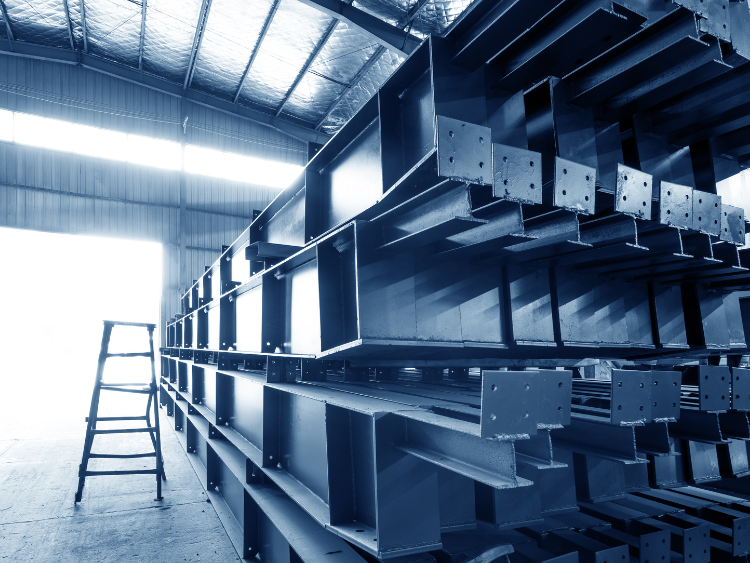
European long steel market quiet; summer holidays curb trading
European domestic long steel prices were stable in the week to Wednesday August 5 amid subdued trading and seasonal production stoppages.
“With most market participants now heading into the next two weeks of summer holidays, activity is expected to be very limited,” a buyer source told Fastmarkets.
In Italy, tradable levels were heard at €690-760 ($795-875) per tonne ex-works, although no transactions were heard at the upper end of the range.
Deals were heard at €690-730 per tonne ex-works, with workable levels also confirmed within that range. Higher indicative offers and indications of €750-760 per tonne ex-works were also heard, however those levels were not supported by transactional activity.
Fastmarkets’ weekly price assessment for steel reinforcing bar (rebar), domestic, exw Italy was assessed at €690-730 per tonne on Wednesday August 5, unchanged from a week earlier.
Fastmarkets’ weekly price assessment for steel reinforcing bar (rebar), domestic, delivered Spain was unchanged at €750 per tonne on the same day.
Meanwhile, Fastmarkets’ weekly price assessment for steel reinforcing bar (rebar), domestic, delivered Northern Europe was also unchanged at €710-730 per tonne on August 5.
Wire rod prices mirrored the broader stability seen across the European long steel market during the assessment week.
In Southern Europe, tradable levels for mesh-quality wire rod were heard at €660-680 per tonne delivered.
Fastmarkets’ weekly price assessment for steel wire rod (mesh quality), domestic, delivered Southern Europe was flat at €660-680 per tonne on August 5.
In Northern Europe, tradable levels for mesh-quality wire rod were heard at €705-715 per tonne delivered.
Fastmarkets’ weekly price assessment for steel wire rod (mesh quality), domestic, delivered Northern Europe was unchanged at €705-715 per tonne on the same day.

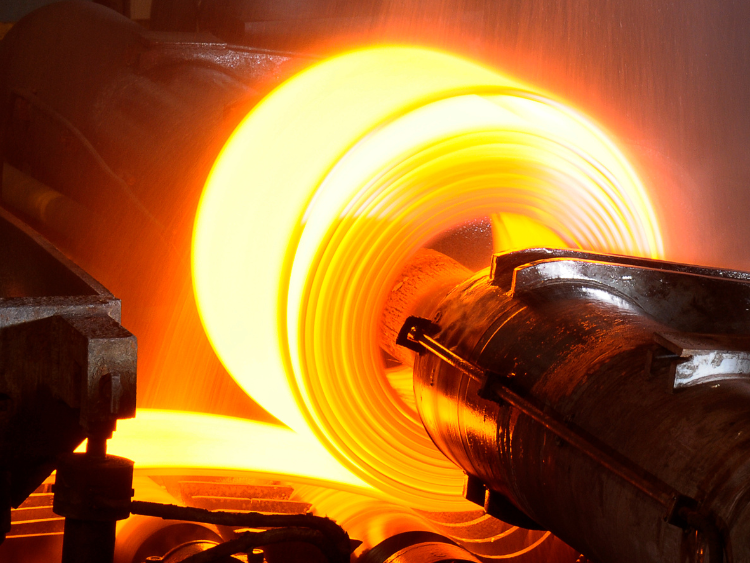
European domestic HRC prices conditioned by weak demand; market activity slows amid summer lull
Domestic prices for steel hot-rolled coil edged down slightly in Italy and remained almost unchanged in Northern Europe, with the market mostly quiet on Wednesday August 5 and no significant development heard, sources told Fastmarkets.
In Northern Europe, offers were quoted at €715-750 ($823-864) per tonne ex-works, with September delivery material still available in the market, although the upper end of the range was not attracting buyers’ interest. Meanwhile, workable prices were indicated at €715-730 per tonne ex-works.
Sources said the market was quiet, with only small quantities available for sale. On the other hand, a distributor said there was sufficient stock at ports in Antwerp, adding that the real impact from the reduced import quotas would be felt in September-October.
“It is deep summer. No one is buying anything. Everyone is concerned with clearing customs and CBAM [Carbon Border Adjustment Mechanism] formalities for what has arrived previously, and the demand is lousy,” a trade source said on Wednesday.
Previous levels of workable prices were reported at €710-740 per tonne ex-works on Tuesday August 4, which were carried over to August 5’s index due to the limited fresh input on Wednesday.
“Demand is very weak (and we have no real holiday season in Germany), therefore I see first bigger volumes by end of August, and then we might judge prices,” a second trade source said, without indicating achievable levels.
As a result, Fastmarkets’ daily steel hot-rolled coil index domestic, exw Northern Europe was calculated at €716.67 per tonne on August 5, up by €0.42 per tonne from €716.25 per tonne on August 4.
The index was up by €8.67 per tonne week on week and up by €21.67 per tonne month on month.
In the Italian HRC market, activity was very slow due to the traditional August summer holiday period.
Offers were reported at €710-715 per tonne ex-works and workable prices were indicated in the range of €700-710 per tonne ex-works.
The corresponding Fastmarkets’ daily steel hot-rolled coil index domestic, exw Italy was calculated at €708.75 per tonne on August 5, down by €1.88 per tonne from €710.63 per tonne a day earlier.
The index was up by €1.25 per tonne week on week and up by €32.08 per tonne month on month.

European CRC, HDG prices continue upward trend on healthy demand
European domestic CRC and HDG prices extended their upward trend in the week to Wednesday August 5, with steady demand and healthy mill order books continuing to support higher prices, even as summer holidays reduced overall market activity.
The trend was particularly pronounced in the CRC segment, where sources reported that September-delivery material had largely been sold out, limiting spot availability and supporting higher prices.
“Mills are pushing more to sell HDG than CRC now,” a German buyer source told Fastmarkets.
Market participants also said that stricter CRC safeguard quotas, antidumping investigation against several origins and risks related to the Carbon Border Adjustment Mechanism were weighing on import activity, resulting in higher demand for domestic material.
In Northern Europe, CRC offers came within the range of €830-850 ($956-979) per tonne ex-works, with indications of tradable levels coming within the wide range of €800-850 per tonne ex-works. The majority of estimates, however, came at €825-840 per tonne ex-works.
Fastmarkets’ weekly price assessment for steel cold-rolled coil domestic, exw Northern Europe was €825-840 per tonne on Wednesday, up from €800-830 per tonne on July 29.
In Southern Europe, offers of CRC were heard at €860 per tonne delivered, which is netting back to around €845 per tonne ex-works.
Indications of tradable levels, however, came at €820 per tonne ex-works, which was reflected in the corresponding Fastmarkets’ assessment.
The assessment for steel cold-rolled coil domestic, exw Southern Europe increased to €820 per tonne on Wednesday, up from €800-830 per tonne on July 29.
HDG prices were also on the upward track in Europe, however, they were somewhat lagging CRC, while typically situation is the opposite. This was, however, dictated by reduced availability of the CRC explained above.
In Northern Europe, CRC offers varied within the range of €830-850 per tonne ex-works, with indications of tradable levels coming within the wide range of €800-840 per tonne ex-works. The majority of indications, however, came within the range of €820-830 per tonne ex-works.
Thus, Fastmarkets weekly price assessment for steel hot-dipped galvanized coil domestic, exw Northern Europe was €820-830 per tonne on August 5, up from €800-830 per tonne on July 29.
In Southern Europe, the HDG market was comparatively much weaker, with offers coming at €830-835 per tonne ex-works, while indications of tradable levels still came at €800 per tonne ex-works.
Fastmarkets weekly price assessment for steel hot-dipped galvanized coil domestic, exw Southern Europe was €800-830 per tonne on August 5, stable week on week.

Tk accelis Stuttgart ramps up new slitter
Tk accelis, the renamed distribution and trading unit of thyssenkrupp group, has ramped up its expanded steel processing site in Stuttgart, Kallanish learns.
The site, part of subunit tk accelis Processing Europe, has processed the first 500 coils on the new slitting line, which supports the processing of particularly thin materials, including electrical strip for future-oriented applications.
In addition, a digitally integrated packaging line has been commissioned, targeting higher-quality, controlled processing services, the company notes. The new setup is designed to enhance efficiency, quality, and process reliability by seamlessly integrating processing and packaging, it adds.
With the new slitting and packaging line, the Stuttgart site is now designed for an annual processing capacity of up to 350,000 tonnes. The slitting line is part of an integrated setup that streamlines material flows and enables processing of materials with thickness range from 0.2 to 5.0 mm.
“The digital integration of production and packaging processes reduces manual handling, minimises paper-based documentation and supports more efficient resource utilsation,” says the ceo of tk accelis Processing Europe, Marcus Wöhl.
He also highlights that the company is strengthening its competitive position “by enabling the site to process electrical steel strip, a key material for various applications”.


Italian coil prices edge higher despite summer slowdown
Italian coil prices are edging higher although orders remain thin as the market enters its August shutdown period, with the entire steel sector on maintenance stoppage, with buyers focused on administrative work this week ahead of the holiday period.
Sources tell Kallanish they expect coil prices to continue rising in September and October, when buyers in Italy and Spain will have worked through their stocks and will need to source material in Europe.
Only large re-rollers remain active on the import market, while service centres are staying away, having built up large tonnages ahead of the introduction of the new tariff rate quotas (TRQ). Traders say import activity is completely stalled. Buyers are enquiring about material for the next import round in the first quarter of 2027, but quotes and contracts have yet to be finalised.
ArcelorMittal has increased prices for southern Europe to €770/tonne ($876.9/t) base delivered for hot rolled coil. In Italy, mill sources report an increase in orders in the past days despite the seasonal slowdown. HRC prices in southern Europe stand now at €710-730/t delivered with very rare peaks at €760/t base delivered, but for low volumes. Cold rolled coils and hot dipped galvanized prices are also moving up to €800-830/t base delivered.
Meanwhile, Italian consumption of coil derivative products such as sheets and tubes has come to a standstill, though sheet prices have risen sharply since early June. Black hot rolled sheets are now trading at €800-820/t, with service centres pushing prices towards €850/t. Sources are confident that level could be reached in October.
The sheet market has moved since the implementation of the new trade measures, though a rebound in consumption has yet to materialise.
Several service centres report volume gains in the first seven months of the year, though margins remain under pressure. Mills will benefit from rising prices, but service centres are expected to remain in a difficult position, caught between upstream price increases and weak downstream consumption, with clients reluctant to commit to volumes. Independent service centres are also losing the opportunity to manage costs through import speculation under the new trade framework.
Klöckner & Co’s Q2 EBITDA rises to EUR 63 million


PwC: Traditional steel production in central Europe to no longer be competitive after 2040
According to a study published by consulting firm PwC Deutschland and previewed by the German business daily Handelsblatt, primary steel production in central Europe is set to lose competitiveness in the long term, while the future of the European steel industry is expected to increasingly focus on scrap-based production and high value-added downstream processing.
In the report, entitled “The end of the European steel industry… or simply a different one?”, PwC analyzes the cost evolution of various steel production routes through 2045 under three different scenarios for energy, hydrogen and CO₂ prices.
Gulf states and India to become more competitive than Europe in green steel production
The study’s main conclusion is that the traditional blast furnace-basic oxygen furnace (BF-BOF) production route will no longer be economically competitive beyond 2040 under any of the scenarios analyzed. According to PwC, rising CO₂ prices under the EU Emissions Trading System (EU ETS) will double the cost of conventional steel production by 2045, while the Carbon Border Adjustment Mechanism (CBAM) will not be sufficient to offset the structural gap in energy costs between Europe and other regions of the world. As early as 2030, the natural gas-based DRI-EAF production route is expected to be around 30 percent cheaper in the Gulf states.
According to PwC, the competitive advantage in low-carbon primary steel production will gradually shift towards countries benefiting from structurally lower energy costs and greater availability of natural gas, green hydrogen and iron ore. In particular, the report identifies the Gulf states and India as the regions best positioned for future DRI production, while within Europe only Scandinavia could maintain competitive costs for green primary steel production. By contrast, the study finds no scenario in which primary steel production in central Europe remains economically competitive in the long term.
For Germany, this would imply a possible redefinition of the role of its steel industry. In recent years, the country has launched several decarbonization projects supported by approximately €5.9 billion in public funding, aimed at replacing blast furnaces with DRI plants and electric arc furnaces powered by renewable energy. However, PwC argues that these public subsidies alone may not be sufficient to ensure the long-term international competitiveness of the German steel industry.
PwC also points out that this transition is already underway. The report highlights several projects currently under development in the Duqm Special Economic Zone in Oman, where multiple DRI and HBI plants targeting international markets are being built. These include the five million mt/year Jindal Steel Duqm project, Meranti Green Steel’s 2.5 million mt/year HBI plant, and Vale’s mega hub integrating iron ore processing and HBI production. The report also notes that Thyssenkrupp Materials Trading has already signed an offtake agreement for one million mt of HBI per year from the Meranti project.
According to the consulting firm, the future European steel value chain should therefore be based on a different allocation of production activities. The most energy-intensive processes, such as the direct reduction of iron ore, could be relocated to countries with more competitive energy costs, while Europe would retain the higher value-added stages of production, including secondary metallurgy, specialty steel production, engineering and advanced downstream processing. In this context, PwC suggests that European steelmakers should become technology partners, investors or operators in overseas projects while securing long-term supplies of DRI and HBI.
The report also stresses that relocating the most energy-intensive production stages should not be viewed as deindustrialization, but rather as a new international division of the steel value chain.
Europe’s steel future lies in EAF production and high value-added manufacturing
The study also places particular emphasis on the role of ferrous scrap. According to PwC, electric arc furnace steel production represents the most resilient option for Europe, thanks to the domestic availability of scrap and the competitiveness of the scrap-EAF route under all scenarios analyzed. However, the report notes that scrap alone will not be sufficient to fully replace the primary steel production capacity expected to disappear over the coming decades.
According to the authors, the future competitiveness of Germany and Europe will depend on their ability to strengthen knowledge-intensive activities, invest in research and the development of advanced products, and create industrial clusters capable of integrating companies, universities and energy infrastructure.
Author: SteelOrbis Editorial Team

EU and other countries exhaust certain UK steel import quotas
In the new UK quota period from July 1 to September 30, some of the import quotas for certain steel products allocated for the EU, and other countries have been exhausted, while over 70 percent of quotas for some steel products have been used up, according to the data from the UK government.
Regarding the exhausted quotas, the EU has used all of its 1,766 mt quota for large welded pipes (25A), while the quotas allocated to “other countries” for 1,135 mt for non-alloy merchant bars and light sections, 17,093 mt for rebars, 4,081 mt for other welded pipes have been exhausted.
Meanwhile, Turkey has used 93.2 percent and 81.0 percent of its quotas of 4,663 mt for alloy merchant bars and light sections and 3,629 mt for other welded pipes, respectively, while the EU used 73.0 percent and 91.3 percent of its quotas of 12,459 mt for organic coated sheets and 11,904 mt for non-alloy merchant bars and light sections.
Looking at the quotas allocated for “other countries”, 83.4 percent, 70.9 percent and 80.7 percent of the quotas of 12,440 mt for HRC, 1,498 mt for organic coated sheets and 2,530 mt for non-alloy wire have been used.
Author: SteelOrbis Editorial Team

tk accelis announces milestone at Stuttgart steel service center
Germany-based steel processing company tk accelis Processing Europe, part of tk accelis, has announced that its expanded steel service center in Stuttgart has processed the first 500 coils on its new slitting line.
According to tk accelis Processing Europe, which operates the Stuttgart facility, the new line can process particularly thin materials, including electrical steel strip. The company has also commissioned a digitally integrated packaging line at the site.
The operator stated that the new equipment has increased the Stuttgart steel service center’s annual processing capacity to up to 350,000 tons. The slitting line can process materials within a thickness range of 0.2-5.0 mm.
“Our goal is to provide customers across Europe with reliable quality, short lead times, and a comprehensive service offering,” Marcus Wöhl, CEO of tk accelis Processing Europe, said.
“With the new slitting and packaging line, we are taking another important step toward highly automated and data-driven operations. The digital integration of production and packaging processes reduces manual handling, minimizes paper-based documentation and supports more efficient resource utilization. We are also strengthening our competitive position by enabling the site to process electrical steel strip, a key material for various applications,” he added.
Author: SteelOrbis Editorial Team

Green steel producer Hydnum secures EUR150m investment
Hydnum Steel, a greenfield low-carbon steelmaking project based in Spain, secured a EUR150 million investment from COFIDES, a state-owned fund manager, for the construction of its green steel plant in Puertollano, Spain, Hydnum said on 5 August.
Annual capacity of the plant will be 2.7 mt of low-CO2 steel, and its carbon emissions under Scopes 1-2 are planned to be 98% lower compared to the traditional blast furnace-basic oxygen furnace (BF-BOF) route.
The funds were committed from the co-investment fund (FOCO), managed by COFIDES. The transaction is part of a financial plan that will mobilise a total investment of EUR1.5bn, approximately EUR600m of which will correspond to equity, and around EUR1bn will be debt.
Hydnum Steel has already obtained approval from the Guadalquivir Hydrographic Confederation for the hydrological adaptation of the surrounding area, as well as secured 500 MW of access capacity to the national electricity grid.
Construction of the plant is scheduled to start at the end of 2026.
According to McCloskey’s Global Green Steel Profile, the first phase of the project involves the construction of a 1.5 mt/y electric-arc furnace (EAF)-based mini-mill with hot charging from a continuous casting machine (CCM) to a rolling line producing hot-rolled coils and hot-rolled pickled and oiled coils. The mill will operate with 100% fossil-free energy and will benefit from full circularity of resources and by-products.
The company said “the project has garnered significant interest from potential clients, having reached agreements covering 100% of the production capacity of the first phase for its initial five years of operation.”
European greenfield low-CO2 steel projects have been following similar routes, signing agreements for green steel supply with buyers before construction of the new facilities has been completed.
The supply of green steel in Europe has been limited to trial plants with scarce volumes available for sale, existing EAF flat-steel producers, and steelmakers applying mass-balance approaches. Buyers have started to show less interest in the latter, preferring steel with low embedded emissions.
While demand for green steel remains low compared to the volumes traded in the traditional steel market, sources reported a gradual increase in demand, with more new buyers starting to make trial purchases.
The latest deals for smaller lots of green hot-rolled coil (HRC) have been concluded at premiums of EUR150-180/t.
Author: Maria Tanatar
