EU announces definitive antidumping duties on CR flat steel from India, Japan, Taiwan, Turkey and Vietnam
The European Commission has disclosed its final findings in the antidumping investigation into imports of certain cold rolled flat steel products from India, Japan, Taiwan, Turkey and Vietnam, proposing definitive duties ranging from 5.6 percent to 28.0 percent and rejecting the retroactive implementation of the duties in the absence of legal requirements.
The investigation, which covered the period from July 1, 2024, to June 30, 2025, was launched on September 18, 2025, following a complaint filed by the European Steel Association EUROFER on behalf of EU cold rolled flat steel producers. As SteelOrbis previously reported, the Commission subsequently introduced mandatory registration for the relevant imports in December 2025, allowing it to examine whether any definitive measures should be collected retroactively.
Exporters face duties of 5.6-28.0 percent
According to the Commission, the proposed definitive antidumping duty for Indian cold rolled flat steel imports amounts to 9.5 percent, while imports from Japan would be subject to a substantially higher rate of 28.0 percent. For Taiwan, the proposed duties stand at 20.7 percent for China Steel Corporation, Chung Hung Steel Corporation and other cooperating exporters, and at 27.0 percent for all other Taiwanese companies.
Vietnamese producer POSCO Vietnam and the other cooperating or noncooperating Vietnamese exporters would be subject to a uniform definitive duty of 16.0 percent.
For Turkey, the Commission has proposed a company-specific duty of 9.7 percent for Borçelik Çelik Sanayi Ticaret A.Ş. and a rate of 5.6 percent for Tatmetal Çelik Sanayi ve Ticaret A.Ş. Other cooperating Turkish producers would face a duty of 7.3 percent, while the rate applicable to all other Turkish exporters would be 9.7 percent.
Investigated imports gain significant EU market share
The Commission determined that the combined volume of imports from the five investigated origins increased by 28 percent compared with 2022, reaching approximately 1.69 million mt during the investigation period. Their aggregate share of the EU free market consequently rose from 16 percent to 23 percent, despite a slight decline from the 24 percent recorded in 2024.
Over the same period, the average price of the investigated imports decreased by 34 percent to €695/mt, with country-specific declines ranging from 30 percent to 43 percent. The Commission calculated price undercutting margins of 11.0 percent for India, 12.6 percent for Japan, 9.2 percent for Taiwan, 5.1-13.4 percent for Turkey and 10.7 percent for Vietnam.
According to the European Commission, this increasing volume of low-priced imports exerted substantial downward pressure on the EU market and prevented European producers from maintaining their sales prices. While EU free-market consumption declined by ten percent, the EU industry’s sales fell by 15 percent and its market share decreased from 70 percent in 2022 to 66 percent during the investigation period. The Commission also found significant deterioration in profitability, cash flow and return on investment, concluding that the EU cold rolled flat steel industry had suffered material injury directly linked to the dumped imports.
EC finds material injury but rejects retroactive duties
Nevertheless, the Commission rejected EUROFER’s request for the retroactive collection of definitive duties on imports registered since December 2025. It stated that retroactive collection under the relevant EU legislation is intrinsically connected to the previous introduction of provisional measures. Since no provisional duties were imposed during the present investigation, the Commission concluded that the legal conditions required for retroactive application had not been met.
The products subject to antidumping duty investigation fall under Customs Tariff Statistics Position Numbers ex 7209 15 00, 7209 16 90, 7209 17 90, 7209 18 91, ex 7209 18 99, ex 7209 25 00, 7209 26 90, 7209 27 90, 7209 28 90, 7211 23 30, ex 7211 23 80, ex 7211 29 00, 7225 50 80, and 7226 92 00.

European domestic steel heavy plate prices stable during summer slowdown amid sluggish import activity
Local steel heavy plate prices were unchanged in Italy and Northern Europe in the week to Thursday August 6 due to the summer slowdown, but some fresh import activity was heard in the market, sources told Fastmarkets.
Southern Europe
Deals for domestic base-grade plate in Italy were heard at €690-700 ($796-819) per tonne ex-works as minimum confirmed levels, unchanged from a week earlier. Market participants said the lowest price was €690 per tonne ex-works for 1,000-3,000-tonne orders, describing this level as a “potential price floor.”
“Prices have seemingly bottomed once September sales were completed by most producers,” a mill source said.
The source reported plate offers at €720 per tonne ex-works for the August holiday period. The producer said they did not expect much interest in the coming weeks but were not chasing orders either.
“We are almost out of the market, looking only at projects for the fourth quarter at the moment,” the same source said.
A trade source shared a similar view. “September production in Italy is now largely booked, leaving mills under less pressure to secure additional orders or offer further discounts,” they said.
While Southern European re-rollers were focused on securing bookings in July ahead of the August summer shutdown, they were facing limited order books and reduced their prices to stimulate market activity, the trade source added.
Fastmarkets’ weekly price assessment for steel domestic plate 8-40mm, exw Southern Europe was €690-710 per tonne on Thursday, unchanged week on week.
Meanwhile, new activity was reported on the plate import side. Sources said Indonesian material for arrival in the fourth quarter of 2026 was sold this week into Spain, with deal levels reported in the range of €770-790 per tonne DDP, which was calculated around €710 per tonne CFR, without additional duties.
Offers into Italy were quoted at $820 per tonne CFR for S275 grades but attracted little to no interest, the trade source said, while a plate producer in the country could not confirm this information.
The corresponding Fastmarkets’ weekly price assessment for steel plate (8-40mm), import, cfr main port Southern Europe was €710-750 per tonne on Thursday, widening downward by €10 per tonne from 720-750 per tonne a week earlier.
Northern Europe
Higher offers for local plate in Germany were reported during the week. According to sources, limited supply was the main reason behind this, with two major mills in the country fully booked by the end of the year due to a 250,000-tonne order for a project in the US, leaving only one supplier with capacity for the spot market.
Spot offers were heard at €850-880 per tonne ex-works, while workable prices were indicated at €820-850 per tonne ex-works. Not all sources agreed with those levels, but they said an increase in prices was widely expected.
“German mills have started offering higher prices in the spot market, supported by long-term contracts and project-related deliveries,” a second trade source said.
A Danish mill was heard quoting plate made with Russian slab at €820 per tonne CPT Ruhr area, but market sources could not confirm the ex-works basis price and the level of buying interest for this material.
Fastmarkets’ weekly price assessment for steel domestic plate 8-40mm, exw Northern Europe was €820-850 per tonne on Thursday, stable week on week.
Regarding plate imports, a deal from India was reported at $720 per tonne CFR. The second trade source said it was “most likely destined for Northern Europe,” but other sources could not confirm the level, and said there were no deliveries to Antwerp recently because “prices were not attractive.”
As a result, Fastmarkets’ weekly price assessment for steel plate (8-40mm), import, cfr main port Northern Europe was unchanged week on week at €700-750 per tonne on Thursday.


China’s manufacturing steel demand set to rise in 2026 led by exports
China’s manufacturing sector remains the primary driver of steel demand growth, supported largely by strong exports amid continued weakness in the property and infrastructure sectors.
However, rising trade barriers and softer internal demand pose risks to that momentum, as manufacturing expansion remains insufficient to fully offset the downturn in construction-related steel consumption.
Steel demand from the manufacturing sector, including machinery, automobiles, home appliances, energy and shipbuilding, is forecast at 344 million mt in 2026, up 3.3% year over year, after rising 4.7% in 2025, according to S&P Global Energy CERA.
Manufacturing’s share of total steel consumption is expected to increase to 52% in 2026 from 46% in 2023, CERA data showed, underscoring the sector’s growing role in China’s steel demand mix.

Author: Jing Zhang – Metals Market Specialist
European steel producers brace for longer shallow-water conditions
Tata Steel Nederland is reducing reliance on inland waterways, making a modal shift to rail, as it anticipates drought conditions to persist, while ArcelorMittal — which also finds low water levels on certain waterways in Europe challenging — sees potential impacts as manageable but has made isolated adjustments to production at its Duisburg plant due to shallow conditions in the Rhine, both steel producers told Platts, part of S&P Global Energy.
“The current low water levels on certain German waterways are posing challenges for the logistics sector,” said a spokesperson for ArcelorMittal, adding that the company is continuously monitoring how water levels develop, being in close contact with its logistics partners and the relevant authorities.
By using additional transport routes and flexibly managing supply chains, it is possible to largely mitigate potential impacts and ensure that supplies reach ArcelorMittal’s sites in Germany and their customers. However, there have already been isolated adjustments to production at the billet-, bar-, and wire-rod-specialized ArcelorMittal Duisburg steelworks due to low water levels on the Rhine, according to the spokesperson.
“At present, the impact on ArcelorMittal [operations in Germany] is manageable. Supplies to our plants and deliveries to customers can continue to be guaranteed,” said the spokesperson.
Severe drought in Europe, causing extremely low water levels on the Rhine and the Danube, has also had only a limited impact on Tata Steel Nederland (TSN) so far. However, the steel producer anticipates that drought conditions, as they are expected to persist over the coming weeks, could eventually begin to affect its shipping operations, a company spokesperson told Platts.
TSN, which produced 6.7 million metric tons of steel in 2025, is situated next to the North Sea coast, but uses Europe’s inland waterways for shipping.
Limited impact so far
The spokesperson explained that the drop in the river water levels has not yet had a material impact on TSN because, in anticipation of increasing drought conditions and the growing frequency of disruptions caused by extreme weather resulting in low or high water levels, the company’s Outbound Logistics department has invested significant effort over the past several years in strengthening the resilience of the TSN transport network.
TSN has developed alternative routes that enabled modal shifts to rail, alongside the existing waterway network.
“For deliveries to Central and Eastern Europe we have established rail-based transport routes. As a result, we have phased out regular transport via the Danube and ceased using it as a routine shipping route till regular water levels return [to normal] and shipping over the river is once again a viable option,” said the spokesperson.
Thanks to alternative arrangements, the extreme drought has had only a limited impact on TSN so far, but drought conditions, if they persist, as currently expected, could “eventually begin to affect TSN transport network operations,” according to the spokesperson.
He also added that at this moment the steel plant has no water shortage yet, and there is no impact on production, but the situation with drawing fresh water, which the plant uses as a cooling agent in several processes, might change as well if the drought persists.
Times higher freight costs
BBC reported on Aug. 3 that 44% of the Rhine measuring stations and 78% of those on the Danube had recorded extremely low water levels at the end of July, citing Germany’s Low Water Information System.
“Rhine and Danube levels are massively affecting our deliveries,” a Germany-based service center source told Platts. “Today we have to calculate minimum four times higher freight costs. We are suffering because we have to transport alternatively via trucks,” the source said, adding that no one could predict this kind of conditions half a year ago.
The low-water situation on the Rhine started to affect the supply of raw materials to Thyssenkrupp Steel’s Duisburg site as early as mid-July. The company took its own push-barge fleet out of service. It now resorts to chartered shallow-draft vessels and has implemented a range of other measures to limit the impact on its production. However, its raw material supply has still become constrained, and the steel producer has eventually had to adjust its hot metal production, as it confirmed to Platts last month.
Thyssenkrupp Duisburg tends to have a stock of one to two months’ worth of production, according to a German-based distributor, who added that most of the mill’s imported raw materials come to Rotterdam or Antwerp first, so there should be alternative ways to deliver them to the plant.
Author: Katya Bouckley, Riley Waters

Voestalpine expects key steel market trends to continue, relying on diversification
Austria’s Voestalpine expects key steel market trends to largely continue against the backdrop of ongoing conflict in the Middle East and its impact on energy prices, and still volatile economic and regulatory conditions between Europe and North America.
The geopolitical tensions that significantly impacted the 2025-2026 fiscal year continued to affect economic development in the first quarter of 2026-2027, Voestalpine said in its April-June performance report released on Aug. 5
It said that so far it has successfully navigated these geopolitical uncertainties thanks to its focus on broad diversification, and expects solid financial performance for the April 1, 2026- March 31, 2027 business year, with EBITDA in the range of €1.60 billion to €1.85 billion.
In Europe, new regulatory measures are providing momentum to the steel market, with positive effects already evident, it said.
In the April-June quarter, Voestalpine’s Railway Systems segment received its largest single order to date, worth €470 million, for the new high-speed Rail Baltica rail line.
Positive performance also continued in the aerospace segment and the warehouse technology segments, while demand from the construction, mechanical engineering, and consumer goods industries remained subdued. It noted that demand from the energy sector was particularly affected by global uncertainties. The company said its automotive components business also faced a challenging market environment.
Voestalpine continued to reorganize certain low-margin business segments in the quarter, including the automotive components unit in Germany. And the sale of BÖHLER Profil, an Austrian manufacturer of near-net-shape special steel profiles, completed the High Performance Metals Division’s streamlining.
“In an environment significantly shaped by external factors, we remain focused on reorganizing low-margin business segments while simultaneously accelerating international growth projects,” CEO Herbert Eibensteiner said in the results.
Growth projects
The April-June quarter saw Voestalpine double production capacity at its Jeffersonville site in the US state of Indiana by inaugurating a new line for manufacturing longitudinal beams. The project is complete and will strengthen the company’s market position in the North American commercial vehicle sector.
Voestalpine continues growing in Canada, where it has recently signed a long-term supply agreement with the Canadian National Railway Company for locally produced track solutions and is building a new production facility for turnouts and rail components in Thorold, Ontario.
With regards to its phased decarbonization program in Austria, which will replace carbon-heavy blast furnaces with green electricity-powered electric arc furnaces, Voestalpine will commission EAFs in Linz and Donawitz in the first half of 2027, with both projects being on schedule and on budget.
In June, Voestalpine presented further plans at Donawitz, where the future EAF could be expanded by 2030, allowing the site to fully transition to electrified steel production. The company has already approved an investment of €100 million, including for the upgrade of the power supply infrastructure, the construction of a third secondary metallurgy line, and an expansion of scrap logistics.
Author: Katya Bouckley

EU announces definitive AD duties on cold-rolled steel imports from five countries
The European Commission has published definitive anti-dumping duties on imports of cold-rolled flat steel from India, Japan, Taiwan, Turkey and Vietnam, after a 10-month long investigation, according to a General Disclosure document dated Aug. 6 seen by Platts, part of S&P Global Energy.
The definitive duties are as follows:
| European Commission duties on cold-rolled flat steel: | ||
| Country | Company | Definitive anti-dumping duty |
| India | JSW Steel Limited
JSW Steel Coated Products Limited |
9.5% |
| Tata Steel India* | 9.5% | |
| All Other imports originating in India | 9.5% | |
| Japan | Nippon Steel Corporation
Daido Steel Co., Ltd. |
28% |
| JFE Steel Corporation*
Proterial, Ltd.* |
28% | |
| All other imports originating in Japan | 28% | |
| Taiwan | China Steel Corporation
Chung Hung Steel Corporation |
20.7% |
| Synn Industrial Co., Ltd.* | 20.7% | |
| All other imports orignating in Taiwan | 27% | |
| Turkey | Borçelik Çelik Sanayi Ticaret A.Ş. | 9.7% |
| Tatmetal Çelik Sanayi ve Ticaret A.Ş. | 5.6% | |
| Erdemir Group*
ATAKAŞ ÇELİK SANAYİ VE TİCARET ANONİM ŞİRKETİ* Yıldız Entegre Ağaç Sanayi ve Ticaret A.Ş.* Gazi Metal Mamülleri Sanayi ve Ticaret A.Ş* |
7.3% | |
| All other imports originating in Turkey | 9.7% | |
| Vietnam | POSCO VIETNAM CO., LTD | 16% |
| CÔNG TY CỔ PHẦN CHINA STEEL & NIPPON STEEL VIỆT NAM
Công ty Cổ phần Tập đoàn Hoa Sen |
16% | |
| All other imports originating in Vietnam | 16% | |
| *Exporting producers not sampled in the investigation | ||
| Source: European Commission | ||
The margins are expressed as a percentage of the CIF Union frontier price, duty unpaid.
The investigation was initiated on Sept. 18, 2025, following a complaint lodged by the European Steel Association, or EUROFER.
It was also noted in the document that as provisional measures were not imposed during the original investigation, the definitive anti-dumping duties would not be retroactively applied to imports.
Throughout the investigation, buy-side participants have remained hesitant to import cold-rolled material, citing potential further cost disruptions and the additional uncertainty posed by the EC’s revised safeguard mechanism and the Carbon Border Adjustment Mechanism.
The EC also sought to address concerns raised during the investigation that any imposed anti-dumping duty, alongside the new safeguard measures — implemented July 1, 2026 — could lead to a potential supply shortage and higher prices for CRC given a lack of domestic capacity and higher processing costs.
Platts, part of S&P Global Energy, last assessed domestic CRC in Northern Europe at €825/metric ton ex works Ruhr on Aug. 6, stable day over day, but up €105 from Jan. 2.
Within the document, the EC said “any prospective horizontal trade policy measures concerning steel served distinct legal purposes and pursued different objectives; one addresses unfair trading practices causing injury to the domestic industry while the other seeks to address the negative trade-related effects of global overcapacity,” and were not substitutes for each other.
Furthermore, the EC also highlighted that underselling and undercutting caused by dumped imports was occurring regardless of total import volumes, and that buyers would continue to have a breadth of supply options in the domestic market, despite EU capacity utilization sitting at about 72% over the investigated period.
Platts assessed imported CRC in Northern Europe at €655/mt CIF Antwerp on Aug. 6, stable day over day, and up €30 since Jan. 2.
The European Commission was contacted for comment, but had not replied at the time of publication.
Author: Charles Thompson, Riley Waters, Euan Sadden
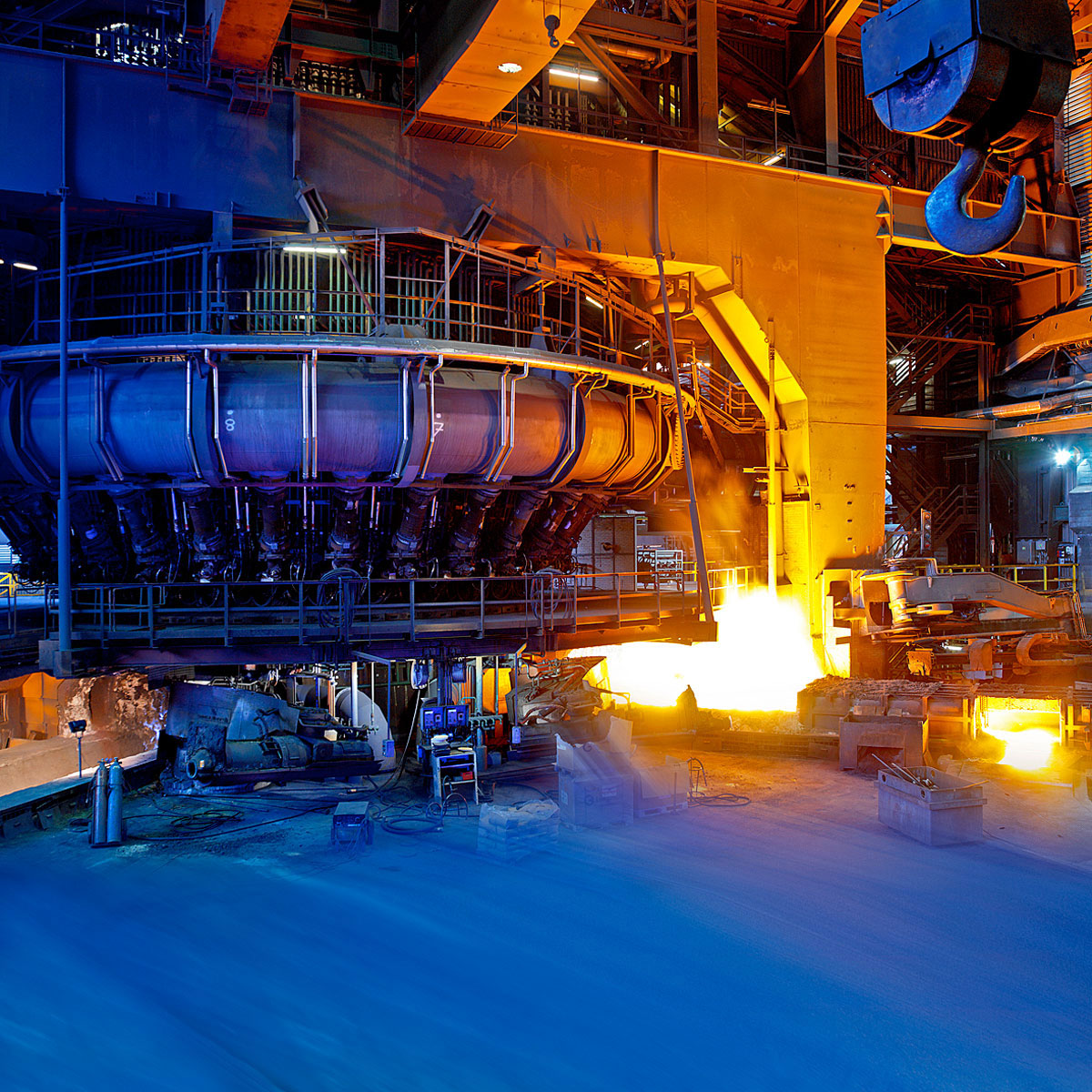
Only EAFs will survive in Europe: PwC
The European steel landscape will be substantially different by 2040, as oxygen-route production becomes uncompetitive and most steelmaking will occur in regions outside Europe, according to a study by PricewaterhouseCoopers (PwC) Germany.
The study references three scenarios how the overall economy might develop, and influence the future of the steel industry. The first notes that if in the long run, imports resurge while European countries cannot get a grip on their energy costs, then ore-based iron making will disappear in Europe. The second assumes that some primary green steel production will prosper in Scandinavia. While in the third scenario, improving political and regulatory conditions, along with lower energy costs, will help to retain iron and steel making.
All three scenarios, however, rule out the survival of blast furnaces, which will become extinct by political will, in the interest of the environment, Kallanish understands.
Meanwhile, India and the Gulf countries are making progress with building up capacities of DRI-based mills, encouraged by available local energy. By 2030, DRI-made steel using gas from those countries will already be 30% cheaper than oxygen-route steel made in Europe.
In this regard, the study questions the efforts and spendings by German steelmakers into a technical transition of their mills. With their low-emission steels costing significantly more than those from Indian and Gulf region suppliers, it says. Only Scandinavia will have a chance to continue playing a role in primary steelmaking with newly built capacities for low-emission steels.
A competitive niche for the other European producer countries will be EAF production based on scrap, of which Europe has relatively large amounts of material.
The study gives three strategic recommendations. Firstly, the companies should actively accompany the relocation of energy-intensive production stages to other regions.
Secondly, Germany especially should bank on its broad technical knowledge to support the value added processes that will remain in the country. Fabricators, too, should prepare for international shifts in supply relationships.
Thirdly, sophisticated production and processing needs dedicated locations in form of regional clusters with diverse players. For Germany, the author proposes the Rhine-Ruhr area with its existing steel industry, the northern coast with access to the sea and offshore wind power, and the Lower Saxony heartland, where companies such as Volkswagen and Salzgitter are located.
“The relocation of energy-intensive raw material production abroad is not deindustrialisation if it is replaced by value creation based on knowledge, specialisation and system competence,” says Andree Simon Gerken, partner energy transition & decarbonisation at PwC Germany.
Author: Christian Koehl