

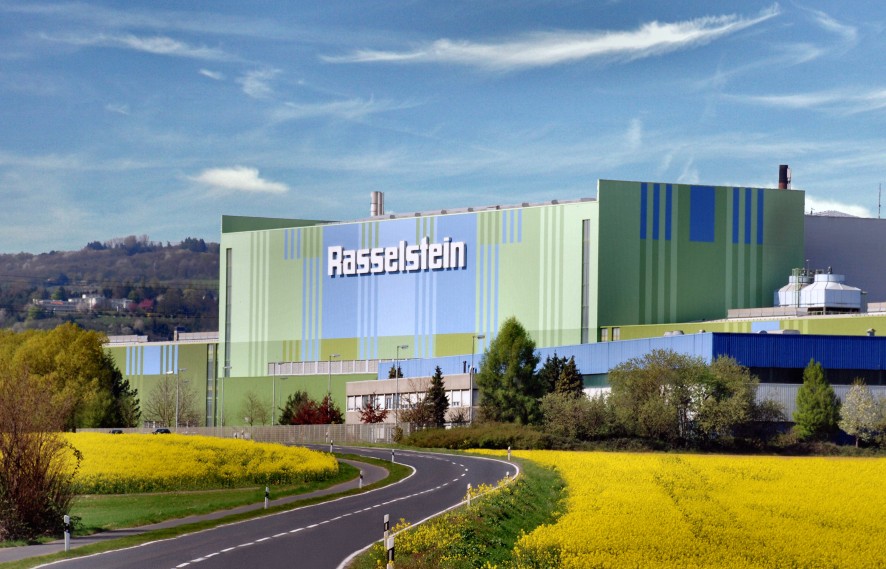
thyssenkrupp Rasselstein installs 8 MW photovoltaic system to advance decarbonization goals
Germany’s only tinplate producer, thyssenkrupp Rasselstein, is set to install a large-scale photovoltaic system at its production facility in Andernach. The project, which will be implemented in cooperation with VSB Integrated Energy Solutions GmbH, is scheduled for completion by mid-2027.
Germany’s only tinplate producer, thyssenkrupp Rasselstein, is constructing a large-scale ground-mounted photovoltaic (PV) system at its production site. The project is being carried out in partnership with VSB Integrated Energy Solutions GmbH, a subsidiary of the VSB Group, which has been part of TotalEnergies since 2025.
The PV system forms part of a comprehensive green electricity strategy for the Andernach plant and is being implemented under a Power Purchase Agreement (PPA). VSB Integrated Energy Solutions will be responsible for the construction, financing, and operation of the facility.
thyssenkrupp Rasselstein will provide two sites and purchase 100% of the electricity generated during the first 20 years. The solar power produced will help reduce the CO₂ footprint of both the plant and its products.
Construction of the photovoltaic facility, which will comprise approximately 12,000 solar panels, is scheduled to begin in the fourth quarter of 2026, with commissioning planned for mid-2027.
The installation will cover 5.2 hectares, an area roughly equivalent to seven football fields. With an installed capacity of 8 MWp, the solar power plant is expected to generate approximately 8 GWh of electricity annually.
The electricity produced is estimated to meet the annual consumption of around 2,000 households, while all generated power will be used directly at the production site.
As part of the project, the supporting structures for the approximately 12,000 solar panels will be manufactured using bluemint® Steel, thyssenkrupp Steel’s low-carbon steel product. The company will also use its ZM EcoProtect® Solar coating, developed specifically for photovoltaic ground-mounted applications, in the steel structures.
As a result, not only the renewable energy project itself but also the materials used in its construction will contribute to a lower carbon footprint.
Dr. Thorsten Krenke, CTO of thyssenkrupp Rasselstein, said the project aims to meet part of the company’s green electricity demand through on-site generation, demonstrating that renewable energy production is feasible even within an established industrial environment.
The on-site solar investment is part of the broader energy transition initiatives being implemented within thyssenkrupp Steel.
Dennis Becher, Head of Energy Management at the company, stated that green electricity supply agreements are a key pillar of the company’s decarbonization strategy. He noted that more than 20% of thyssenkrupp Steel Europe’s current electricity supply is secured through Power Purchase Agreements (PPAs).


German steel industry warns: Low water levels threaten supply security
German Steel Association (WV Stahl) warned that low water levels on the Rhine River are disrupting logistics operations and threatening supply security in the steel industry, calling for stronger transport infrastructure and expanded alternative freight capacity.
German Steel Association (WV Stahl) Managing Director Kerstin Maria Rippel attended a meeting convened by Federal Transport Minister Steffen Bilger, bringing together representatives from government and industry to discuss the impact of persistently low water levels on German industry.
Rippel described the meeting as an important signal, warning that the ongoing low water levels are creating significant challenges for industry.
She emphasized that reduced water levels pose risks to supply security and Germany’s competitiveness as an industrial hub, highlighting the importance of inland waterway transport for the steel sector. According to Rippel, around one-third of the German steel industry’s freight volume is transported via inland waterways.
While noting that companies have expanded storage capacity and developed more flexible logistics chains following previous low-water periods, Rippel stressed that businesses cannot compensate on their own for structural shortcomings in the country’s transport infrastructure.
She called for faster implementation of measures to improve navigation conditions on the Middle and Lower Rhine, strengthen rail transport as a reliable alternative route, and provide additional rail and road freight capacity during periods of disruption.
Rippel also underlined the need for continued discussions supported by concrete measures and a binding implementation timetable, stating, “Low water levels must not become a permanent competitive disadvantage for Germany’s industrial sector.”