


Sidenor Sales Manager Mefat Torba: “Turkish producers will maintain their leading position in the Western Balkans”
- Consistent and stable demand from the regional market,
- Aggressive pricing and trade policies from producers in the East,
- The significant price gap between EU producers and producers in Türkiye, Algeria and Egypt.

German automotive suppliers back EU Industrial Accelerator Act to strengthen manufacturing
German automotive supplier association ArGeZ has expressed support for the European Commission’s proposed Industrial Accelerator Act (IAA), arguing that the initiative could strengthen Europe’s industrial base, expand manufacturing capacity and accelerate decarbonization across strategic sectors.
According to the association, geopolitical uncertainty, growing supply chain dependencies and large-scale industrial policy programs in the US and China have increased the need for a more strategically focused European industrial policy. ArGeZ stated that European preference rules are justified, particularly where public funding is involved, provided that the measures remain appropriate and proportionate.
Chinese automotive component imports have doubled since 2019
ArGeZ highlighted the growing competitive pressure on European automotive suppliers, noting that EU imports of automotive components from China have doubled since 2019, while EU exports have recorded only limited growth. Against this backdrop, the association considers a European preference system necessary to safeguard the competitiveness of manufacturers operating within the EU and preserve industrial value creation.
Under the proposed IAA, public procurement and financial support would increasingly favor products manufactured in Europe and associated with lower carbon emissions.
‘Made in Europe’ rules could support strategic industries
According to ArGeZ, a “Made in Europe” approach could strengthen European value chains and employment while supporting the transition toward a climate-neutral economy and helping retain technological expertise within the EU. The association identified steel, aluminum, rubber, automotive manufacturing and future technologies as strategic sectors that could benefit from the proposed procurement criteria.
ArGeZ stressed that local content requirements should apply not only to finished goods but also to their components, allowing a greater proportion of industrial value creation to remain within Europe. While supporting European preference rules, ArGeZ warned that their implementation should not create excessive administrative burdens for manufacturers. The association called for realistic and achievable local content requirements and said digitalized supply chains could simplify compliance and documentation, particularly in complex industries such as automotive manufacturing.
Third-country content should not automatically qualify as EU origin
ArGeZ also addressed how EU origin should be determined under the proposed framework. According to the association, the existence of a free trade agreement, customs union or procurement agreement with the EU should not automatically mean that content originating in a third country is treated as equivalent to EU-produced material. Instead, such treatment should depend on clear and WTO-compliant conditions, including reciprocity and comparable carbon costs and sustainability standards.
Europe’s steel industry at a critical crossroads: High costs are driving production abroad
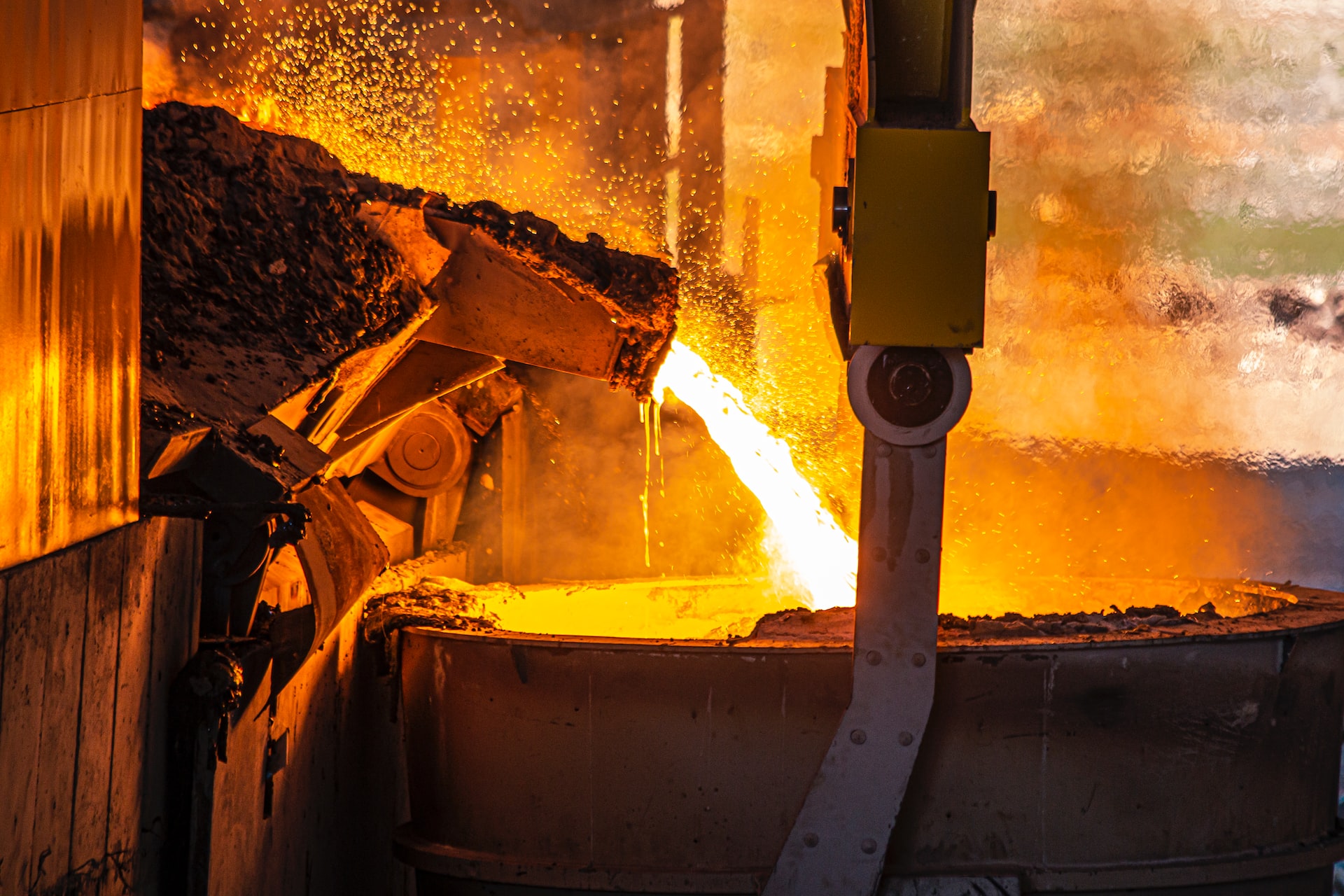
Europe’s steel sector is undergoing a critical transformation under pressure from high energy costs, global steel overcapacity, rising imports and carbon costs. According to an analysis by PwC Germany, coal-based blast furnace technology will not be the lowest-cost production method in any region by 2040. For Europe to remain competitive, it needs to shift towards secondary steel, low-carbon primary steel and high value-added production.
Europe’s steel industry is entering a structural transformation under pressure from global competition as well as energy and carbon costs. According to an analysis prepared by PwC Germany, high energy and production costs in Europe are combining with global steel overcapacity and strong import pressure, while the competitive advantage of regions outside Europe in low-carbon steel production is gradually increasing. While the European Union’s Emissions Trading System (ETS) and Carbon Border Adjustment Mechanism (CBAM) are making carbon costs more decisive in production decisions, these mechanisms are not expected to completely eliminate Europe’s energy cost disadvantage compared with resource-rich regions.
The cost advantage of blast furnaces is coming to an end
One of the key findings of the analysis is that traditional blast furnace technology using coking coal will lose its economic advantage in the long term. According to PwC’s calculations, rising CO₂ prices could double the cost of traditional steel production by 2045. By 2040 at the latest, the blast furnace method will no longer be the lowest-cost steel production option in any region of the world. This development has an important consequence for Europe. Maintaining energy-intensive primary steel production on the continent is becoming more difficult, not only because of carbon costs but also due to the persistent price gap between Europe and regions with access to low-cost energy sources.
The Gulf and India are emerging
The centre of gravity of competition in low-carbon primary steel production is shifting towards regions outside Europe. The Gulf countries and India are in an advantageous position in green steel production due to their access to low-cost energy and raw material resources. In particular, the ability to generate electricity from solar energy at low cost is making hydrogen-based direct reduction technology more competitive in these regions. According to the PwC analysis, in 2030, the cost of steel produced in the Gulf countries using natural gas-based direct reduction could be approximately 30% lower than blast furnace production in Central Europe. Green steel produced in India using hydrogen-based direct reduction is also expected to be approximately 15% cheaper than European blast furnace steel in the same year. In Europe, meanwhile, low-carbon primary steel production remains more costly. According to the analysis, only Scandinavia is in a position to achieve competitive primary steel production costs under optimistic assumptions.
Three different future scenarios for Europe
The PwC study presents three different scenarios for the transformation of the European steel sector. Under the import-based transition scenario, if Europe fails to reduce energy costs sufficiently, primary steel production is expected to shift to lower-cost regions such as the Gulf countries and India. Germany, meanwhile, is expected to maintain mainly its secondary steel production capacity. Under the balanced transition scenario, Europe develops its own low-carbon primary steel capacity, particularly in Scandinavia. After 2035, the share of imports increases. In this model, the European steel market consists of a combination of secondary steel produced in Europe, low-carbon primary steel supplied from Scandinavia and selective imports. The self-sufficiency scenario, meanwhile, envisages Europe meeting most of its steel needs through its own production thanks to stronger industrial policies and competitive industrial energy prices. In this case, the role of imports remains marginal.
Europe’s advantage lies in scrap steel
One of the areas where Europe can remain competitive stands out as secondary steel production. Production from scrap steel offers an advantage not only because of its lower emissions potential compared with primary production, but also because Europe has access to large quantities of scrap steel. However, secondary steel production cannot replace all of the primary steel capacity that will be closed or transformed. Therefore, in the future, Europe will need to source low-carbon primary steel both from its own competitive production regions and from external markets offering competitive costs.
The nature of production in Germany will change
For Germany, one of the key aspects of the transformation will be which stages of steel production will remain in the country. Alexander Schröder, Director of Energy Transition and Decarbonisation at PwC Germany, states that there is no future for coal-based primary steel production in Germany and points out that the metal processing sector needs to reposition itself at earlier stages of the value chain. According to Schröder, knowledge-intensive activities such as design, precision manufacturing, systems integration, certification and software will become more important in the future of production in Germany. In this model, competition will be shaped not only by the cost of producing steel per tonne, but also by the added value created when steel is transformed into a customer-specific product.
Industrial clusters will be decisive in the new era
Andree Simon Gerken, Partner for Energy Transition and Decarbonisation at PwC Germany, also states that relocating energy-intensive basic material production abroad does not necessarily mean deindustrialisation if it is supported by new value creation based on knowledge and expertise. According to Gerken, Germany needs to develop knowledge-intensive production activities around strong industrial clusters in order to maintain its competitiveness. In this context, accelerated permitting processes, access to affordable energy, port infrastructure supporting the import of intermediate products, and cooperation between universities and industrial companies stand out. In Germany, the Rhine-Ruhr region, the coastal regions, and the triangle formed by Hannover, Braunschweig and Wolfsburg are identified as potential areas for such industrial clusters.
Companies will redesign their production chains
The transformation of the European steel sector is not expected to be limited to changes in factory technologies. Companies also need to reassess the geographical location of energy-intensive production stages. The PwC analysis recommends that European steel companies establish partnerships with operators of facilities outside Europe, develop technology partnerships and secure access to low-carbon raw materials and steel through long-term supply agreements. This approach could reduce the impact of high energy costs in Europe while enabling producers on the continent to access low-carbon steel at predictable costs.
The focus of competition is shifting from production to value added
The fundamental question facing Europe’s steel industry is becoming not whether all production can be retained in Europe, but which stages of the value chain can be maintained competitively in Europe.
According to PwC’s analysis, a structure combining secondary steel production in Europe, low-carbon primary steel capacity in Scandinavia and selective imports stands out as a potential model for Europe.
For Germany, strengthening knowledge-intensive activities such as design, precision manufacturing, systems integration, certification and software is of critical importance.
Thus, the future of competition in Europe’s steel sector will depend not only on producing more steel, but on sourcing low-carbon steel at the most competitive cost and transforming this material into high value-added products.
Author: SteelRadar Editorial Team

European local HRC prices mostly stable on slow market activity during summer slowdown
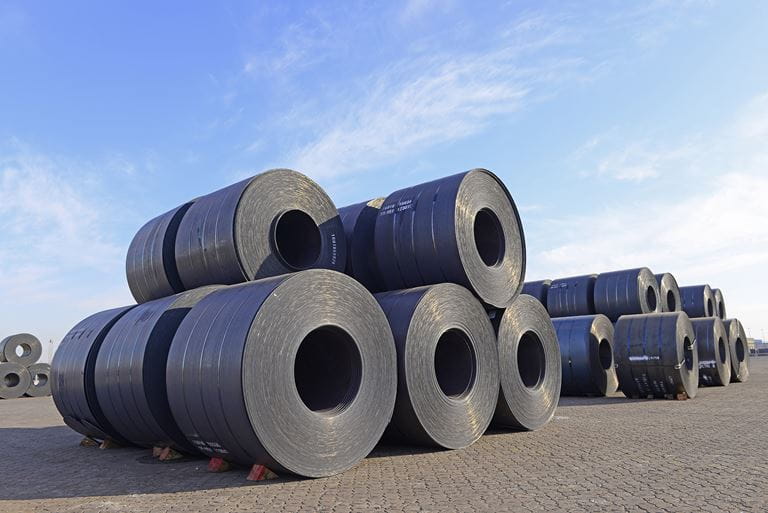
Prices for steel hot-rolled coil (HRC) in the domestic market of Northern Europe and Italy remained broadly stable on Wednesday August 12, with limited trading reported during the traditional summer slowdown period, sources told Fastmarkets.
In Italy, sources said prices were stable, as most suppliers were out of the market in August.
“Moreover, at the moment we are out of the market, with the next availability from Italy, which is now an October or even November shipment depending on the product and specification,” a producer source said on Wednesday, adding that the activity in Italy was almost at zero, as usual for this period.
A buyer source indicated workable levels at €700-720 ($808-831) per tonne ex-works, in the same range as offers and indications reported on August 11, when mills were heard targeting €720 per tonne ex-works.
Fastmarkets’ daily steel hot-rolled coil index domestic, exw Italy was calculated at €713.75 per tonne on August 12, unchanged day on day.
The index was up by €4.75 per tonne week on week and up by €20.69 per tonne month on month.
The latest HRC import activity into Southern Europe included a deal from Egypt at $750 per tonne CFR for a small-quantity order, while material was offered at $760 per tonne CFR from the same origin, all including $30 duties under the Carbon Border Adjustment Mechanism (CBAM).
A lower offer was reported at €600-620 per tonne CFR on Wednesday, but sources could not confirm the origin.
Fastmarkets’ weekly price assessment for steel hot rolled coil import, cfr main port Southern Europe was at €565-600 per tonne, unchanged week on week.
In Northern Europe, the market was very quiet on Wednesday, with many of the participants away on holiday. A buyer source reported an indication of workable levels at €715-720 per tonne ex-works on August 12, and prices collected on August 11 were carried over to the following day.
On Tuesday, a deal for October delivery was reported at €705-715 per tonne ex-works, which was included in the index, as September delivery material was no longer available, according to sources.
Indications of achievable levels were reported at €710-730 per tonne ex-works on the same day, while offers reached €715-730 per tonne ex-works.
Fastmarkets’ daily steel hot-rolled coil index domestic, exw Northern Europe was calculated at €717.00 per tonne on August 12, up by €0.12 per tonne from €716.88 per tonne on August 11.
The index was up by €0.33 per tonne week on week and up by €12 per tonne month on month.
–Vlada Novokreschenova in Dnipro contributed to this article.
