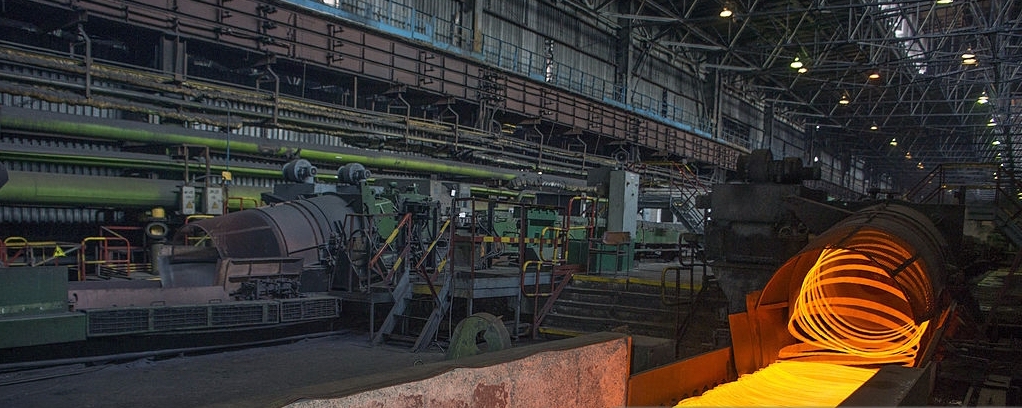
Romanian flats prices fall further amid weak demand and lower offers
The downward trend in Romania’s flat steel market has extended into another week, as persistently weak demand and increasingly aggressive pricing from some larger traders continue to drag workable levels lower. With August business already at a seasonal low, buyers are showing little urgency to purchase amid sufficient stocks, tight liquidity and weaker activity in the construction sector. In this environment, larger sellers are cutting prices to stimulate sales, forcing smaller and medium-sized traders to either follow the downward trend or offer wider discounts despite growing pressure on their margins.
Hot rolled sheet prices have consequently fallen to around €765-770/mt ex-warehouse, compared to €780-790/mt ex-warehouse last week. Some larger traders are still heard at around €745-750/mt ex-warehouse, while smaller and medium-sized sellers generally try to stay closer to the upper end of the market and negotiate only for serious inquiries. Discounts of around 5-8 percent remain possible depending on tonnage and payment terms. Cold rolled sheet prices have also softened to around €870-880/mt ex-warehouse, down from €880-890/mt ex-warehouse last week. Even at the lower levels, however, buying remains scarce and most transactions continue to be limited to immediate requirements.
There has, meanwhile, been no notable progress regarding the sale of Liberty Galati, with no new buyer or concrete development heard in the process. Nevertheless, concerns surrounding the group’s financial position have deepened after Liberty Services Center Galati entered bankruptcy proceedings amid significant outstanding debts. Although the company is separate from Liberty Galati itself, the development has further worsened sentiment around the group’s Romanian operations and added to the already uncertain outlook for the producer.
Import activity has also remained very limited, with Romanian buyers seeing little reason to enter the market while stocks remain sufficient and much of Europe is still affected by the August holiday period. Market participants expect discussions to gradually resume in September, as suppliers return with fresh quotations and buyers get a clearer indication of the post-summer price direction. Ukrainian offers have remained unchanged at around €790-800/mt CPT Romania for hot rolled sheet and €880-890/mt CPT for cold rolled sheet, levels which are still considered too high to attract much interest. Meanwhile, Turkish HRC offers are heard at around $570-585/mt FOB, with freight to Romania estimated at $25-30/mt, resulting in an indicative delivered level of approximately €515-530/mt CFR Romania, compared to around €520-530/mt CFR last week. Despite the competitive level, quota limitations and uncertainty over CBAM-related costs continue to restrict Romanian buyers’ interest in Turkish material.


Thyssenkrupp’s Duisburg DRI plant could initially operate without hydrogen
Germany steelmaker thyssenkrupp is in advanced discussions to adjust the funding framework for its new direct reduction plant in Duisburg to reflect changed economic conditions and allow the facility to initially operate without hydrogen, according to a report by Reuters.
Around two-thirds of the €3 billion in funding for the project is being provided by the German federal government and the state of North Rhine-Westphalia. The funding was initially linked to the use of hydrogen in the direct reduction plant. However, thyssenkrupp now considers this requirement unrealistic for the plant’s initial operations.
Funding amendment discussions with Germany and EU
As a result, the company has been holding discussions with the German government and the European Union to amend the funding conditions and ensure that financial support can still be provided even if hydrogen is not used initially.
“We are very pleased that the European Commission has approved the planned amendment to the funding rules currently in force and has already confirmed that they are fully compliant with EU state aid law,” thyssenkrupp chief financial officer Axel Hamann stated. According to Hamann, the approval allows the German federal government to implement the amendment and subsequently adjust the funding decisions. The revised funding rules will come into effect following these adjustments.
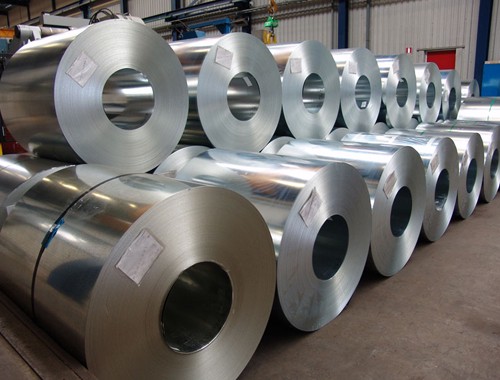
European domestic CRC, HDG prices firm, import stocks, summer cap further gains
European domestic cold-rolled coil and hot-dipped galvanized remained largely firm in the week to Thursday August 13, having gained around €20 per tonne on average in the previous weeks.
Further upward movement is limited by high stocks of import material in ports as well as reduced activity during the traditional market slowdown at the end of summer.
In Northern Europe, basic cold-rolled coils scheduled for delivery in October onwards were available within the range of €830-850 per tonne ex-works.
A source from Germany reported deals at €825 per tonne ex-works, while another German source confirmed this figure as a tradeable level, adding that the higher end of the range targeted by the mills has yet to be seen in transactions.
Fastmarkets’ weekly price assessment for steel cold-rolled coil domestic, exw Northern Europe was €825-830 per tonne on August 13, narrowing down from €825-840 per tonne on August 5.
“Antwerp is full of cold-rolled coils,” the source said, explaining that availability of the competitively priced import material is still weighing down on domestic prices.
Last week, however, the European Commission announced definitive anti-dumping duties on imports of cold-rolled coil (CRC) from India, Japan, Taiwan, Turkey and Vietnam.
While Turkey and India received duties of 5.6-9.5%, Japan, Taiwan and Vietnam received duties of 16-28%, which is expected to affect shipments from these countries as, together with other limitations such as safeguard duties and the Carbon Border Adjustment Mechanism (CBAM), the final cost of these products may become uncompetitive.
“Formerly the buyer paid only the highest duty of all. Let’s say if the anti-dumping duty was 6% and the out-of-quota safeguard duty was 25%, the buyer paid only 25%. Now it has changed and all duties are applied together,” a German buyer said, adding that if Asian suppliers do not cut their initial price it will be difficult for them to sell to Europe.
The hot-dipped galvanized (HDG) segment was also stable with offers coming at €830-850 per tonne ex-works, while indications of tradeable level came at €820 per tonne ex-works, which was reflected in the corresponding Fastmarkets’ assessment.
The weekly price assessment for steel hot-dipped galvanized coil domestic, exw Northern Europe was €820-830 per tonne on August 13, stable week on week.
A market source said that mills in the region have lately been preferring to produce HDG rather than CRC, because some types of HDG can be produced directly from hot-rolled coil (HRC), skipping the CRC stage, and because the annealing process happens naturally during galvanizing, while producing CRC requires the steel to be heated and softened separately, incurring additional energy costs.
Southern Europe was comparatively quieter, with the majority of market participants on holiday.
Nevertheless, some HDG transactions came through at €830 per tonne delivered or €815 per tonne ex-works, while offers came at €825-835 per tonne ex-works.
Fastmarkets’ weekly price assessment for steel hot-dipped galvanized coil domestic, exw Southern Europe was €815-825 per tonne on August 14, versus €800-830 per tonne the previous week.
The most recent CRC offers in the region came at €840-850 per tonne ex-works; however, buyers found these levels elevated.
The assessment for steel cold-rolled coil domestic, exw Southern Europe was €815-825 per tonne on August 12 versus €820 per tonne on August 5.
“In September you can bet on a big jump,” a buyer from Italy said.

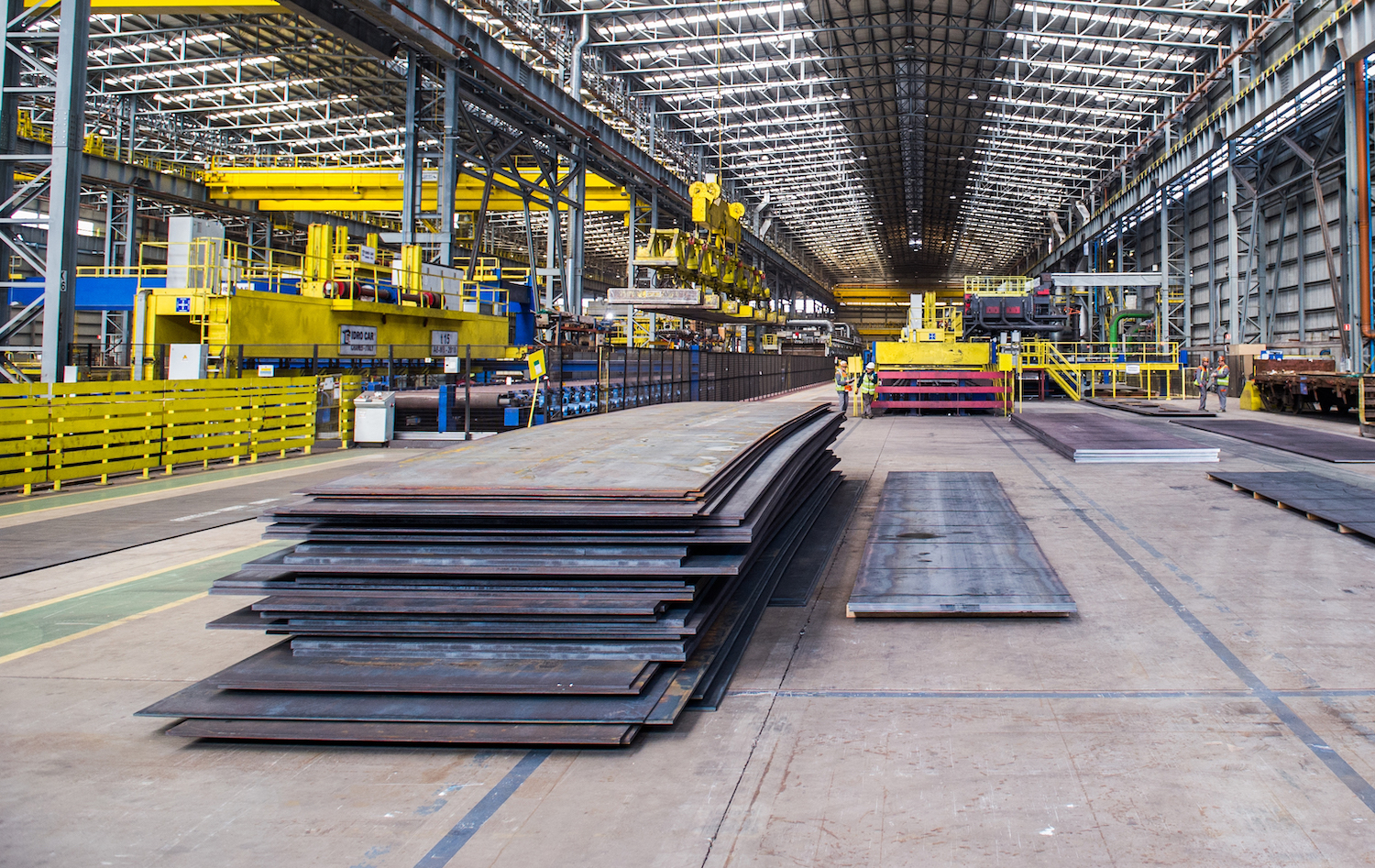
European local steel heavy plate markets quiet amid summer lull; Italian slab imports stable
Domestic prices for steel heavy plate remained broadly stable in European markets, while trading activity was slow during the summer slowdown period, also stabilizing Italian slab import prices, sources told Fastmarkets on Thursday August 13.
Italy
Sources indicated workable prices for base-grade plate at €690-700 ($797-809) per tonne ex-works in Italy on August 13, on the same level as the latest deals heard a week earlier. They also confirmed the offer reported by a supplier at €720 per tonne ex-works on August 6, but it was considered unworkable.
Market participants have said that the levels at €690-700 per tonne ex-works were a potential price floor in the market, linked to the traditional summer slowdown in August.
Fastmarkets’ weekly price assessment for steel domestic plate 8-40mm, exw Southern Europe was €690-700 per tonne on Thursday, narrowing downward by €10 per tonne from €690-710 per tonne a week earlier.
Meanwhile, the latest offers for steel slab imports into Italy were reported in the range of $545-565 per tonne CIF on August 13 for material originating from Southeast Asia, while Chinese mills were quoting slab at $560 per tonne CIF.
One trader said Indonesian slab might be even a few dollars cheaper than $545 per tonne CIF, but did not report any achieved transactions at lower levels.
A buyer source said there were “no real changes” in slab prices over the week, while most Italian mills were out of the market for the August holiday period. “A couple of Chinese offers were renewed around $560 [per tonne CIF] but no deals or real changes [were done],” the same source added.
As a result, Fastmarkets’ weekly price assessment for steel slab import, cif Italy was $545-560 per tonne on Thursday, unchanged week on week.
Northern Europe
No significant market activity was seen in the domestic plate market in Northern Europe during the week.
Market participants continued to cite tight supply from integrated German plate producers, linked to a previous price increase in the market, but no fresh transactions were heard to support the sharp rise in prices.
Offers for base material were reported at €850-880 per tonne ex-works, while workable prices were indicated at €820-850 per tonne ex-works, all unchanged from a week earlier.
Fastmarkets’ weekly price assessment for steel domestic plate 8-40mm, exw Northern Europe was €820-850 per tonne on Thursday, stable week on week.