Gonvarri invests €116.4 Million in Low-Carbon Steel and Clean Energy

Gonvarri Industries, a Spain-based steel processing and metal solutions manufacturer, continued its investments in sustainability, low-emission steel, energy efficiency, and new technologies in 2025.
According to the company’s 2025 Sustainability Report, Gonvarri Industries made EUR 116.4 million in capital expenditures during the year, with projects focused on low-carbon steel, renewable energy and the electrification of production processes standing out.
The company’s sales volume reached approximately 5 million tons in 2025, while EBITDA stood at EUR 335 million. Gonvarri operates in 27 countries with 56 production facilities.
RECA fully acquired
Of Gonvarri’s EUR 116.4 million CAPEX spending in 2025, EUR 29.8 million was allocated to mergers and acquisitions.
The report stated that the acquisition of 100% of RECA was an important step in bringing new technological capabilities into the group, expanding its presence in strategic markets and increasing business diversification.
Partnerships in low-carbon steel expanded
Gonvarri Industries stated that the use of low-emission steel in Europe is gradually increasing, depending on factors such as availability, certification, cost and technological maturity.
The company signed cooperation agreements with ArcelorMittal, thyssenkrupp Steel and Hydnum Steel to increase the use of steel with a lower carbon footprint.
In addition, low-emission steel solar tracking systems were supplied for Iberdrola’s photovoltaic projects in Portugal, while low-emission galvanized products were supplied to Schneider from Gonvarri Barcelona.
Environmental Product Declarations were prepared for galvanized coils at Gonvarri Barcelona and for crash barriers and road safety terminals at Gonvarri Asturias.
Scope 1 emissions down 14% from 2022
Under Gonvarri’s Carbon Neutral 2030-2050 Plan, the company aims to reduce Scope 1 emissions by 50% from 2022 levels by 2030 and source 100% of purchased energy from renewable sources.
In 2025, Scope 1 emissions, including Gonvvama, decreased by 4% compared with 2024 and by 14% compared with the 2022 baseline. The company therefore exceeded its 12% interim reduction target set for 2025. During the same period, 61% of electricity and 29% of heat and steam used came from renewable sources.
122 energy efficiency projects implemented
Gonvarri commissioned nine energy efficiency projects at nine plants in 2025. Six of these projects focused on reducing natural gas and propane consumption, while three targeted electricity consumption.
The projects are expected to generate more than 4 GWh of annual energy savings and reduce CO₂ emissions by 1,229 tons.
The total number of projects and measures implemented under the ECO-ENERGY program since 2015 reached 122, generating more than 30 GWh in annual energy savings. This corresponds to a reduction of more than 9% in the group’s energy consumption.
In Türkiye, improvements to the combustion system of the ÇEPAS galvanizing furnace reduced natural gas consumption by 9%, electricity consumption by 50% and zinc consumption by more than 5%.
More than 12 GWh generated by 20 solar plants
By the end of 2025, Gonvarri had 20 solar energy facilities used for self-consumption. These facilities generated more than 12 GWh of electricity annually.
New solar facilities were commissioned at Gonvarri Asturias, Senica, Laubac and Popes Lane.
Gonvarri Solar Steel supplied solar energy structures to nine countries in 2025. According to the company’s calculations, these projects indirectly avoided approximately 1.08 million tons of CO₂ emissions throughout the year.
10-year PPA signed covering plants in five countries
Gonvarri signed a 10-year European virtual power purchase agreement (PPA) starting in 2026.
The agreement covers facilities in Portugal, Slovenia, Hungary, Slovakia and the Czech Republic. The company plans to source 100% of the electricity consumed at these facilities from renewable sources.
Green hydrogen project under development in Barcelona
Gonvarri is developing a green hydrogen production system at its Barcelona facility under the HYGreen BCNA project.
The project includes plans to install 300 kWp of solar capacity and a 100 kW electrolyzer. The hydrogen produced will be used together with natural gas in boilers to reduce Scope 1 emissions.
The report also noted that H2Greem has developed a 250 kW electrolyzer stack.
CBAM preparations extended across the supply chain
In 2025, Gonvarri continued collecting and verifying embedded emissions data from its suppliers in preparation for CBAM obligations.
From 2026, the company plans to further integrate CBAM requirements into supplier management, with a particular focus on data reliability, preparation for carbon costs and compliance processes.
In 2025, the share of secondary material in Gonvarri’s steel sourcing mix averaged 14%.
The company considers the 2026-2027 period a regulatory and industrial turning point for the gradual integration of low-carbon and green steel into its product portfolio.

Author: SteelRadar Editorial Team

SteelRadar Logo

steelradar.com

Romania launches new railway investment plan that could support steel demand
The Romanian government has approved the 2026–2030 Railway Infrastructure Development Plan, aimed at halting the technical deterioration of the country’s railway network and accelerating accumulated renewal works. Under the new plan, Romania intends to carry out maintenance, renewal, modernization and expansion of railway infrastructure, while continuing priority projects along the European TEN-T railway corridors.
According to data released by the Romanian government, the country’s railway infrastructure has deteriorated significantly due to years of insufficient funding.
In 1990, railway lines overdue for renewal totaled 1,364 km, accounting for 10.10% of the network. By 2010, this figure had risen to 5,596 km, or 41.14%.
As of 2025, the length of railway lines that had exceeded their technical lifespan reached 9,753 km, representing 72.56% of the total network. The government noted that this figure has nearly doubled over the past 15 years.
Only 45.76% of funding needs were met in the previous period
The government stated that financial resources provided during the 2021–2025 period covered only 45.76% of the actual funding required for railway infrastructure. The funding gap for maintenance and repair of existing infrastructure alone exceeded RON 12 billion.
Insufficient funding has resulted in speed restrictions across the railway network and accelerated infrastructure deterioration. During the same period, rail passenger transport declined by more than 2%, while freight transport fell by around 23%. The previous plan had targeted 25% growth in the transport market.
Railway network renewal will be a priority
Under the 2026–2030 plan, accelerating the renewal of railway infrastructure accumulated from previous periods has been identified as a key priority.
Other main objectives include improving the competitiveness of rail transport in the domestic market and strengthening the integration of Romania’s railway network into the common European railway system.
The program covers various areas of the railway system, from basic maintenance and operational activities to infrastructure renewal and expansion, while also including administrative reforms aimed at improving the sector’s efficiency.
Investments could support steel demand
The implementation of the planned railway investments could support demand for steel products used in Romania’s railway and construction sectors. In particular, rail and other long steel product consumption could increase as railway lines are renewed, while structural steel and rebar demand may benefit from bridge, station and related infrastructure works.
Electrification and railway superstructure investments could also generate additional demand for various steel structures and fastening components. However, the Romanian government has not provided any estimate for the volume of steel to be used during the 2026–2030 period or the potential impact of the investments on the country’s overall steel consumption.


Author: SteelRadar Editorial Team

SteelRadar Logo

steelradar.com

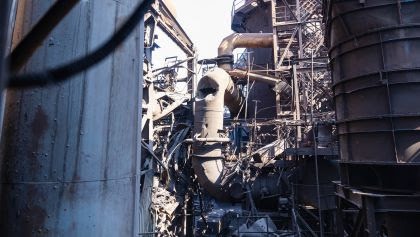
New Russian attack damages production infrastructure at Metinvest’s Zaporizhstal

Ukrainian mining and steel group Metinvest has announced that Russian forces carried out another attack on its Zaporizhstal steel plant in the early hours of August 27, following the previous attack on August 11 that had resulted in a complete production shutdown.

According to the company, five ballistic missiles struck blast furnace equipment, energy and transport infrastructure and open areas of the plant. No fatalities or injuries were reported in the latest attack, as employees on shift reached shelters after the air raid alert was issued.

Metinvest stated that specialists are currently assessing the extent of the damage and inspecting the plant’s production, energy and transport infrastructure to determine further steps. The company has not provided a timeframe for the resumption of production.

Latest strike occurs during recovery work from previous attack

As SteelOrbis reported earlier, the previous attack on August 11 resulted in the deaths of eight Zaporizhstal employees, while another 26 employees were injured. According to Metinvest, ballistic missiles hit the plant two minutes after the air raid alert was issued, damaging key blast furnace equipment, energy facilities and other infrastructure.

Following the August 11 attack, Zaporizhstal carried out emergency repair work and began dismantling damaged structures to access equipment, assess the damage and determine the possibilities for restoration. With production completely halted, the number of employees present at the plant was reduced, while a core team remained on site.

Metinvest COO Oleksandr Myronenko stated that the August 11 attack had caused destruction on a scale not experienced at Zaporizhstal since the Second World War and that the latest attack occurred while the company was still clearing debris from the previous strike. He also stressed that Zaporizhstal is a civilian industrial enterprise producing pig iron and rolled steel used in pipes, household appliances and motor vehicles and does not manufacture military products.

Author: SteelOrbis Editorial Team

SteelOrbis Logo

steelorbis.com

Salzgitter launches new wear-resistant TektoSal®450 steel for multiple applications

Salzgitter Flachstahl GmbH, a subsidiary of German steelmaker Salzgitter AG, has announced the launch of TektoSal®450, a new wear-resistant special steel available to customers as strip steel.

Wear-intensive applications targeted

The material is suitable for applications including earthmoving and mining machinery, dump trucks, tanks, containers and mixer transport systems, as well as other components primarily exposed to abrasive wear. It also offers good weather resistance.

Salzgitter Flachstahl offers TektoSal®450 as unpickled strip steel with natural edges in thicknesses ranging from 3 mm to 5 mm and widths between 900 mm and 1,500 mm. The company stated that the material provides high weldability due to its chemical composition and excellent bendability in both longitudinal and transverse directions.

Author: SteelOrbis Editorial Team

SteelOrbis Logo

steelorbis.com