


Blastr Green Steel ceo to depart
The chief executive officer of Blastr Green Steel (BGS), Mark Bula, is to leave the company, Kallanish learns.
A published statement by the company says that Bula and Blastr “have reached an agreement regarding his departure” from the company. Bula was appointed as ceo in April 2024.
“Mark has played a key role in bringing Blastr to where it is today, and the board would like to thank him for his contribution,” says Olaf Wigstol, chairman.
A Blastr Green Steel spokesperson tells Kallanish: “We can confirm that BGS ceo Mark Bula is stepping down from his role, allowing for an orderly transition period. [The] current cfo, David Morant, will become ceo of BGS UK.”
They add that Morant is an experienced executive with more than 20 years in capital markets and has held senior leadership roles in companies involved in the industrial economy in the UK and worldwide.
The statement adds that the board and management team remain fully committed to the continued development of the Blastr companies and to maintaining strong relationships with its partners, suppliers and employees.
“All existing business operations and commitments continue as normal,” it concludes.
The low-carbon emissions project has not yet reached a final investment decision (FID) but was moving towards permitting in a March 2025 update.
Blastr is understood to still be in the running to acquire Speciality Steel UK (SSUK), with talks with the Insolvency Service still ongoing as the preferred bidder.
Sources familiar with the matter say Morant has been heavily involved with the negotiations for the potential takeover of SSUK.

ArcelorMittal increases longs prices: sources
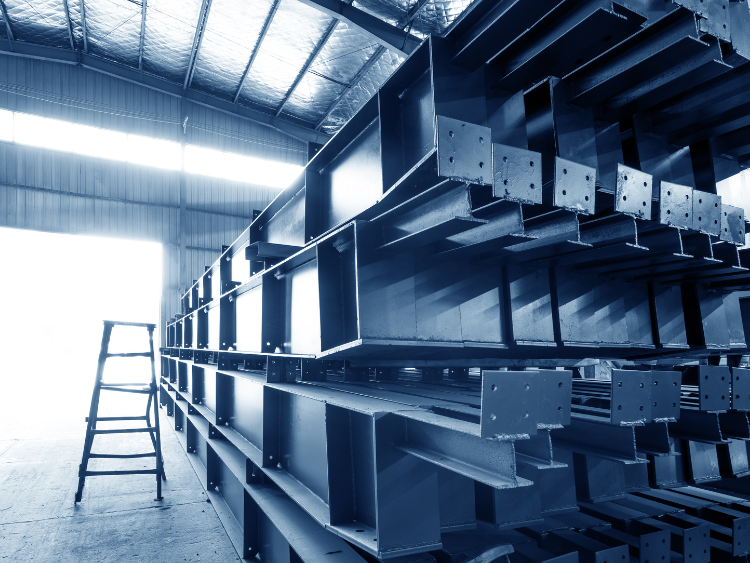
ArcelorMittal is raising its long product prices by a further €20/tonne ($23.3/t) for commodity grade sections, rebar and wire rod, market sources tell Kallanish.
This follows the previous increase implemented in July of €25/t, bringing the total increase to €45/t.
The market environment remains challenging for producers, with the instability of the Middle East conflict pushing up gas and electricity costs, which are critical for electric arc furnace steelmakers.
One source warns that electricity costs have soared beyond affordable levels, leaving producers with two options: pass on the increases or implement heavy production cuts across Europe in the coming months.
Several sources describe the European long product market as extremely quiet, with the holiday period and heatwaves keeping activity at a standstill. “The main issue is that in terms of costs there is no stability. Scrap is the only cost that is stable, but energy continues to soar, both gas and electricity, compared to before the summer. This conflict seems to have no conclusion, and it’s having a huge impact on all EAF producers,” a source says.
Another says that increases implemented before the summer are not enough to cover all costs and believes several long producers will implement further hikes in the coming weeks hoping that sales activity will pick up in September.
Wire rod sales remain slow and the market challenging in both south and northern Europe as well as rebar, a segment plagued by uncertainty.
European scrap prices have remained mostly stable in August, Kallanish notes.
German rebar price resurge not yet materialising
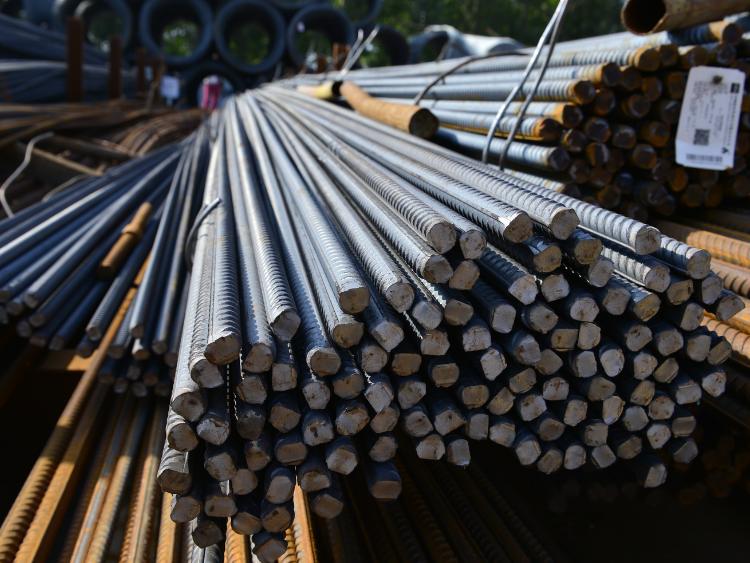
Rebar prices in Germany have stabilised from the dip that occurred a month ago, but a notable uptick has not come about.
Base prices softened from mid-July into August, undercutting the mark of €400/tonne ($466/t), with quotes as low as €380/t heard from large rebar benders, and even lower than that heard from southern Germany.
Several buyers tell of enhanced purchasing activity during that period. They also note signals from mills to announce more solid prices, at least keeping the €400/t level, but ideally heading for €10-20/t more, according to one central German buyer.
But a clear word has not been heard from the mills, a manager of a relatively small northern German bender tells Kallanish, and says he can still place orders for €400/t.
In southern Germany, one commentator claims that €380/t is still possible, with equal prices from German and Italian mills, and attributable to the competition from both sides in the south. He also denies that the earlier buying spree was very big at all.
He concedes that the mills are dealing with higher transport costs, and have a point to ask for higher prices, but adds that “the market speaks a different language”.
Only one mill that is particularly impaired from the low water level of the Rhine River had asked for €10/t extra as compensation for additional logistics costs, he says.
All base prices need to add a size extra customarily of €265/t.