


IREPAS Short Range Outlook : September 2026
Demand still generally subdued in global longs market, all eyes on geopolitical developments
The supply and demand balance in the global long steel products market has become marginally worse for international business since June, although supply has started to react. Global crude steel production moved from an increase of 1.7 percent year on year in June to a decrease of 0.3 percent in July, with China’s crude steel output moving from an increase of 0.4 percent to a decrease of 3.6 percent in these respective months. However, global production in the January-July period was down only 0.6 percent year on year, which does not yet signal a meaningful rebalancing. The market situation in the coming period is extremely difficult to predict, particularly given the geopolitical developments affecting the Black Sea region and the Strait of Hormuz. International trade has become increasingly challenging. Demand remains generally subdued, while disruptions to supply and logistics are creating upward pressure on prices.
Energy costs rise significantly, overall environment increasingly inflationary
At the same time, energy costs have risen significantly. Natural gas prices in Europe and elsewhere remain at very high levels, with electricity prices following the same trend, while coal prices have also moved higher. Consequently, the overall environment has become increasingly inflationary. We, therefore, have an unusual combination of relatively weak demand and rising costs and supply-side pressures, which are creating considerable uncertainty and volatility in the international steel market.
China’s steel bar exports rise further, its real estate investments deteriorate
In the meantime, China’s real estate investments deteriorated from a decrease of 18.0 percent in the first half to a drop of 19.2 percent in the January-July period, with fixed-asset investments and infrastructure investments decreasing by bigger margins of 6.7 percent and 3.6 percent respectively in the January-July period, compared to respective declines of 5.7 percent and 2.4 percent in the first half. Steel exports from China in July remained above 10 million metric tons, with steel bar exports rising by 20.9 percent in July and by 12.3 percent in the January-July period. Together with the tighter EU and UK import quotas from July 1, this means a better balance inside protected markets but more displacement into the remaining open markets. The imbalance is being redistributed rather than resolved.
Higher costs begin to push EU prices upwards
Demand in the EU market remains weak, partly due to the summer season and the continued lack of activity in construction. A sudden increase in consumption is not currently foreseen, particularly as we move into the fourth quarter, which is traditionally a period of slowing activity. Nevertheless, sharply higher energy costs are now pushing mills’ prices upwards. Exceptionally low water levels on Europe’s major rivers have also increased transport costs for both mills and importers. Even in a weak demand environment, producers cannot continue absorbing these additional costs indefinitely. The current upward price movement is therefore mainly cost-driven rather than the result of any significant improvement in consumption.
US remains one of the clearer growth markets, but high interest rates still a major issue
The US is one of the clearer growth markets: domestic steel shipments increased by 5.3 percent in the first half of 2026, while steel demand is forecast to grow by 1.7 percent in the calendar year 2026, supported by infrastructure and technology-related investment. There is a gradual demand recovery in the US as well as strong infrastructure investment and continued AI investments. Meanwhile, imports are down 22 percent year-to-date. Supply in the US long steel market is moderately tight but has been moving toward a balance as of August. High interest rates are still a major issue for residential and commercial construction. However, rising domestic capacity and slowly recovering imports should gradually ease the supply pressure. Overall, the situation is better for US mills, but tougher for international suppliers. The US is going on its own path, at least until the results of the mid-term elections are announced. In the meantime, there are about 20 steel producers in the US announcing outages for September, October and November.
Global prices to remain driven by supply-side factors rather than by demand
From a pricing perspective, the main supportive factors are the prospect of reduced supply pressure from China, disruptions affecting trade in the Black Sea and the Strait of Hormuz, higher energy and production costs, and the increasingly restrictive trade measures being implemented in the US, the EU and the UK. Global production finally saw a slightly negative correction in July, indicating that mills are beginning to respond. In the EU, steel producers are announcing profits. Our expectation is that prices will remain under upward pressure during the next quarter driven primarily by the abovementioned factors rather than by a strong recovery in underlying demand.
Global steel demand foreseen to improve in 2027, but no broad recovery yet
On the demand side, the picture is less encouraging. Nevertheless, there is still meaningful demand in the Americas, while demand in most other regions appears broadly stable rather than deteriorating significantly. Looking at the global situation, India, Southeast Asia, Africa and select US construction segments offer the best opportunities for long steel products. According to market analysts, global steel demand is expected to improve further in 2027, supporting trade volumes and market confidence. These are positives for select markets and margins, but not yet evidence of a broad global demand recovery.
Ferrous scrap market still characterized by weakness
The ferrous scrap market is weak without much movement towards the upside as steel mills seek to avoid price hikes that would further constrict their margins.
Competition at reduced levels amid limited number of viable supply alternatives
Competition in the global long steel market is currently somewhat reduced, mainly because the number of competitive supply sources has become more limited. Trade restrictions, geopolitical disruptions, higher freight and energy costs, and difficulties in accessing certain markets have all reduced the number of viable supply alternatives.
Current market status very unstable, market highly sensitive to geopolitical developments
Under such circumstances, the current status of the market can be described as very unstable. The market will remain highly sensitive to geopolitical developments, particularly in the Black Sea and the Middle East.
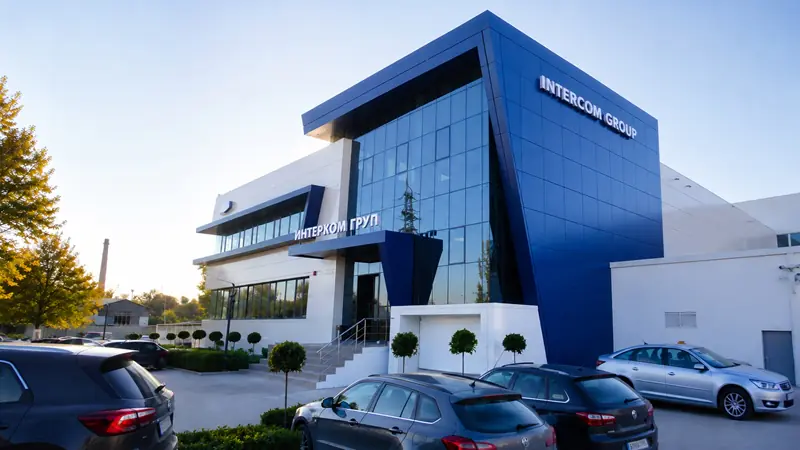
Intercom Group Expands Product Range with Welded Steel Pipes and Profiles


thyssenkrupp Begins Partial Revamp of Schwelgern 2 Blast Furnace

Northern European, Italian local HRC prices rise on tighter supply, post-summer market pickup
Domestic prices for steel hot-rolled coil (HRC) increased in both Northern Europe and Italy, driven by limited availability in the market and a resumption of trading activity after the end of the summer slowdown period, sources told Fastmarkets on Wednesday September 2.
In Northern Europe, indications and offers for workable prices were reported within the range of €740-760 ($858-881) per tonne ex-works on Wednesday, in line with the latest transactions heard on Tuesday.
Higher offers from mills were quoted at €770-790 per tonne ex-works, but these levels were still considered unworkable, sources said.
HRC producers increased their offers at the beginning of September, which was also driven by the limited availability of material in the region due to the partial refurbishment and maintenance work at thyssenkrupp’s blast furnace No. 2 in Duisburg, as the company announced on September 1.
However, no full production stop at the mill’s site was expected, a trade source said, adding that the producer was still offering HRC but at higher prices.
Another trade source said that customers were hesitating to buy imported material due to the uncertainty over the additional duties under the steel safeguard system.
As a result, Fastmarkets’ daily steel hot-rolled coil index domestic, exw Northern Europe was calculated at €755 per tonne on September 2, up by €6.67 per tonne from €748.33 per tonne on September 1.
The index was up by €21.25 per tonne week on week and €43.75 per tonne month on month.
In Italy, market activity resumed slightly on Wednesday, with sources quoting higher levels compared to August prices. This was widely expected, as most mills were out of the market during the summer holiday period.
Latest transactions were heard at €720 per tonne ex-works, with a trade source saying this was “the minimum price,” while customers were heard asking for material at €710 per tonne ex-works.
Indications for workable prices were reported in the range of €710-730 per tonne ex-works. Offers reached €730 and €740-745 per tonne ex-works, but the higher levels were considered unworkable, according to sources.
“Market is waking up slowly, opposite of my idea. They [prices] are still not jumping up strongly,” a second trade source said.
No news about a restart date was heard for Metinvest’s Ferriera Valsider mill, which declared a force majeure in late August due to an engine issue. However, a source at the company said it was not offering HRC yet due to “limited allocation for the fourth quarter of the year.”
Fastmarkets’ daily steel hot-rolled coil index domestic, exw Italy was calculated at €721.67 per tonne on September 2, up by €9.17 per tonne from €712.50 per tonne on September 1.
The index was up by €2.09 per tonne week on week and €15.42 per tonne month on month.


ArcelorMittal to end primary steelmaking at Duisburg site, retain rerolling operations
ArcelorMittal plans to end primary steelmaking at its Duisburg site in Germany by the end of 2027, closing its steelworks and billet mill and shifting to a rerolling model amid mounting economic pressures.
The company announced on Monday, September 1, that the decision followed an assessment of “several options” to maintain steel production following the end of its pig iron supply contract in September 2027.
Its contract with thyssenkrupp Steel was terminated in December 2024 because extending it would have resulted in “significant cost increases,” ArcelorMittal said. Alongside alternative pig iron supply arrangements, the company considered switching to electric-arc furnace-based steelmaking as part of its decarbonization strategy, but concluded that neither option was economically viable.
“While the structural challenges facing the steel sector in Europe are significant and well known – including low capacity utilization, declining local demand, limited export opportunities, and high energy costs – securing the long-term future of ArcelorMittal Duisburg for our customers, our employees, and the entire region is an absolute priority,” said Sanjay Samaddar, chief executive of ArcelorMittal Europe – Long Products.
The plan is for the company to rely on externally supplied billet, Fastmarkets learned.
“Several ArcelorMittal sites, as well as other external manufacturers in Europe, are capable of supplying Duisburg with the majority of the required semi-finished products,” a spokesperson said. “ArcelorMittal Hamburg, which produces steel using the DRI-EAF [direct-reduced iron-electric-arc furnace] process, is well-positioned to supply Duisburg with semi-finished products that have a lower CO2 footprint.”
The Duisburg plant currently has crude steel production capacity of 1 million tonnes per year and supplies customers in the automotive, mechanical engineering and railway sectors. ArcelorMittal did not specify the volume of wire rod it expects to produce after steelmaking ends.
“We are pressing ahead with our plans to supply the wire rod mill to ensure continuity of supply for all our customers beyond September 2027,” Samaddar added.
Management has begun discussions with the site’s 800 employees, with around 550 jobs reportedly at risk. ArcelorMittal did not say when its board would vote on the proposal or when employee consultations were expected to conclude.
Duisburg decision highlights mounting pressure on European steelmaking
A study published by PricewaterhouseCoopers (PwC) in August said the transformation of Europe’s steel sector was stalling and projected that conventional blast-furnace/basic oxygen-furnace steel (BF-BOF) steelmaking could become economically unviable in Europe and other regions by 2040.
The report said the deterioration in the route’s competitiveness would be driven mainly by rising carbon costs under the EU Emissions Trading System (ETS) and the Carbon Border Adjustment Mechanism (CBAM) affecting imports into the EU, which would “put an additional burden” on conventional steelmaking globally.
“The steel world of 2040 will be fundamentally different from today’s. The blast-furnace route will become uneconomical, the geography of primary production will shift, and the value of European steel processing will increasingly have to be measured by the knowledge contained in the product, not by the material itself,” Andree Simon Gerken, energy transition and decarbonization partner at PwC Germany, said on August 3.
The study identified scrap-based EAF steelmaking as Europe’s most resilient and competitive production route, noting that scrap is generated domestically and is not dependent on imported iron ore. However, PwC also noted that scrap-EAF cannot fully replace primary steel production because certain steel grades require specific raw material qualities, while also remaining sensitive to power costs and scrap availability.
In a bid to support industrial decarbonization, the European Commission proposed changes to the ETS in July, including extending free emissions allowances beyond 2030 for companies investing in low-carbon projects. Steelmakers said such measures are critical to support the transition to EAF-based steelmaking.
In June, voestalpine joined ArcelorMittal Europe and thyssenkrupp in calling for a pause in rising ETS costs, arguing that higher carbon costs risk diverting capital away from investments needed for the transition to low-carbon steelmaking.
The companies estimated then that, without reform, steel-intensive manufacturing activity in the EU could decline by 30-40%, putting as many as five million jobs at risk across the value chain. They called for a temporary pause in ETS cost escalation until conditions for economically viable decarbonization are in place, alongside stronger support for early-stage projects and measures to balance import and export competitiveness.
When asked whether ArcelorMittal’s recent decision could signal a broader risk of primary steelmaking capacity closures in Europe, a source said: “There is always a risk of a downturn. I don’t see that happening in Germany just yet, but who knows what will become of thyssenkrupp in the future.”
“ArcelorMittal has clearly put the brakes on decarbonization efforts in Germany. However, other blast-furnace operators such as Salzgitter and HKM are currently pursuing their decarbonization programs,” the source added.
Fastmarkets’ weekly price assessment for steel wire rod (mesh quality), domestic, delivered Northern Europe, was €705-715 per tonne on September 2, unchanged week on week.

Tata Steel Nederland applies for new nature permit for green steel transition at IJmuiden
Tata Steel Nederland has announced that it has applied to the North Holland North Environmental Service for a comprehensive update of the nature permit covering its entire steel production site in IJmuiden, as the company prepares to implement its green steel project and further reduce emissions, including carbon dioxide and nitrogen.
The company stated that the updated permit is intended to bring its operations into line with current legislation and regulations and provide the basis for both the green steel project and other future investments aimed at cleaner and more circular steel production.
Changes in Dutch nitrogen rules require permit update
Tata Steel Nederland’s existing nature permit dates from 2016 and was expected to be updated after 10 years. The company stated that the application has also become necessary following changes in Dutch case law concerning nitrogen.
A 2024 ruling by the Council of State introduced stricter requirements regarding nitrogen offsetting, which apply retroactively to 2020. As a result, certain projects initiated previously must now also be incorporated into the permit. The existing permit will remain valid until the Province of North Holland issues a renewed permit.
DeNOx installation to cut pellet plant nitrogen emissions by 80 percent
One of the main measures aimed at reducing nitrogen emissions is a new DeNOx installation at the company’s pellet plant, which is expected to reduce nitrogen emissions from the facility by approximately 80 percent. Together with a previously completed dedusting installation, the project represents the largest environmental installation in Tata Steel Nederland’s history, involving an investment of more than €200 million. To fully commission the DeNOx installation, Tata Steel Nederland is also applying for the necessary environmental and water permits from the relevant Dutch authorities. The installation can be fully put into operation once the required nature, environmental and water permits have been granted.
According to the company, obtaining a single integrated nature permit for the entire IJmuiden site is intended to provide regulatory certainty for the implementation of existing sustainability measures as well as future projects aimed at reducing emissions and supporting the transition to green steel production.
On another note, the Dutch Public Prosecution Service decided to prosecute the company, suspecting it of multiple criminal offenses, including the intentional and unlawful release of harmful substances into the air, which might have had adverse consequences for public health, as SteelOrbis reported previously in July 2026. The company was also suspected of breaching its duty of care by carrying out insufficient maintenance, operating without the required permits and failing to report several incidents involving raw coke.

UK recognizes 16 overseas carbon pricing schemes for CBAM relief
The UK government has published a list of overseas carbon pricing schemes that currently qualify for carbon price relief under the UK Carbon Border Adjustment Mechanism (CBAM), ahead of the mechanism’s introduction.
The list, based on information available as of June 19, 2026, is intended to help importers determine whether the embedded emissions of CBAM goods have already been subject to an overseas carbon price that may be eligible for relief. The measure is designed to prevent double taxation while ensuring imported carbon-intensive goods face a carbon price comparable to that paid by UK manufacturers.
EU ETS, China and India among 16 recognized schemes
The government currently recognizes 16 qualifying carbon pricing schemes, including the EU Emissions Trading System (EU ETS), China’s national ETS, India’s Carbon Credit Trading Scheme (CCTS), South Korea’s K-ETS, Japan’s GX-ETS and Australia’s Safeguard Mechanism. The list also includes carbon pricing systems in Canada, Chile, Kazakhstan, Montenegro, New Zealand, Serbia, Singapore, South Africa, Switzerland and Taiwan.
The UK government stressed that the list is not exhaustive, noting that some regional carbon pricing systems may already meet the qualifying criteria and that schemes currently under development may become eligible once finalized and implemented. The list will therefore remain under review and will be updated as additional schemes are assessed.
Relief to depend on effective carbon price paid
The amount of relief available will depend on the effective carbon price actually paid on the embedded emissions of the imported goods. Emissions covered by free allowances will not qualify for relief, since no effective carbon price has been paid on them, while rebates and refunds will reduce the amount that can be claimed. Accordingly, no relief may be available where all emissions are covered by free allowances or where the overseas scheme provides full rebates or other relief.
The government also stated that if any changes made after June 19, 2026, result in one of the listed schemes no longer fully meeting the qualifying criteria, that scheme will cease to qualify for carbon price relief. Importers liable under the UK CBAM will remain responsible for determining whether they are eligible for relief, calculating the applicable amount and meeting the related record-keeping requirements.

Romania’s UMB Steel closer to restarting Otelu Rosu with 700,000 mt longs capacity
After more than a decade of inactivity, the restart of the Otelu Rosu steel plant in Romania is taking shape as domestic company UMB Steel moves ahead with the redevelopment of the site. The plant has remained idle since 2012 and is expected to return with around 700,000 mt per year of long steel capacity. The project also marks a significant expansion of UMB’s activities beyond infrastructure construction and into steel production.
According to local media reports, the future production route is expected to combine scrap-based EAF steelmaking with continuous casting and rolling. The planned product mix will include rebar and other straight bars, compact coils and wire rod, giving the project a clear focus on construction-related demand. This is particularly relevant given UMB’s strong presence in Romania’s road and infrastructure sector, which could potentially provide an additional outlet for part of the future production. Meanwhile, the remaining volumes may increase the availability of locally produced long steel once the plant becomes operational.
However, the actual impact of the new capacity will depend largely on market conditions at the time of the restart. Romanian long steel demand remains relatively subdued, while consumption continues to rely heavily on the progress of infrastructure and public investment. Even so, the return of Otelu Rosu could become more relevant if project activity strengthens, both by adding domestic supply and supporting future steel requirements linked to infrastructure development. At the same time, the EAF-based route could give the future plant some advantages in terms of energy use and emissions as environmental requirements in the European steel sector continue to tighten.

Most EU ships recycled outside of Europe: report
Europe has recycled just 5% of the tonnage of EU-owned and EU-flagged ships between 2019-2025, despite having sufficient domestic recycling capacity, Kallanish discovers from a report by Shipbreaking Platform and Transport & Environment (T&E).
During the period, 706 EU-flagged or EU-owned ships totalling 6.7 million light displacement tonnes (LDT) were recycled globally. Of these, 22% were recycled at EU facilities, representing 5% of the total tonnage. Nearly half of the vessels, representing 66% of total tonnage, were dismantled in India, Bangladesh and Pakistan.
The report argues this represents both an environmental concern and a loss of recyclable steel for the European economy. The group criticised beaching practices in South Asia, arguing they increase environmental and safety risks.
“It is a profound failure of EU industrial strategy, prioritising strategic resilience and material autonomy on paper, while in reality letting valuable steel be lost to third markets,” says Benedetta Mantoan, policy manager at Shipbreaking Platform. “The EU speaks of reducing dependence on imported critical materials, yet, it lets its shipowners evade regulations and export millions of tonnes of recoverable steel that could be processed domestically. This is not strategic autonomy.”
EU regulations require EU-flagged ships to use approved recycling facilities and restrict the export of waste vessels to non-OECD countries. The report said shipowners often reflag vessels or uses other mechanisms to avoid these requirements.
Industry groups including Eurofer and Recycling Europe have previously called for a ban on beaching and landing methods of ship recycling. Some organisations have also argued that certain facilities should be removed from the EU-approved recycling list.
The debate has intensified following European Commission proposals to add two Indian recycling yards to the EU-approved list. In July, Brussels launched a public consultation on its proposed changes.
Shipbreaking Platform and T&E reiterate an explicit EU ban on beaching practices and higher standards in the ship recycling sector.


Arvedi submits binding bid for AMCLN assets
Italian steelmaker Arvedi has submitted a binding offer to acquire troubled coil service centre ArcelorMittal CLN Distribuzione Italia (AMCLN), according to sources familiar with the matter.
Earlier this year ArcelorMittal was seeking full control of AMCLN, its joint venture with CLN. The process comes amid continued pressure on the European automotive sector, a key market for the business.
In May, the European Commission cleared the merger between ArcelorMittal and AMCLN Distribuzione Italia. However, the Italian government has invoked its “golden power” authority to impose conditions on the merger, suggesting the government has pushed for an Italian buyer instead of ArcelorMittal. The Italian government has blamed ArcelorMittal for failing to relaunch Acciaierie d’Italia, also known as former Ilva and is now seeking €7 billion ($8.17 billion) in damages. This may have influenced the political dynamics around the merger, Kallanish hears.
The golden power is a tool the Italian government can use to block or impose conditions on corporate acquisitions considered strategically important for the country, even when the deal has been approved by European competition authorities. A source says the government could invoke the golden power as AMCLN supplies strategic companies in the automotive sector, such as Iveco.
A union source says they expect Arvedi to preserve all 400 jobs and guarantee production continuity. Unions have been summoned to a meeting in Rome with authorities for the presentation of Arvedi’s industrial plan on 14 September.
Arvedi and ArcelorMittal declined to comment when contacted by Kallanish.
AMCLN operates several Italian service centre assets and subsidiaries, including Delna, active in metal storage and pickling, and Tamagnone, specialising in coil transport and storage.