

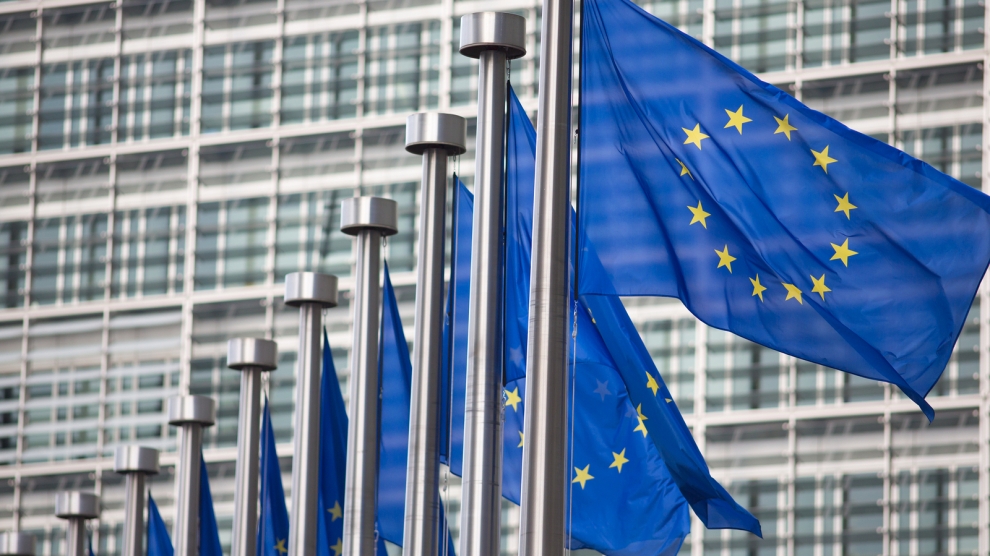
European Commission defines steel melt-and-pour rules for importers
The European Commission has clarified the evidentiary requirements for importers surrounding its new steel melt-and-pour rules, according to regulations published in the EU’s Official Journal on Aug. 31.
The rules, applicable across all member states from Oct. 1, 2026, were originally established in the EU’s Steel Regulation and aim to address the “root causes of global overcapacity” through monitoring steel imports and their place of origin — the original place where raw steel or iron is initially produced in liquid form and then cast into its first solid state.
By doing this, the Commission will gain a more accurate overview of the EU’s steel supply chain, allowing it to assess future policy developments within the sector.
The regulation states that a failure to declare the country of melt-and-pour with verifiable evidence would constitute non-compliance with the transparency requirements of the Steel Regulation, ultimately resulting in a rejection of the imported material by customs authorities.
Importers of steel categories covered by the Steel Regulation must provide a Mill Test Certificate that includes both the country of melt-and-pour and the heat number of the steel when available.
Where a Mill Test Certificate is available but does not contain either of these elements, customs authorities may assess complementary evidence such as invoices, delivery notes, quality certificates or contractual clauses, long term supplier declarations, cost accounting or production documents, customs documents from the exporting country, commercial correspondence or production descriptions.
If no Mill Test Certificate can be provided at all, then customs authorities can consider the same types of information as evidence so long as it entails the the melt-and-pour country and heat number during a transitional period from Oct. 1, 2026 to Sept. 30, 2027, after which the Commission may limit the types of admissible evidence. The list will remain under continuous review and may be adjusted at any time. The regulation states that there may be a delay in access to the relevant tariff-rate quotas until the evidence provided by the importer is officially verified.
Since the Steel Regulation entered into force on July. 1, steel prices have risen amid tighter quotas for importers and additional cost pressures from the Carbon Border Adjustment Mechanism and anti-dumping duties where relevant. The new import landscape has provided domestic producers with firm support despite weak underlying demand, with market expectations on future price trajectory largely bullish.
Platts, part of S&P Global Energy, last assessed domestic hot-rolled coil at €725/mt ex-works Ruhr Aug. 28, and in Southern Europe at €715/mt ex-works Italy, both up €45/mt since July. 1.
Platts assessed imported HRC in Northern Europe at €585/mt CIF Antwerp, unchanged from July. 1, and in Southern Europe at €575/mt CIF S. Europe, down €10/mt over the same period.

Arvedi bids for Italian auto steel joint venture as ArcelorMittal steps back
Largest Italian flat steel producer Arvedi has submitted a binding bid for the ArcelorMittal-CLN joint venture (AMCLN), after the Italian government invoked its so-called golden power rules to impose conditions on ArcelorMittal’s plan to acquire the remainder of its Italian automotive steel joint venture with CLN-Coils Lamiere Nastri, according to two people familiar with the matter.
ArcelorMittal has decided to withdraw from its planned acquisition of the remaining 51% stake, opening the door for domestic rival Acciaieria Arvedi — now Italy’s biggest producer of flat steel products — to take over not only that stake but the whole of AMCLN, the sources said.
The decision unwinds a decade-old partnership between ArcelorMittal and one of Italy’s leading automotive steel distributors, and comes as the Luxembourg-based group remains locked in a separate dispute with Rome over the nationalization of its former Ilva plant, once Italy’s largest flat steel asset.
ArcelorMittal and CLN set up the joint venture, ArcelorMittal CLN Distribuzione Italia, in 2015, as ArcelorMittal sought to expand its position in southern Europe — a strategy cemented in 2018 with its acquisition of Ilva.
ArcelorMittal had originally agreed to acquire the remaining 51% of the venture it did not already own. The European Commission cleared the wider transaction at the end of April 2026, saying “it was compatible with the internal market.”
Rome, however, used its golden power framework — legislation designed to protect companies deemed strategically important to the national interest — to attach conditions to the takeover, including a requirement for government approval and commitments on company restructuring, the people said.
Faced with those conditions, and against the backdrop of an unresolved standoff with the Italian government over the nationalization of its former Ilva assets, ArcelorMittal opted not to proceed with the acquisition, the people said.
The dispute over Ilva, once Europe’s largest steelworks, has weighed on ArcelorMittal’s broader Italian strategy for several years, amid disagreements with Rome over production levels, environmental remediation and the plant’s ownership structure.
Acciaieria Arvedi declined to comment, and ArcelorMittal did not answer when reached for a comment.

Irepas: Demand remains subdued in global long steel market on geopolitical uncertainties
Global long steel demand has become marginally lower since June due to geopolitical developments affecting the Black Sea region and the Strait of Hormuz, the International Rebar Producers & Exporters Association, or Irepas, said in its latest short-term outlook issued Sept. 3.
Disruptions to supply and logistics have been creating upward pressure on prices, the association said.
Irepas noted a combination of relatively weak demand and rising costs and supply-side pressures, which are creating considerable uncertainty and volatility in the international steel market.
From a pricing perspective, the main supportive factors are the prospect of reduced supply pressure from China, disruptions affecting trade in the Black Sea and the Strait of Hormuz, higher energy and production costs, and the increasingly restrictive trade measures being implemented in the US, EU and UK, Irepas said.
The association is expecting prices to remain under upward pressure during the next quarter driven primarily by the supply-side factors rather than by a strong recovery in underlying demand.
“On the demand side, the picture is less encouraging,” Irepas said, drawing attention to no evidence of a broad global demand recovery yet.
Global demand growth is projected to remain sluggish at around 0.9% per year through 2030, with the conflict in the Middle East, rising energy prices and disruptions in supply chains adding further headwinds, according to a recent report by OECD June 4.
“As the gap between steel production and capacity widens, utilisation rates will remain low and may slide from 76% in 2025 to 74% or less in 2028, intensifying financial pressure across the steel industry, OECD Steel Outlook 2026 report said.
The ferrous scrap market, meanwhile, remained weak without much movement towards the upside as steel mills sought to avoid price hikes that would further constrict their margins, Irepas said.
Turkish deepsea import scrap prices remained stable on Sept. 3. Platts, part of S&P Global Energy, assessed Turkish imports of premium heavy melting scrap 1/2 (80:20) at $380/mt CFR on Sept. 3, unchanged day over day.
“Under such circumstances, the current status of the market can be described as very unstable. The market will remain highly sensitive to geopolitical developments, particularly in the Black Sea and the Middle East,” Irepas noted.
Author: Cenk Can

EU Court of justice rejects Turkish Steel Companies’ anti-Dumping appeals

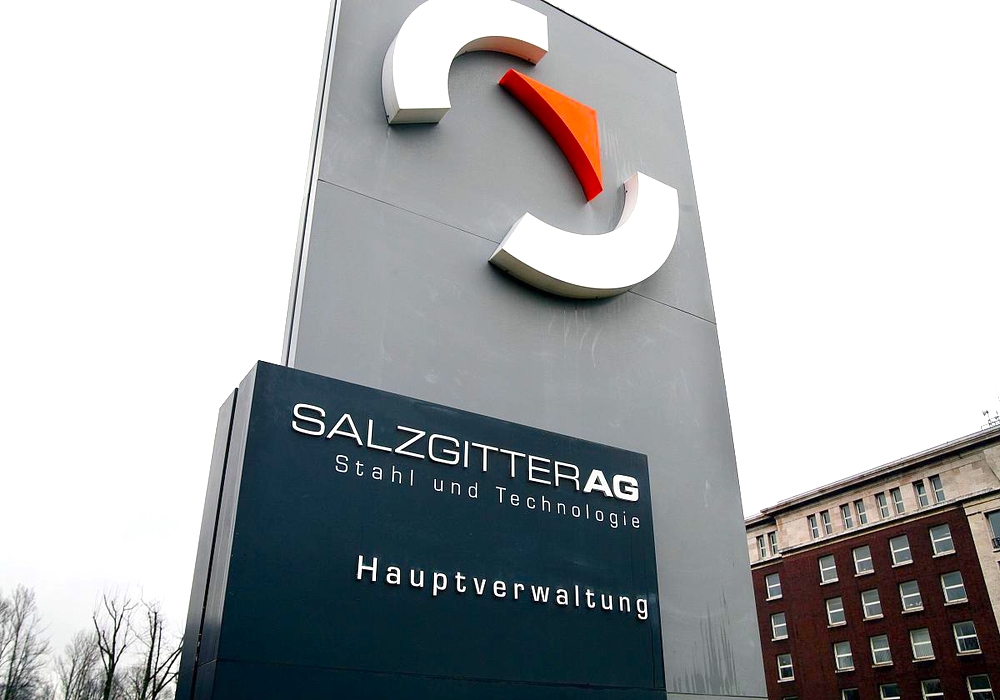
Salzgitter starts up new hot straightening machine in Mülheim
Commission sets type of evidence to be provided by importers to prove country of ‘melt and pour’
European Commission sets type of evidence to be provided by importers to prove country of ‘melt and pour’ of steel products subject to EU Steel Regulation.
From 1 October 2026, importers of steel products covered by the EU Steel Regulation will need to demonstrate the country where the steel was originally melted and poured.
The implementing act applies from 1 October 2026. From then on, importers must declare on their customs declaration the country in which the steel has been melted and poured, in order to be able to import steel products subject to the Steel Regulation into the EU market. They will need to support the declaration with the following evidence:
- To provide a Mill Test Certificate that includes the country of ‘melt and pour’ and the heat number of the imported steel;
- In case the Mill Test Certificate provided does not give information either on the country of ‘melt and pour’ or the heat number, or if no Mill Test Certificate can be provided at all, the following evidence may be considered by customs authorities as complementary to the Mill Test Certificate or as standalone evidence, provided that it gives information on the country of ‘melt and pour’ and the heat number: invoices, delivery notes, quality certificates and clauses in implemented purchase orders or contracts, long-term declarations from suppliers, cost accounting and production documents, customs documents from the exporting country, commercial correspondence, or production descriptions.
As of 1 October 2027, the listed documents will only be accepted as complementary to the Mill Test Certificate, rather than as standalone documents.
The Commission will continue to work closely with Member States and stakeholders to support the smooth implementation of the new traceability requirements.
Read more: https://policy.trade.ec.europa.eu


Thyssenkrupp Hohenlimburg lifts green power intake
Tk Hohenlimburg’s medium wide strip rolling mill intends to lift the share of green power in its energy consumption from currently 40% to 100%, Kallanish learns from an online post by thyssenkrupp Steel.
Two years ago, the unit started sourcing electricity from the wind park of SL Natur Energie, which is also located in the Hohenlimburg district of Hagen. The local connection made the mill the first German industrial manufacturer to have a direct feed from a neighbourhood wind park, the company claims.
SL Natur Energie is a wind power company that predominantly seeks partnerships with local companies and municipalities in North Rhine Westphalia.
It operates 180 wind power plants on 36 sites, with a combined annual power production of 1.2 terawatt hours, which it says avoids the emission of 835,00 tonnes of CO2. Its Hohenlimburg park site started operating in mid-2004, and has a capacity of 55 gigawatt hours/year.


NW European plate market reality defies higher prices
Northwestern European integrated plate mills are seeking to achieve higher prices going forward, although the prospects for realising this in the current market are not certain.
“We are in negotiations for the third quarter, with mills asking for €60/tonne ($70) more quarter-on-quarter,” one market source tells Kallanish. In line with others who have observed higher prices in spot offers in recent weeks, he sees the mill target’s reaching €900/t for S355 delivered. He doubts that it will be achieved in full in the negotiations, “but it will certainly at least be +€30/t”.
Thanks to project contracts, German mills are well utilised, and therefore can afford to ask for higher prices. These mills are licensed for projects by railroad operator Deutsche Bahnfor example, “which are more profitable, but also take longer for certification,” one manager explains.
According to numerous players, German mills are utilised until the end of the year now, and some special grades are not available before the New Year. In addition, a blast furnace repair outage at one mill and impairments of waterway transports have caused longer lead times for high-end plate, the manager says.
Hence, the full price hike by the integrated mills may be achievable for high-end products which are in demand, but not for commodity plate, observers believe.
“Hardly anyone will be willing to pay €900/t,” one manager notes. He warns that “the next two weeks will have to show if the demand is given, otherwise we might see a backlash.”