


Bekaert ends cord production in Sardinia, transfers site
Belgian wire making group Bekaert says it has signed a preliminary agreement with Nuova Icom, a Sardinian industrial engineering and metalworking company, for the reindustrialisation of its Macchiareddu site in Sardinia, Italy.
Over recent years, structural changes in the tyre industry have impacted market demand and the competitive position of Bekaert’s wire reinforcement site in Sardinia, Kallanish learns from a statement by the group. It says that production activity at the site has progressively declined, and tyre cord production is no longer viable under current market conditions.
According to Italian business daily Il Sole 24 Ore, reasons for the crisis highlighted by the company are transport costs that are three times higher than those of competitors, and “unsustainable” energy supply conditions in Sardinia, which penalise energy-intensive companies.
The plant provides work for 237 direct employees and about 50 in allied industries. The preliminary agreement signed with Nuova Icom provides for the transfer of Bekaert’s site as well as the reemployment of Bekaert employees.
Workers and unions Fiom, Fsm and Uil are in permanent assembly until Thursday. The announced sale not only offers no guarantees, but also risks the silent dismantling of an industrial reality that still represents a strategic stronghold for Sardinia’s economy, the paper quotes a representative as saying.
The transaction is anticipated to close in October.


ADI’s future pending as Assofermet demands transparency
Italian steel trade association Assofermet is asking the government for complete transparency in the sale tender process for Acciaierie d’Italia (ADI). All eyes are now on the imminent court hearing, set for 9 September, which will review the Milan Court of Appeal ruling which imposes the shutdown of ADI’s hot end area by 28 October, Kallanish learns from the association.
According to an Assofermet note, the conditions for participation in the Italian consortium should be public and accessible in order to protect all potentially interested parties. This is so the industrial relaunch of the Taranto steelworks can represent a strategic opportunity for the entire supply chain, including the downstream sector represented by the association.
Assofermet says it wishes to be involved in and informed about the consortium initiative formalised by Federacciai and 14 steelmakers in August, given the potential implications for its members.
“The association shares the concerns expressed by various parties over the future of the hot end area under ADI in special administration, given the inevitable consequences for the supply chain and the outcome of the ongoing tender process,” the note says.
It adds that production continuity at the Taranto steelworks and the protection of employment remain a priority.
Additionally, it says ADI could once again become a strategic supplier for its member companies, now more than ever, given the recent tightening of import restrictions on steel from non-EU countries.
ADI’s special commissioners have filed a request to obtain an urgent suspension of the Milan Court of Appeal ruling, and the hearing will decide the future of the plant’s primary steelmaking.
Meanwhile, the Italian government is financially guaranteeing the production and operational continuity of the Taranto steelworks as the search for a new owner continues.
Authorities remain in talks with Jindal Steel International and Federacciai consortium.
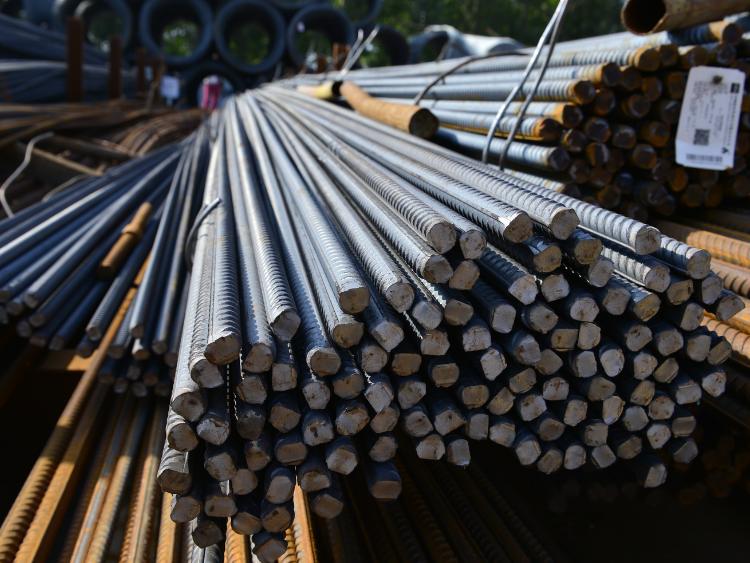
Italian rebar makers pause sales, seek increases
Some Italian rebar producers are halting sales and are expected to come back to quoting increased prices by some €20-40/tonne ($23.3-46.6/t) compared to their pre-holiday levels, according to sources.
The new asking level is said to be €460-480/t base ex-works. Before the August break, producers announced increases to €440/t base ex-works, Kallanish notes.
The current pause in sales mirrors ArcelorMittal’s recent price increase for rebar and other long products by €25/t in September, driven by rising energy and freight costs. A mill source says that high costs are forcing producers to push up prices to recover margins. Demand has been fluctuating in recent months, with the first two weeks of each month quiet as customers hold back, before orders pick up in the final two weeks.
The market has remained quiet post-holiday, with buyers adopting a wait-and-see approach with some contracts implemented but not for high volumes.
The few rebar contracts implemented in the past week remain stable compared to the pre-holiday levels. They were concluded at €410-420/t base ex-works. Including size extras of €260-270/t, effective transaction prices are assessed at €670-690/t ex-works, sources suggest. Mesh prices were reported at €500-530/t delivered, excluding €300/t for size extras.

EUROFER urges EU to safeguard steel competitiveness during green transition
The European Steel Association (EUROFER) has called for measures to ensure that the decarbonization of the European steel industry supports the sector’s competitiveness and maintains production, investment and employment in Europe.
EUROFER made the statement following a meeting at the European Parliament attended by around 100 members of the European Parliament, steel industry executives and other stakeholders, which focused on how the European steel sector can decarbonize while maintaining its industrial base.
High energy costs and global competition pressure European steelmakers
According to the association, high energy costs and global competition continue to put pressure on European steelmakers. The EU’s Steel and Metals Action Plan should provide conditions that allow steel producers to remain competitive and continue investing in Europe.
The association also stressed the need to create predictable demand for low-carbon steel to support investments in decarbonization projects. In this regard, EUROFER pointed to the Industrial Accelerator Act and measures promoting the use of low-carbon steel in the automotive sector as potential instruments for creating lead markets for steel produced in Europe.
ETS and CBAM decisions seen as critical for competitiveness
In addition, EUROFER stated that upcoming decisions concerning the EU Emissions Trading System (ETS) and Carbon Border Adjustment Mechanism (CBAM) will be critical to preventing carbon leakage while maintaining the competitiveness of European steel production. According to EUROFER, Europe’s green transition should ultimately strengthen the region’s industrial base and support growth rather than weakening European industry.
European Commission Executive Vice-President Teresa Ribera stated that Europe’s industrial strength and sustainable future must advance together, adding that the EU should create the conditions needed for industrial transformation while companies are responsible for delivering investments, innovation and employment.
Meanwhile, EUROFER President Henrik Adam welcomed the progress made by the EU so far, including the Steel and Metals Action Plan, but stated that further measures are required to achieve a broader industrial transformation. According to Adam, Europe needs to strengthen industries throughout the value chain to establish a competitive “Made in Europe” industrial ecosystem, while substantially reducing energy costs. He stressed that competitive and affordable energy is essential for European industry to decarbonize while continuing to produce and invest in the region. The European steel industry is ready to contribute to the transition, but warned that Europe risks falling behind as other major economies strengthen their industrial bases, Adam added.

Italian longs market sees slight stir as some increases consolidate
Sentiment in the Italian domestic longs market appears to have regained momentum this week. General price increases for semis and finished steel products at an international level are also exerting upward pressure on the Italian domestic market.
According to market participants, in the rebar segment the level of €440/mt ex-works base (€700/mt ex-works including regular extras) is now consolidated, and some producers are reported to be aiming to increase their offers by a further €20/mt. “We are collecting more orders, as customers are probably trying to stock a little more ahead of further increases,” a source stated. A market player at an Italian steel mill said, “Inventory levels are under control, and, despite the complex and uncertain geopolitical scenario, September could be a positive month. However, the market remains extremely volatile.”
In the drawing-quality wire rod segment, the price range of deals concluded for Italian material widened to €670-690/mt delivered in the past week, while for imported material end-users are offering €650-660/mt delivered, including CBAM costs. “Wire drawers continue to prefer domestic material, as it is subject to fewer risks,” a source stated. Another market player, who at the end of last week had expressed cautious optimism regarding the short-term market trend, now told SteelOrbis that the medium-to-long term outlook remains negative.
Market players in the trading segment continue to report medium-low demand levels, and one source believes that the upward trend will not last more than two or three weeks, since fundamentals remain weak and market dynamics have “changed significantly, making it very difficult to predict a clear trend”.
An increase in domestic offers – and prices – has also been reported in both the beam and merchant bar segments.

European local HRC prices rise on tighter availability, higher energy costs pressuring producers
Domestic prices for steel hot-rolled coil (HRC) in Europe increased on September 9 in both Northern Europe and Italy, with buyers resisting the increases from mills, but tighter availability and higher energy costs putting pressure on producers, sources told Fastmarkets on Wednesday.
In Northern Europe, trading activity was slowly picking up, but sources said demand in the market was still weak, with many market participants remaining in a wait-and-see mode. Mills were targeting higher levels because of reduced availability and energy cost pressure, but buyers were resisting these price increases, sources said.
On Wednesday, deals were reported at €750 ($872) per tonne ex-works, in line with previous levels heard on September 8. Offers from mills were reported within the range of €750-790 per tonne ex-works, but sources said the upper end of the range was considered too high.
A producer was heard targeting prices around €800 per tonne ex-works by the end of the year but no official offers were quoted at this level.
“Buyers are complaining about higher offers, as demand remains underwhelming,” a distributor source said on September 9, adding that “both electricity and gas [prices] are moving sharply higher, squeezing margins [for mills].”
As a result, Fastmarkets’ daily steel hot-rolled coil index domestic, exw Northern Europe was calculated at €750 per tonne on September 9, up by €7.50 per tonne from €742.50 per tonne on September 8.
The index was down by €5 per tonne week on week but up by €32.50 per tonne month on month.
In Italy, the market was still quiet with no fresh trading activity reported. “Demand in the downstream is low, and thus there are low negotiated volumes with the producers,” a buyer said on Wednesday.
A supplier indicated workable levels for October delivery on the same day at €750 per tonne delivered, which nets back to €730 per tonne ex-works.
The same supplier said that buyers were reporting minimum levels for material at €710-720 per tonne ex-works but discarded these prices as too low, along with other sources in the market, who said these levels were not seen anymore.
Two buyers said mills were offering material at €730-740 per tonne ex-works, but deals had yet to materialize.
A source at Metinvest’s Ferriera Valsider mill confirmed that it had restarted production of HRC after declaring a force majeure in late August due to an engine issue. However, the same source said that “the backlog is too large,” so it was not offering any new spot volumes yet.
Fastmarkets’ daily steel hot-rolled coil index domestic, exw Italy was calculated at €732.50 per tonne on September 9, up by €6.25 per tonne from €726.25 per tonne on September 8.
The index was up by €10.83 per tonne week on week and €23.75 per tonne month on month.

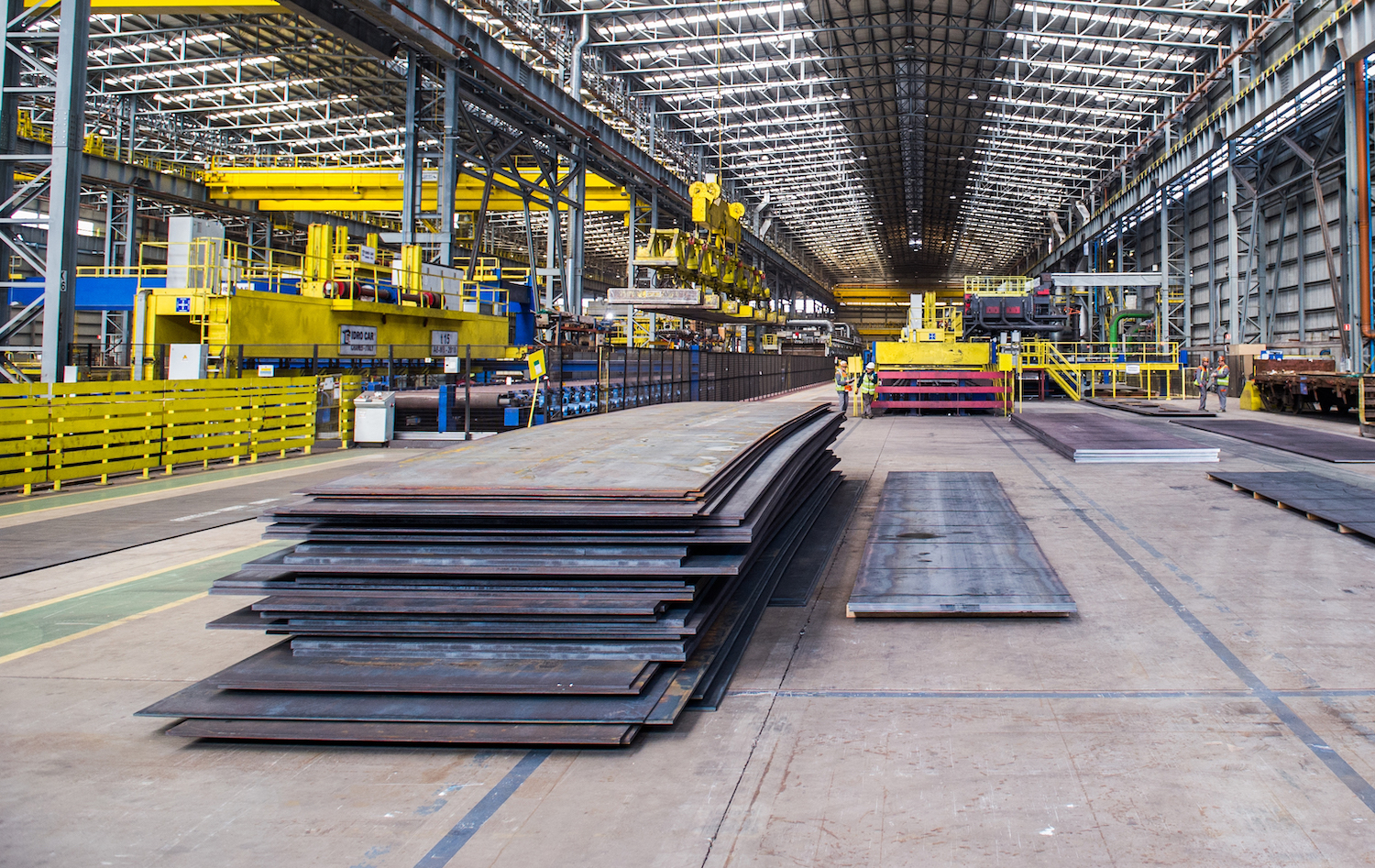
European domestic steel heavy plate prices rise on higher slab costs, tighter material availability
Domestic steel heavy plate prices in Europe increased further this week, with Italian producers raising target prices amid increasing slab costs and limited October availability, while in Northern Europe stronger offers and constrained material availability pushed plate prices higher, sources told Fastmarkets on Thursday September 3.
Italy
In Italy, S235-grade plate was heard being offered at €740-760 ($859-883) per tonne ex-works, increasing from previous levels at €740-750 per tonne ex-works quoted a week earlier.
However, no fresh trading activity was reported, as the market was still recovering from the Italian Ferragosto summer shutdown in August.
A producer source said they expected plate re-rollers to defend levels no lower than €750-760 per tonne ex-works for the fourth quarter of the year due to higher slab import costs.
The same source said they were targeting €760-780 per tonne ex-works but had not officially restarted sales yet, with their remaining tonnage for October being limited.
As a result, Fastmarkets’ weekly price assessment for steel domestic plate 8-40mm, exw Southern Europe was €740-760 per tonne on Thursday, up from €710-740 per tonne on August 27.
Prices for steel slab imports into Italy increased during the week, driven by higher raw material costs in China pushing up new offerings for November deliveries, sources told Fastmarkets.
Fastmarkets’ weekly price assessment for steel slab import, cif Italy was $560-580 per tonne on Thursday, up from $550-560 per tonne a week earlier.
No fresh plate import activity was heard during the week, therefore, Fastmarkets’ weekly price assessment for steel plate (8-40mm), import, cfr main port Southern Europe, was €710-750 per tonne on Thursday, stable week on week.
Northern Europe
In Northern Europe, latest offers were reported for German base plate at €875 per tonne ex-works and €870-880 per tonne ex-works, increasing from the latest indication for workable levels heard at €850 per tonne ex-works a week earlier.
Higher offers in Germany emerged in the market in late July when mills were said to have very good order books related to projects, but no trading activity above €850 per tonne ex-works was confirmed at the time.
However, the tighter availability of material in the market had been pushing new prices even higher.
This was reflected in Fastmarkets’ latest weekly price assessment for steel domestic plate 8-40mm, exw Northern Europe, which was €850-875 per tonne on Thursday, up from €820-850 per tonne a week earlier.
The plate import market in Northern Europe was quiet during the week, but prices were calculated in line with those in the South, reflecting growing domestic levels.
The corresponding Fastmarkets’ weekly price assessment for steel plate (8-40mm), import, cfr main port Northern Europe, was €710-750 per tonne on Thursday, narrowed upward by €10 per tonne from €700-750 per tonne.

Polish long steel market remains quiet amid poor demand
Polish domestic wire rod prices widened downward in the week to Friday September 4 amid weak demand, limited buying activity and growing cost pressures.
Market participants described demand as “very poor” amid increasing costs for fuel, energy and transportation.
Indications for wire rod were heard at 3,100 zloty ($717) per tonne delivered, while lower indications were also heard at 2,900-3,000 zloty per tonne delivered.
Fastmarkets’ weekly price assessment for steel wire rod (drawing quality), domestic, delivered Poland, widened downward to 2,900-3,100 zloty per tonne on Friday, from 2,990-3,100 zloty per tonne the previous week.
In the rebar segment, no new offers or transactions were heard during the assessment week.
Fastmarkets’ weekly price assessment for steel reinforcing bar (rebar), domestic, CPT Poland, was 2,650-2,680 zloty per tonne on Friday, unchanged week on week.
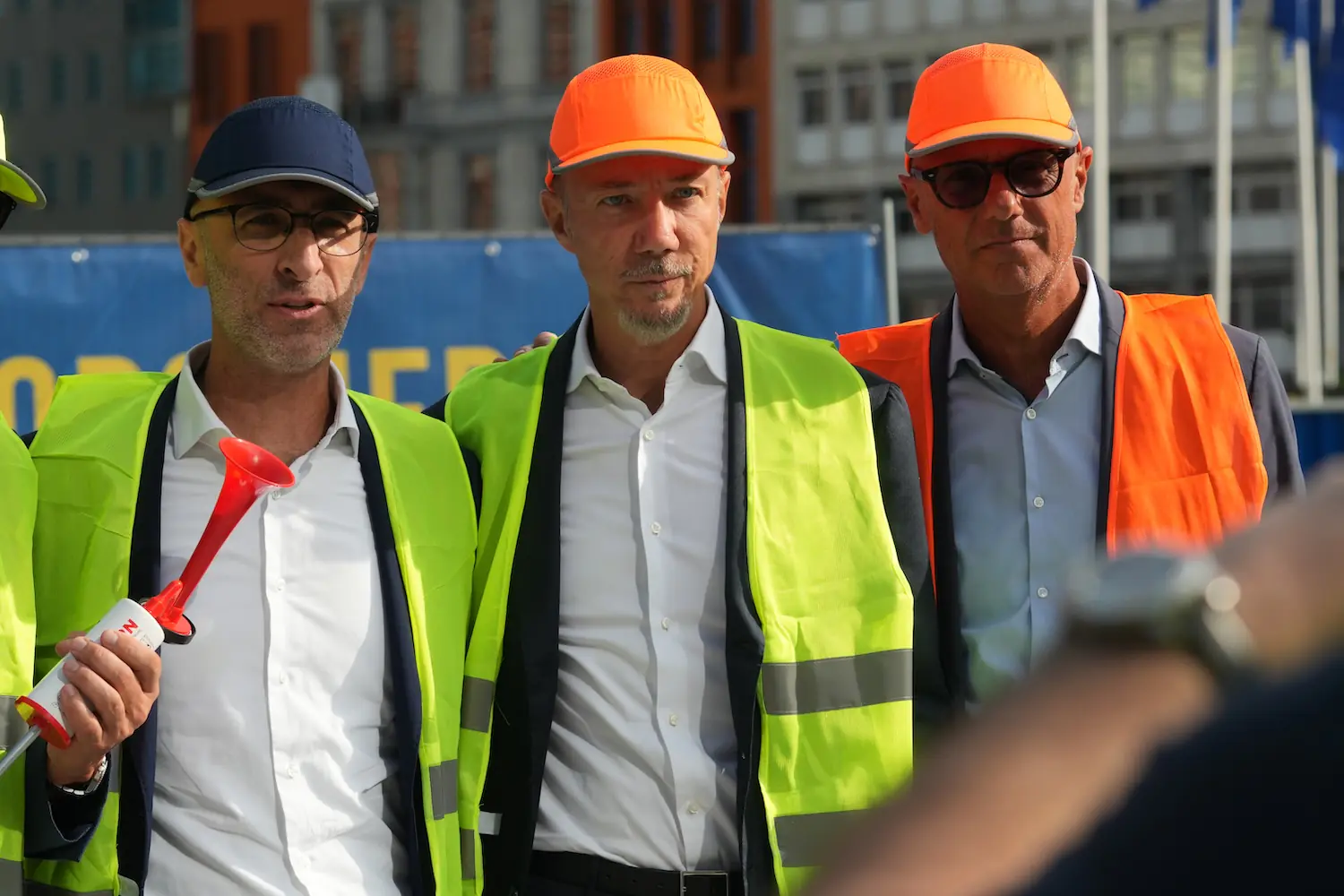
Assofermet joins EUROMETAL rally for stronger EU industrial competitiveness
Assofermet, the association representing Italian companies active in the trading, distribution and processing of steel, scrap and nonferrous metals, took part in the demonstration organized by EUROMETAL in Brussels on September 7 to call on European institutions to take action to support industrial competitiveness and ensure more balanced competitive imports from third countries.
As reported by SteelOrbis, around 200 representatives of the European metal industry took part in the initiative, gathering outside the European Commission to draw attention to the growing competitive imbalance between European companies, which are subject to stringent environmental and regulatory requirements, and non-EU producers of steel-intensive goods, which can access the European market without being subject to equivalent constraints.
Assofermet endorsed EUROMETAL’s call to extend protection across the value chain beyond primary steel production, highlighting the risks posed by a system in which restrictions on steel imports could ultimately shift competitive pressure onto the downstream stages of the production chain.
“This is an unprecedented initiative for the sector we represent. It was peaceful but, at the same time, determined, sending a strong and direct message aimed, looking ahead, at involving all stakeholders affected by and interested in European Union policies,” said Paolo Sangoi, president of Assofermet Acciai.
Protection of the entire value chain
The key element of Assofermet’s position concerns extending trade defense measures to products further downstream from steel production. “Imposing duties and restrictions only on raw materials is a dangerous injustice,” Sangoi said.
Assofermet, therefore, argues that trade protection instruments should also be extended to intermediate and finished products and to steel-containing components, in order to prevent imported goods from benefiting from production and regulatory conditions that differ from those imposed on European companies.
According to the association, the risk is that greater protection for steel produced in Europe could end up penalizing precisely those companies that use steel as a raw material. If the cost and regulatory burdens associated with steel increase for European companies, while competing finished products from third countries are not subject to similar constraints, part of production could gradually move outside the European Union.
Transition costs and non-EU competition
In its statement, Assofermet also stressed that European companies are making significant investments and incurring substantial costs to comply with EU environmental standards, while competing in the domestic market with operators that are not subject to the same requirements.
According to the association, stronger trade defense cannot be considered separately from the needs of European manufacturing. “Strengthening trade defense instruments must therefore be accompanied by a comprehensive view of the production chain, from raw materials through to finished products, so that the EU’s decisions can provide concrete support to companies and help keep manufacturing activities in Europe,” the statement said.
Assofermet’s call thus forms part of the broader European debate over how to reconcile decarbonization, protection of the steel industry and the competitiveness of downstream sectors. EUROMETAL has stressed that the aim should not be to oppose European climate policies, but rather to ensure that the same principles are applied across the entire value chain.
Author: Aurora Magnani