Google and Stegra sign agreement for low-emission steel


Domestic HRC prices rise in most parts of Europe as mills target higher prices on rising production and energy costs
Prices for domestic steel hot-rolled coil (HRC) edged up in Northern Europe day on day amid rising production and energy costs, while levels declined in Italy despite the tight supply in the market, sources told Fastmarkets on Wednesday September 16. Rising prices were also seen in the domestic markets of Spain and Central Europe, and were reflected in imports into Southern Europe.
In Northern Europe, trading activity was slow as end-user demand remained weak, while mills were under pressure due to higher production and energy costs, sources said.
The latest indications for workable levels were reported within the range of €730-750 ($842-865) per tonne ex-works, with one trade source pointing to €750 per tonne ex-works as the realistic level for deliveries of basic grades and sizes in October.
The same source expected customers to pay €760-770 per tonne ex-works for contracts in the fourth quarter.
Meanwhile, a distributor was pessimistic about such price increases. “Problem is that demand is low and there is extremely expensive energy,” the same source said, adding that electricity costs in Europe had risen by more than 50% in the last four months.
The distributor said that price increases were initiated by mills to cover the production costs, while there was no significant import activity due to the reduced import quotas and higher out-of-quota duties.
Latest offer for HRC imports into Northern Europe was reported at $700 per tonne CFR from India on Tuesday, or around €605 per tonne CFR, but no fresh trading activity was confirmed.
As a result, Fastmarkets’ daily steel hot-rolled coil index domestic, exw Northern Europe was calculated at €745 ($859.63) per tonne on September 16, up by €6.67 per tonne from €738.33 per tonne on September 15.
The index was down by €5 per tonne week on week but up by €26.25 per tonne month on month.
Meanwhile, in Italy, no significant trading activity was reported as well, while sources said customers were not worried about the tightening supply in the market for now.
On Friday, the Court of Appeal of Milan confirmed the shutdown order for the hot-end area at the former Ilva works in Taranto by October 28, while Metinvest’s Ferriera Valsider mill had not resumed offerings for HRC yet.
Latest offers in the market were reported at €750 per tonne delivered, which nets back to €730 per tonne ex-works, while indications for workable levels were heard in the range of €720-730 per tonne ex-works.
A second distributor said that mills were open to negotiate a discount of €15-20 per tonne from offer at €730 per tonne ex-works, which results in around €710-715 per tonne ex-works. However, other sources could not confirm these lower levels, and they were discarded from the daily index calculation.
Fastmarkets’ daily steel hot-rolled coil index domestic, exw Italy was calculated at €728.33 per tonne on September 16, down by €7.50 per tonne from €735.83 per tonne on September 15.
The index was down by €4.17 per tonne week on week but up by €14.58 per tonne month on month.
HRC imports into Southern Europe
In the import segment, most suppliers also raised prices after several rounds of successful sales, sources said on Wednesday.
Turkish material was heard available within the range of €550-560 per tonne CFR in the reported week, narrowed upward from €540-560 per tonne CFR, with 40,000 tonnes cargo reported sold within €550-560 per tonne CFR.
Indian offers moved well above $700 (€606) per tonne CFR from $650-655 per tonne CFR seen in late August.
Most recent offers were heard within the range of $715-740 (€620-641) per tonne CFR in the reported week, with small tonnage deals reported at the lower end of the range.
Egyptian HRC was offered at $750 (€623-627) per tonne CFR, including Carbon Border Adjustment Mechanism (CBAM)-related costs of $25-30 per tonne, with customers bidding for $725 per tonne CFR.
Excluding CBAM costs, the price would net back to €695-700 per tonne CFR. This price was used in the calculation of Fastmarkets’ weekly assessment of steel hot-rolled coil import, cfr main port Southern Europe, which excludes all types of duties.
The assessment was €550-620 per tonne CFR on September 16, up from €540-585 per tonne CFR on September 9.
HRC domestic market in Spain, Central Europe
In Spain, sellers managed to achieve higher levels for HRC material of €750-760 per tonne delivered (€730-740 per tonne ex-works) in the first half of September and were now targeting higher prices amid tighter domestic and import availability.
Buyers said that suppliers no longer agree to sell material at the abovementioned levels, and were offering €790 per tonne delivered (€770 per tonne ex-works), but were ready to discuss €760-770 per tonne delivered (€740-750 per tonne ex-works).
Fastmarkets’ weekly price assessment for steel hot-rolled coil domestic, exw Spain was €730-750 per tonne ex-works on September 16, widened upward from €730-735 per tonne ex-works on September 9.
Fastmarkets’ weekly price assessment for steel hot-rolled coil domestic, exw Central Europe moved to €730-740 per tonne on September 16, up from €720-730 per tonne on September 9, in line with recent transactions heard in the market.
Sources reported deals from all major suppliers within the range of €750-760 per tonne delivered or CPT, which corresponds to €730-740 per tonne ex-works.
Meanwhile, mills were targeting higher levels of €770 per tonne delivered, or €750 per tonne ex-works, amid tighter domestic and import availability.

Salzgitter signs major hybrid energy contract with Zelestra
Salzgitter Flachstahl, the strip-making subsidiary of Salzgitter AG, and Zelestra have signed what they say is Germany’s largest hybrid solar-plus-storage power supply agreement (PPA).
The long-term agreement covers two projects that support the production of green steel and increase grid flexibility, Kallanish learns from the steelmaker.
As part of the agreement, Zelestra will build, own and operate two new hybrid plants, each with directly connected battery storage systems, in Brandenburg and Thuringia. Salzgitter will purchase a total of 147 MW or 158 GWh/year of solar power from both plants and control the operation of the battery storage systems.
According to Salzgtter, the agreement is the first hybrid PPA in the German market for both partners, and makes Salzgitter the operator of a battery storage system for the first time.
For Salzgitter Flachstahl, hybrid PPAs are an important building block in meeting increasing demand for green electricity for the transformation of steel production within its SALCOS project, it says.
With Germany a core market for Zelestra, the company is now advancing more than 2 GW of solar, hybrid, wind and storage projects in the country, Salzgitter says.


US Steel Kosice confirms EAF investment, secures grant
US Steel Kosice (USSK) will invest approximately €900 million ($1.04 billion) in a new electric arc furnace and air separation unit (ASU) after signing an agreement with the Slovak government for a grant to partly cover the cost.
The 1.6 million tonnes/year capacity EAF is scheduled for commissioning in 2030, Kallanish notes.
The investment “strengthens the long-term perspective of steelmaking and employment in Kosice, supports a reliable regional customer base with high-quality and progressively lower-CO2 steel products, and confirms USSK’s active role in the decarbonisation and continued functioning of Slovak industry,” USSK says.
The EAF will operate together with the existing blast furnace facilities, enabling USSK to achieve both a stable supply of high-quality steel and a significant reduction in CO2 emissions, the firm says. The new ASU will support stable steelworks operation while improving energy efficiency and reducing CO2 emissions.
The grant amounts to approximately €350m, of which €310m is for the EAF and €40m for the ASU. It will be disbursed by the government through the EU Modernisation Fund. This is financed from revenues generated by the EU Emissions Trading System, including revenues from allowances paid by companies operating under the EU ETS. As the largest industrial participant in the Slovak EU ETS system, USSK has been the country’s most significant contributor to these revenues, it points out.
USSK’s decarbonisation “will help preserve industrial capabilities, strengthen supply security and support the competitiveness of Slovakia and the CEE region,” the firm notes. “At the same time, it is expected that Europe will secure its home market for domestic producers that invest in modern decarbonisation technologies, manufacture high-tech products in the region and contribute to the EU’s strategic competitiveness.”
Nippon Steel will transition USSK to direct ownership and rename the unit to Nippon Steel Slovakia effective 1 October. It aims to capitalise on the EU’s tighter import regime and concentration of automotive customers in Central and Eastern Europe.

European Parliament approves broader CBAM scope, limitations remain
The European Parliament has approved in a plenary vote by 464 to 50, with 159 abstentions, the extension of CBAM to cover downstream goods, including additional steel-containing goods proposed by the Industry, Research and Energy Committee (ITRE). It has also approved a fund to support the low-carbon transition.
Products such as fasteners, wire, springs and household articles are included in the proposed bill, a broader range than the Commission initially proposed.
MEPs also lowered the threshold by which small changes to a particular good would qualify as circumvention of the rules. They tightened the rule, so it targets only arrangements set up purely to avoid CBAM, and not normal business decisions to lower a company’s costs. MEPs also want to empower the Commission to apply the true country of origin’s default values where a pattern of circumvention is established, a Parliament note explains.
The Commission’s proposed safeguard was rejected. This would have allowed goods to be removed from the scope of the mechanism in the event of price shocks. MEPs instead want to add a mechanism to temporarily redirect CBAM revenues from the goods concerned to the affected sectors.
Parliament adopted its position on the related temporary decarbonisation fund (TDF) to protect EU producers on export markets, by 433 votes to 97, with 146 abstentions. MEPs want financial support from the TDF to run from 2027 to 2029, rather than only from 2028 as proposed by the Commission.
All downstream operators – firms that use CBAM-covered goods as inputs in their production – should be eligible for support from the fund. Leftover revenue could instead be redirected to the EU’s international climate finance commitments under the Paris Agreement.
Parliament will now start negotiations with EU member states on the final shape of the bill.
Eurofer welcomed the Parliament vote, highlighting as most important the CBAM extension to more products made from steel, including the priority list proposed by ITRE. “Broader coverage makes it harder to avoid CBAM by manufacturing steel into finished products outside Europe and then importing them into the EU,” it says in a note sent to Kallanish.
Eurometal also welcomed the move to extend CBAM to downstream steel products, but warned large numbers of steel-containing goods remain outside the mechanism’s scope, thereby providing a potential circumvention route. “Global suppliers will naturally redirect production towards categories that remain exempt, moving additional processing steps outside Europe while continuing to access the EU market,” it notes.
European export competitiveness, “perhaps the most significant structural weakness”, remains unaddressed, with exporters unable to recover carbon costs embedded in steel procured in the EU, Eurometal adds. “Until a credible mechanism exists to neutralise carbon costs for exports while remaining compliant with international trade obligations, Europe will continue to expose its manufacturing sector to an uneven global competitive environment,” the association continues.
Also needed are measures to address the cumulative impact of trade defence measures and other regulatory cost burdens throughout the manufacturing value chain, it concludes.

EUROMETAL: Wider downstream CBAM still fails to level playing field for EU steel users
The European Parliament has moved to address one of the key weaknesses in the EU’s carbon border policy by backing a broader application of the Carbon Border Adjustment Mechanism (CBAM) to downstream steel and aluminium products.
The move comes only days after EUROMETAL warned that rising costs of steel imported into Europe risk shifting competitive pressure towards finished goods manufactured outside the bloc.
While the Parliament’s position acknowledges that carbon leakage is increasingly moving further down the value chain, EUROMETAL believes significant gaps remain. In particular, the federation points to incomplete product coverage, a slow implementation timeline and the lack of an effective solution for EU exporters facing carbon costs in international markets.
Downstream carbon leakage gains political recognition
The Parliament’s position comes amid growing concern among European steel users that stricter carbon and trade requirements on steel could alter import patterns rather than reduce competitive pressure.
As SteelOrbis previously reported, EUROMETAL raised the issue during the European Convoy for Industrial Competitiveness in Brussels on September 7, warning that higher costs on steel produced or imported into the EU could make finished components, machinery and other steel-containing products manufactured outside Europe increasingly competitive.
The latest development therefore marks an important political recognition that carbon leakage is no longer confined to primary steel and aluminium, but can extend to components, assemblies, equipment and finished products further down the manufacturing chain.
Product coverage still leaves significant loopholes
For EUROMETAL, however, the proposed extension remains too limited. Even under the broader scope supported by Parliament, a substantial number of steel- and aluminium-containing products would remain outside CBAM. This could encourage non-EU manufacturers to carry out additional processing outside Europe and export product categories not covered by the mechanism, effectively shifting carbon leakage further downstream instead of preventing it.
The implications go beyond competition in finished goods. If a growing share of steel-intensive manufacturing moves outside the EU, domestic demand for European steel could also come under pressure.
Timing and export competitiveness remain key concerns
The timing of the extension is another concern. European manufacturers are already facing stronger import penetration in steel-intensive products, while regulatory and cost disparities are increasingly influencing investment and production decisions. EUROMETAL argues that delaying effective downstream coverage could give manufacturers further incentives to relocate production outside the EU while continuing to supply the European market.
At the same time, the issue of EU exports remains unresolved. European manufacturers selling into global markets continue to bear EU ETS-related carbon costs through their steel and aluminium inputs, while competitors in countries without equivalent carbon pricing may face no comparable burden. This leaves EU exporters at a structural disadvantage that an import-focused CBAM does not address.
CBAM cannot offset the wider EU cost gap
EUROMETAL also stressed that carbon costs are only one part of the competitiveness gap between European and non-European manufacturers. The federation pointed to the cumulative effect of carbon regulation and EU trade defence measures, including antidumping and antisubsidy duties and safeguard-related restrictions. These contribute to higher steel input costs within Europe, while manufacturers in third countries may continue to access steel at lower international prices.
As a result, finished products imported into the EU could retain a cost advantage even after downstream CBAM obligations are introduced, while European manufacturers continue to face both higher material and regulatory costs.
EUROMETAL is therefore calling for a broader value-chain approach, with wider coverage of steel- and aluminium-intensive products, faster implementation and measures addressing the competitive position of EU exporters.
“Today’s vote is a step in the right direction, but it does not yet deliver a level playing field for European industry,” EUROMETAL president Alexander M. Julius said, adding that Europe needs to protect the entire value chain if it wants to prevent carbon leakage and deindustrialisation.
Author: SteelOrbis Editorial Team

EUROFER president discusses CBAM with Turkish steelmakers in Istanbul
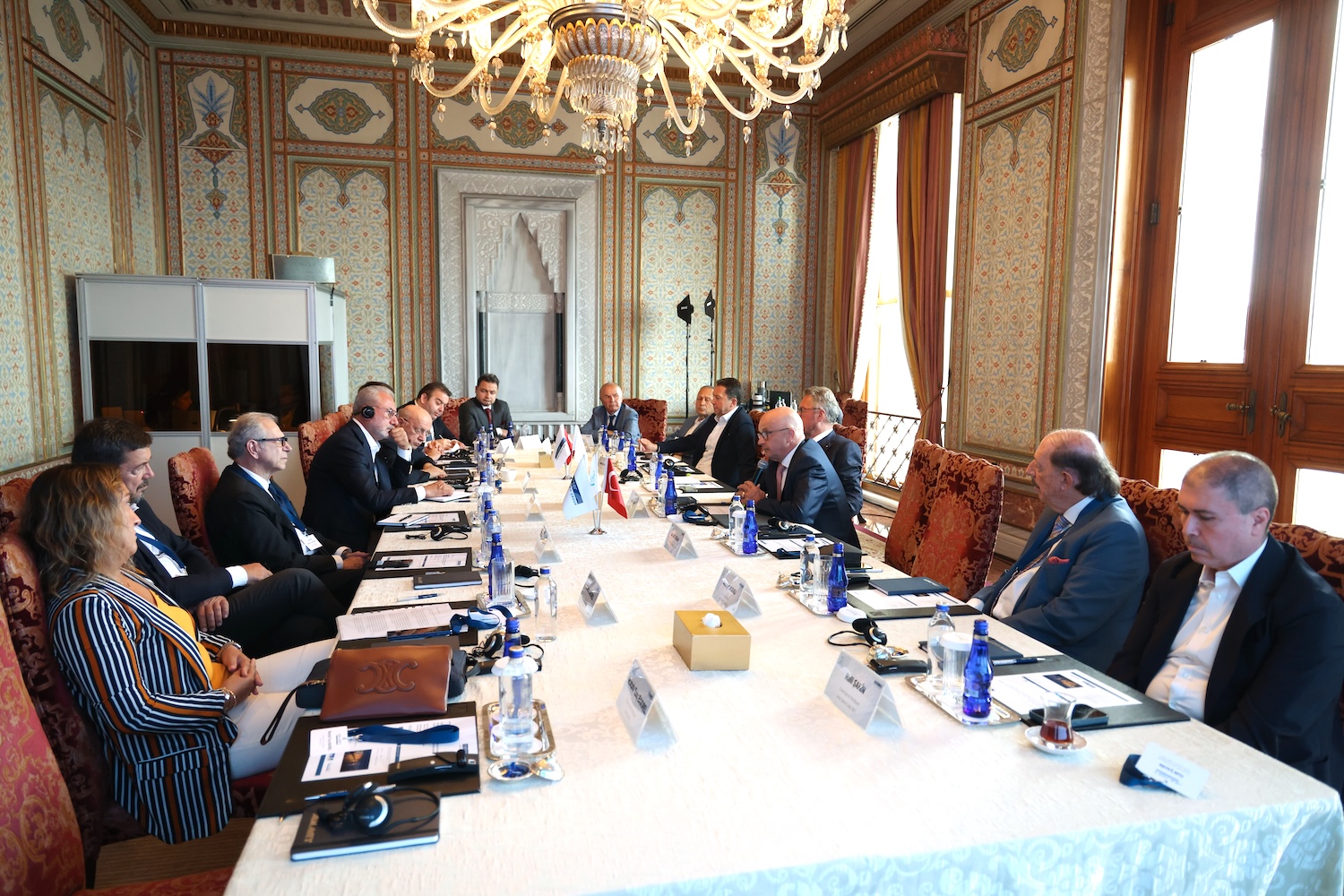
EUROFER President Henrik Adam met senior representatives of Türkiye’s steel industry in Istanbul on September 6 to discuss the EU Carbon Border Adjustment Mechanism (CBAM), carbon costs and the competitiveness of steel producers supplying the European market.
The meeting, hosted by ALMAMET International Group at the Çırağan Palace Kempinski, brought together executives from Turkish steelmakers and industry organisations, as well as representatives of the European steel sector.
Adam presented EUROFER’s assessment of the EU’s carbon-related regulatory framework and the implementation of CBAM, according to a statement issued following the event. The discussion also covered the outlook for the European steel industry and the market and competitive conditions expected to influence the sector.
CBAM entered its definitive phase on January 1, 2026. It applies to imports into the EU from several carbon-intensive sectors, including iron and steel. Under the mechanism, EU importers must report the emissions embedded in covered goods and surrender the corresponding number of CBAM certificates. A carbon price already paid in the country of production may be deducted if the importer can provide the required evidence.
The mechanism is intended to align the carbon cost of imports with that faced by European producers under the EU Emissions Trading System.
Participants in the Istanbul meeting discussed the effect that CBAM-related costs and compliance requirements could have on Turkish mills serving EU customers. Other subjects included emissions management, investment in lower-carbon production, environmental performance and the implications of evolving EU climate and trade policies.
The meeting also addressed how carbon intensity and regulatory compliance are becoming increasingly important factors in access to the European market.
Attendees included Uğur Dalbeler, CEO of Çolakoğlu Metalurji and chairman of the World Steel Association; Fuat Tosyalı, founder and chairman of Tosyalı Holding; Hasan Çolakoğlu, chairman of Çolakoğlu Metalurji; and Veysel Yayan, secretary general of the Turkish Steel Producers Association.
Representatives of İzmir Demir Çelik, Diler Holding, Kardemir Çelik, HABAŞ, Hasçelik, Tata Steel Ticaret and Kroman Çelik also participated.
ALMAMET International Group was represented by owner and chairman Karl Koehler and CEO Tolga İmrağ. Sezai Atay, founder of Metser Demir Çelik, also attended.

WV Stahl: CBAM improvements adopted, but critical gaps remain