

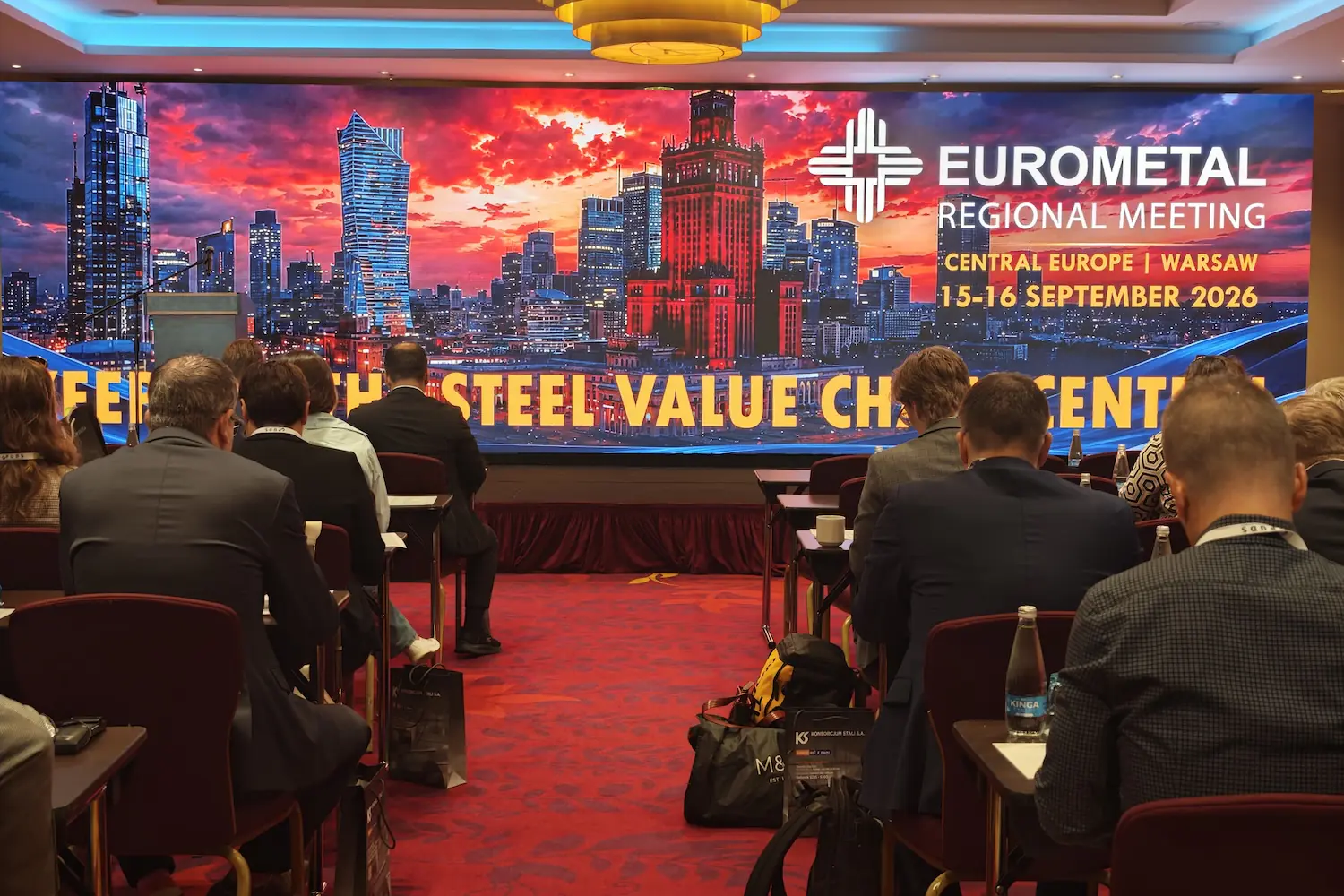
EU mills/distributors interdependent, energy determines investment
EU mills and distributors are increasingly relying on each other amid limited export competitiveness and tighter import measures, while energy prices trump all other considerations for steelmaking transition investments in the bloc.
So concluded a panel of steelmakers’ representatives at last week’s EUROMETAL Regional Meeting Central Europe in Warsaw, attended by Kallanish.
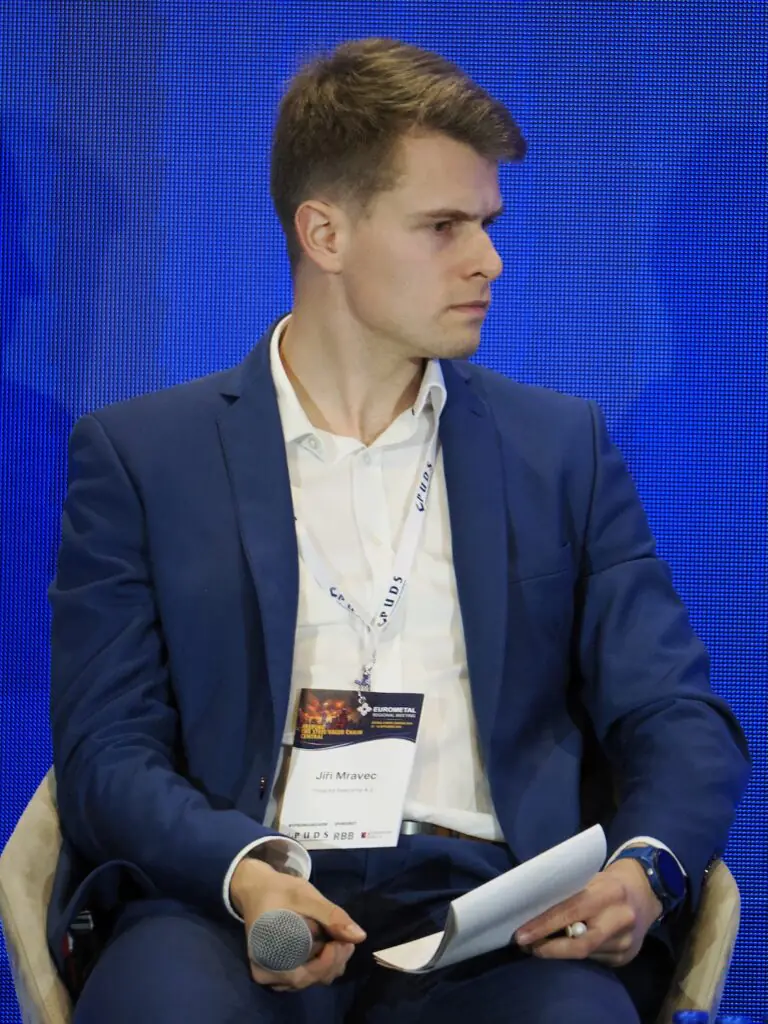
Given the energy and carbon costs put on EU mills that foreign competitors are not burdened with, “we can forget about exports really, and being competitive exporting outside Europe,” exclaimed Jiri Mravec, head of innovation & transformation at Trinecke Zelezarny (TZ). “So without European customers, we don’t survive the next month … We are in this fight side by side and together. I mean, steelmakers and the whole downstream value chain, And in crisis, you find your friends.”
European customers will meanwhile shift towards domestic mill procurement due to the complexity of navigating the new trade barriers. This shift has been gradual so far because of the high stocks accumulated in prior quarters, said Tomasz Plaskura, chief marketing officer East Europe – ArcelorMittal Europe Flat Products.
“In terms of competitiveness, of course, it’s our primary objective to stay competitive in Europe in the entire value chain,” he noted, adding he agreed with the need to extend import measures downstream.
The Emissions Trading System (ETS) has so far meanwhile just been a stick rather than a carrot for mills. In terms of allowances, TZ is overallocated for its blast furnace alone, but when taking into account its captive power plant that utilises BF off-gases, it is short off allowances and burdened by the cost. “We are already having discussions on how do we put this in [our steel] prices in terms of some CO2 surcharge or something,” Mravec noted.
“If we just increase the price by €160, we are out of the market very quickly. So it forces us to decarbonise, but they force us to decarbonise in the times when we are poor … We don’t have the Ebitda margin to go to banks,” he added.
“If you plug in €200 per megawatt hour of electricity in the Excel, it will give you no ROI for any electrification business case, and no one’s willing to pay for the green steel extra premium, that I can confirm,” he continued. CBAM “has to be working really well” for mills to achieve the steel prices required to make the investment feasible.
Fellow Czech mill Nova Hut, currently a re-roller, faces the “unique situation” of needing to purchase ETS allowances for its reheating furnaces and also navigating CBAM to import the required semi-finished steel feedstock, said Nova Hut chief executive Radek Strouhal.
“It’s not very easy with the CBAM because we are approaching the suppliers asking about certification … During February, we received cross benchmark figures, so we were offering material in the last quarter, last previous year, and not knowing what will be the price, just estimating where the benchmark can be,” he continued.
The firm’s plan to install an EAF “is the only future we can have”, he added. However, it will need “predictable” electricity prices to operate. With EU gas prices shooting up in September, it would be difficult to imagine having to pay €200/MWh for electricity from the grid, he added. Nuclear power “is the only way”.
Competitive energy prices are “the only driver to keep those [steelmaking electrification] investments in Europe” as they form the business case, more so than subsidies, Plaskura said.
Mravec said TZ’s EAF subsidy application is “hitting the wall with financing”. The firm’s strategy is to operate an EAF alongside a BF to have flexibility. “I am 100% certain there will not be a successful hydrogen DRI in Central Europe. This is relevant for particular geographic regions where you can get so cheap renewable electricity that you produce so cheap hydrogen to be able to be cost competitive,” he concluded.
Author: Adam Smith


Euro area construction output stable in July 2026 from June
According to first estimates released by Eurostat, the Statistical Office of the European Union, in July this year the seasonally-adjusted production of the construction sector in the European Union member states (EU-27) decreased by 0.3 percent compared to June this year and fell by 1.8 percent compared to the same month of 2025. In June, production in the construction sector had moved down by 1.3 percent month on month.
In the euro area, the seasonally-adjusted production of the construction sector in July remained stable month on month and moved down by two percent year on year. In June, production had decreased by 1.5 percent month on month.
Building construction in the EU-27 in July moved down by 0.4 percent month on month and down by 5.6 percent year on year, while civil engineering output in the region decreased by 0.9 percent month on month and decreased by 0.4 percent year on year. In the euro area, building construction remained stable month on month and was down by 6.4 percent year on year, while civil engineering output in the region rose by 0.6 percent both month on month and year on year.
As compared to June, construction output in July increased by 2.8 percent in Belgium, by 2.1 percent in the Czech Republic, and by 1.9 percent in Slovakia, while it decreased by 4.7 percent in Hungary, by 3.8 percent in both Poland and Sweden, and by 2.2 percent in Austria.
As compared to July 2025, construction output in July this year increased by 12.8 percent in Finland, by 11.6 percent in Slovenia and by 4.8 percent in Bulgaria, while it decreased by 12.2 percent in Hungary, by 9.7 percent in Spain and by five percent in France.


European HRC prices climb despite weak demand; import risks and supply concerns support market
Domestic prices for steel hot-rolled coil (HRC) edged up in both Northern Europe and Italy on Monday September 21, while sources reported steady but gradual price increases linked to weak demand and limited import activity.
In Northern Europe, sources said prices were gradually increasing but demand remained weak as there was no major restocking in the market.
A supplier source in the region indicated workable HRC levels for October delivery at €740-750 ($850-861) per tonne ex-works, adding that it was aiming to achieve €760 per tonne ex-works, depending on how demand develops.
“Mills are carefully observing the situation,” the supplier said on Monday.
The same source said HRC import activity into the region was very quiet due to the high risks related to safeguard quotas and Carbon Border Adjustment Mechanism (CBAM), so buyers were staying a bit away for the moment.
The supplier also said that it was seeing prices mostly stable in the upcoming period, with an ambition to reach levels around €800 per tonne ex-works in the domestic market by the end of the year.
Meanwhile, a distributor source in Germany reported offers for material within the range of €750-760 per tonne delivered on Monday, which nets back to €730-740 per tonne ex-works, adding that the market was very quiet and demand remained weak.
The same source said that levels around €720 per tonne ex-works, which were previously quoted by sources in the market on Friday September 18, were no longer achievable.
On the other hand, a buyer source said on September 21: “Whilst there may be odd deals at lower levels, we would agree that around €750 [per tonne ex-works] is a fair estimate, trending to €775 [per tonne ex-works].”
As a result, Fastmarkets’ daily steel hot-rolled coil index domestic, exw Northern Europe was calculated at €745 per tonne on September 21, up by €7.50 per tonne from €737.50 per tonne on September 18.
The index was also up by €7.50 per tonne week on week and by €22.92 per tonne month on month.
In Italy, the picture of achievable prices in the market remained slightly blurred, with buyers and suppliers reporting different levels.
Latest offers were reported at €750 per tonne delivered, equivalent to around €735 per tonne ex-works after deducting €15 per tonne in delivery costs, a trade source said on Friday September 18.
The same source added that there was limited room for negotiation, indicating workable levels for hundreds of tonnes at €750 per tonne delivered and for larger volumes at €740-745 per tonne delivered (€725-730 per tonne ex-works) on the same day.
Meanwhile, a distributor source said on Monday that the minimum levels it was hearing were within the range of €730-740 per tonne ex-works, declining to offer lower prices.
“Honestly, I think that in this moment buyers are not realistic. Price is going up week after week and some numbers they declare are not anymore available, according to my opinion,” the same source said.
A second trade source quoted achievable levels in the range of €730-735 per tonne ex-works on Monday, in line with the latest deals heard in the market on September 17. The source added that prices at €725 per tonne ex-works sounded “optimistic” under current market conditions.
Thus, Fastmarkets’ daily steel hot-rolled coil index domestic, exw Italy was calculated at €733.75 per tonne on September 21, up by €3 per tonne from €730.75 per tonne on September 18.
The index was down by €2.50 per tonne week on week but up by €21.25 per tonne month on month.
One of the main factors affecting HRC availability in Italy remained the uncertain future of the former Ilva steelworks in Taranto, which has been ordered to suspend hot-end operations by October 28.
However, market participants were uncertain how the situation would develop. Italy’s Court of Cassation, the highest court of last resort in the country, is scheduled to hear appeals against the shutdown order on October 20, only days before the deadline for the closure to take effect, a trade source told Fastmarkets.
As a result, many participants remained in a wait-and-see mode regarding the producer’s future and its potential impact on domestic steel supply.
At the same time, a company source at Metinvest’s Ferriera Valsider mill in Italy told Fastmarkets that it was not taking new orders yet. “We are producing but the potential space for new orders, if any, would be for December production earliest,” the same source said.

Polish domestic rebar prices rise amid higher energy costs
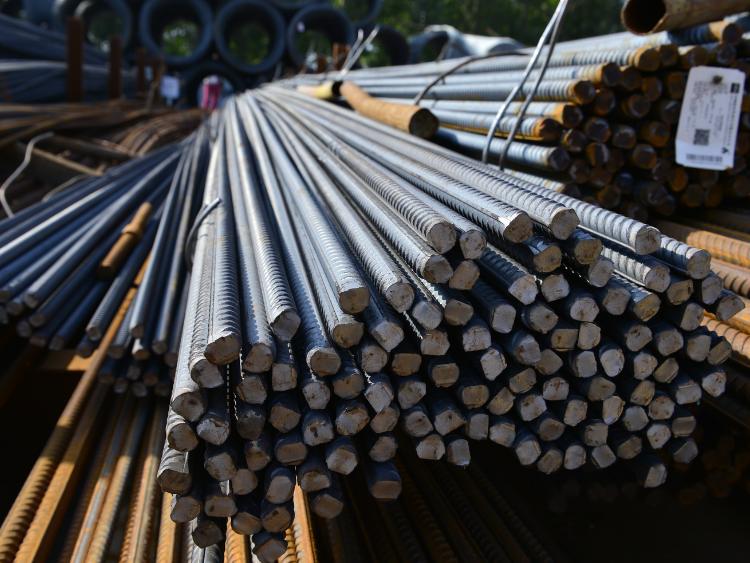
Polish domestic rebar prices rose in the week to Friday September 18 as producers continued to push for higher levels in response to increasing production costs.
“There is a really big cost pressure for mills. Energy prices are very high. Compared to a month ago, prices are doubled,” a distributor source told Fastmarkets.
Rising oil and energy prices continued to support higher offers, while some mills adjusted their working hours depending on energy costs.
Deals for domestic rebar were heard at 2,770-2,800 zloty ($729-737) per tonne, with offers also heard within that range. Workable levels were heard at 2,740-2,800 zloty per tonne.
Fastmarkets’ weekly price assessment for steel reinforcing bar (rebar), domestic, CPT Poland, rose to 2,740-2,800 zloty per tonne on Friday, up from 2,650-2,680 zloty per tonne the previous week.
In the wire rod segment, indications were heard at 2,900-3,100 zloty per tonne delivered.
Fastmarkets’ weekly price assessment for steel wire rod (drawing quality), domestic, delivered Poland, remained unchanged at 2,900-3,100 zloty per tonne on Friday.
Siemens Mobility forms rail material recycling consortium
Siemens Mobility has launched a project aiming to recover materials from end-of-life trains, Kallanish learns.
It is joined by a consortium that includes railway operator Deutsche Bahn, aluminium producer Hydro, German metals recycler TSR, and steelmaker voestalpine.
The project, named “Train2Train”, brings together the full value chain, from dismantling and recycling to material processing and manufacturing. Each partner plays a critical role in creating a transparent and circular material loop, Hydro says.
TSR will dismantle the rail vehicles and retrieve the materials with the aim of recycling them into new rail parts. It will ship steel to voestalpine for recycling and further production. TSR will also recover aluminium and send it to Hydro, to its recycling facility in Ghlin, Belgium.
The project aims at reusing material from end-of-life trains, recycling them to become materials that can again be used within the railway industry. Austrian partner voestalpine is active in making rails and in railway technology. However, it has not issued an announcement on the project to explain its further use of the recycled steels.
Italy’s ABS opens hub for Scandinavian operations
ABS – Acciaierie Bertoli Safau SpA, the Italian maker of special bar qualities (SBQs), inaugurated last week its new distribution and service centre in Värnamo, Sweden, the firm tells Kallanish.
This marks a shift for Danieli-owned ABS from a producer of special steels to an industrial partner that is closer to the customer, the company says. This involves integrating product, stock availability, processing, logistics and metallurgical consultancy within a single facility, it adds.
The new site is known as ABS Steel Nordic Service Centre. It covers an area of approximately 25,000 square metres, with a newly constructed building spanning 5,500m². It stores structural steel, high-strength and case-hardened steel, free-cutting steel and micro-alloyed steel. It operates cutting equipment that can process from 10mm to 560mm thick product.
Värnamo will be the hub for ABS’s Scandinavian operations. Last November at the Elmia Subcontractor trade fair, ABS announced the establishment of a new unit for Scandinavia, ABS Steel Nordic, plus the greenfield construction of the service centre.
“We have been operating here in Sweden with our own company since 2012, but, now, we are making a huge investment,” Elmia’s website quoted Eric Lennermark, chief executive of ABS Steel Nordic, as saying then. He noted that ABS is the number two SBQ supplier in the Nordics, with an annual sales volume of 55,000 tonnes.
Arvedi/CLN merger antitrust ruling expected early October
The EU antitrust review of the merger between Italian steelmaker Arvedi and troubled coil service centre ArcelorMittal CLN Distribuzione Italia (AMCLN) is expected to conclude on 2 or 3 October. The presentation of Arvedi’s industrial and financial plan to trade unions should follow, union sources tell Kallanish.
“We hope that the Arvedi group, which in the past has resolved disputes such as those in Trieste and Terni, will take over CLN and quickly bring the crisis to an end,” an Uilm union note says.
The next meeting is scheduled for 6 October at the Rome headquarters of the Ministry of Enterprises and Made in Italy (MIMIT), where the unions hope to meet Arvedi. The firm is expected to show the industrial plan to the social partners.
“We express strong concern over the current state of the company. The majority of the approximately 400 employees across the six plants have been on short-time work schemes for several weeks now, with a significant impact on workers’ wages. To date, we have not yet received the industrial plan and, as a result, many doubts remain over future employment levels and the nature of the investments Arvedi intends to make in AMCLN,” another Fiom union note states.
The company has been reducing its output due to financial hurdles, and part of the workforce has been put on temporary layoffs.
At the end of July, Arvedi submitted a binding offer to acquire the service centre. Earlier this year, ArcelorMittal was seeking full control of AMCLN, its joint venture with CLN. The process comes amid continued pressure on the European automotive sector, a key market for the business.
In May, the European Commission cleared the merger between ArcelorMittal and AMCLN Distribuzione Italia. However, the Italian government has invoked its “golden power” authority to impose conditions on the merger, suggesting the government has pushed for an Italian buyer instead of ArcelorMittal.
The Italian government blamed ArcelorMittal for failing to relaunch Acciaierie d’Italia – the former Ilva – and is now seeking €7 billion ($8.08 billion) in damages. This may have influenced the political dynamics around the merger.
The golden power is a tool the Italian government can use to block or impose conditions on corporate acquisitions considered strategically important for the country. This is the case even when the deal has been approved by European competition authorities (see Kallanish passim).
Contacted by Kallanish, Arvedi and ArcelorMittal did not comment before press deadline.

