

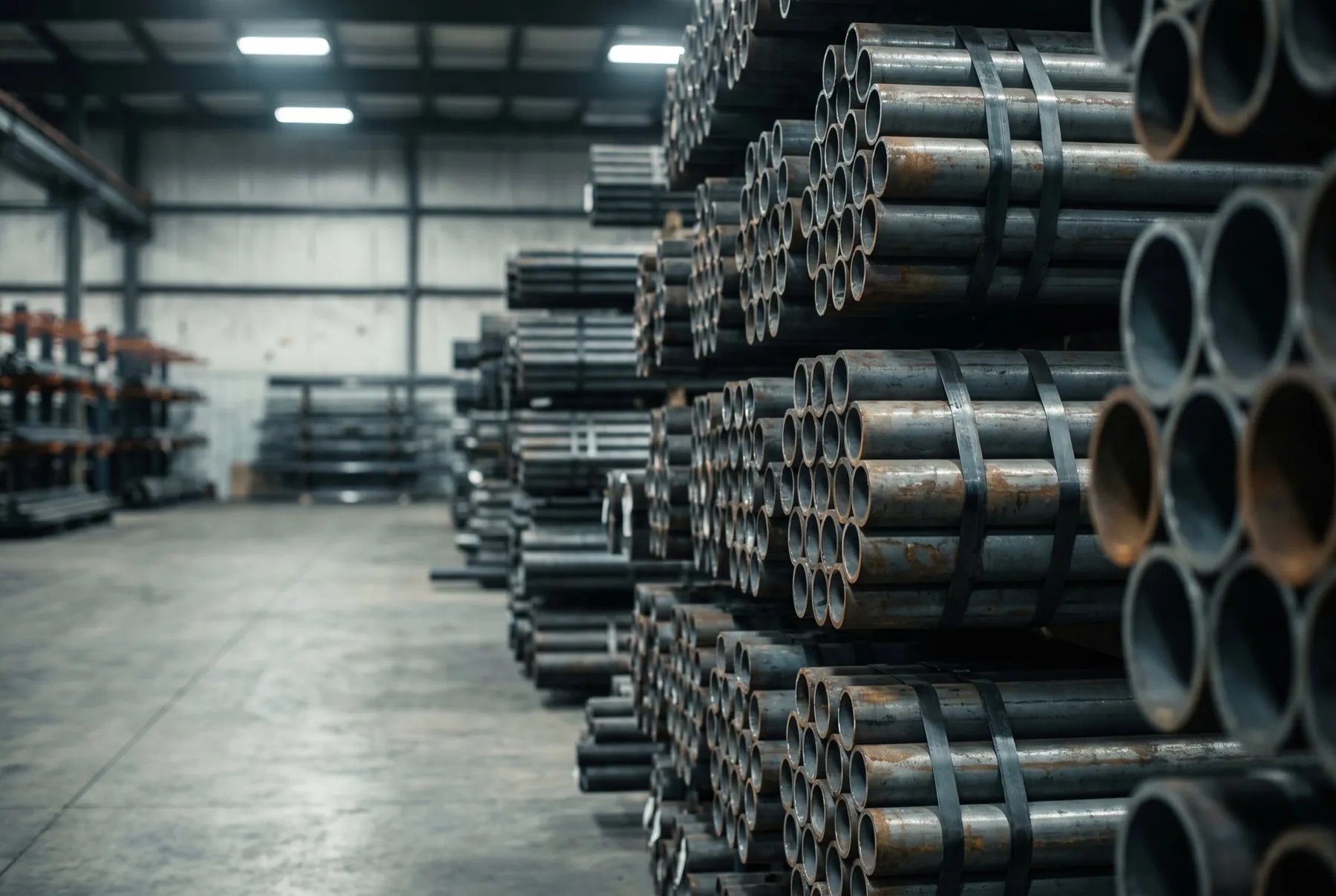
UAHE Revista InfoAcero Septiembre 2026
En el siguiente enlace pueden ver la edición de septiembre de nuestra revista INFOACERO Septiembre 2026
Destacamos a continuación algunos de sus contenidos:
- Opinión – D. Manuel García- Junta Directiva UAHE
- Índice UAHE: evolución precios de aprovisionamiento septiembre 24 – julio 26
- Metal: actividad productiva y comercio exterior del metal- informe Confemetal – septiembre 2026
- Formación: próximos cursos UAHE- Tecnología del acero, Introducción a la gestión del trabajo con Chatgpt, Excel Intermedio, Finanzas.
- Próximos Eventos: 22 Forum MagFerros (7 octubre, Castelldefels)
- Colaboración RRHH: “Los proyectos de los Planes de Igualdad y la aventura del registro REGCON”- D. Agustín Barroso-Dtor. RRHH Grupo Hiemesa


Geert Van Poelvoorde elected President of the EUROFER
The European Steel Association (EUROFER) has elected Geert Van Poelvoorde, Chairman of the Board of ArcelorMittal Europe Steel, as its new President, effective 1 October 2026.
He succeeds Henrik Adam, who led the association since November 2023 and is taking up the role of Director General of the World Steel Association. Peter Bernscher of Tata Steel Nederland has also been elected Vice-President of EUROFER.
On taking office, Van Poelvoorde identified stronger European markets across the steel value chain, access to export markets and competitive conditions for industrial investment as priorities.
His appointment comes amid weak demand and declining exports. According to EUROFER’s latest economic and steel market outlook, EU steel exports to third countries fell by 20% in the first half of 2026. European steel production stood at 125.8 million tonnes in 2025 and declined by a further 1% in the first five months of 2026.
Van Poelvoorde welcomed the EU’s new steel trade measure, in force since 1 July, describing it as an important foundation for addressing global overcapacity. EUROFER estimates that the measure could create conditions for the recovery of around 15 million tonnes of European steel production annually.
He also called for competitive energy costs, stronger demand for EU-made products and changes to the EU Emissions Trading System to support investment in low-carbon steelmaking.
On exports, Van Poelvoorde urged the EU to address the carbon-cost disadvantage faced by European producers in international markets. He advocated a structural solution for exports and a significantly slower phase-out of free emissions allowances until enabling conditions are in place across steel-producing regions.
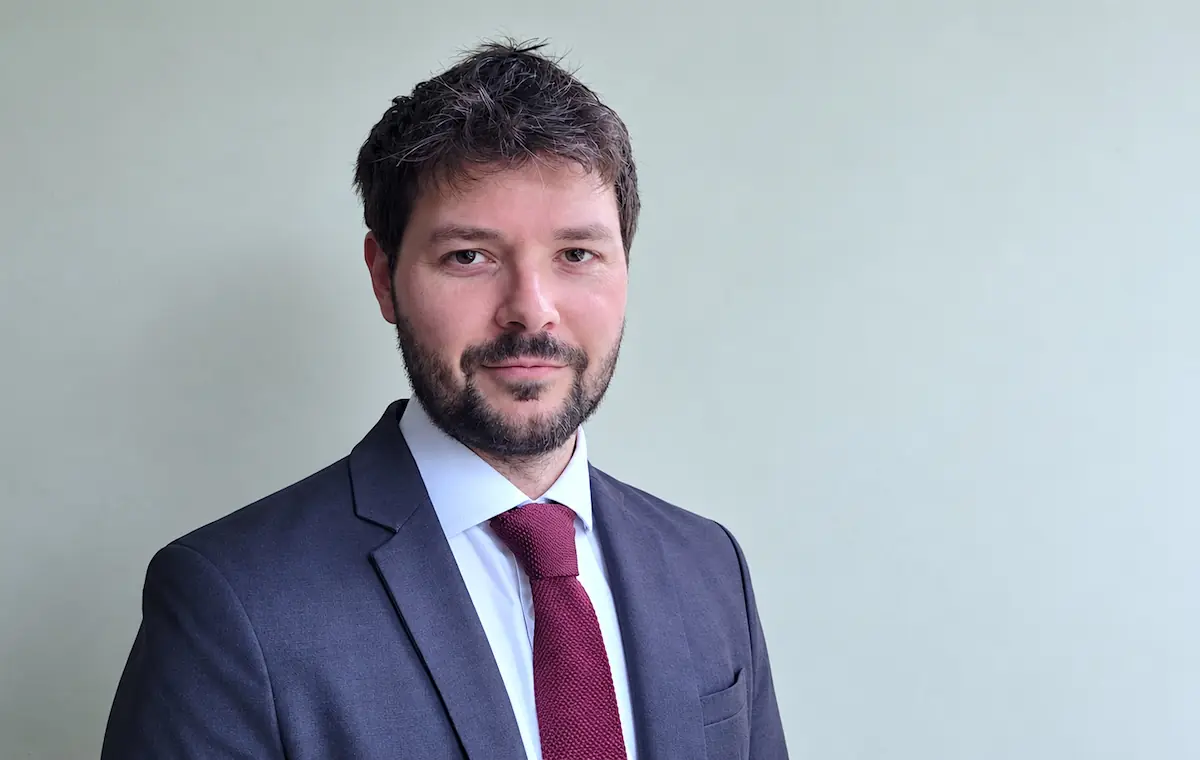
Peter Brennan appointed Director General of UK Steel
Peter Brennan has been appointed Director General of UK Steel, succeeding Gareth Stace, who steps down after 12 years in the role.
Brennan previously served as UK Steel’s Director of Trade and Economic Policy. His background also includes more than a decade at S&P Global, where he held reporting and editorial positions covering steel markets, manufacturing, global trade and financial markets.
During his time at Platts, Brennan reported on the European and UK steel industries and worked on publications including Steel Business Briefing and World Steel Review. He subsequently covered global markets, macroeconomics and credit at S&P Global Market Intelligence.
Announcing his appointment, Brennan described the current period as crucial for the entire steel supply chain and emphasised the need to create conditions in which both steel producers and users can thrive.
“This is a crucial time for the entire steel supply chain and we have much to do to create a viable ecosystem within which steel producers and users can thrive,” he said.
Brennan also paid tribute to Stace’s leadership and said he looked forward to working with stakeholders and the UK Steel team to address the challenges facing the industry.

Germany to see higher prices in 2027: MBI
Steel prices in Germany will enjoy altogether higher levels in 2027 according to Peter Fertig, MBI Research analyst, at the recent Stahltag event in Frankfurt, organised by MBI Infosource.
According to his forecasts, hot-rolled coil is likely to average at €718/tonne ($816/t) ex-works over the year, with possible highs of €780/t and lows of €660/t.
For cold-rolled coil, he assumes a base scenario of €796/t, within a wider range of between €735-835/t, Kallanish learns from Fertig’s presentation.
For HRC, the estimated values in 2027 would be €40-50/t above those of 2026. For CRC, the increase is more moderate, if compared with the average of €791/t reached until the end of August.
Reviewing the forecast made at last year’s event, Fertig noted that it had been too pessimistic, and that prices performed better than expected. The quantitative models then predicted base scenarios of €595/t for HRC, and €680/t for CRC.
This applies also to the long product groups with rebar and wire rod, which turned out higher than anticipated, by some €20/t for rebar, and some €40/t for wire rod. For 2027, the base scenario foresees €678/t ex-works for rebar, with a worst-case scenario of €630/t, and a best-case scenario of €715/t. For wire rod, the range lies between €725-810/t, with €777/t assumed as the most likely base scenario.
Fertig noted that he had to adjust his mathematical models recently due the distortion brought by factors like the new trade measures and the Carbon Border Adjustment Mechanism (CBAM).
“We expect that prices will be nearer to the best-case than the worst-case scenario,” he said.
Author: Christian Koehl


Voestalpine, Verbund extend energy partnership
Austrian energy company Verbund and steelmaker voestalpine are strengthening their strategic partnership focusing on industrial energy supply and transformation.
They have signed an extended framework agreement which reaffirms their shared goal of actively driving forward the transformation of industry and energy systems, Kallanish hears from Verbund.
The new agreement forms the basis for implementing specific projects and for collaboration in the areas of renewable energy supply and hydrogen, it says.
These include site-specific projects for the use of renewable energy, as well as solutions for hydrogen, energy storage and flexibility marketing. Different supply concepts are being pursued depending on the site and the initial technical situation.
In in the areas of flexibility and energy storage, the implementation of battery storage projects at the Kindberg and Donawitz sites is being assessed.
In addition, the Austrian companies will look into further potential at locations in Germany. Battery storage facilities make an important contribution to the integration of renewable energy, increase flexibility in the energy system, and strengthen the security of supply for industrial processes, Verbund notes.
The partners also plan to explore other opportunities for expanding renewable energy generation at suitable sites. In recent years, they have jointly installed photovoltaic systems, including those at voestalpine Tubulars’ Donawitz site and at voestalpine Wire Rod. In addition, further opportunities for expanding renewable energy generation are being considered, such as long-term power purchase agreements (PPAs) for renewable energy.
The framework agreement runs until the end of 2029 and establishes a binding framework for the joint development and implementation of forward-looking projects, Verbund says.
Author: Christian Koehl
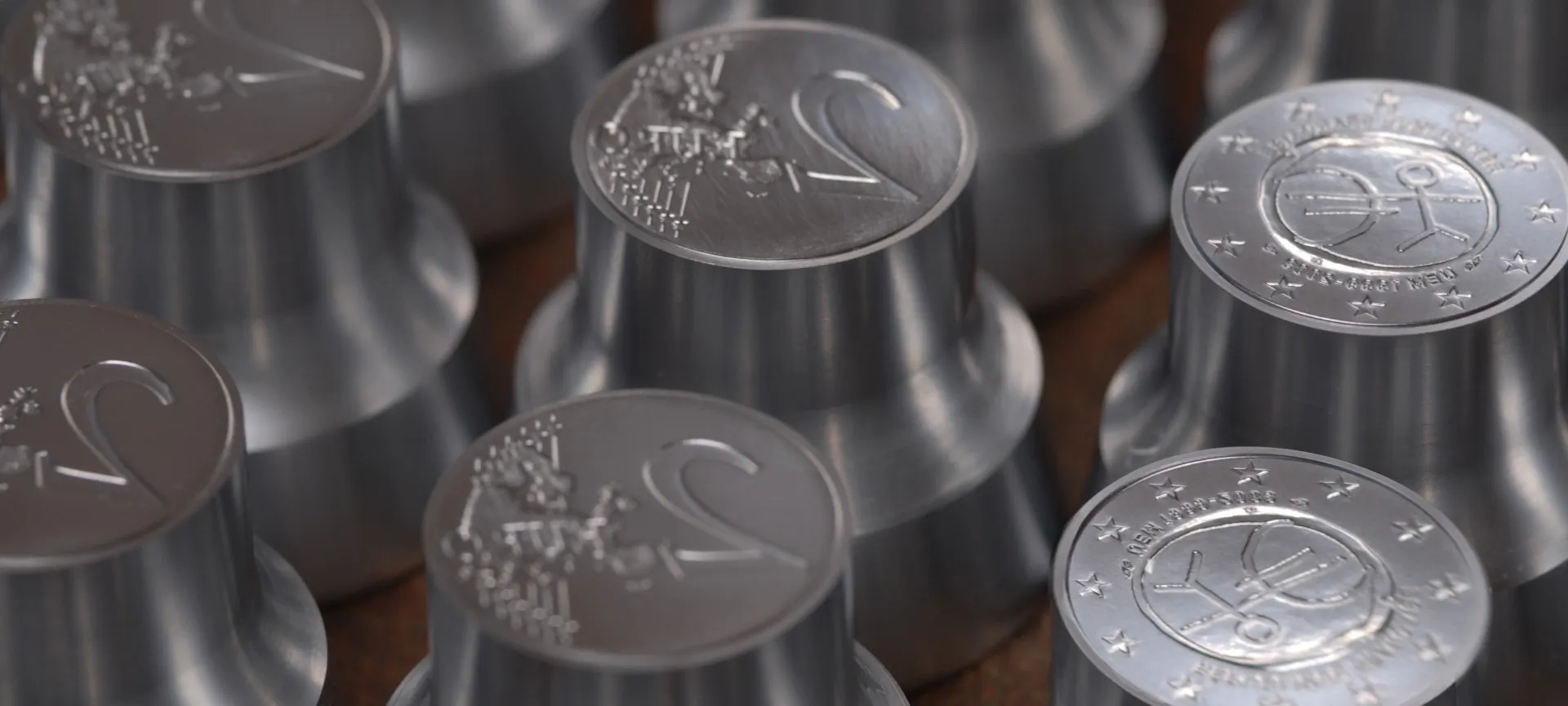
ArcelorMittal supplies reduced emissions steel for coin production
ArcelorMittal has won a contract to supply low-carbon emissions steel to the Monnaie de Paris, the French institution that produces France’s euro coins for the French and European Central Banks. The supply will include the production of €1 ($1.14), 2 and 5 cent coins, marking the first time reduced emissions steel will be used in euro cent coin production, Kallanish notes.
The steelmaker will supply XCarb recycled and renewably produced cold-rolled steel, made by ArcelorMittal Europe Flat Products and processed at its service centre in Ottmarsheim, France, where slitting operations are carried out to meet the specific requirements of coin manufacturing.
Monnaie de Paris will purchase 800 tonnes of the low-carbon emissions steel annually. XCarb steel generates up to 68% less CO2 than conventional blast furnace steel, with a carbon footprint of around 800 kg CO2e/tonne compared to approximately 2,500 kg CO2e/t for traditionally produced steel.
In a joint note obtained by Kallanish, procurement director at Monnaie de Paris Aïcha Nowak says the partnership perfectly supports its Ambition 2027 strategy in which the energy transition and the reduction of its carbon footprint play a central role.
“We are taking another concrete step towards our objective of reducing our carbon emissions by 50% while supporting a more circular approach to coin production.”
The partnership is the result of nearly a decade of technical collaboration between the two companies.
Author: Natalia Capra

ArcelorMittal halts Spanish steel plant amid weak demand
ArcelorMittal de España will halt steel production at its Gijón plant in Spain for one week in response to current demand levels, a company spokesperson told Platts, part of S&P Global Energy, on Sept. 29.
The halt began Sept. 28 and will continue through Oct. 3, citing the steel wire order book, the spokesperson said. It is one of several short production halts — typically lasting about a week — that the plant has undertaken in 2026, they added.
The 1.1 million metric ton/year site had one of its two blast furnaces, Furnace B, offline for about four months during the first half of the year to address a production issue that emerged following maintenance in 2025.
ArcelorMittal confirmed Sept. 29 that it expects to bring a new 1.1 million mt/year electric arc furnace online at Gijón in 2026. The furnace will supply two long products rolling mills and use direct-reduced iron, hot-briquetted iron and scrap as feedstocks.
Spain’s steel industry association Unesid, which represents ArcelorMittal and the country’s other leading steel producers, said Sept. 22 that the industry was facing increasing energy-cost pressures through the remainder of the year.
From September through December, the industry faces “excessive costs” of €452 million ($513 million), following €206 million in accumulated costs from January through August, Unesid said. The costs have been exacerbated by a €20/megawatt-hour impact from grid-balancing charges.
“Cost pressures are already impacting business activity,” the association said. “Companies are halting production during peak electricity-price hours — a practice that could become more widespread if current price levels persist.”
Unesid called for immediate intervention, including increasing the 2026 allocation for compensation for indirect CO2 costs to the €1-billion maximum permitted under European regulations. The measure would help “sustain industrial activity in 2026 and provide certainty on energy conditions for 2027,” it said.
Platts assessed imported hot-rolled coil in Northern Europe at €585/mt CIF Antwerp, and in Southern Europe at €580/mt CIF, both steady day over day.
Author: Euan Sadden, Gianluca Baratti

EU’s need to raise steel output requires millions of tons of extra scrap
The EU must boost crude steel production 12%-13% by 2027 to counter falling imports triggered by steel safeguards and the Carbon Border Adjustment Mechanism, but meeting this target and rolling out new electric arc furnaces will require an additional 8 million-11 million metric tons of steel scrap later this decade, Stanislav Zinchenko, CEO of Kyiv-based think tank GMK Center, told Platts, part of S&P Global Energy.
The EU was importing 7 million mt/year of long rolled steel before, with half of that tonnage produced via the blast furnace-basic oxygen furnace steelmaking route. Now, because of the safeguards and CBAM, this volume is likely to be replaced by EU-based scrap-intensive EAF production, he said.
To replace the expected decline in steel imports, the required 12%-13% growth by 2027 in EU crude steel production, from 2025 levels, will need an extra 4 million-6 million mt of steel scrap. Then, by 2028, the commissioning of new EAFs could further boost domestic scrap demand by 4 million-5 million mt, according to Zinchenko.
Key already-announced EAF projects represent significant new capacity, he said. They include Metinvest’s 2.7 million mt greenfield plant in Piombino, Italy; Voestalpine’s 2.5 million mt projects in Linz and Donawitz, Austria; Marcegaglia’s 2.1 million mt unit in Fos-sur-Mer, France; ArcelorMittal’s 2 million mt EAF in Dunkirk, France; and NLMK’s developments in Verona (+0.5 million mt) and Belgium.
These are set to be predominantly scrap-fed facilities — at least during the initial years, until there is sufficient cheap supply of direct reduced iron/hot briquetted iron on the EU market, Zinchenko said, adding that together the projects will generate an additional annual demand of up to 5 million mt of scrap once operational.
“We are seeing a clear, pragmatic trend in which steelmakers are prioritizing scrap-based EAF capacity additions over capital-intensive DRI-hydrogen concepts,” he said.
However, Zinchenko’s scrap consumption forecast is still based on a mix of scrap with DRI/HBI and assumes non-maximum capacity utilization, as the new EAFs’ future run rates are currently unknown. As for the mix composition, it will depend on market prices of several metallic feedstocks and could vary from quarter to quarter.
Higher future demand should uphold domestic European prices of scrap and potentially boost its collection, Zinchenko said, but from today’s viewpoint, meeting inflated requirements with local supply poses a challenge, as the EU continues to lose a double-digit stream of scrap through exports, net exporting 11.5 million mt to third countries in 2025 alone.
In 2027, the situation could change, though. The European Commission is looking to reduce EU annual exports of steel scrap by 4 million-4.1 million mt, or 25%-26%, from 2025 levels, having proposed cutting off the majority of non-OECD countries from EU scrap metal supplies as of May 21, 2027. On Sept. 18, the commission presented a respective draft delegated act under the revised Waste Shipment Regulation.
Author: Katya Bouckley

EU launches expiry review of anti-subsidy measures on stainless steel from India and Indonesia
The European Commission has announced that it has initiated an expiry review of the anti-subsidy measures applicable to imports of cold rolled stainless steel sheets and coils originating in India and Indonesia.
The review will examine whether allowing the measures to expire would be likely to result in a continuation or recurrence of subsidization and injury to the EU industry. The review will cover the period between July 1, 2025 and June 30, 2026, and will be completed within 12 months.
Recently, the commission also initiated an expiry review of the antidumping duties on imports of cold rolled stainless steel sheets and coils from India and Indonesia, as SteelOrbis previously reported.
The current countervailing duties on the given products are at 4.3 percent and 7.5 percent for India, while duties are at zero percent, 13.5 percent and 21.4 percent for Indonesia.
The products subject to the review currently fall under Customs Tariff Statistics Position Numbers 7219 31 00, 7219 32 10, 7219 32 90, 7219 33 10, 7219 33 90, 7219 34 10, 7219 34 90, 7219 35 10, 7219 35 90, 7219 90 20, 7219 90 80, 7220 20 21, 7220 20 29, 7220 20 41, 7220 20 49, 7220 20 81, 7220 20 89, 7220 90 20 and 7220 90 80.
Meanwhile, the expiry review comes alongside two separate proceedings launched by the Commission concerning Indian cold rolled stainless steel sheets and coils. The Commission has opened interim reviews addressing the antidumping and anti-subsidy measures separately.
Author: SteelOrbis Editorial Team

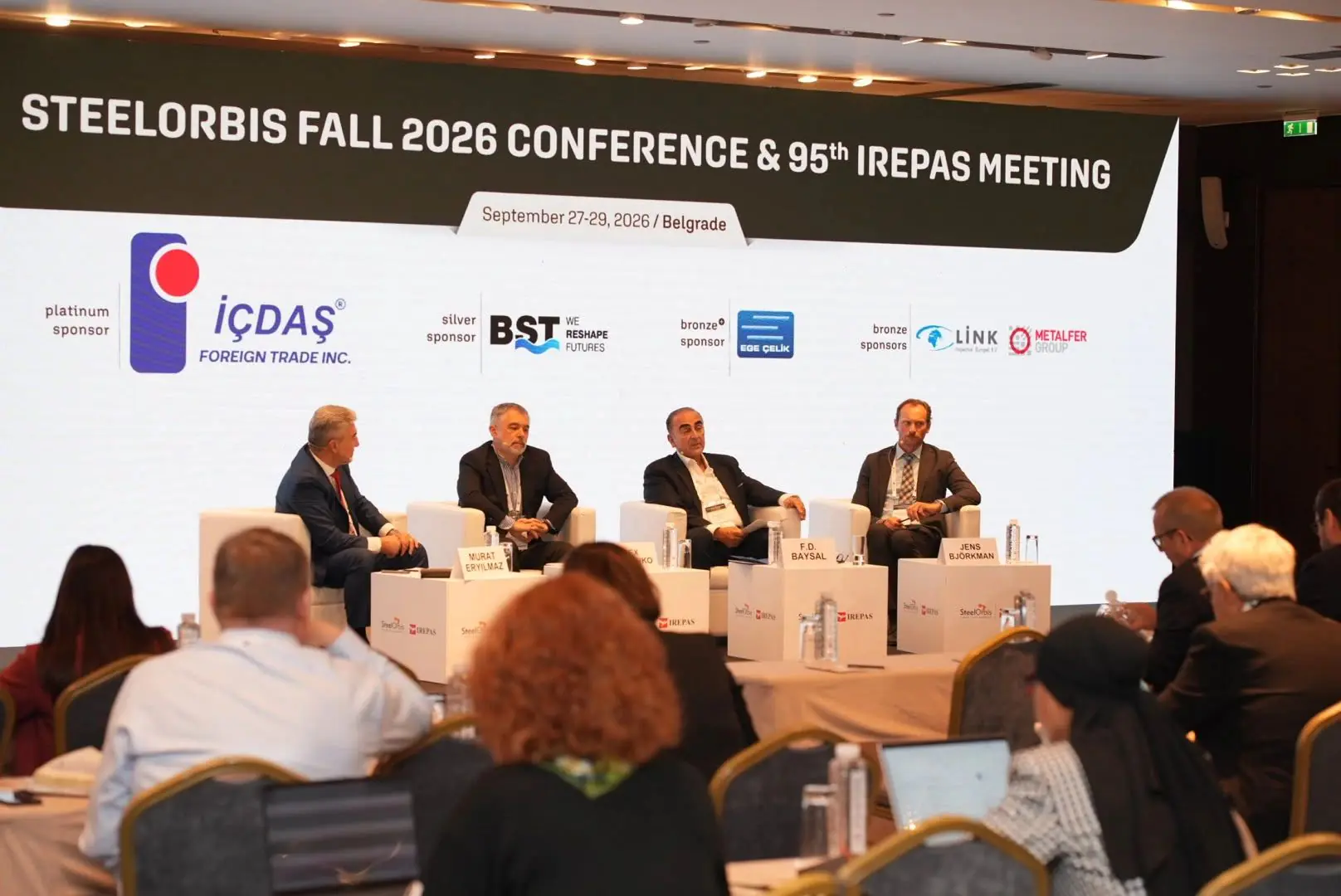
Long steel market becoming increasingly regional, despite global GDP growth: IREPAS
Global GDP growth of 3.1%, according to the International Monetary Fund (IMF), has not translated into stronger steel demand, Alexander Gordienko, export director of Spanish electric-arc furnace (EAF)-based steelmaker Celsa Group, said during his presentation.
“This is not the kind of growth which creates growth in demand,” Gordienko said.
While the global economy continues to expand, the distribution of that growth has become increasingly important for steel markets. Stronger economic growth remains concentrated in Asia, particularly India, which recorded GDP growth of 6.5%, while Europe grew by just 1.3%.
Gordienko said that despite solid global GDP growth, the steel market remained oversupplied and highly competitive. Faster-growing economies were also expanding their own steelmaking capacity; however, GDP growth somewhere in the world does not automatically become export demand for steel.
Construction remains key steel-consuming sector
Construction remains the most important end-use sector for steel, but regional trends differ significantly.
Europe’s construction sector remains constrained by weak residential activity despite persistent housing shortages. Infrastructure projects provide some support, but according to Gordienko, the challenge is not the absence of demand for housing, but the difficulty of converting that need into actual projects through faster planning, approvals and reduced bureaucracy.
In contrast, the United States is witnessing significant investment in infrastructure linked to artificial intelligence (AI), including data centers, power generation and transmission networks. While residential construction remains relatively soft, AI-related infrastructure investment has emerged as a key source of steel demand growth.
China remains main structural weakness
China, meanwhile, remains the main structural weakness for global steel consumption, according to Gordienko. The country’s property sector has yet to show a meaningful recovery, leaving domestic demand unable to absorb the country’s steelmaking capacity and maintaining pressure on export markets.
“The problem is that if Chinese demand is not saved, then the Chinese domestic market cannot absorb the enormous Chinese steel production. It has to go for export.”
India presents the opposite picture, with infrastructure investment continuing to support genuine steel demand growth. However, Gordienko cautioned that increasing domestic steel production means India should not automatically be viewed as a major future import market.
Regional divergence becoming more visible
Global steel production remains close to pre-pandemic levels, but production trends are increasingly diverging by region.
While output has declined in China and Russia, production has increased in countries including India and the US.
At the same time, Chinese steel exports continue to exert pressure on international markets. While trade measures may alter trade flows and destinations, Gordienko said they do not eliminate export pressure.
Long steel consumption declined by around 2% in the first half of 2026, according to estimates by CRU Group presented during the conference.
While such a decline may appear modest, it is enough to intensify competition in a market with significant available capacity, said Gordienko.
The decline in rebar consumption remains concentrated in Asia, particularly China, while Europe has remained broadly stable and North America has recorded stronger demand.
From a global steel cycle to regional cycles
While technologies such as AI are spreading globally, the physical infrastructure required to support them is concentrated in regions with access to capital, energy and project development capabilities.
As a result, investment growth is becoming increasingly concentrated geographically.
This trend, combined with growing trade barriers and diverging regional demand patterns, suggests that steel markets are becoming increasingly fragmented.
“On some level, the world is moving very rapidly into the future. On another, physical level, it appears to be returning to the past. Our business is operating in both worlds at the same time,” said Gordienko.
Raw materials continue to trade globally, while finished steel markets are becoming more regional.
Demand growth is concentrated in specific regions such as India, while large-scale AI-related investment is concentrated in the US.
Gordienko argued that traditional global steel cycles may be breaking down into multiple regional cycles, where one market can remain oversupplied while another experiences tighter conditions.
“Maybe we should stop talking about the global steel cycle, and we should start talking about regional cycles,” Gordienko said.
