

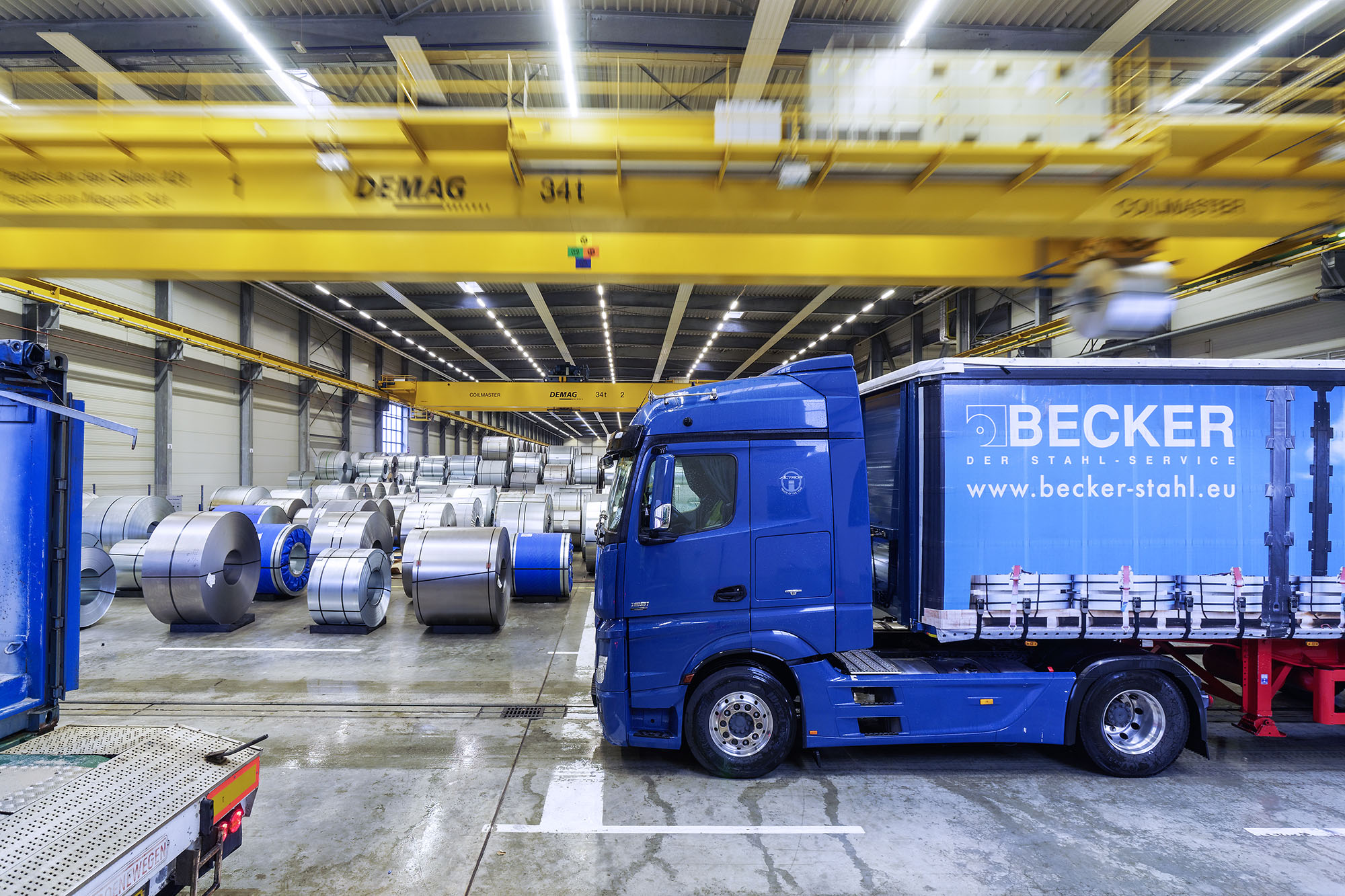
Klöckner agrees to sell Becker Group to Accura and BCB consortium
Klöckner & Co has signed an agreement to sell Becker Group to a consortium comprising Accura Investment Partners GmbH and Becker Consult + Beteiligungs-GmbH (BCB), the company announced on 8 October 2026.
The transaction is subject to customary regulatory approvals and is expected to close before the end of 2026. The parties have agreed to keep the purchase price confidential.
Becker Group is a producer-independent supplier of steel, stainless steel and aluminium in Europe, serving customers including the automotive and metal processing sectors. Klöckner & Co first announced its intention to divest the business in January 2026, following a review of strategic options. The company said the sale supports its focus on higher value-added products and services.
Guido Kerkhoff, CEO of Klöckner & Co SE, said: “With the sale of Becker Group, we have reached another milestone. The consortium of Accura and BCB is deeply rooted in the industry and brings the expertise needed to develop Becker Group on a sustainable basis. The realignment concept initiated by us and Becker Group will be further developed by Accura and BCB, determining the future direction of Becker Group. Through the sale, Klöckner & Co will place an even greater focus on higher value-added business and consistently drive its own profitable growth in this segment.”
Ulrich Becker, Senior Managing Partner of Becker Consult + Beteiligungs-GmbH, said: “Becker Group has a strong market position and a team that truly knows the business. With our own extensive background in the steel and metal industry, we look forward to building on this foundation together with the management team and the entire workforce to drive long-term growth.”
Under the planned ownership change, Becker Group will continue to be led by its existing management team, headed by CEO Torsten Gieseke. The consortium intends to further develop the realignment programme jointly initiated by Klöckner & Co and Becker Group.
The programme will focus on improving sales, procurement and business processes, alongside inventory management and liquidity. According to the announcement, the buyers aim to stabilise the business and support its long-term development in Europe.
No immediate headcount reductions or site closures are planned at closing. However, the consortium intends to review Becker Group’s strategic positioning and the contribution of individual business units as the programme progresses. Any subsequent decisions will take account of market and cost developments and be coordinated with the relevant employee representative bodies.
Accura is an independent investment company focused on traditional industries in the European mid-market. BCB is a consultancy and investment firm specialising in industrial mid-market businesses, led by Ulrich Becker, a former member of Klöckner & Co’s Management Board.

Northern European HRC rises slightly on higher mill offers; Italian prices decline despite tight supply
Local steel hot-rolled coil (HRC) prices in Northern Europe edged up slightly as mills tried to achieve higher levels, while prices in Italy declined on the latest deals despite limited supply in the market, sources told Fastmarkets on Wednesday October 7.
In Northern Europe, sources said demand was still subdued, so price increases were not accepted as quickly as mills expected.
A buyer source reported an indication of workable prices in the Benelux area at €730 ($821) per tonne ex-works, saying this level was still possible to achieve. The same source said offers from mills in the area were at €740-750 per tonne ex-works.
A second buyer reported an offer at €760 per tonne ex-works. No other price points were received during the day.
Due to one source accounting for more than 50% of the input on Wednesday, prices collected in the previous day were copied over to the latest index calculation, in line with Fastmarkets methodology.
On Tuesday, a seller source reported deals within the range of €740-760 per tonne ex-works, and a buyer reported an indication of tradable level at €740 per tonne ex-works.
Thus, Fastmarkets’ daily steel hot-rolled coil index domestic, exw Northern Europe was calculated at €746.88 per tonne on Wednesday, up by €1.88 per tonne from €745 per tonne on Tuesday.
The index was stable week on week but up by €4.38 per tonne month on month.
In Italy, a producer in the market said that the latest prices confirmed in transactions were within €750-760 per tonne delivered for November-December delivery, which nets back to around €730-745 per tonne ex-works after deducting delivery costs of €15-20 per tonne.
The same source said that they were not seeing higher levels achieved in the market yet, “even if the offers are definitely higher.” The producer added that it was offering minor December allocation at €750 per tonne ex-works, with bids €10-20 per tonne below this level.
However, this fell outside the Fastmarkets methodology delivery window of up to six weeks, so the December prices were not considered in Wednesday’s index calculation.
Despite the statement from the producer about limited increases achieved in the market, a buyer indicated workable HRC prices in Italy within the range of €740-750 per tonne ex-works, in line with previous transactions heard in the market on Monday October 5.
As a result, Fastmarkets’ daily steel hot-rolled coil index domestic, exw Italy was calculated at €741.25 per tonne on October 7, down by €3.75 per tonne from €745 per tonne on October 6.
The index was down by €2.50 per tonne week on week but up by €13.75 per tonne month on month.


EUROFER: EU steel pipe and tube output to grow by 1.3 percent in 2026
EU steel pipe and tube production is expected to increase by 1.3 percent in 2026, following marginal growth of 0.1% in 2025, according to the European Steel Association’s (EUROFER) third-quarter Economic and Steel Market Outlook 2026-2027, which points to a gradual recovery amid persistent uncertainty across European manufacturing.
The projected expansion follows three consecutive years of contraction, with EU tube output falling by 1.3% in 2022, 1.4 percent in 2023 and 2.4 percent in 2024, before stabilizing in 2025. EUROFER forecasts a further increase of 1.2% in 2027, indicating that the sector’s recovery will remain modest.
Tube production growth is expected to lag behind the overall recovery in EU steel-using industries, whose steel-weighted output is forecast to increase by 1.5 percent in 2026 and 2.5 percent in 2027, following a decline of 0.1 percent in 2025.
Author: SteelOrbis Editorial Team


ArcelorMittal Eisenhüttenstadt restarts BF, long-term future remains uncertain
Germany-based steelmaker ArcelorMittal Eisenhüttenstadt has restarted its blast furnace 5A following a recent operational disruption, restoring operations at the facility after production was interrupted at the end of September, according to media reports.
The disruption was reported in September after an operational irregularity was detected at the blast furnace, leading ArcelorMittal to partially halt production at the plant, as SteelOrbis previously reported. At the time, the company said its technical teams were working to stabilize operations and expected regular production to resume shortly.
However, questions remain over how long the blast furnace can continue operating. No definitive timeline for its continued operation or shutdown was provided.
Future production route remains unclear
Uncertainty over the blast furnace comes after ArcelorMittal decided in June 2025 not to proceed with its previously planned direct reduced iron and electric arc furnace-based decarbonization projects at its Bremen and Eisenhüttenstadt plants.
As a result, blast furnace 5A continues to play a central role in maintaining production at Eisenhüttenstadt, while the longer-term production route for the site remains unresolved. The Eisenhüttenstadt facility has an annual crude steel production capacity of approximately 2.5 million mt.
Author: SteelOrbis Editorial Team

France’s steel exports rise as imports ease in Jan-Aug 2026; metal output edges up in August
France’s basic steel product and ferroalloy exports increased by 2.3 percent year on year to €6.44 billion in January-August 2026, while imports declined by one percent to €5.92 billion, according to the French Ministry of Economy, Finance and Industry. These figures resulted in a trade surplus of €520 million for the period.
Trade in other steel product categories showed mixed trends. Steel pipe and tube exports fell by 5.6 percent to €796.36 million, while imports edged up by 0.3 percent to €1.33 billion. Exports of cold rolled steel bars rose by 6.1 percent to €307.88 million, whereas imports slipped by 0.9 percent to €335.02 million.
Cold rolled steel strip exports decreased by 5.3 percent to €407.16 million, with imports falling by 3.4 percent to €422.93 million. Cold drawn wire exports increased by 3.2 percent to €197.76 million, while imports declined by 4.8 percent to €301.79 million. Exports of metal structures and parts fell by one percent to €594.21 million, while imports dropped by 9.5 percent to €1.53 billion. All trade changes are compared with January-August 2025.
Meanwhile, France’s production of basic metals and fabricated metal products, excluding machinery and equipment, edged up by 0.1 percent month on month in August, following a 1.4 percent decline in July, according to the National Institute of Statistics and Economic Studies (INSEE).
Overall manufacturing output rose by 0.3 percent in August after falling by 0.8 percent in July. However, manufacturing output in June-August was down by 1.2 percent year on year and by 1.9 percent compared with the previous three-month period.
Among steel-consuming sectors, production of motor vehicles, trailers and semi-trailers declined by 3.4 percent month on month in August, reversing a 1.3 percent increase in July. Construction output rose by 0.7 percent after remaining stable in July, although output for June-August was down by 2.0 percent compared with the preceding three months.
Author: SteelOrbis Editorial Team
Swiss Steel’s cutbacks in Germany still undefined
The scale of the layoffs and capacity reduction that’ll take place at Swiss Steel is not yet known, despite announced intentions of further cutbacks.
The company underwent a wave of reductions and redundancies in late 2024 (see Kallanish passim), when the number of staff was brought down to under 7,000. According to ceo Frank Koch, the group has halved the number of employees over the years from 13,000 to 6,500 now.
This comes as Koch told Sonntagszeitung in an interview that further cutbacks are expected at the group’s German subsidiary, Deutsche Edelstahlwerke. That measure will minimise the group’s dependency on the automotive industry, he was quoted as saying.
With its upcoming measures, the loss-making group plans to return to operating profit by 2028, Koch said.
In a statement, Swiss Steel tells Kallanish that in the future the group “will have an altogether smaller and more focused set-up”.
The statement did not provide further details on the cutbacks. “As soon as the current considerations lead to tangible steps, we will communicate the process that will come,” the company says.


Italian coil prices tick up, uncertainty seen downstream
Italian coil prices are ticking up week on-week. Downstream, however, sheet and tube demand is still weak, with prices lagging behind.
Coil order intake also remains slow, with buyers yet to return to the market. Several buyers tell Kallanish they have sourced hot rolled, cold rolled and hot dip galvanized coil from imports. Import buying eased from mid-September when Asian mills raised their offers.
With stocks still sufficient, buyers are only taking small volumes from European mills to cover inventory gaps.
Kallanish assesses HRC Italy at €730/tonne ($822/t) ex-works. In September, service centres and re-rollers sourced material from various Asian producers and Turkey at €560-580/t cfr. In the second half of the month, Asian mills lifted prices, and some import deals are now heard at €675-700/t cfr.
Although imports have become more expensive, buyers continue to purchase to diversify supply and avoid relying solely on European mills.
A smaller service centre says it only buys imports on a ddp basis when available, and otherwise covers its limited needs from European producers. Very few traders now offer ddp, however, with most quoting cfr.
HDG import contracts are heard at €750-760/t cfr, excluding CBAM costs. Adding this would bring these prices close to current European levels, where HDG deals are at €840-860/t base delivered. A large service centre says it has to buy imported HDG because European supply is limited and it needs to restock.
The new price level for black hot-rolled coil in Italy and across Europe is €730-740/tonne, base delivered with offers at €750-790/t base. Demand is weak, but producers are uncompromising on prices for small and large customers alike. “Protected as they are, producers know that demand in Europe will recover and prices will keep rising,” a source comments.
Service centres are still making money at current sheet prices as they bought cheap Asian coil in the first half of the year. However, “downstream activity is very slow and sheets increases are lagging behind,” a service centre says.
“With increasing import prices we play it by ear. We bought a lot in August and September and we have stock to cover us at least until almost the end of the first quarter,” another service centre comments.
Demand for black hot-rolled sheet remains tepid. Payment delays are heard throughout the value chain. Prices are stable at €810-820/t delivered. “At €820/t you often lose orders,” an agent warns.

NW European coil buyers unfazed by possible shortages
Buyers remain broadly unalarmed by the potential output reductions at western European coil mills amid recent temporary stoppages.
Currently, it appears that alleged disruptions have been overcome according to official statements (see Kallanish 6 October 2026).
“They [the mills] seem to tell different things to different sides,” one German market observer believes. He notes that they do not want to let on about disruptions publicly, but to their buyers “they rather blow up small issues, to pretend that volumes could become scarce”.
Among buyers, though, “no one is really worried,” a Swiss-based trader notes. A manager of a Dutch processor concurs.
“There is still a lot of stock at service centres, and, we have enough contract volume with European mills, so no worries from my side,” he tells Kallanish. And, like many, he adds “I am more concerned about the low demand.”
A recent temporary blast furnace disruption at ArcelorMittal Eisenhüttenstadt, made public by the group, “would maybe affect automotive customers, but not us,” a buyer at an Austrian processor says. “The overall availability from the western mills is given,” he states.
The spot price of hot rolled coil is hovering around €740/tonne ex-works ($833/t), and views among buyers diverge as to whether mills will concede deals for €10/t less, or if they could bag €10/t more.
“Mills would like to go above the €750/t,” the Austrian sources says. Another buyer notes that mills do succeed in this when it comes quarterly contracts, where the level is €760/t for the first quarter 2027, he says.