


European heavy plate round-up: Heavy plate prices up in Germany, down in Italy
Domestic heavy plate prices inched up in Germany and remained stable in Italy over the week to 27 February, while restocking activity has been muted.
In Italy, re-rollers continued to aim for EUR750/t ex-works, but such prices were achieved only in deals settled for projects for the material with higher added value. Spot buyers booked limited volumes at EUR700-740/t ex-works.
Big stockists have not returned to the market looking for volumes yet, but their price ideas are closer to EUR700/t delivered. Sellers have not accepted such prices.
Re-rollers in Italy claim that they have solid order books – selling late March-April rolling – and they feel no pressure to give discounts.
In addition, they need to maintain higher plate prices to cover potentially high Carbon Border Adjustment Mechanism (CBAM) duties for imported slab. Re-rollers estimated CBAM duties for imported slab at EUR30-80/t based on actual emission values. But until exporters obtain the certifications – in 2027 for imports during 2026 – European re-rollers risk that the duties would be calculated based on default values resulting in substantially higher costs.
“CBAM duties for slabs looks well covered by current plate prices, taking into account price rises earlier this year. But this is based on actual values. The risk remains that the costs would be much higher based on default values,” an Italian trader said.
Offers of imported slab in Italy have been reported at $540-550/t CIF, though no transactions have been heard.
In Germany, due to lack of trading activity in the commodity grade plate segment, mills have been trying to focus on sales to projects or under long-term contracts.
“Stockists and cutting centres report a bad turnover in February. So, the mood is worsening and therewith the ex-stock prices cannot be increased and re-purchases are less,” a German distributor said.
German mills have been offering s235jr plate at EUR770-810/t ex-works and s355jr material at EUR850/t delivered.
Offers of s355jr plate from Scandinavia have been reported at EUR850/t delivered Northwest Europe. Italian mills have been offering the similar material at EUR820-830/t delivered Germany.
Offers of imported s355jr plate from South Korea, India and Brazil have been reported at EUR760-800/t DDP Antwerp, posing competition to European suppliers.
| Weekly European heavy plate, slab and green steel | |||||
| Unit | Term | 27-Feb-26 | Change | ||
| Weekly heavy plate | |||||
| Northwest Europe ex-works heavy plate | EUR/t | EX-WORKS | 770.00 | 20.00 | |
| Germany delivered heavy plate (Northwest Europe) | EUR/t | DEL | 820.00 | 20.00 | |
| Italy ex-works heavy plate | EUR/t | EX-WORKS | 720.00 | 0.00 | |
| Weekly steel slab | |||||
| Italy CFR slab | $/t | CFR | 535.00 | 5.00 | |
| Weekly green steel | |||||
| Green heavy plate premium (scopes 1-3 CO2 under 1t) | EUR/t | 25.00 | 0.00 | ||

Court orders part production suspension at ADI
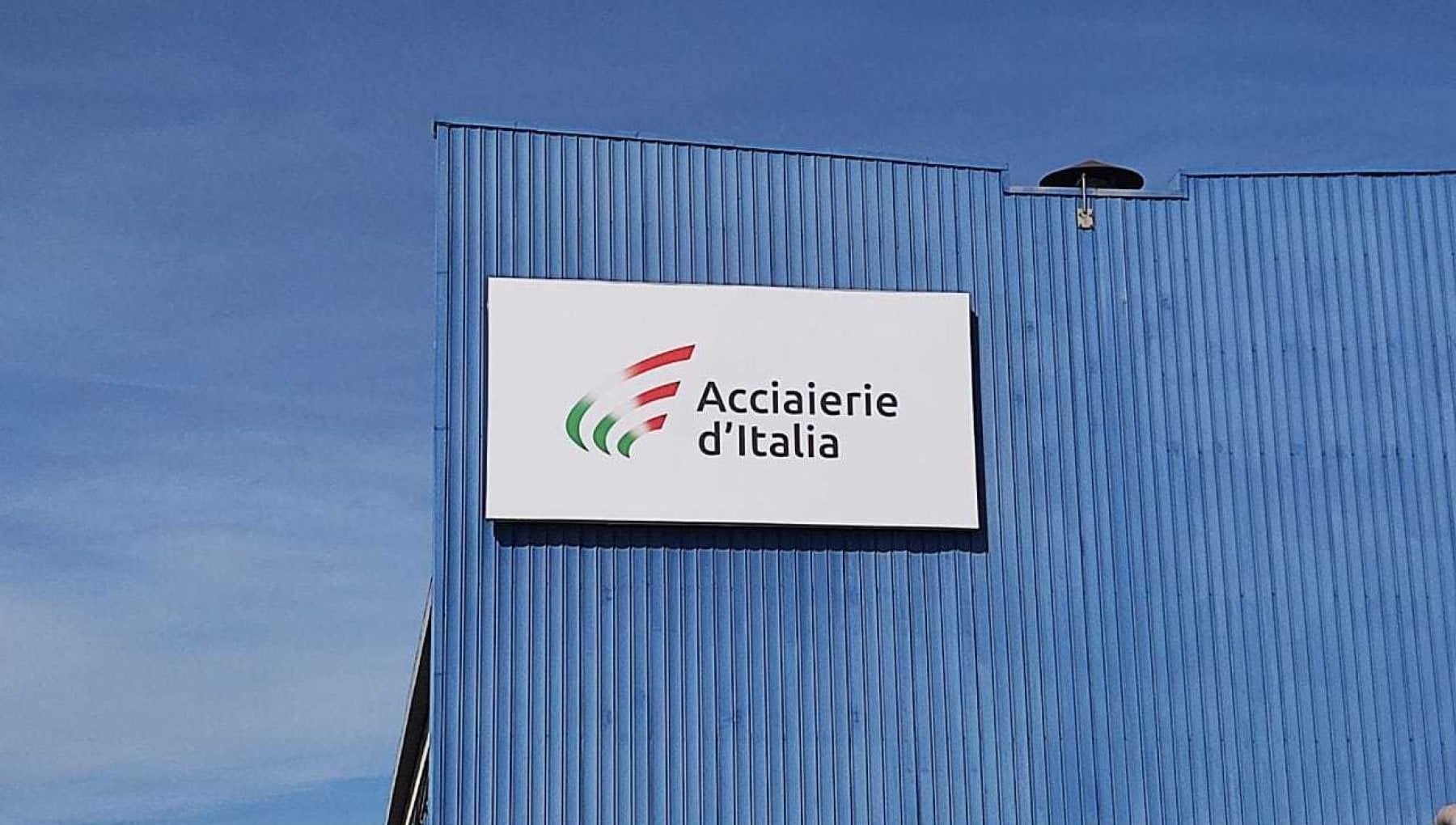
A Milan court ordered Acciaierie d’Italia (ADI) to suspend production at its Taranto plant on health grounds, although the ruling will only become effective on 24 August pending required environmental interventions, the industry’s trade unions UILM and FIM-CISL said.
The ruling followed a legal petition from several Taranto citizens.
The court ruling “required the extraordinary administration of ADI to comply with the provisions of the AIA [Integrated Environmental Authorization], under penalty of the suspension of production in the hot-rolling area of the plant,” UILM said.
No information was confirmed regarding the equipment which could be suspended.
“The reference is to the partial, rather than total, non-application of the Integrated AIA, specifically of certain provisions contained therein that the judges are requesting be supplemented,” FIM-CISL said. The union requested clarifications on the matter.
UILM criticized the Italian authorities for lack of communication and clarity on the production and environmental plans for ADI. The union also highlighted that the legal challenges combined with the limited financing make it difficult for ADI’s extraordinary administration to ensure sustainable production.
Earlier this week, ADI temporarily idled blast furnace (BF) No. 4 for maintenance until end of April. BF No. 2 was restarted on 10 February. The steelmaker plans to double steel production to 4 mt/y by end April 2026, and to continue operating two furnaces. But the recent court ruling could disrupt those plans.
ADI is currently in the process of being sold, with Flacks Group, a United States-based investment firm focused on the turnaround of distressed businesses, discussed in the market as a likely new owner. The tender has not yet been finalized.

Coil imports resurface in Italy
Italian coil prices continue to tick up compared with early February, although domestic activity remains relatively subdued. Both small and large buyers have resumed sourcing from the import market, market participants tell Kallanish.
Despite the uncertainty surrounding CBAM costs, larger buyers continue to purchase directly from Asia. One source says they are working closely with suppliers on CBAM certification and are confident that several foreign mills will qualify under actual emissions values, as they intend to preserve their European market share. Smaller buyers, meanwhile, report purchasing only on a delivered-duty-paid (ddp) basis to limit risk.
A trader notes that some traders are prepared to assume the CBAM risk by offering ddp terms, while others remain reluctant due to the potentially prohibitive impact of default CBAM values. Several larger buyers say they are accepting a degree of risk due to their substantial HRC needs. They rely on long-standing relationships with Asian and Middle Eastern suppliers. They expect CBAM charges for their purchases to remain within €50-60/t ($58.94-70.73/t).
Ddp transactions have been concluded around €600-610/t approximately ten days ago. However, offers from Turkey and North Africa have since increased to €620-640/t ddp. A Middle Eastern cargo is rumoured to have been sold at slightly below €530/t cif. One service centre says current domestic levels of €650-660/t delivered are justified, given hot rolled sheet prices of around €750/t delivered. Downstream activity remains somewhat subdued.
Domestic HRC is currently at around €650/t base delivered. Market sources indicate that ArcelorMittal has exhausted allocations for Southern Europe. The producer is now targeting €750/t base delivered for HRC in Southern Europe, while asking prices in Northern Europe remain at around €720/t base delivered.
Availability of cold rolled coil remains limited, and supply of hot-dipped galvanized material is also constrained. Contract prices for CRC and HDG are expected to reach €800/t base delivered, compared with current levels of around €780/t delivered, Kallanish understands.
Italian producers are targeting €810-820/t for HDG, while several other European mills report little or no CRC availability. HDG offers into Italy from other European suppliers are heard at €800-820/t delivered, depending on producer and origin. Limited volumes of imported CRC have meanwhile been concluded at around €740/t base cfr.
Although import activity has recently resumed on both cif and ddp terms, market participants expect bookings to slow again towards May ahead of the new safeguard regime scheduled for July, amid uncertainty over quota allocation and the cost of both CBAM and safeguard.


Policy boosts Europe sentiment, energy remains critical: Primetals’ Plaul
Recent policy changes are improving sentiment in Europe, but lack of competitively-priced energy remains a fundamental issue, with utilisation of domestic natural gas resources a potential solution. Europe is meanwhile likely to import the majority of its low-emission iron requirement in future, while upscaling limitations could constrain the buildout of electric smelters.
These were the conclusions of Primetals Technologies head of iron – steelmaking and environmental solutions Jan Friedemann Plaul in an exclusive interview with Kallanish at the technology supplier’s flagship location in Linz.
Policy boosts EU sentiment, potentially investment
The uncertainty surrounding the final cost per tonne of imports under CBAM means the new measure’s impact on pricing is unclear, but the EU’s new trade regime due to come into force from July should boost prices. Policy measures have noticeably improved sentiment in Europe, which is reflected in the share prices of listed steelmakers, which have risen in the last six months.
“The stock market normally predicts quite well if something positive is happening. I think the shareholders see it positively. We expect higher earnings, and then I think also the climate for investing is getting better,” Plaul told Kallanish.
Low-cost, predictable energy supply remains critical
The policy measures are however just “protecting the uncompetitive situation in Europe”, he added, while low-cost electricity supply remains the fundamental problem. In the long term on this issue, “I cannot really see an improvement in Europe”, Plaul noted. Despite the significant buildout of renewable energy capacity, Europe remains dependent on imported fossil fuels and energy prices are elevated.
Steelmakers are also sourcing a large portion of their electricity requirement from the spot market – unlike the long-term contracts of the past – making them more susceptible to volatile pricing and thereby hampering investment confidence.
Energy taxes and network charges are also making electricity more expensive and therefore need to be addressed by EU member states’ governments.
With electricity, “predicting on a ten-year horizon what you need to make an investment decision, it’s very difficult – and I think this is a big uncertainty … These are the main driving factors: good visibility on the electricity price and availability, and long-term contracts. If this is more visible, then it’s easier to invest,” Plaul observed.
Domestic natural gas should be utilised
A locally available solution to energy import dependence would be to use the EU’s own reserves of natural gas. However, politics may get in the way.
“For example, Germany has a lot of natural gas reserves in the earth, but doesn’t extract them. Why import from the US? Fracking is similar whether done in the US, Germany, or the Netherlands. It’s a political issue, of course, but to get more stable or stable prices on energy, it would be better to also have safe, sufficient supply of fossil fuels,” Plaul pointed out.
Since natural gas is prone to distribution losses at multiple points during its transport, it would be environmentally friendlier to access and utilise EU resources at source, he added.
Europe likely to import iron requirement
As for the future of ironmaking in Europe, many consider it a strategic imperative to have indigenous ironmaking capability, especially during times of instability. However, ore-based metallics are essentially a raw material. If you look at the major steel producing countries, such as China, Japan or Korea, these all depend on imported raw materials, Plaul said.
Most direct reduced iron is likely to be imported into Europe because of the unfavourable conditions for local production. After energy, bureaucracy is the next major factor that raises investment costs in Europe. “If you build a DR plant in Germany, it looks quite different with the DR plant you would build in the Middle East. Noise protection is a big issue in Europe. New equipment must be integrated into existing steel plants, often near residential areas,” he noted.
There are a number of steelmakers pushing ahead with direct reduction plants in Europe, but they will face costs. “They will have operational advantages, having hot DRI in their plant. But from the opex perspective, it’s most probably not the cheapest at the moment,” he added.
Importing from the Middle East, on the other hand, involves political risks. “Then it’s a question: do I pay for this additional risk or can I protect this risk in a certain way?” Plaul asked.
One way for EU mills to increase their raw material supply security will be to sign offtake agreements with overseas DR plants, or even become shareholders in them.
Europe remains decarbonisation hot spot
Despite recent uncertainty over decarbonisation, major European steelmakers are continuing to carry out transition investments and Europe remains the hot spot. However, hurdles need to be overcome.
“You can see the difficulties in executing such big projects: unstable political conditions, hydrogen is a big issue. The commitment, especially in Central Europe, on this hydrogen network, is … fading … Every investment which was also sponsored by the government was based on a certain amount of hydrogen utilisation. And these networks are not coming up as fast as projected,” Plaul observed.
The US is the number two hotspot for steel decarbonisation, given its mainly scrap-EAF-based steel mill fleet and, next to its conventional mini-mills, the larger EAF flat steel mills it is focusing on to supply the automotive industry, he added.
EAFs will produce flat steel, with compromises
In Europe, the future fleet of EAFs will produce automotive grade steel but carmakers may need to adapt their quality requirements, Plaul noted. “I think it’s a must. All these integrated steel producers have promised the companies who are buying steel from them that they will get similar products like before,” he said. Several steelmakers are simulating automotive steel production through the EAF route, in alignment with the automotive industry, he added.
“The steelmakers have to adapt their whole value chain on the changed conditions. But also the automotive industry has to adapt their expectations on certain [mechanical properties] to use green steel,” he said.
The big carmakers are demanding and have very high expectations from their suppliers but, together with steelmakers, they are working on developing products in the EAF. “The target is, for sure, to produce high-quality products on the electric arc furnace – all integrated steelmakers have this target, because this is where they earn the most money,” Plaul added.
Electric smelters needed but upscaling a challenge
If the energy transition is to happen fast, electric smelters will be needed to utilise the mainly low-grade iron ore deposits found globally, with direct reduction-grade ore availability limited. However, upscaling will be a limiting factor.
The smelter is “probably the biggest development step, which still has to be proved”, Plaul noted. Besides thyssenkrupp building large-capacity smelters, Primetals is constructing a 300,000 tonnes/year smelter jointly with Posco, and a joint smelter demonstration plant with voestalpine, which aims to de-risk the technology.
The smelter is significant as it provides competition with the blast furnace, whose economics have been difficult to beat for decades. A single BF can produce up to 5-6 million tonnes/year of hot metal. “And with the smelters, you need more aggregates to produce the same amount. The upscaling of the smelters is challenging. It might also be a limiting factor for the future,” Plaul warned. One smelter is predicted to produce 1.2-1.5m t/y of hot metal.
Ore availability will nevertheless drive their development, with the mining landscape unlikely to change significantly, as mines can take up to 30 years to develop. Although there are new high-grade ore mines coming online, “it’s basically not in the amount that you can make a whole transition of the steel industry,” Plaul pointed out. “This is the question: is the steel industry transition following the availability of iron ores … or do we develop new technologies which can take existing iron ore material?”

European steel distribution sector stable but structurally weaker: Assofermet Acciai president
The European steel distribution sector is navigating a stabilized but structurally weaker market, with downstream demand running 10%-15% below historical levels, according to Tommaso Sandrini, President of Assofermet Acciai, the association of Italian steel service centers.
Speaking to S&P Global Energy on the sidelines of a Eurometal event held in Milan Feb. 26, Sandrini — who is also a board member of Eurometal and CEO of Italy-based metal product manufacturer and distributor San Polo Lamiere — said consumption volumes had held steady compared with 2024 but remained significantly lower than in 2020.
“We’re not seeing any particular changes — just a repetition of consumption volumes, with some threats in specific sectors, first and foremost automotive, which I see in very bad shape,” he said.
In particular, Sandrini said that, of the major users of steel, the automotive sector was the one struggling most, with European players suffering from an inadequate approach to the shift toward electric vehicles, with no clear resolution to the incompatibility between sustainability targets and industrial survival.
Policy uncertainty looms
On the supply side, Sandrini said 2025 marked a sharp break from two decades of free trade, with protectionist measures potentially justified by unfair competition, particularly China’s subsidy system. However, he strongly criticized the implementation of the EU’s Carbon Border Adjustment Mechanism and safeguard measures.
“The main issue is the total lack of clarity,” Sandrini said of CBAM, which applies to imports from January 2026. “We don’t know the rules, the values, the actors involved, or the emission certification methodologies that non-EU steel mills will have to follow.”
Certification bodies are expected to be announced in September, but Sandrini said most imports made from Jan. 1, 2026, will likely fail to obtain certification before well into 2027, forcing them to fall back on default values. “The default values prices are apocalyptic,” he said on the sideline, citing CBAM costs of Eur650/mt ($766/mt) for certain countries as “manipulated data, without solid technical or industrial justification.”
Sandrini said distributors were currently absorbing risks they cannot calculate, creating massive uncertainty. He also criticized the lack of clarity on safeguard quota distribution at the end of February, saying key elements should already be factored into purchasing decisions.
Industrial reckoning
Sandrini described the current situation as “the failure of the European Union’s climate policy,” arguing that the Emissions Trading System lacked a solid foundation and represented a massive burden on European industry. He pointed to halted investments in hydrogen and green steel projects worldwide as evidence that deep decarbonization was incompatible with maintaining European industrial activity.
“Large companies made a mistake over the last 10 years by blindly following regulatory dictates without raising objections,” he said, singling out automotive as “the clearest negative industrial example we have.”

EU faces ‘industrial desertification’ without urgent downstream protection
European policymakers must act swiftly to prevent “industrial desertification,” panelists warned at a EUROMETAL roundtable, emphasizing that current protections for primary steel are insufficient and urging the EU to extend safeguards to downstream manufacturers and steel derivatives.
At the “Are we risking the EU industrial desertification?” roundtable, held by the European steel body as part of its event in Milan, Italy, Feb. 26, speakers also called for a shift from a cost-focused debate to strategies that stimulate demand.
Across Central and Southern Europe, industry representatives said the risk was no longer theoretical, with plant closures and a shift from domestic production to import-and-assemble models becoming more frequent. Concerns focused on gradual erosion, adding that once value chains were relocated, they rarely returned.
The EU’s Carbon Border Adjustment Mechanism, originally conceived as an environmental tool to prevent carbon leakage, is now widely viewed in the steel sector as an increasingly complex trade defense instrument. While intended to level the playing field by pricing carbon on imports, its heavy administrative burden and uneven product coverage risked distorting trade flows rather than stabilizing them, speakers said.

Safeguards and CBAM
Panelists noted that both the EU’s safeguard measures and CBAM have mixed effects. While intended to protect the industry, the new safeguard regime that is reducing quotas and CBAM that adds extra costs to the steel imports are inadvertently opening the door to steel derivative imports from outside Europe.
Franco Felisa, a representative of Electromechanics Synergy Network, highlighted the severe challenges facing European electromechanical companies. “Every day, we are losing a significant part of our market,” Felisa said, attributing the problem to a substantial gap in input costs rather than quality. He pointed out that Chinese raw materials are “at least 50%” cheaper than European equivalents, making it impossible for EU companies to compete with state-subsidized imports.
Piotr Sikorski, President of the Polish Union of Steel Distributors, described the deindustrialization trend as “already visible” in Poland and across Europe. “There is no single week when I don’t have a call telling me another client is out of business,” Sikorski said, warning that fragmented, small downstream companies remain largely unrepresented in policy discussions, leaving a critical blind spot.

Demand Stimulation Needed
Tayfun Iseri, Chairman of YISAD, the Turkish flat steel user, trader, and producer association, challenged the notion that the crisis was solely cost-driven. “We have a demand problem. It’s not only a cost problem,” Iseri said, urging policymakers to focus on boosting demand.
Tommaso Sandrini, head of Assofermet Acciai, the Italian distributors and re-rollers association, warned that delays in addressing steel derivatives could result in irreversible losses. “We don’t have time … In two years, a significant part of downstream manufacturing will never come back,” he said. He cautioned that once production relocates outside Europe, it is unlikely to return, risking not only plant closures but also the erosion of business models, with companies shifting to importing and assembling rather than manufacturing.
Platts, part of S&P Global Energy, assessed Feb. 26 domestic hot-rolled coil in Northern Europe at Eur670/mt ($791/mt) ex-works Ruhr and in Southern Europe at Eur665/mt ex-works Italy, both stable day over day. It assessed imported HRC in Northern Europe at Eur515/mt CIF Antwerp and in Southern Europe at Eur505/mt CIF S. Europe, both unchanged.

EU downstream steel sector faces weak demand amid regulatory uncertainty
The primary challenge facing the European end-user steel industry is weak demand rather than costs, with regulatory uncertainty further exacerbating market fragility, according to participants at a roundtable discussion during the EUROMETAL Southern European Meeting in Milan on Feb. 25, which was attended by Platts, part of S&P Global Energy.
During a session titled ‘The new normal of global economy while Europe loses track,’ panelists emphasized that trade defenses alone would not restore competitiveness unless they are accompanied by initiatives to stimulate consumption and strengthen industrial ecosystems.
The rapid pace at which the steel industry has been required to shift toward decarbonization was also a significant challenge, according to the participants.
Fernando Espada of Tata Steel said that the market “is trying to find a new balance,” noting that the previous momentum for a green deal and decarbonization has shifted.
“The problem with the entire legislation is the pace of it,” Espada said, before drawing a comparison between the adoption of green steel and the slower-than-expected growth of the electric vehicle market in Europe.
“In 2022, everyone thought we had to embrace green policies. But only for the first time, now I have two big projects on the table that are real green steel projects with significant volumes. The transition is taking place, just at a different speed than what the EC (European Commission) wants.”
Manufacturing shift
Emilio Rossi of EconPartners and Oxford Economics said the decline in manufacturing’s share of gross domestic product was not limited to Western economies but was also evident in China, highlighting a broader structural transformation. “Manufacturing and steel depend increasingly on services, such as logistics, financing and funding,” Rossi said, emphasizing that industrial competitiveness now hinges on the strength of supporting service networks.
Espada said steel serves as the “backbone of the economy,” adding that the EC has started to acknowledge that industrial policy “cannot be unilateral” and must align with global developments.
The immediate challenge was weak demand, as buyers have been holding off until there is clarity on revised safeguard measures.
“Once there is clarity, the market will reorganize itself,” he said, noting that suppliers from Taiwan, South Korea and Japan were already preparing competitive offers.
Platts assessed domestic hot-rolled coil in Northern Europe at Eur670/mt ex-works Ruhr on Feb. 26, and in Southern Europe at Eur665/mt ex-works Italy, both stable day over day.
Platts assessed imported HRC in Northern Europe at Eur515/mt CIF Antwerp on Feb. 26, and in Southern Europe at Eur505/mt CIF, both unchanged day over day.
Author: Devbrat Saha, Charles Thompson, Annalisa Villa

Southern Europe steel sector warns of trade shock as CBAM, safeguards converge
Southern Europe’s steel supply chain is moving toward a potential trade shock, as fragile demand coincides with sweeping trade measures and the approaching financial phase of the EU’s Carbon Border Adjustment Mechanism, market participants warned at an event held by EUROMETAL in Milan this week.
The event brought together distributors, traders, mills and policymakers to discuss growing concerns that the regulatory pace is outstripping market preparedness, particularly in import-dependent Italy.
Participants repeatedly stressed that while Europe is seeking a level playing field, the cumulative burden of CBAM, new safeguard measures and administrative complexity risked weakening the broader manufacturing base that the policies aim to protect.
President of Italian steel services body Assofermet, Cinzia Vezzosi, urged in the event’s opening speech that European competitiveness should be prioritized in regulatory changes or risk furthering the ongoing deindustrialization.
“We need rules, but they must be clear and balanced and must meet the number one objective, which is making the continent more competitive,” she said.
CBAM exposure
One of the themes emerging from Milan was the increasing relevance of delivered-duty-paid (DDP) pricing structures, particularly in Southern Europe, where imports account for a larger share of flat steel consumption than in Northwest Europe.
“People had time to prepare and report data last year, but many didn’t, and now they are complaining,” one participant said, referring to CBAM’s transitional reporting phase. “The market needs to adapt quickly. DDP offers are becoming more relevant.”
Early enthusiasm for import trading had faded as the financial implications of CBAM became clearer, several traders said. While shipments for June arrival are still achievable, visibility beyond that remains limited, with both buyers and sellers reluctant to assume liability for future carbon costs.
Market participants expect the European Commission to publish an official list of certifiers later this year, but doubts remain over capacity and consistency, alongside the functioning of the emissions verification and certification processes.
“If you don’t have actual emissions values clearly embedded in pricing, it becomes very tricky,” one distributor said. “A lot of companies are not prepared. The costs will come as a surprise in 2027.”
Regulatory hurdles
Alongside CBAM, the forthcoming safeguard regime dominated discussions. Participants questioned how reduced import volumes would be offset, particularly given the limited idle capacity within the EU, as one trader labeled the incoming trade measures as a “gamechanger” and “more important than CBAM at this stage.”
“Who will make up for the potential loss of 12 million-15 million mt of imports?” one trader asked, referencing struggling operations. “EU mills don’t have that flexibility.”
A key theme across both panels was the apparent lack of regulatory urgency for trade protectionary measures against steel derivatives, or downstream products, as several panelists and attendees warned that the focus on upstream steelmaking risked neglecting downstream industries.

EUROMETAL President Alexander Julius said during his keynote speech that European manufacturing remained uncompetitive on a cost basis to Chinese production, with energy costs and employment costs as two of the largest detractors for European firms. Julius outlined that “steel derivatives are the hidden threat driving European deindustrialization” and that “Europe cannot compete with products that are the same quality but significantly cheaper.” With domestic prices increasing, further import restrictions could see steel derivatives become increasingly cost-competitive,
“We are protecting steel production, but not steel-using sectors,” one speaker said. “There are no quotas on derivatives, so we incentivize imports of finished products.”
Several participants argued that the speed and layering of legislation, spanning trade defense, CBAM, and environmental reporting, had created regulatory fatigue and failed to address a fundamental lack of demand.
“There are hundreds of pages of regulation, but the real problem today is a lack of demand,” one attendee said. “The dynamism in the market right now is administrative.”
Speakers pointed to persistent structural challenges, including high energy costs since the COVID-19 pandemic, infrastructure gaps and elevated tax burdens, particularly in Southern Europe. While aerospace and select high-value manufacturing segments were showing resilience, overall steel demand was described as fragmented and weak.

Coherent industrial policy
Across panels, a recurring message was the need to align environmental objectives with industrial competitiveness.
“Environmental policy must be supported by industrial policy,” Tommaso Sandrini, of Assofermet, said. “When manufacturing is lost, the whole system suffers.”
Some participants expressed frustration with what they perceive as limited responsiveness from Brussels, with industry bodies now preparing coordinated initiatives at both EU and national levels to advocate for clearer, more balanced implementation.
While most agreed that trade measures may temporarily restrict imports, several argued that once clarity emerges, global suppliers are likely to reorganize and re-enter the market competitively.
For now, however, sentiment in Milan suggested a sector caught between structural transition and cyclical demand weakness, with limited visibility on how the balance between protection, decarbonization, and competitiveness will ultimately settle.
“Steel represents a small share of total emissions,” Tommaso said. “We have to be careful we don’t destroy our value chains in the process of trying to fix the problem.”

European Commission seeks clarity after US Supreme Court ruling
The European Commission has called on the US to provide full clarity on the steps it intends to take following the recent ruling by the Supreme Court of the US on reciprocal trade tariffs.
The commission stated that the current situation is not conducive to delivering the “fair, balanced and mutually beneficial” transatlantic trade relationship outlined in the EU-US joint statement of August 2025.
The US president Donald Trump began enforcing a temporary 10 percent global tariff on all imported goods as of February 24, after the US Supreme Court ruled that the previous broad tariffs imposed under emergency powers were unlawful, as SteelOrbis previously reported.
EU insists commitments must be respected
The Commission stressed that EU companies and exporters must receive fair treatment, predictability and legal certainty.
“As the US’ largest trading partner, the EU expects the US to honor its commitments set out in the joint statement – just as the EU stands by its commitments,” the Commission said. In particular, Brussels underlined that EU products must continue to benefit from the most competitive treatment, with no tariff increases beyond the previously agreed ceiling.
The Commission reiterated that tariffs function as taxes, raising costs for businesses and consumers. It warned that unpredictable tariff measures undermine market confidence and disrupt global supply chains.
Officials noted that the EU remains in close contact with the US administration. On February 21, EU Trade Commissioner Maroš Šefčovič held discussions with US Trade Representative Jamieson Greer and Commerce Secretary Howard Lutnick.
The EU stated that it will continue working toward lowering tariffs as foreseen in the Joint Statement, with the priority of preserving a stable and predictable transatlantic trading environment. At the same time, the bloc reaffirmed its broader strategy of expanding comprehensive “zero-tariff” trade agreements worldwide and strengthening the open, rules-based global trading system.


EU delays Industrial Accelerator Act amid divisions over “Made in Europe” rules
The European Commission has delayed the presentation of new industrial policy measures under the Industrial Accelerator Act (IAA) by one week due to internal disagreements over proposed local-content requirements, according to Reuters.
Originally scheduled for February 26, the proposal will now be unveiled on March 4, according to the office of Commission Executive Vice President Stéphane Séjourné. The postponement aims to allow additional negotiations among member states and stakeholders.
Debate centers on “Made in Europe” sourcing rules
The Industrial Accelerator Act is expected to introduce minimum local-content thresholds for industrial components used in publicly-funded projects across strategic sectors including batteries, solar energy, wind power and nuclear technologies.
The initiative forms part of the EU’s broader Clean Industrial Deal, which seeks to strengthen Europe’s industrial base and competitiveness amid intensifying global competition, particularly from the US and China.
Concerns over competitiveness and investment impacts
However, EU member states remain divided on the proposal. Countries such as France strongly support stricter “buy European” rules to shield domestic industries from lower-cost imports produced under less stringent environmental standards. Other countries, including Sweden and the Czech Republic, have warned that mandatory local-content rules could raise procurement costs, deter investment and reduce the EU’s global competitiveness.
Meanwhile, industry stakeholders such as automotive manufacturers have called for broader eligibility criteria extending beyond EU and EFTA members to include closely integrated supply-chain partners, notably the United Kingdom and Turkey.