

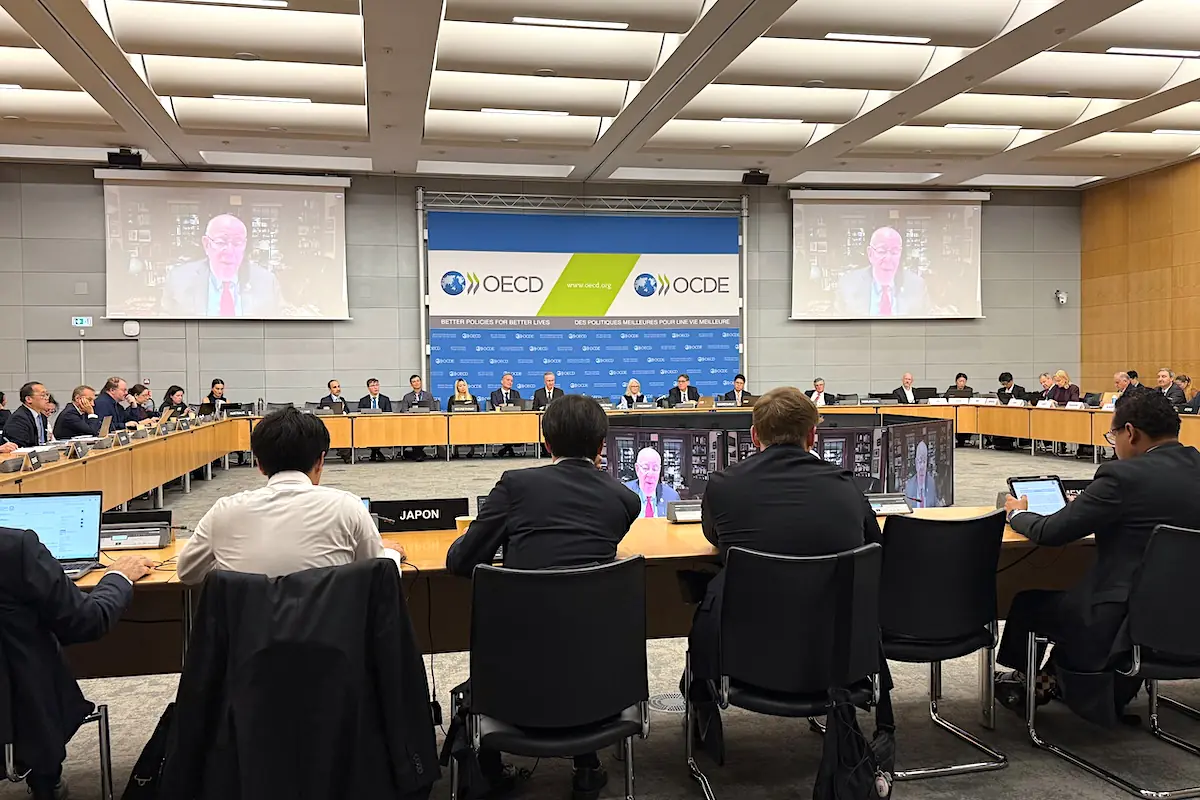
The OECD Steel Committee announced that global steel production capacity reached 2.533 billion tonnes in the first half of 2026, despite a 1.6% year-on-year decrease in global steel demand. According to the Committee, global excess steelmaking capacity could exceed 700 million tonnes by the end of the year if current trends continue.
Sheryl Groeneweg, Chair of the OECD Steel Committee, stated following the 100th session held in Paris on 18–19 November that global excess steel capacity could exceed 700 million tonnes by the end of 2026 if current trends continue. The meeting was attended by 279 participants representing 46 delegations.
Global steel demand decreased by 1.6% year-on-year in the January–June period. In the same assessment, the increase in global steelmaking capacity was recorded at 88 million tonnes on an annualized basis, marking the largest increase since 2013.
According to the Committee, China added significant new capacity despite weak domestic demand. In India, although new investments were aimed at meeting growing domestic demand, the gap between production capacity and demand widened. The Committee stated that projects scheduled to become operational or currently under construction for the 2027–2029 period could generate a potential gross capacity increase of 89 million tonnes worldwide.
Three of the six major producers recording crude steel output increases in October are OECD members
Following the OECD Steel Committee’s assessment of capacity growth, October data from the World Steel Association (worldsteel) revealed changes in actual production across countries. Crude steel production in the 70 countries reporting to the association decreased by 1.1% year-on-year to 142.4 million tonnes. Among the ten major producers listed in the bulletin, production increased in the US, Türkiye and South Korea among OECD members, and in Vietnam, India and Russia among non-OECD countries.
Among non-OECD producers, Vietnam’s production increased by 28.5% to 2.7 million tonnes, while India’s production increased by 3.6% to 14.5 million tonnes. Russia’s production was estimated to have increased by 1.9% to 5.4 million tonnes. China’s production decreased by 1.6% to 70.8 million tonnes. Among OECD members, US production was estimated to have increased by 8.4% to 7.5 million tonnes, while Türkiye’s production increased by 5.5% to 3.4 million tonnes and South Korea’s production increased by 3.7% to 5.3 million tonnes.
China’s share of global steel exports reaches approximately 40%
According to the OECD Steel Committee, China’s share of global steel exports increased from 19% in 2019 to approximately 40% in the first half of 2026. The Committee stated that despite the expansion of import monitoring and traceability requirements, steel from economies with excess capacity is increasingly entering importing markets through steel-intensive products such as automobiles and machinery.
The circumvention of trade measures and trade diversion were also on the Committee’s agenda. The Committee’s new study examines regulations in Malaysia, Thailand and Vietnam aimed at preventing the circumvention of trade measures, as well as potential transshipment and processing routes that could be used following investigations in member countries.
OECD calls for closer monitoring of subsidies
The Committee reported that 42 programmes and initiatives implemented across 25 provincial-level administrative regions in China between 2015 and 2026 to establish overseas steelmaking capacity had contributed to excess capacity in Southeast Asia. The statement noted that investments supported by the country of origin had created more challenging competitive conditions for domestic producers in the region and increased concerns regarding the enforcement of labour standards.
According to the Committee, improving access to information on government support, ensuring timely monitoring of subsidies and increasing information sharing among governments could enhance the effectiveness of measures such as countervailing duties. The Committee emphasized the need for measures involving multiple economies to address practices contributing to excess capacity. Studies on manganese, molybdenum and graphite also showed that export restrictions and industrial support measures restrict supply, increase costs and weaken the competitiveness of importing economies.
Milwaukee Framework and early warning tool on the agenda
Committee members welcomed the Milwaukee Framework adopted by the Global Forum on Steel Excess Capacity (GFSEC) on 30 September. Members stated that cooperation could be expanded with Latin American and Southeast Asian economies facing the effects of excess capacity. The draft work programme and budget for 2027–2030, submitted for discussion by the Committee, proposed extending subsidy analysis across the entire steel value chain, developing an early warning tool for suspicious trade flows and assessing the effectiveness of existing trade measures.


