


China’s exports slip but imports soaring
China saw its finished steel exports recover slightly on-month in July. Imports however continue to increase, and the country is expected to remain a net steel importer, Kallanish notes.
In July, China exported 4.176 million tonnes of finished steel, up from 3.701mt in June but still down -25% year-on-year, according to official Chinese Customs data. That brought exports over the first seven months of the year to 32.88mt, down -17.6% y-o-y.
With Chinese domestic steel prices high, export markets have been subdued this year. Now that domestic prices are increasing and domestic demand is expected to peak in the coming months, there is likely to be few opportunities to increase exports.
Finished steel imports meanwhile hit 2.606mt in June, up 38.8% month-on-month and around 210% y-o-y. Over January-July, finished steel imports are now 9.948mt, up 49.3% y-o-y and close to the 12.3mt imported over the whole of 2019.
These numbers do not include trade in semi-finished steel and so currently downplay imports. In June China imported 2.488mt of semis and those trade flows have remained strong. China officially became a net steel importer in June for the first time since July 2009. It is now expected to be a net importer for much of the second half of the year.
Outokumpu turns to loss, foresees lower third-quarter deliveries
Outokumpu expects stainless steel deliveries to decrease -10% on-quarter in the third quarter due to seasonally low demand in Europe and the continued Covid-19 pandemic impact. The firm has accelerated its Long Products segment strategic review under new management.
The European stainless steel market remains challenging as a result of continuing import and price pressure, the steelmaker says. The planned maintenance work at the ferrochrome mill in Tornio, Finland is expected to have approximately €15 million ($17.7m) negative impact on the Q3 result.
Outokumpu’s consolidated Q2 deliveries fell -10% on-year and -11% on-quarter to 523,000 tonnes. Sales were down -17% on-year and -12% on-quarter to €1.4 billion ($1.66 billion), while net result was a €37m loss versus a €6m profit in Q2 2019 and €22m profit in Q1 2020, Kallanish notes.
In business area Americas, deliveries were down -20% on-quarter due to continued distributor destocking and the pandemic. Business area Europe’s result was burdened by lower deliveries, continued price pressure and high import penetration. As a response to lower demand, production has been adjusted with temporary shutdowns and shorter working hours in all operating countries.
Europe segment adjusted Ebitda slumped -59% on-year in Q2 to €30m but Americas segment adjusted Ebitda turned to positive €3m from negative €8m a year earlier.
In the Long Products segment, deliveries dropped -38% on-year to 40,000t, sales were down -36% to €119m and adjusted Ebitda fell to negative €4m from positive €6m a year earlier.
In the Ferrochrome segment, meanwhile, production fell -5% on-year to 123,000t, sales dropped -25% to €95m and adjusted Ebitda fell -23% to €24m.
In the first half of 2020 consolidated deliveries fell -8% on-year to 1.11 million tonnes, with sales down -11% to €3.04 billion. However, net loss halved to €15m.

Spanish union welcomes strike-ending deal at Nissan vehicles plant
Spain’s UGT Union said Aug. 6 it welcomed an agreement reached between automaker Nissan and striking workers at its Barcelona-based plant that confirms activity at the site until December 2021.
The two sides reached an agreement Aug.5 after a consultation period concluded June 30, that will avoid the immediate closure of the plant, UGT said.
The agreement will end a three-month strike by the workers, who will resume production at the end of August at the three sites concerned.
The Barcelona site has a capacity for 200,000 vehicles per year, but produced only about a quarter of that total in 2019.
During the COVID-19 pandemic, vehicle production fell to near zero across Spain, prompting Nissan to announce May 28 its intention to close its plant as part of a global restructuring plan.
The two sides will continue to seek a long-term solution, which could include a “re-industrialization” of the site, the union said.
— Gianluca Baratti
Quotas to restrict Turkish steel exports to EU
With the EC’s new quota regulation, Turkey could face a 58% on-year decline in steel exports to the EU region, Adnan Aslan, chairman of Turkish Steel Exporters’ Association (CIB), told local news agency Dunya adding that Turkish mills’ overall steel exports in the first half of 2020 fell 10% on year to 9.7 million mt, due to trade barriers and the pandemic.
“As EU reduced Turkey’s steel quotas, Turkish mills’ steel exports to the EU region could fall as much as 52%, while protection measures in the US, Morocco, Egypt and United Arab Emirates are also limiting exports to these countries,” Aslan said.
Turkish mills’ hot-rolled coil exports probably will be exempted from the new quota regulation, as the EU imposed a country-specific quota on HRC imports on July 1, instead of a global quota. Turkey’s HRC exports to the EU region could fall by as much as 1.2 million/mt year to 1.3 million mt/year.
However, as Chinese support packages raised steel consumption in the Chinese market notably, China’s partial withdrawal from the export markets could create an opportunity for Turkish mills, the CIB chairman observed.
Aslan is expecting a recovery in the Turkish steel sector especially with the support of strong domestic demand. “It is important to establish the required mechanisms to direct the home demand to the domestic market in this regard,” he noted.
— Cenk Can
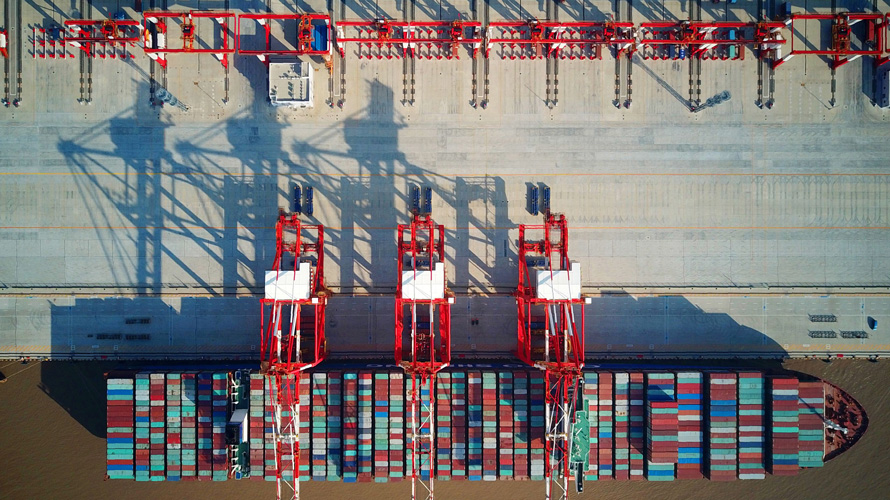
Shipyards face long lull, in Germany and elsewhere
The global shipbuilding industry will have to face very low demand for a considerable while, according to German maritime industry association VSM.
The suspension of orders due to the coronavirus pandemic is aggravating the global under-utilisation of shipyards that has existed for some time. VSM assesses that worldwide new orders in the past four years have been -40% below the volume which has been in production. Dumping prices and state subsidisation are common, it adds.
German shipyards, by comparison, have fared relatively well in recent years, due to specialisation in hi-tech segments, such as luxury yachts and cruise vessels. Before the advent of Covid-19, the order backlog of German yards translated to a capacity utilisation of four years, against only two years at Southeast Asian shipbuilders. But long production periods for such vessels make yards more vulnerable to a suspension of orders, VSM notes.
While overall plate demand in Germany has been low for some years, shipyards’ demand for plate has been healthy, Kallanish hears from a specialised stockholder. The plate typically used for ships is relatively thin, 10-15mm, and up to 40mm for ships travelling in frozen waters in Arctic zones.
With construction now suspended at some particularly big projects (see separate story), production volumes in Europe could drop by as much as -50-75%, VSM fears. The critical mass would not be sufficient to keep shipyards afloat, unless countermeasures are taken.
VSM has liaised with partner organisations in other countries to ask governments to launch programmes in support of public and military vessels. However, with most countries already supporting private enterprises during the crisis, they may, ironically, not have the money for such governmental programmes.
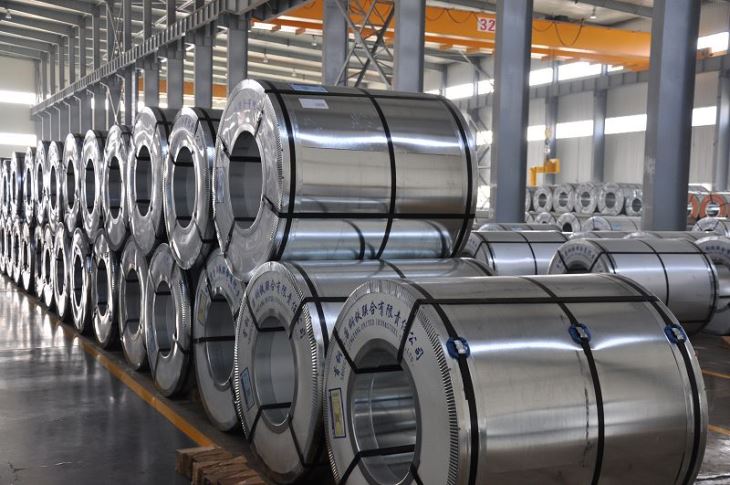
EU widens China galv duties following circumvention probe
The EU has extended anti-dumping duties on imports of certain corrosion resistant galvanized steels originating in China to cover certain new HS codes. This comes after the existing 17.2-27.9% AD duties were found to have been circumvented by imports of a slightly modified product originating in China.
The EU imposed AD duties on the initial set of products in 2017 (see Kallanish passim). Statistics at 10-digit TARIC level show that a significant change in the pattern of trade involving exports from China to the Union took place following the imposition. “Evidence pointed to the fact that the remedial effects of the measures in force were being undermined both in terms of quantities and prices, and that the slightly modified product was being dumped,” the European Commission says.
The duties have now therefore been extended to cover HS codes 7210 41 00 30, 7210 49 00 30, 7210 61 00 30, 7210 69 00 30, 7210 90 80 92, 7212 30 00 30, 7212 50 61 30, 7212 50 69 30, 7212 50 90 14, 7212 50 90 92, 7225 92 00 30, 7225 99 00 23, 7225 99 00 41, 7225 99 00 93, 7226 99 30 30, 7226 99 70 13, and 7226 99 70 93.
They exclude stainless steel, silicon-electrical steel, and high-speed steel, as well as steel not further worked than hot-rolled or cold-rolled.
The product under investigation is obtained by making small modifications to the initial set of products, for example, by slightly changing the chemical composition of the product or its coating. This can be done using the same production lines, the Commission says.
Imports of the products previously levied with AD duties almost zeroed in the reporting period of 1 October 2018 to 30 September 2019. However, imports of the products under investigation surged to 988,937 tonnes from around 30,000t in 2013.
The duty extension does not apply to Beijing Shougang Cold Rolling or Shougang Jingtang United Iron and Steel.
At the start of this year the Commission scrapped the rule requiring importers of hot-dip galvanized coil using the 4b safeguard quotas to prove the use of the material in the automotive sector. The products found to have circumvented AD duties fall under product category 4.
State support for construction to soften blow of plunging steel demand: Eurofer
Production in all European Union steel-consuming sectors will decline in 2020 and recover only partially in 2021, according to a market forecast published by European steelmakers’ association Eurofer Aug. 5. However, activity in construction will fall significantly less than activity in other sectors, due to “rather robust” government support, the association said.
The outlook for investment in construction – the biggest steel using sector, expected to account for 35% of the market this year – is “less negative” than in some other industrial sectors, but will only partially alleviate the overall blow the EU’s steel industry will receive from lower demand this year, with overall market conditions not expected to improve before the fourth quarter of 2020 or early 2021, according to Eurofer.
Total output by steel-using sectors is set to fall by 12.8% in 2020 and to recover by 8.9% in 2021, the association said.
Construction output will drop by 5.3% in 2020, and will rebound by 4% in 2021, Eurofer forecast. The construction sector has in recent years been more resilient than others because it is largely protected from the ongoing weakening dynamics in foreign trade. However, in the first quarter of 2020, the onset of the pandemic led to the first drop in construction output since the fourth quarter of 2016 (down 0.9%), it said.
“The construction sector is set to be more resilient and, to some extent, less exposed to the huge repercussions of the COVID-19 lockdown. It is thus likely to achieve relatively better performance than other GDP components in 2020,” Eurofer said. This sector will benefit from government investment and public expenditure which will play a “rather robust, counter-cyclical role,” it said.
Automotive hardest hit
In Q1 2020, production activity in the EU automotive industry fell year-on-year for the sixth consecutive quarter, i.e. by 16% (after being down 6.5% in the fourth quarter). “The combination of already weakening demand for new passenger cars in Europe and in key export markets such as the US, China and Turkey, uncertainty around WLTP and model changes plus – from mid-March 2020 – the outbreak of the COVID-19 pandemic took their heavy toll on production activity in all EU countries,” said Eurofer.
Output in the automotive sector is expected to be hit the most compared to all other steel-using sectors in the course of 2020, with an annual slump of 26% (the most severe on record), followed by a rebound of 25.3% in 2021, it forecast. The automotive sector will account for 18% of the EU steel market this year.
Mechanical engineering
Production in the EU mechanical engineering industry fell 8.6% year-on-year in Q1 (after a drop of 1% in Q4 2019), as a continuation of an existing negative trend, Eurofer said. Mechanical engineering output is expected to fall by 13.4% in 2020 – when it will account for 14% of the EU steel market – and to rebound by 6.8% in 2021.
Tubes
In Q1 2020, output in the EU steel tube industry fell by 13.3%, a much more pronounced fall than the 1.4% recorded in Q4 2019, that had resulted, over the whole year, in a marginal decrease of 0.3%.
The tube industry – to account for 13% of the EU steel market this year – is considered relatively resilient due to links with the construction sector in the EU: however, the outlook for demand for large welded tubes from the oil and gas sector is expected to remain very weak, Eurofer said.
Steel tube output will fall for the second consecutive year in 2020, at a much faster rate than in 2019 (down 19.4% vs down 0.3%). A rebound of 9.8% is foreseen for 2021.
Electrical appliances
Production in the electrical domestic appliances sector dropped by “a severe” 5.2% in Q1, further to a decrease of 0.9% in Q4 2019 that had resulted in an annual output decrease in 2019 of 1.2% (revised, formerly to 1.7%), Eurofer said. The pandemic has further exacerbated the negative trend in production of electrical domestic appliances in the EU recorded since Q3 2018. Output is expected to drop by – 10.8% in 2020 and to recover by 5.7% in 2021. The sector is set to account for just 3% of the EU steel market this year.
Total production activity in EU steel-using sectors increased by “a meager” 0.3% in the whole of 2019, following a decline in Q4 2019 which had been the first drop in output since 2013, Eurofer noted. This compared to an increase of 2.9% in 2018. In Q1 2020 came a drop of 7.2% on year in total steel-using output, due to pandemic-related lockdowns exacerbating the existing negative trend.Overall output in steel-using sectors in Q1 2020 registered negative growth in all EU economies (at different rates across countries) with the sole exceptions of the Czech Republic and Poland, it said.
— Diana Kinch
EC extends dumping duties on Chinese coated steel
The European Commission extended the antidumping (AD) duties on imports of Chinese corrosion-resistant steel to a larger selection of products Aug. 5 in an effort to counter circumvention of the existing duties.
Laying ground for its 2019 steel safeguards review, the EC found that imports of Chinese corrosion-resistant steel subject to AD measures almost disappeared, however, imports of other corrosion-resistant products increased to as much as 1 million mt or Eur650 million a year, the EC said.
An anti-circumvention investigation confirmed that the existing AD measures were the only reason for the shift in imports, the EC said.
To prevent the sale of only slightly modified Chinese products at dumped prices, the EC is extending AD duties to corrosion-resistant steel products modified by plating or coating by magnesium, an alloy with silicon, an additional surface treatment such as oiling or sealing, or a slightly modified content of carbon, aluminium, niobium, titanium, and/or vanadium.
The measure will apply to all Chinese exporters with the exception of one cooperating company, the EC said. It did not name the exempted company.
The EC confirmed AD duties of 17.2%-27.9% for corrosion resistant coated steel from China in February 2018.
— Justine Coyne

Der lange Weg zum „grünen“ Stahl

Die Umstellung der Stahlerzeugung auf „grüne“ Technologien ist auf der wirtschaftspolitischen Agenda weit nach oben gerückt und bestimmt maßgeblich die strategische Ausrichtung europäischer Stahlhersteller. Vielen Stahlverarbeitern sind die weitreichenden Auswirkungen auf das eigene Geschäft dagegen zu wenig bewusst. Bei dem Thema mischen sich politische und unternehmerische Fragestellungen, die sich wechselseitig beeinflussen. Nicht nur werden heute die politischen Weichen für die Zukunft gestellt, sondern Fragen nach dem CO2-Fußabdruck von Stahlerzeugnissen gewinnen in hoher Geschwindigkeit Bedeutung für das operative Geschäft.
Faktor Zeit: Der Verweis auf die ferne Zukunft hilft nur bedingt
In kurzen Intervallen starten EU-Stahlhersteller zukunftsträchtige Pilotprojekte, die dabei helfen sollen, den hohen CO2-Ausstoß der Branche zu senken. Im Mittelpunkt stehen dabei in Deutschland Verfahren für eine wasserstoffbasierte Stahlerzeugung und/oder für eine Abspeicherung bzw. produktive Nutzung des im Produktionsprozess anfallenden CO2. Die unter großer politischer Anteilnahme verkündeten Klimaziele sind in der Regel sehr langfristig formuliert. Über Zwischenziele in den 2030er Jahren soll das Ziel der Klimaneutralität im Jahr 2050 erreicht werden.
Dieser Blick in die doch recht ferne Zukunft scheint durch die technischen, finanziellen und politischen Gegebenheiten gerechtfertigt, hilft bei den Herausforderungen der Gegenwart aber nur bedingt. Diese bestehen darin, dass immer mehr Endkunden von ihren Zulieferern schon heute mindestens eine konkrete Auskunft über den CO2-Fußabdruck des verwendeten Stahls verlangen. In Einzelfällen werden bereits auf einer recht straffen Zeitschiene deutliche Minderungen verlangt. Beispiele dafür gibt es in jüngster Zeit nicht nur, aber vor allem aus dem Bereich der Automobilindustrie. Es zeichnet sich ab, dass die CO2-Intensität des eingesetzten Vormaterials schon bald ein entscheidendes Kriterium für die Vergabe von Aufträgen wird.
Das Problem: Es ist heute gar nicht so leicht, die benötigten Informationen zu bekommen. Angaben über den heutigen spezifischen CO2-Ausstoß, bezogen auf die Herstellung einzelner Stahlerzeugnisse in spezifischen Werken, sind kaum zu finden, ebenso wenig konkrete Zielwerte für den zu erwartenden CO2-Ausstoß 2025 oder2030. Die ambitioniertesten prozentualen Minderungsziele nützen aber nur wenig, wenn die Ausgangsbasis gar nicht oder nur in allgemeiner Form bekannt ist.

Dies ist deshalb so relevant, weil der spezifische CO2-Ausstoß nicht nur zwischen den verschiedenen Herstellrouten äußerst unterschiedlich ausfällt. Für Stahlverarbeiter ist zunächst die Feststellung entscheidend, ob der bezogene Stahl über die Hochofenroute oder in Elektrostahlwerken hergestellt wird. Die Hochofenroute, in Europa fast ausnahmslos der Weg der Flachstahlerzeugung, weist einen vier bis fünf Mal so hohen CO2-Ausstoß pro Tonne Stahl auf. Neben den schrottbasierten Elektrostahlwerken haben auch sogenannte Direktreduktionsanlangen eine bessere CO2-Bilanz, die aber noch recht selten sind. Aber auch die Spannbreite zwischen einzelnen Stahlwerken derselben Erzeugungsroute ist groß. Wer heute im Vergleich günstige Werte vorweisen kann, hat also einen klaren Wettbewerbsvorteil. Notwendig für einen Vergleich ist allerdings eine einheitliche Methodik, die heute nicht immer gegeben ist. So macht es einen Unterschied, ob die Erzeugungsstufe Rohstahl oder die Endstufe der Walzstahlerzeugung zugrunde gelegt wird. Auch unterschiedliche „scope“-Abgrenzungen erschweren eine direkte Vergleichbarkeit. Auf internationaler Ebene wird es noch komplexer, da die Spanne möglicher Erzeugungswege und Klimabilanzen dann noch größer wird.
Kurzum: mehr Transparenz über den heutigen CO2-Fußabdruck einzelner Stahlerzeugnisse und Stahlwerke ist dringend nötig und muss beharrlich von den Produzenten eingefordert werden.
Faktor Wertschöpfungskette: Klimaneutralität auch vom Ende her denken

Aus einer Vielzahl von Gründen wird Klimaneutralität in der Wertschöpfungskette Stahl heute ganz überwiegend vom Anfang her gedacht. Kurz gesagt lautet die politisch vorherrschende Argumentationslinie: Stahl ist eine Schlüsselindustrie, die als Basis der stahlbasierten Wertschöpfungsketten in der EU erhalten werden muss.
Umgesetzt wird dies in einer ersten Stufe einer immer deutlicher zu Tage tretenden Bereitschaft zur staatlichen Unterstützung der Transformation auf direktem oder indirektem Wege. Da „grüner“ Stahl nach Schätzungen zwischen 30 und 100% teurer sein wird als heute, reicht dies aber nicht aus. Hohe Investitionen lohnen nur, wenn das geförderte Produkt auch verkauft werden kann. Daher werden flankierend weitere Unterstützungsmaßnahmen diskutiert, mit einer nicht kleinen Wahrscheinlichkeit der späteren Umsetzung. Ein Beispiel dafür sind Quotenvorgaben für Endprodukte aus „grünem“ Stahl. Da andernorts Klimaschutz anders als in der EU definiert wird und vergleichbare Umstellungskosten nicht anfallen, hat auch der Vorschlag einer „Grenzausgleichsabgabe“ https://www.stahlmarktconsult.de/blog/entry/co2-grenzausgleich-fuer-stahlimporte-vorsicht-stahlverarbeiter für Stahleinfuhren aus Drittländern nach wie vor Konjunktur, zumal sich die EU-Kommission damit einen Weg zu händeringend gesuchten Zusatzeinnahmen öffnen möchte.

Dieses Denken bringt für Stahlverarbeiter hohe Risiken mit sich, denn sie drohen bei der Gestaltung des politischen Rahmens vergessen zu werden. Stark steigende Kosten für das mit Abstand wichtigste Vormaterial, Markteingriffe zugunsten der Grundstoffindustrien und ein verzerrter internationaler Wettbewerb – dies ist eine explosive Mischung, die für wenig marktmächtige Stahlverarbeiter schnell existenzbedrohend werden kann, zumindest aber massiv auf Standortentscheidungen einwirkt.
Was zu oft vergessen wird und mit Kraft in den politischen Raum zu tragen ist: Ohne international wettbewerbsfähige Stahlverarbeiter ist die EU-Stahlindustrie nicht zukunftsfähig. Dies gilt ganz besonders für Deutschland, denn die hiesige exportorientierte Industrie bietet nicht nur ein Vielfaches an Arbeitsplätzen, sie ist als Abnehmer eine unverzichtbare Stütze der Stahlindustrie. Hierzulande wird ca. 40% mehr Stahl verarbeitet als im Inland verbraucht wird. Die Stärke des deutschen Stahlmarktes steht und fällt mit dem (Export-)Erfolg der verarbeitenden Industrie.
Faktor Staat: das Risiko der Fehlsteuerung

Marktwirtschaftliche Lösungen und das Bemühen um multilaterale Übereinkünfte verlieren in der EU-Klimapolitik sichtbar an Bedeutung. Dirigistische Eingriffe und einseitige Festlegungen der EU bestimmen den Diskurs. Auch Deutschland scheint in der Stahlpolitik diesen Weg beschreiten zu wollen. Die Einbettung der Stahlindustrie in eine industriepolitische, staatliche Wasserstoffstrategie, die angestrebte Lockerung von Beihilferegeln, staatliche Forschungsförderung, Prüfaufträge für handelsbeschränkende Maßnahmen – für diese These gibt es genügend Beispiele.
Diese Maßnahmen mögen politisch und erst recht aus Sicht der Stahlindustrie gut zu begründen sein. Auch aus Sicht der Stahlverarbeiter kann man das Vorgehen unterstützen in der Hoffnung, dass durch eine großzügige Unterstützung der Stahlhersteller die aus der De-Carbonisierung resultierenden Lasten für Stahlverarbeiter kleiner werden. Es steht auch außer Frage, dass der Fortbestand einer leistungsfähigen europäischen Stahlindustrie gurndsätzlich im Interesse ihrer Kunden ist.
Es gibt aber ebenso gewichtige Gegenargumente: Schon über die Frage, inwieweit der Staat einzelne Unternehmen auf dem Weg zur Klimaneutralität überhaupt unterstützen soll (und andere Unternehmen nicht), kann man trefflich streiten. Gerade bei der europäischen Stahlindustrie, die nicht müde wird, Staatshilfen in anderen Ländern als wettbewerbsverzerrende Subvention zu geißeln, begibt man sich mit diesem Weg auf dünnes Eis.
Eines darf nicht übersehen werden: staatliche Eingriffe beinhalten die Möglichkeit des fulminanten Scheiterns. Was ist, wenn die Wasserstoff-Strategie aus technischen, wirtschaftlichen oder politischen Gründen nicht funktioniert? Was, wenn mit staatlichen Mitteln Unternehmen künstlich am Markt gehalten werden, die eigentlich ihre (internationale) Wettbewerbsfähigkeit verloren haben? Was, wenn mit staatlicher Hilfe in Kapazitäten investiert wird, für deren Erzeugnisse es keine Abnehmer gibt? Was, wenn die Verringerung des CO2-Ausstoßes mit einem wesentlich geringeren Mitteleinsatz effizienter erreicht werden kann?

In einer Zeit, in der Gesellschaft und leider auch größere Teile der Wirtschaft immer stärker der Staatsgläubigkeit zugeneigt scheinen, drohen diese Fragen zu wenig diskutiert zu werden. Ein Blick über den Tellerrand hinaus würde dabei helfen. Denn schon in Europa und erst recht in den USA gibt es Stahlhersteller, die sich aus eigener Kraft eine deutliche Reduzierung ihres CO2-Ausstoßes zutrauen. Dafür gibt es viele Möglichkeiten. Zum Beispiel auch die Schließung von Hochöfen und Investitionen in klimafreundlichere Elektrostahlwerke.
Der Beitrag stammt vom Leverkusener Stahlmarkt-Berater Andreas Schneider, StahlmarktConsult.
Foto: StahlmarktConsult, Fotolia und Joerg Trampert_pixelio
Der Gastkommentar spiegelt die Meinung des Autors wider, nicht notwendigerweise die der Redaktion von marketSTEEL.
Autor: von Andreas Schneider
06.08.2020

NLMK DanSteel supplies plate to Portugal wind farm

NLMK DanSteel has supplied heavy plate to the Wind Float Atlantic project. The product will be used in the production of floating platforms and foundations.
Wind Float Atlantic is the first semi-submersible floating wind farm in the world located off the north coast of Portugal. It comprises three wind turbines of 8.4MW each, mounted on floating platforms. The third platform was installed in July, and the wind farm will now start operating at full capacity. The facility will be able to generate enough energy to supply 60,000 households in Portugal, saving almost 1.1 million tonnes of CO2 emissions per year.
NLMK DanSteel has developed a special chemical composition of high-strength steel that ensures strong performance under high static and dynamic loads at low temperatures, the mill’s Russian parent says. Together with the American Bureau of Shipping (ABS), the plant has successfully completed product certification.
Earlier this year the Denmark-based rolling mill delivered the first batch of high-strength, high yield strength steel plate to German machine builders (see Kallanish passim).
Slab used by NLMK DanSteel for the production of high-strength plate is supplied by NLMK Lipetsk, NLMK Group’s flagship site in Russia.