European HRC prices move up but demand remains weak
European hot-rolled coil markets in both southern and northern Europe saw some positive price gains June 17, but visibility remains unclear, sources told S&P Global Platts.
An Italian rolling mill source said the market continued to stabilize with limited opportunity for lower prices going forward.
“We are feeling that there is no possibility for lower prices from here, there should be an increase in prices as all mills are in the worst position now – we recalculated the profitability budget and its now in a tragic position.”
The daily Platts TSI index for HRC southern Europe increased Eur1.50/mt to Eur392.50/mt EXW S.Eu, while the daily Platts TSI index for northern Europe went up Eur1.50/mt to Eur398/mt EXW Ruhr.
Most buyers across the European coils market continue to only buy what they need with most deals heard around 100-500 mt over the last weeks.
The continued uncertainty puts buyers off committing to either import material or larger volumes.
“We buy small quantities as we also sell small quantities, it’s not the normal levels we are used to,” said a Benelux steel service center source.
“We try to keep purchasing at the minimum if possible,” said the Benelux source, adding that they were trying to sell from their stocks as much as possible. “The only thing I can confirm is that demand is not picking up.”
A German service center source said liquidity pressure was increasing at stockholders and service centers.
“Stockholders are under pressure to sell material. They do have lower stocks now than in the months after the 2009 financial crisis but they are still pushing material into the market due to liquidity needs,” he said.
According to the source it was possible to buy from stockholders de-coiled sheets cut to length at or below current mill offers for new production coils, highlighting the distressed position that some businesses were now in.
“There is a two-tier market almost now, those that will make immediate payment and take delivery as agreed, versus those that will agree [on] price then ask extended payment terms and also try to delay taking delivery – even some will come back and try to renegotiate the agreed price lower afterwards – desperate measures,” the German source said.
With Europe’s demand muted, western European mills continued to search for business outside Europe to fill their order books.
Following recent bookings to China from a European mill, the trader said that volumes, albeit small, have been bought by Canadian buyers for HRC, according to a German trader.
— Len Griffin, Laura Varriale

ArcelorMittal Fos-sur-Mer targets blast furnace production beyond July
ArcelorMittal has confirmed it is currently working to secure the operation one blast furnace at its Fos-sur-Mer site beyond July, Kallanish learns from a company statement.
Workers at the site organised a demonstration this week against the possible complete closure of steelmaking activity. The company responded confirming it aims to keep steelmaking operational during the coming months.
Since 23 March one of the two blast furnaces at the site has been temporary idled. Rumours have circulated that the second furnace would also be stopped during the summer, but a firm plan is not yet in place.
A direct consequence of the Covid-19 crisis has been the collapse of demand: So far in Europe, activity has only recovered by 50%. The situation is all the more difficult for the European steel industry as it is exposed to low-cost steel imports, despite ArcelorMittal’s calls for aid from the European Union to ensure fair competition, the firm comments.
“This deep and lasting crisis that we are going through is therefore causing concern, as in most companies today,” the company continues. “We assure all site employees, subcontractors, elected officials and residents of the territory of our utmost commitment to find solutions to preserve the future of the company.”
“Even if the level of orders remains low, our commercial and operational teams are working to record and produce punctual orders, and thus allow business to remain at 50%, as has been the case since March 23,” ArcelorMittal says. “We repeat that we work day after day to keep a blast furnace in operation beyond July.”
US Steel Kosice restarts two blast furnaces, hot rolling mill
Slovakian company US Steel Kosice has restarted two blast furnaces and the hot rolling mill after a coronavirus pandemic-induced outage, the plant’s spokesman told S&P Global Platts.
“Due to the pandemic, we made a decision to pull our Q3 [maintenance] outages into Q2 while we are at what we believe to be the bottom of the market,” the spokesman said. “We finished the outage work last week and restarted a blast furnace.”
USS Kosice will wait until demand returns before restarting its third blast furnace. Blowing in the last BF might take time, as “the COVID pandemic has crippled the manufacturing sector, and the demand for steel in the EU is down 50%”, the spokesman said.
Given the weakened market, the steelmaker has expressed its disappointment with the so-called Safeguard review proposal made by the European Commission.
“Once again the government in Brussels has shown they do not support the home steel industry, and all our employees and the employees of the many businesses that depend on the EU steel industry,” he said.
USS Kosice was seeing poor demand before the coronavirus pandemic. In 2019, its liquid steel output declined to 3.9 million mt, down from 5 million in 2018 and 5.1 million mt in 2017.
In July 2019, it announced, as a measure to improve the cost position of its business, it would reduce the employee headcount by 2,500 by the end of 2021. Some 1,400 people left the company in 2019. COVID-19 has made it speed up the process.
After negotiations with trade unions, the steelmaker has recently adopted an amendment to the collective labor agreement, which offers, in exchange to the termination of work, a one-off severance payment amounting to 18-times their monthly wages to employees, who either have less than three years to their retirement, or have worked in the company for 35 years or more.
USS Kosice, a US Steel-owned integrated steel plant and coke production facilities in Slovakia, conducts its business mainly in Central and Western Europe and primarily serves customers in the European transportation (including automotive), construction, container, appliance, electrical, service center, oil and gas conversion and petrochemical markets.
With 5 million mt/year steelmaking capacity, the plant produces and sells slabs, plate, sheet, tin products, spiral welded pipe, and refractory ceramic materials.
— Ekaterina Bouckley
GFG Alliance readies Liberty Steel, Alvance and SIMEC for IPOs
GFG Alliance, an international group of businesses founded by the British Gupta family, plans to take its steel, aluminum and renewable energy subsidiaries public in the foreseeable future, perhaps as soon as next year, executive chairman and CEO Sanjeev Gupta said in an interview with S&P Global Platts June 16.
The plan is to present Liberty Steel Group and Alvance Aluminium to the stock exchanges using their “green” credentials to attract investors, “when market conditions are right,” Gupta said. The group is accelerating plans to achieve carbon-neutrality, which may be achieved even before its target date of 2030, Gupta said. There are also plans to open up the capital of GFG’s SIMEC Group, active in renewable energy, mining, shipping and infrastructure.
Preliminary discussions for IPOs were shelved last year due to market conditions. Consolidation and restructuring ensued, to ensure transparency and appropriate governance for GFG Alliance’s growing subsidiaries, following market talk of opaque finances. Late last year the group’s steel businesses worldwide were consolidated into Liberty Steel Group, after several European works were acquired from ArcelorMittal.
“On 31 March we appointed a global board … a global audit is underway and we will publish quarterly results … we will prepare ourselves and do everything that a public company does: Liberty Steel, Alvance and SIMEC will enter public markets…. It’s a question of time, not if,” Gupta said. “In steel we’re almost ready: and Alvance and SIMEC are on their way. All three businesses are on this journey.”
Liberty’s aluminum assets, including Europe’s biggest aluminium smelter with a capacity of 280,000 mt/year in Dunkirk, France, bought from Rio Tinto; the UK’s sole smelter at Fort William, Scotland; and downstream assets have recently consolidated into Alvance Aluminium Group.
IPOs should allow the group “remodel our capital stack, which is heavily based on equities and short-term funding. We would like to have more permanent capital as well,” Gupta said. The businesses are profitable and have potential to become highly profitable, he said.
Despite GFG’s announcing last week a drive for 30% efficiency improvements in a market which has slumped as much as 20%-40% from pre-COVID-19 levels, Liberty Steel Group — now one of the world’s top ten steelmakers outside China — could eventually expand production further, according to Gupta. It’s possible that three of the company’s plants could double capacity in three to four years: the Galati, Romania plant, to 4 million mt/year; Whyalla, Australia, to 2 million mt/year; and Rotherham, UK, to more than 1 million mt/year crude steel capacity, he said.
However, he gave no date for capacity recently halted due to the pandemic to come back on stream. “Production for the time being is being calibrated with demand … we won’t dump … we won’t overproduce and we will keep our market share … the steel and aluminium markets will see pressure for the next year.”
Hydrogen market dynamics
COVID-19 may accelerate the move towards achieving “green” steel and aluminum because it may encourage emergence of supply chains “closer to home” and has highlighted the need for governments to help industry secure funding at good rates for achieving net-zero carbon targets, according to Gupta.
“Renewable energy becomes cheaper by the day,” he said, noting that natural gas-based steelmaking is a first step to hydrogen-based steelmaking, which should fit into “market dynamics” when hydrogen prices come down to $1-$2/kg.
Galati, and Liberty’s direct reduced iron-based Whyalla, Australia, steel mill, where direct reduced iron plants and new electric arc furnaces are being installed, will both eventually use hydrogen, and the company’s steel mill in the Czech Republic will be the first in Europe to use an EAF with hybrid technology, he said.
“We are going to announce pilot projects for hydrogen production in short order,” he said. The group plans to produce its own hydrogen for its plants, using solar power.
Liberty also wishes to get more involved in the scrap metals business in the UK, for use in EAFs. “We don’t need blast furnaces in the UK,” he said.
Green aluminum trading
GFG Alliance is a “strong proponent” of the London Metal Exchange’s plans to set up a platform for low-carbon aluminum trade, possibly next year. There’s a “strong customer pull for green metal,” even if it may involve a price premium: “that’s how we set the market,” he said.
Alvance’s operations are considered low-carbon, as its French smelter is powered by nuclear and hydroelectric energy and its Scottish one by hydroelectricity.
Gupta, meanwhile, considers the possible putting in place of a European Union carbon border tax “very urgent” to eliminate dumping in the EU of metal produced with less environmentally-acceptable standards.
M&A appetite
GFG Alliance continues with its appetite for mergers and acquisitions, which have formed the basis for its growth so far, viewing consolidation as positive for the industry, Gupta said.
“As a result of COVID-19 the pot is stirring and there will be a need for M&A activity: it’s become more compelling and will happen faster … fixed costs for steel are high, particularly in Europe, causing enormous pressures,” he said, without being drawn on which new targets GFG may currently have in sight.
— Diana Kinch, Annalisa Villa
EU member states approve safeguard review proposal
EU member states have approved the steel safeguard quota revision proposal presented by the European Commission at the end of May to the World Trade Organisation (WTO).
EU trade commissioner Phil Hogan confirmed in a tweet that the proposal was approved. He stated that “…the proposal will result in substantive benefits to industry in this difficult period. It reflects the Commission’s commitment to effectively defend EU industry from trade diversion effects.” The proposal is compliant with WTO rules, he added.
The document presented at the end of May raised many concerns among steelmakers as well as European trade unions. A number of official statements from Eurofer and other associations were issued to request the European Commission to further consider their proposal. The biggest changes proposed were the calculation of all country-specific quotas on a quarterly basis as well as changes to the way residual quotas can be used.
Hot rolled coil quotas are also set to be strongly impacted as they will be moved from global to country-specific.
Sources confirmed the approved draft by member states is not substantially different from the one seen previously (see Kallanish passim).
The new changes to the safeguard measures should be implemented from the beginning of July, when new quotas will become available for the market. The official publishing of the changes should be done in the next days.
Italian government earmarks investment agency for Ilva relaunch
The prospect of ArcelorMittal leaving its Italian investment in former steelmaker Ilva is becoming more realistic. This comes after Italian Prime Minister Giuseppe Conte declared as “…absolutely unacceptable” the company’s latest industrial plan, which involves the possibility of cutting the steelworks’ workforce by half.
In a televised interview seen by Kallanish, Conte added that the government has a clear project in mind for the steelworks that remains essential for the country’s economy. He states that his administration intends to invest into and relaunch the steelmaker through its financial body Invitalia.
The latest industrial plan submitted by ArcelorMittal has been judged unacceptable also by economic development minister Stefano Patuanelli. According to the agreement that ArcelorMittal has with the Italian authorities, it is allowed to leave at the end of the year by paying €500 million ($566m). At present, 8,200 workers in Taranto are on temporary layoffs.
The new industrial plan that ArcelorMittal submitted for Ilva for 2020-2025 has been reviewed and adapted to the current crisis from the previous plan submitted in March. Over the period 2020-2025 the former Ilva’s crude steel output is to be pushed to 6-6.5 million tonnes/year, while the previous plan indicated 8mt as the target level. 3,300 jobs will be cut this year and the future is uncertain for the 1,600 workers from Ilva’s administration who remain on temporary furlough (see Kallanish passim).
European Commission opens anti-subsidy investigation into Turkish HRC
The European Commission (EC) has officially announced the opening of an anti-subsidy investigation into hot rolled coil imports from Turkey. This will run in addition to the ongoing anti-dumping investigation launched last month, Kallanish notes.
The investigation was started following a complaint lodged on 30 April by Eurofer which, for example, indicated that Turkey offers a number of subsidies and incentives for exports, investments and electricity prices.
“The Commission considers that the complaint includes sufficient evidence that the producers of the product under investigation from Turkey have benefitted from a number of countervailable subsidies,” the EC explains.
The investigation is set to be concluded by July 2021, while provisional measures could be applied before March 2021.
LME issues discussion paper on electronic warranting proposal
The London Metal Exchange (LME) has issued a market-wide discussion paper on its proposal to introduce an electronic warranting process that enables customers to make and take delivery of metal, the exchange said on June 15.
The paper — which closes for feedback on 10 July — seeks views from market participants on both the operational and legal implications of the measure. The LME aims to launch the proposed warrant function by the end of October this year.
“We believe warrant dematerialisation will be highly beneficial for our users and for the LME,” Matthew Chamberlain, LME Chief Executive said. “By replacing the physical transferral process with an electronic one, we reduce administrative burden and eliminate operational risk in warrant lodgement and withdrawal.”
The digitisation of the depository function is complex and has involved the input of external counsel from all 14 of the jurisdictions where LME warehouses operate. As a result of this process, the LME has proposed a legal structure that caters for the local areas of all its warehouse locations.
Under the proposed structure, warrants will either be fully electronic, or “immobilised” in jurisdictions where a paper warrant is still legally required and produced, but the warrant itself is printed by the LME and will only remain valid while inside the LME’s depository.
“Having direct oversight of this new depository service also provides us with more control over future development, as well as in business continuity scenarios,” said Chamberlain.
— Annalisa Villa
Second Covid-19 wave could delay automotive sector recovery
Fitch Solutions expects global automotive production to decline -11.5% on-year in 2020 as a result of Covid-19-related lockdown measures and supply chain disruption.
The current crisis has hit the industry harder than the 2008/09 global financial crash. “Even back in the global financial crisis the industry could still operate, so companies could still produce, dealers could still sell,” Fitch Solutions autos research head Anna-Marie Baisden said during a webinar monitored by Kallanish. “What we’re expecting now is… actually more than double the decline during the global financial crisis.”
A second wave of Covid-19 could push the automotive sector recovery into 2022 instead of the mild recovery currently forecast from 2021.
Carmakers have taken on vast credit to heavily invest in recent years into electrification and autonomous vehicles. These are things that have not yet provided a return on investment, and now their income has been weakened further. This will spell a difficult operational environment for these companies in 2020-21.
Electric vehicles (EV) will, however, benefit from pollution concerns linked to Covid-19, a respiratory disease. Consumers are seen becoming increasingly cautious of climate change and their carbon footprint post Covid-19. Governments will promote the use of electric cars as these have zero tailpipe emissions and contribute to CO2 and NO2 reduction, Fitch Solutions says.
EVs will be at the centre of the production restart for at least four reasons. They are more automated and less labour intensive; lower scale, cheaper in nominal terms, and more commercially viable for automakers with challenging operational costs. Moreover, ramping up production of EVs coincides with the requirement to reduce average fleet emissions in Europe. Finally, they typically require fewer component parts and narrower supply chains at a time of heightened supply chain risk.
As a result of the pandemic, “…automakers will increasingly look to diversify their supply chains away from China,” said Fitch Solutions principal autos analyst Joshua Cobb. There will not be a mass exodus but automakers will reduce their capacity in China and relocate closer to their primary markets.
Nevertheless, “…there’s no other country that can come close to China when it comes to manufacturing capability,” Cobb observed. India comes close in terms of labour costs, but still needs significant development to absorb that capacity from China.
Morocco – where French carmakers have established manufacturing capabilities – could benefit from carmakers leaving China or Algeria, where operational risk is rising. Chinese automakers could benefit from the exit of carmakers from Southeast Asia.
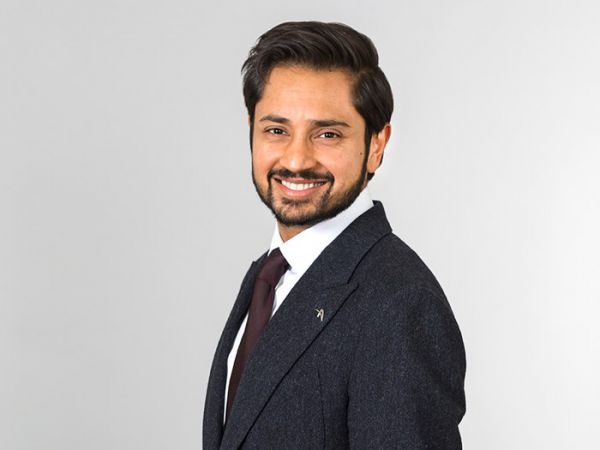
Aditya Mittal and Etienne Schneider newly elected as directors of ArcelorMittal
The Annual General Meeting and Extraordinary General Meeting (‘General Meetings’) of shareholders of ArcelorMittal (‘the Company’) held today approved all resolutions by a strong majority. 68% of the voting rights were represented at the General Meetings. In view of the Covid-19 outbreak, the Board of Directors of ArcelorMittal had decided to hold this year’s General Meetings by virtual-only format, as permitted by Luxembourg law. Arrangements were made to allow shareholders to vote electronically and by proxy voting. The results of the votes will be posted shortly on https://corporate.arcelormittal.com under ‘Investors – Equity investors – Shareholders-events – AGM – Annual General Meeting and Extraordinary General Meeting of shareholders, 13 June 2020’ where the full documentation regarding the General Meetings is available.
In particular, the shareholders:
- Approved the re-election of Mr. Lakshmi N. Mittal, Mr. Bruno Lafont, Mr. Michel Wurth and the election of Mr. Aditya Mittal and Mr. Etienne Schneider as directors of ArcelorMittal, for a term of three years each;
- Decided to increase the authorised share capital of the Company and change the Articles of Association accordingly
Source and Photo: ArcelorMittal