

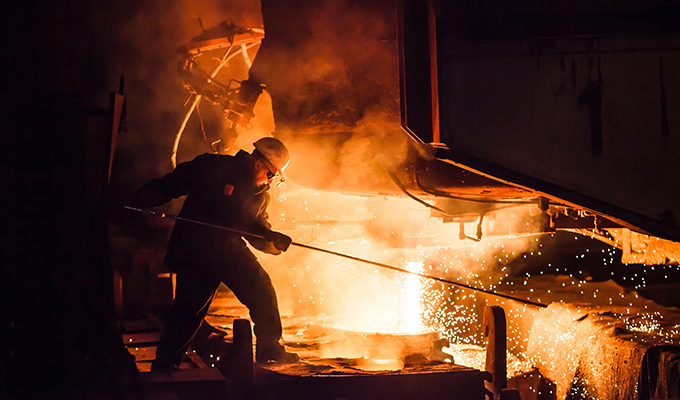
EAF plate supports EU steel decarbonisation: Industeel’s Gingell
ArcelorMittal subsidiary Industeel says it produces heavy plate under the XCarb recycled and renewably produced brand using slab from the electric arc furnace route.
In collaboration with the ArcelorMittal plate mill in Gijon, it is now possible to make structural steel plate with a certified CO2 footprint of 914 kg CO2e per tonne of steel. This is based on a life cycle analysis (LCA) approach and certified by an Environmental Product Declaration (EPD), Industeel business development director Andrew Gingell said at this week’s Gulf Steel show in Dubai attended by Kallanish.
To compare, heavy plate produced via the blast furnace-basic oxygen furnace route emits around 2.6 tonnes CO2 per tonne of steel.
Gingell did not disclose the specific premium for low-emission plate paid by customers. However, he emphasised the pricing reflects the added value as perceived by the customer, depending on the end-use market and its approach to sustainability.
Scrap-using EAF technology is only one part of the solution for the steel industry, according to Gingell. Since scrap availability is insufficient, the world will still rely on primary iron beyond 2050. Therefore, ArcelorMittal’s decarbonisation strategy emphasises achieving net-zero emissions in primary steel production through the direct reduced iron-based route.
By transitioning from BF-BOF to DRI using natural gas, in conjunction with EAF utilisation, CO2 emissions could be significantly reduced. Further steps involve transitioning to green hydrogen in DRI production, and implementation of carbon capture, usage, and storage (CCUS) technology, leading to a net elimination of CO2 emissions.
The energy transition is driving increased demand for steel in sectors like solar and wind, among others. Industeel’s low-emission plate can therefore find application in various industries supporting decarbonisation efforts, such as biofuels, CCUS, solar photovoltaic (PV) systems, energy storage (including cryobatteries), liquid hydrogen storage, and other energy transition-related sectors.
In response to rising demand for steel from sectors supporting decarbonisation efforts, ArcelorMittal has reorganised its assets. It has created a dedicated division called Sustainable Solutions, which focuses on markets that are both “structurally attractive and experiencing high growth”, with Industeel part of that division.
This division comprises specialised, low-capital ventures playing important roles in addressing climate change. Currently, the construction, engineering project solutions, renewables, metallics, including cleaner scrap, distribution, and service centre sectors collectively contribute around 4% of the company’s $7.6 billion Ebitda. This figure is expected to double over the next five years.
Elina Virchenko UAE


Spain’s automotive industry foresees promising 2024
The Spanish automotive sector increased both production and exports in January, Kallanish notes.
“Car output has started the year at a good pace, confirming the sector’s recovery and approaching pre-Covid-19 figures, at only 3.9% below 2019,” comments national automotive association Asociación Nacional de Fabricantes de Automóviles y Camiones (Anfac) president José López-Tafall. “Our goal is to return to the 2.8 million vehicles produced before the pandemic and to make Spain an electromobility hub in Europe. The automotive industry must be a priority for the government’s industrial policy to generate a favourable scenario for investment.”
Production in January reached 230,956 units, an on-year growth of 18.7%.
Meanwhile, Spanish vehicle exports reached 201,454 units in the month. This volume was up 14.7% on-year, supported by higher supplies to Europe.
Shipments in Europe represented 91% of the country’s total exports in January, up 1.3 percentage points, with France, Germany, the UK, Italy and Turkey being the top destinations, Anfac data show.
Todor Kirkov Bulgaria

Italian HRC prices drop fast, imports considered again
Italian coil prices continue to decline amid market stagnation and low sales. The coil derivative market is also experiencing weak consumption and lower prices, with activity considered to be “stuck”, local sources tell Kallanish.
“We have no apparent demand and our clients are only ordering back-to-back because of the very low visibility. Sheet prices should be at least €70-80/tonne ($75-86) more expensive for us to have a slight margin but prices are falling and our competitors are chasing volumes. Today, nobody is buying hot rolled coil and we can resist using our stocks for some time,” a service centre comments. Another says it is losing money at current prices for the first quarter, following the low sales seen in the second half of 2023.
Some coil buyers have resumed importing from Asia despite the long lead times. Prices from countries such as India, Taiwan and Japan are at €620-640/t cfr Italy for end-March and April boarding, meaning material availability in July. Some contracts from an Asian country were agreed at roughly €650-660/t cfr in the first half of February. After vessels arrive at the port, buyers will not be able to clear out material through customs until quotas are renewed in July, Kallanish is told.
Italian domestic HRC is now at €710-720/t base ex-works for March-April shipment. This represents about a €50/t decline compared to the beginning of February. Sources in the market predict further price declines in the coming weeks and domestic values to fall below €700/t base ex-works in March.
Natalia Capra France

Revista InfoAcero – Febrero 2024
En el siguiente enlace pueden acceder a la edición de Febrero de nuestra revista INFOACERO
Destacamos a continuación algunos de sus contenidos:
- Opinión – D. José Francisco Sánchez- Junta Directiva UAHE
- Evolución del Índice de Precios de Productos Siderúrgicos – UAHE
- Información Asociativa: Webinar Ciberseguridad (8 Febrero) // Próximos Cursos UAHE
- Siderurgia: Evolución Sectores Consumidores, Consumo Real y Consumo Aparente- Informe Eurofer- 1er trimestre 2024
- Colaboración ASCEM: “Perspectivas del acero optimistas para 2024”- D. José Mª Lagos- Gerente ASCEM
- Steel Net Forum Iberia 2024: 11 y 12 de Abril en Santiago

Tata Steel expands low-emission steel supply to automotive
Tata Steel says its Dutch unit has signed a new memorandum of understanding with German automotive group GEDIA for the supply of steel with a lower environmental footprint.
GEDIA manufactures lightweight structural body parts for many automotive manufacturers globally.
Tata Steel will initially supply GEDIA with Zeremis Carbon Lite, steel with an allocated carbon footprint reduction of up to 90%, including emissions in scope 1, 2 and 3. In future, this supply will transition towards Zeremis embodied green steel, when the IJmuiden steelworks will be able to produce it.
The companies also agreed to explore opportunities to reduce emissions associated with steel transportation.
“GEDIA joined the initiative of various car manufacturers years ago. We are committed to the Paris Climate Agreement and aim for CO2 neutrality by 2032. To achieve this, a company like ours not only needs the necessary technologies but also a promising partner by its side. We have found this in Tata Steel,” the German manufacturer says in a note seen by Kallanish.
This agreement reconfirms the increasing demand for reduced-emission steel from carmakers across Europe. Steelmakers on the continent are betting strongly on support from steel-using industries going forward for their sales of future low-emission steel.
Emanuele Norsa Italy
EU provides $400m for Italy green hydrogen hub
The European Commission will provide up to €370 million ($401.8m) in financing to support the development of a green hydrogen cluster in Italy targeting steelmaking decarbonisation, Kallanish reports.
Energy companies Edison and Saipem, alongside green investment manager Sosteneo SGR have seen their Puglia Green Hydrogen Valley project selected as part of the IPCEI Hy2Infra scheme. The funding programme announced earlier this month has awarded 33 green hydrogen infrastructure projects in seven EU countries.
The Italian project, deemed of importance and common interest, covers the construction of two electrolysers with a total capacity of 160 megawatts. The plants in Brindisi and Taranto are expected to produce 250 million cubic metres/year of green hydrogen. The clean fuel will be supplied to local industry, particularly the Apulian steelmaking hub.
End-users will have access to the green hydrogen produced at the valley through a dedicated hydrogen pipeline network to be constructed by Snam. The project, also awarded in the Hy2Infra scheme, will transport the fuel between Brindisi and Taranto. Operations are set to start in 2028.
“The IPCEI loan will represent the main driver for the development of the supply chain dedicated to the production of green hydrogen in Europe and will support Puglia Green Hydrogen Valley in the pursuit of decarbonisation projects,” says Sosteneo SGR’s partner and investment principal Europe, Federica Gallina.
Last November, Sosteno said the Puglia hub would primarily enable the use of green hydrogen in future direct reduced iron production plants in the region, including at the Taranto steel mill.
DRI D’Italia, a company owned by state investment agency Invitalia, will lead the potential application of hydrogen in the steelmaking process, in partnership with a consortium of steelmakers. They have finalised a feasibility study for setting up hydrogen-based DRI plants to replace fossil fuels and decarbonise steel production in the country. The engineering and construction of these plants is slated for the first half of 2026, enabling the start of operations in the second half of 2026, according to DRI D’Italia.

EU quota risk, high inventories drag Indian HRC
Indian domestic demand continues to remain stable this week. Traders anticipate demand to pick up after the upcoming general elections are completed. These are expected to be held in April or May.
A market source says: “The [European] market remains quiet, there’s not much activity. People just want to wait.” Multiple factors are contributing to the subdued market activity in Europe, including quota issues and high inventories, he adds.
Indian-origin HRC has around 310,660 tonnes of first-quarter EU safeguard quota left unused and a total of 3,719t awaiting allocation, according to EU TARIC data as of 26 February. The available quota totalled 330,000t last week. In-transit shipments are not included in the TARIC data (see Kallanish passim).
In the European market, initial Indian HRC offers were heard in the range of $690-700/tonne cfr, or $630-640/t fob India for SAE1006/S235 structural grades, for March shipment. This is a drop of $10/t on-week.
CRC offer prices were reported at $790/t cfr Europe, or $730-740/t fob India, also dropping $10/t on-week. No bids were heard. However, one market participant notes his offer price expectations are $50-60/t lower than current offers.
He adds: “I expect Indian offers [to the European market] to drop by a further $10-15/t in the coming weeks.”
In the Gulf Cooperation Council, an initial Indian offer for re-rolling grade (SAE1006) HRC was heard at $627-632/t cfr GCC, or $600-602/t fob India for March shipment.
Another India-UAE offer for pipemaking grade was heard at $630/t cfr Jebel Ali, or $600-603/t fob India for 8,000t for March shipment.
In Vietnam, initial Indian HRC offers were heard at $600-605/t cfr or $565-575/t fob India for March-shipment re-rolling SAE1006 grade HRC.
Last week, offers were heard in the range of $615-620/t cfr, or $580-590/t fob India. Traders opine softening Chinese prices and Vietnam’s own domestic market are mainly contributing to low buying interest from India.
In the domestic market, HRC offer prices remain unchanged at INR 54,000-54,500/t ($651.55-657.59/t) for E250 grade ex-Mumbai. Similarly, CRC offer prices were flat at INR 61,500-62,000/t ex-Mumbai for IS513 Grade O. Both prices saw no movement for the second consecutive week.
Suhita Poddar India
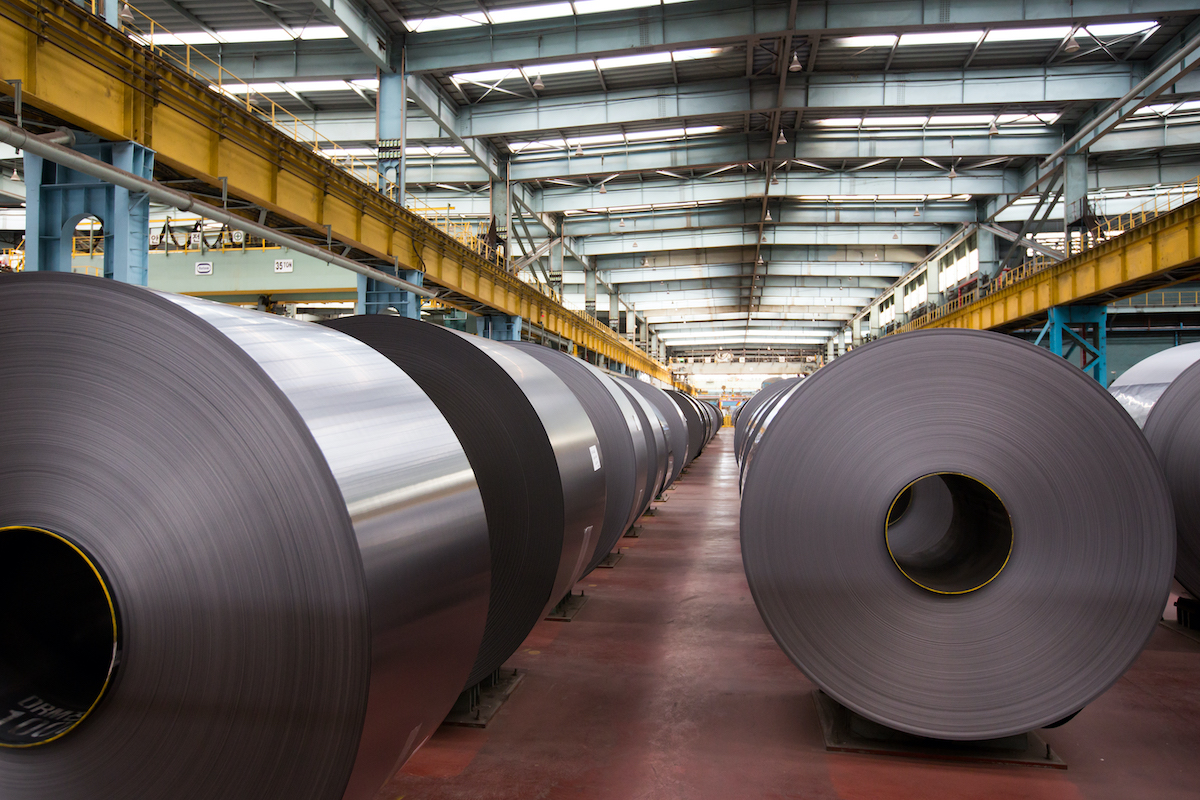
EU HRC trades thin out as buyers resist stockpiling on short-term price uncertainty
“The market is very silent now,” a German service center source said. “Mills are quoting offers but customers are not willing to pay anywhere close to what mills are asking.”
Some market participants expected producers to reduce output in the near term in case demand fails to improve.
In the mean time, buyers focused on back-to-back deals and resisted building inventories anticipating prices to soften further.
While no firm offers or deals were reported for domestic HRC in the Northwest European market, tradable levels were estimated at Eur705-720/mt ex-works Ruhr.
Platts assessed the price of domestic HRC in Northwest Europe stable on the day at Eur715/mt ex-works Ruhr Feb. 26.
Interest in imported HRC remained muted due to longer lead times and uncertainties about volumes that can be allocated under safeguard quotas for Q1 from “other countries.”
Offers were heard from Indian mills in the week that ended Feb. 23 at Eur670-680/mt CNF Antwerp for end-May or early June-arrival cargoes. Turkish mills made offers around Eur700/mt CIF Antwerp, including anti-dumping duties.
No buyer showed interest in these offers.
Platts assessed the price of imported HRC in Northwest Europe stable on the day at Eur650/mt CIF Antwerp Feb. 26.

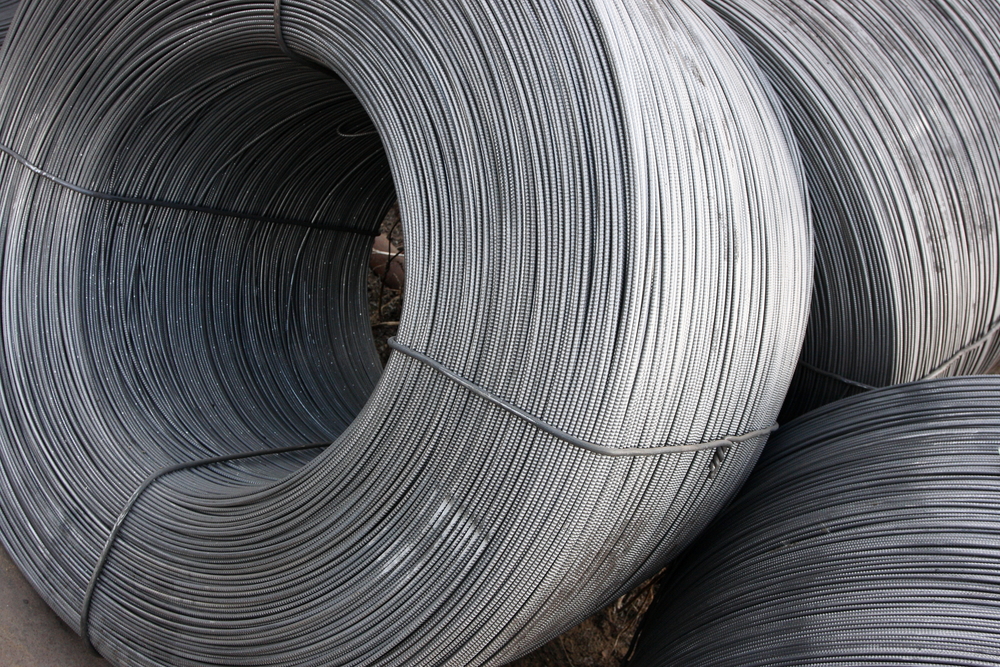
Turkey’s BMS starts galvanized steel wire exports to EU, receives orders from UK
Turkey’s galvanized steel wire producer BMS Birlesik Metal said in a regulatory filing Feb. 26 that it has started exporting galvanized and zinc-al coated steel wires to Europe.
The wire shipments for the European agricultural sector are expected to be around 300 mt/month and expected to affect the company’s turnover and profitability positively, the company said.
BMS also received two galvanized steel wire orders from the UK in the last two weeks worth a total of $707,000, it said without citing the tonnage.
According to the company’s regulatory filing seen by S&P Global Commodity Insights, the production for the UK orders will begin as of March and the shipments are scheduled to be completed within April.
“To meet the rise seen in galvanized steel wire orders, and to raise our market share both in the domestic and export markets, we signed an agreement at the beginning of February with Nuh Wire, based in Yalova, for the purchase of the company’s galvanized steel wire production line with a capacity of 36,000 mt/year,” BMS also said.
The company currently has 72,000 mt/year of galvanized, zinc-aluminum coated, stranded and black annealed steel wire production capacity.
Turkish mills’ long steel pricing remained under pressure from low demand, especially in export markets throughout 2023.
Although Turkish mills’ steel export volumes increased by 17% year on year in the first month of 2024, on higher demand especially from some EU countries, according to the Mediterranean Ferrous and Non Ferrous Metals Exporters’ Union data, demand has slowed down again in recent weeks.
Turkish rebar export prices continued to drop on Feb. 23 as demand remained slow, while scrap import prices to Turkey fell further.
Platts assessed Turkish exported rebar at $602.50/mt FOB Feb. 23, down $2.50/mt on the day, according to S&P Global data.
Author Cenk Can, support@platts.com | EN |

Poland’s JSW seeks new ceo after relative stability
Jastrzebska Spolka Weglowa (JSW)’s supervisory board has dismissed chief executive Tomasz Cudny from his post, as well as commercial director Sebastian Bartos, Kallanish notes. Reasoning was not provided.
Supervisory board member Pawel Rostkowski has been appointed acting ceo until a permanent replacement is found. Robert Ostrowski has been appointed acting commercial director, while retaining his position as JSW economic director.
Cudny survived as JSW ceo for 2.5 years, the longest stint anyone has managed in the job since long-serving former ceo Jaroslaw Zagorowski resigned in 2015.
JSW saw external coking coal sales drop 9% on-year in the fourth quarter of 2023 to 1.46 million tonnes, but coke sales inched up 5% to 790,000t. The miner is due to publish its full Q4 and 2023 results in March. Nine-month-through-September 2023 external coking coal sales were flat on-year at 4.8mt, with coke sales at 2.5mt, also flat on-year.
Adam Smith Poland