


EU reviews steel import safeguards, could terminate a year earlier than planned
The European Commission has initiated the review of safeguard measures concerning the import of 26 steel products to determine whether they should be terminated in mid-2023, a year earlier than planned, it said in a Dec. 2 report.
The EC imposed a definitive safeguard measure on certain steel products on Jan. 31, 2019, until July 16, 2021, with the measure then prolonged in June 2021 for a further three years from July 1, 2021, to June 30, 2024, after 12 EU member states requested it examine whether the measures should be prolonged.
The measures consist of country-based tariff-rate quotas for the biggest steel supplying countries combined with global quarterly quotas for all other countries for each of the 26 products. Once a quota has been reached, a 25% duty applies.
The safeguard was imposed in 2019 as a direct response to the US government’s introduction of import tariffs on grounds of national security under Section 232 of the Trade Expansion Act and replaced the previous provisional duties the EC introduced in July 2018, with the EC saying the Section 232 tariffs were causing a diversion of trade flows into the EU.
The new review will look at whether the safeguard measure should be terminated a year earlier than planned on June 30, 2023, using data from 2022 to update the last review that used 2021 data, it said.
The EC aims to conclude the review by June 30, 2023.
The review will include questionnaires sent to EU producers and end-users, to be filled in by Jan. 13, 2023, as well as written submissions from interested parties and the possibility of interested parties commenting on other parties’ submissions, without raising new issues.
The EC said it would not organize hearings for the investigation, unless there were exceptional circumstances, due to the short timeframe and the ability to comment on other parties’ submissions providing parties sufficient opportunities to defend their interests.
The 26 products include non-alloy, other alloy and stainless hot rolled sheets and strips, non-alloy, other alloy and stainless cold rolled sheets, as well as stainless CR strips, and electrical, metallic-coated and organic-coated sheets.
They also include tin mill products, non-alloy, other alloy and stainless quarto plates, non-alloy and other alloy merchant bars and light sections and wire rod, stainless bars and light sections, and wire rod and rebars.
Non-alloy and other alloy cold finished bars, non-alloy wire, seamless stainless tubes and pipes, other seamless and large-welded tubes and other welded pipes are also included, as are angles, shapes and sections of iron or non-alloy steel, sheet piling, railway material, gas pipes and hollow sections.
Domestic prices for HRC have been declining in Europe since the second half of March due to weak demand. Platts, part of S&P Global Commodity Insights, daily assessments for HRC in Northern Europe declined to Eur610/mt ex-works Ruhr on Dec. 1 and in Italy to Eur610/mt ex-works, down 33.8% and 27% respectively since the start of 2022.
— Jacqueline Holman


Taranto’s situation remains complicated: Antonio Gozzi
The future of the Taranto integrated steelmaking site of Acciaierie d’Italia (ADI), the former Ilva, remains uncertain. On 2 December, a key meeting will be held to discuss the future of the company, majorly controlled now by ArcelorMittal, with the participation of the state owned company Invitalia.
The meeting between the parties takes place following strikes by the company’s workers to call for the government to support ADI financially and take full control of the company. Amid a liquidity crisis, ADI’s management recently decided to suspend its use of contractors. This, on top of almost 3,000 workers being temporarily laid off, is putting in doubt production continuity. The steelmaker is said not to be paying many of its debts.
“The situation in Taranto remains very difficult. There is a majority shareholder (ArcelorMittal) that is not supporting financially the company. Similarly, the minority shareholder (Invitalia) has troubles injecting money in a company that remains run by ArcelorMittal,” Antonio Gozzi, president of Federacciai, said during an event in Genova this week attended by Kallanish.
Invitalia was expected to take over the majority control of ADI in May through a new injection of capital, but this move has been delayed.
Meanwhile, the Taranto plant continues to run at reduced capacity.
“It is now some 12 years that capex investments in the plant have not been done,” Gozzi added. “The Riva family used to invest some $350 million of capex each year before 2010.”
According to the executive, the Taranto mill needs the rebuilding of blast furnace number 5, the largest in Europe, as well as one coil and plate rolling mill.
“In March 2022, the company said it would ramp up output to 5.7 million tonnes; we are now at slightly over 3mt,” a union said in a note denouncing the “dramatic situation.”
Emanuele Norsa Italy


Demand remains flat in steel rebar markets in Italy, Spain
Market fundamentals remained weak in the Southern European rebar market in the week to Wednesday November 30.
Subdued demand and an uncertain outlook continued to inhibit trading activity.
Input costs such as scrap and energy prices have risen through late November. Further price declines would result in prices becoming unworkable for mills because producers would be selling below cost, Fastmarkets heard.
Most market participants said that they felt that the price floor has been reached.
Italy
Depressed consumption resulted in there being few trades in the Italian rebar market.
Fastmarkets’ price assessment for steel reinforcing bar (rebar), domestic, exw Italy, was €810-860 ($839-890) per tonne on Wednesday, stable week-on-week.
Slow demand and a wait-and-see attitude among market participants resulted in there being few trades.
“Demand remains low,” one trader source said, “[and] is likely to stay the same until the end of the year. The future is uncertain, but we forecast that the first few months of 2023 will be difficult.”
“Demand is very slow currently,” another buyer source said. “The general feeling in the market is that conditions are going to remain the same until the end of the year.”
Production cuts have yet to significantly affect prices due to the depressed demand. Some mills were said to be intending to extend Christmas production stoppages longer than usual.
Market sources remained pessimistic regarding the effect that such extended stoppages would have on prices, given that supply still dramatically outweighs demand.
But future infrastructure projects could boost prices in the new year, sources said.
“I think prices will remain stable for the remainder of the year,” one buyer source told Fastmarkets. “The market is calm, and we are waiting to see what infrastructure projects the new government [in Italy] will invest in next year.”
Spain
Weak demand resulted in few trades being agreed in the Spanish rebar market, Fastmarkets heard.
Energy and scrap price increases may boost prices, sources added.
Mills cannot continue to offer discounted prices if input costs are rising, Fastmarkets heard.
Fastmarkets’ price assessment for steel reinforcing bar (rebar), domestic, delivered Spain, was €730-760 per tonne on Wednesday, stable week-on-week.
International scrap prices affect the prices of all long steel products. Scrap prices remained flat through early November, but have begun to rise since the middle of the month.
Fastmarkets’ daily calculation of the index for steel scrap, HMS 1&2 (80:20 mix), North Europe origin, cfr Turkey, was $361.44 per tonne on November 30, up from $344.65 per tonne a week earlier.
Published by: India-Inés Levy


EU steel rebar, section prices continue to fall as mills chase orders
European domestic steel sections prices continued to fall week on week Nov. 30, as mills cut offers further to attract demand.
Platts assessed European medium sections (category 1, S235 JR) down Eur40/mt at Eur985/mt delivered on Nov. 30. The assessment has fallen Eur265/mt since mid-September, Platts data showed.
A deal for 1,000 mt was booked Nov. 28 at Eur970/mt (S235 JR, Cat 1) delivered Benelux, by a distributor source, while a second distributor source said Eur1,000/mt delivered was considered workable, but only for delivery by end-December.
“We have received the message that mills may increase prices as they are expecting higher costs in January, so mills have two options — to cut production or raise prices,” the second distributor source said.
Meanwhile, Northwest European domestic rebar prices fell sharply amid poor demand. Platts assessed TSI Northwest Europe rebar down Eur32.50/mt on the week at Eur752.50/mt ex-works on Nov. 30.
The assessment is now well below the Eur822.50/mt delivered level seen on Feb. 23, prior to the outbreak of the Russian invasion of Ukraine. Following the outbreak of the war, EU domestic rebar prices eventually rose to an all-time peak of Eur1,340/mt delivered on March 30, before falling steadily for the rest of the year.
“The [rebar] price now is a political price to try and break open the market and see some activity but the price does not even cover the cost of production for rebar — and scrap costs are also increasing,” one sell-side source said, citing offers at Eur765-775/mt delivered.
The source added that December delivery of rebar was difficult amid the short working month due to holidays, and that he was advising customers to buy at current prices for January or February delivery, rather than wait, as he expected prices to go up
One Italian mill source indicated that German domestic rebar prices were as low as Eur745-750/mt delivered in the local market, adding that offers for Italian-origin rebar at Eur750/mt delivered were of little interest to German buyers.
“But this is the bottom of the market, buyers also understand this — we can’t go lower than this as energy costs are rising, and scrap is rising,” the Italian mill source said.
Platts is part of S&P Global Commodity Insights.
— Viral Shah

European HRC market in transitional stage, expecting increases
The European hot-rolled coil market was described as in a transitional stage Nov. 30, as market participants expect price increases on flat products in the near term.
Both the North and South European markets described accelerated demand this week, with depleting distributor inventories motivating first-quarter purchasing.
“I’m hearing generally that service centers are reaching their bare minimums and so are looking to build stock,” said a North European distributor. “Offer prices are up very slightly and many see the floor, so I think we’ll see some buying at these levels followed by price hikes next week.”
Mill sources confirmed the sentiment, with some withdrawing from the market to assesses willingness to pay higher prices from next week.
“We’ve sold the last of our volumes at the current price level of Eur600-610/mt ex-works,” said a mill source. “At the moment we aren’t offering until next week as we’re expecting a price increase.”
While some perceived opportunity to secure volumes at the previously reduced price level, even below Eur600/mt ex-works North and South Europe, the most competitive of offers were generally accepted as withdrawn from the market.
“The market is in a transitional period,” said a German distributor. “I’m hearing that in some cases mills are taking back old offers and withholding new offerings, and there’s definitely resistance to the lower levels now.”
A Northern mill source confirmed expectations of an uptrend given recent stock clearance from steelmakers and provided some clarity on lower prices heard in the market.
“In general, I think we’ll see increases from next week, but its always possible to see some stupid prices left over,” said a Northern mill source. “Some are still in stock clearance, and some must continue to produce as otherwise they’ll lose ETF rights, so in some cases the arguments to sell lower are still there.”
Platts assessed hot-rolled coil in both North and South Europe stable, at Eur610/mt ex-works Ruhr and Italy.
Platts is part of S&P Global Commodity Insights.
— Benjamin Steven

German construction slows noticeably in September
Order intake in Germany’s construction industry in September was down 23% on the corresponding 2021 month, Kallanish learns from construction association Hauptverband der Deutschen Bauindustrie (Bauindustrie).
This marks an aggravation over August, when the association already lowered its forecast for full-year 2022, but the year-on-year dip was still only 5%. For the first nine months, the y-on-y dip is 7%, in nominal terms, as the figure is price-adjusted and does not yet consider cancellations that took place in the meantime, the association notes.
“The revenues in September were nominally still higher, but were eaten up in full, and beyond, by the price increases,” says Bauindustrie’s managing director, Tim-Oliver Müller. “In real terms, they sunk by 8% in September, and by nearly 5% in the first nine months. Lower demand is having a more and more negative effect on production,” he details.
In a poll carried out by the national trade and commerce chamber, 60% of construction companies expected a negative trend for their business in the next 12 months, while only 3% had reason to see an improvement. Müller has accused the government of stepping on the brake on infrastructure investment, which he says means a brake on the entire German economy.
Meanwhile, rebar prices appear to have relatively stabilised after they dropped by nearly €100/tonne ($103) in a matter of one week in early November. This brought the base price from domestic mills to €600/t, which plus the size extra of €265 translates to €865 delivered.
Sources say prices did not fall noticeably in the course of November and might remain sitting where they are, but could soften slightly more before the business year ends. “Mills might concede another €10-30, but not massively,” a northern German buyer says.
Christian Koehl Germany

French rebar market remains in limbo
The French rebar market continues to stagnate, with order intake low and buyers adopting a wait-and-see attitude. Prices are steady on last week but have lost over €100/tonne ($103) since early November.
In the south of the country, particularly, values have been dragged down by competitive import offers from Spain, distributors report. The French market is currently one of the slowest in Europe. In neighbouring countries, Italy and Germany, markets are also quiet but prices are higher and some limited volumes are being sold regularly every week. In France, November has not brought the usual restocking for the end of the year, and no restocking is expected in December, Kallanish notes.
Including size extras, domestic contracts are at an average of €700-720/t delivered, sources suggest.
On a brighter note, 2022 has been a record year for all players throughout the value chain despite the slow fourth quarter. Sources expect a hard Q1 next year, with a big question mark over energy prices. December production plans will depend on increasing energy costs, which are forecast to skyrocket in the coming days. If this happens, local producers may be forced to shut down production earlier than expected this month.
Natalia Capra France
German, Austrian freight hikes threaten Italian scrap imports
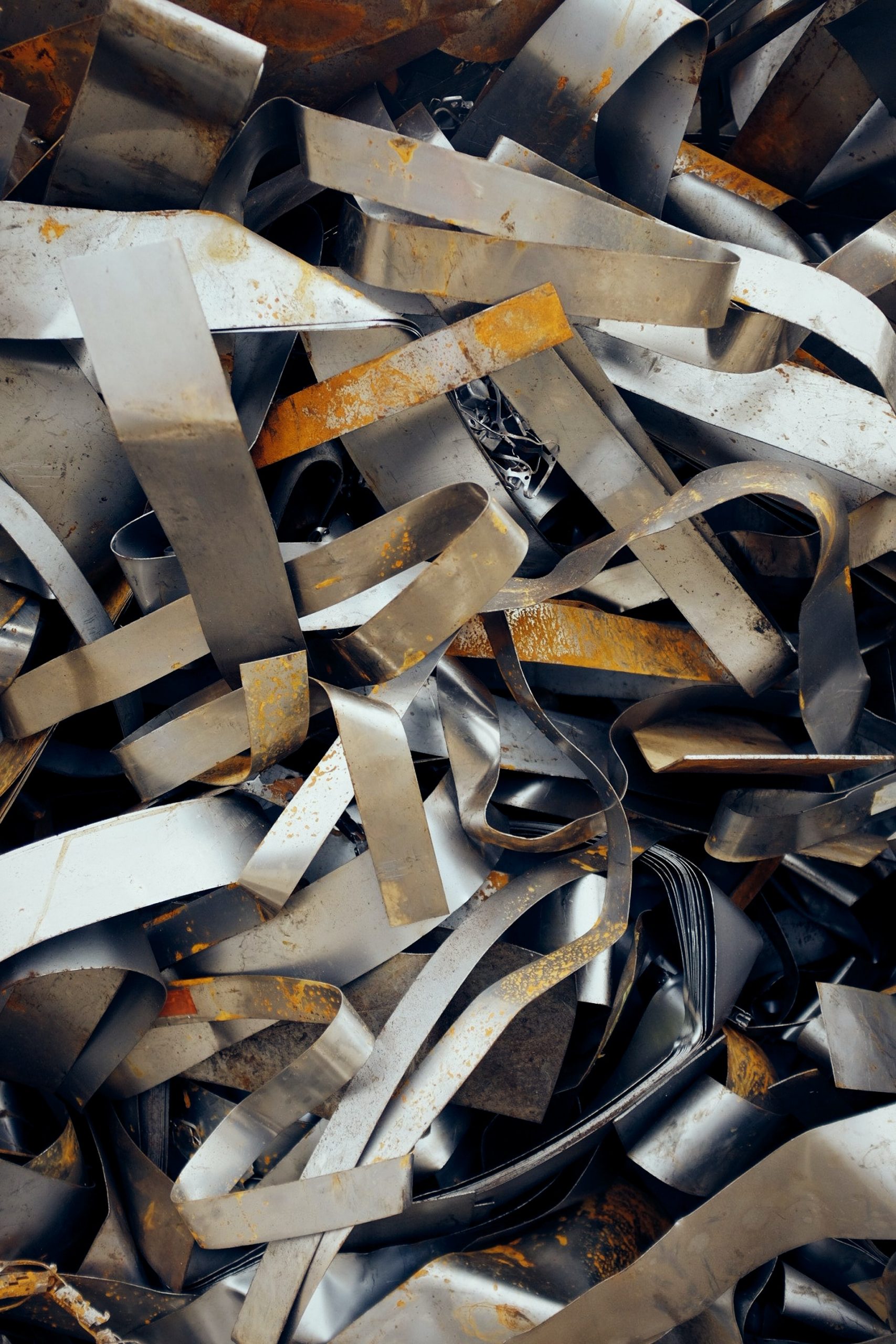
Italian contract prices for scrap imports from Germany, France and Eastern Europe are expected to remain stable month-on-month in December, with some €5-10/tonne ($5.1-10.3) increase on certain grades in short supply.
While Italian demand for imported material is strong, local mills’ production plans for December remain unclear. They will all implement longer maintenance stoppages to balance demand and supply, but they have yet to officially communicate dates to their suppliers. Some are considering shutting down from 16-19 December until business resumes after the Christmas holiday on 9 January, Kallanish hears.
The main issue remains increasing rail freight tariffs in Germany and Austria, whose rail operators are asking for a 40% and 30% increase respectively effective 1 January. Local scrap merchants and steel companies are trying to negotiate a two-month delay and a more moderate increase but nothing has been agreed so far. Both scrap suppliers and steel mills will be hit by the move, together with many Italian steelmakers selling coil and long products in Germany and Austria.
If the 40% increase is implemented, Italian steelmakers will have to pay an eyewatering figure of €55/tonne for scrap transport from southern Germany to northern Italy, up from the current €40/t. According to some scrap sellers, the rate increase in Germany will ultimately be agreed at about 30%, but this still represent a significant hike in transport for Italian mills.
Scrap import contracts are negotiated toward the first or second week of each month with material delivered until the first ten days of the next month. Italian mills will therefore be obliged to pay rising freight rail transport in the first ten days of January for contracts agreed in December.
Germany is a prolific scrap supplier to Italy. Italian steelmakers say they cannot afford to only buy scrap on the domestic market and will need to continue to import from other European countries. Sellers and buyers are currently trying to find solutions.
To make things more complicated, truck transport rates from Germany and Austria will also increase from 1 January. Scrap is often shipped to Italy from Stuttgart or Munich by truck using intermodal transport. Material travels to the railway connection by truck. It is then charged onto trains and discharged in a northern Italian station such as Milan or Verona where another truck provided by the supplier will deliver scrap to the mill’s yard. Suppliers who use this type of transport will also have to absorb the German freight increases, Kallanish notes.
This month, French and German suppliers are reporting limited old scrap availability, like last month, and a lower intake of grades such as shredded E40 and sheared scrap. One German supplier also reports limited E8 new arisings availability.
Last month, import contracts from France and Germany to Italy for E8 mixed grade were done at €360/t, E40 at €370/t, E3 at €355-360/t and the lower E1 grade at €315-320/t, all on a delivered basis. From Eastern European countries, Italian mills paid €355-360/t for the mixed E8 grade, about €300/t delivered for E1, €370/t for E40 and €330-340/t for E3, sources suggest.
Natalia Capra France
Revista InfoAcero Noviembre 2022
En el siguiente enlace pueden acceder a la edición de Noviembre de nuestra revista: INFOACERO
Destacamos a continuación algunos de sus contenidos:
- Opinión – D. Sergio Cobos – Junta Directiva UAHE.
- Evolución del Índice de Precios de Productos Siderúrgicos – UAHE
- Sector Siderúrgico: Evolución Consumo Real y Aparente de Acero en Europa – Eurofer-Informe 4º trimestre
- Información Asociativa: Conferencias virtuales UAHE, Jornada UAHE, Avance Steel Net Forum Iberia 2023 (Oporto)

US Steel Kosice interest may return: Metinvest
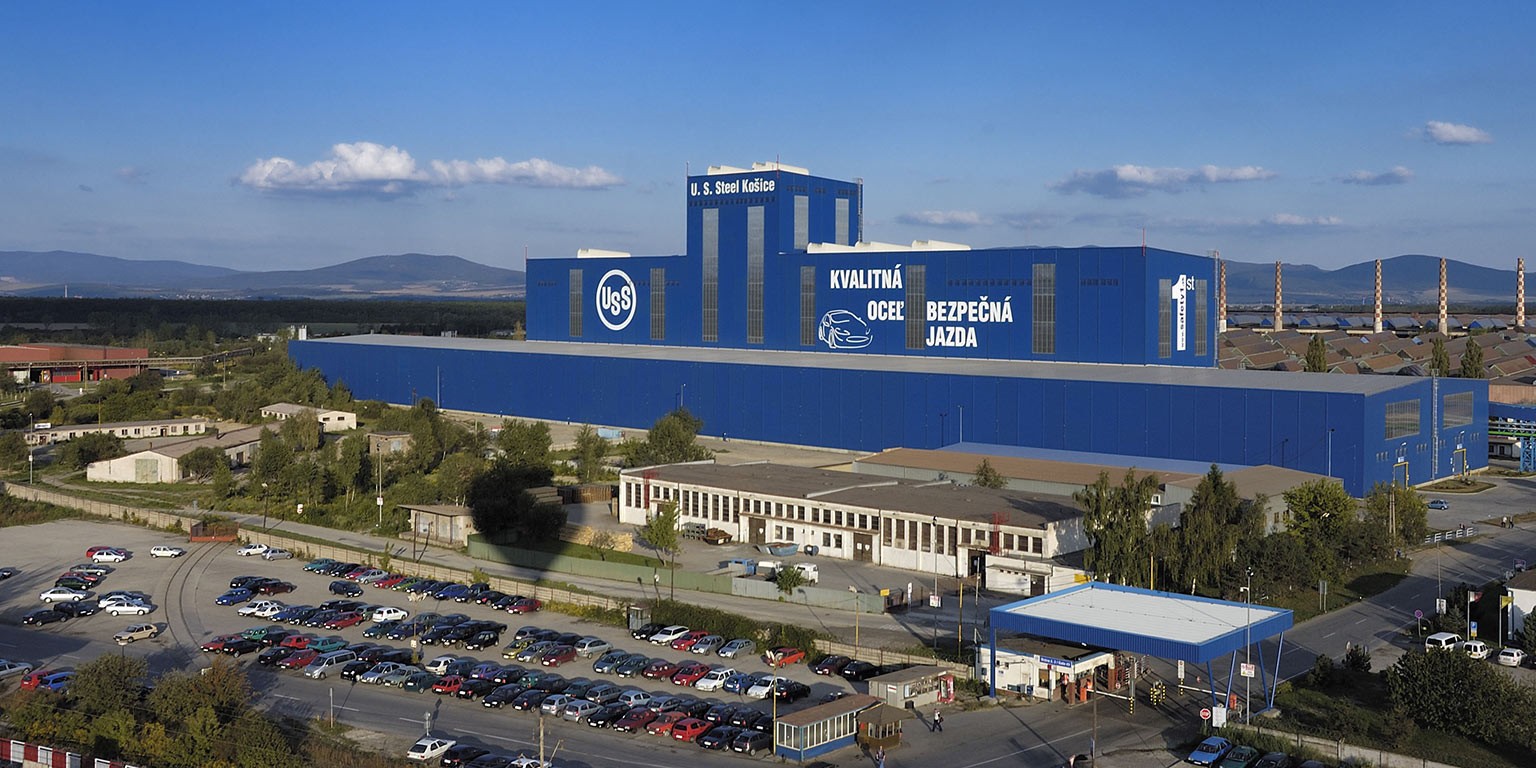
Metinvest says its interest in US Steel Kosice may resume in future but the invasion of Ukraine by Russia is currently dampening any acquisition potential.
Asked by Kallanish if it is in talks with US Steel to acquire its Slovakian plant, a spokesperson for the Ukrainian steelmaking group says: “US Steel Kosice is a high-quality asset that, before Russia’s military invasion of Ukraine, could have been in the area of interest of Metinvest Group. In the future, interest in this asset may resume. However, at the moment, the group’s main priority is to maintain the efficiency of its enterprises and our employees.”
USSK meanwhile tells Kallanish it “does not comment on speculation”.
According to media reports, the idea of such a deal would be to restore the vertical integration of the Metinvest Group, which has several assets in Italy, Bulgaria and the UK, and lost its Mariupol-based steelmaking plants to Russian occupation.
Previously, the European assets received slab, mainly from Mariupol-based Azovstal (see Kallanish passim). Since the outbreak of war, the group has switched to purchasing semi-finished products from China and other countries.
The production capacity of US Steel Kosice is 4.5 million tonnes/year. The company produces a wide range of sheet products, including for the automotive industry. However, its rolling capacity has been underutilised in recent months due to falling demand for steel products in the EU. One of the plant’s blast furnaces has been decommissioned.
Metinvest decreased crude steel production in January-September by 62% on-year to 2.7 million tonnes due to the ongoing Russian-Ukrainian war (see Kallanish passim). Pig iron output decreased by 65% to 2.47mt.
However, it significantly increased its merchant iron ore pellet shipments to Central and Eastern Europe in the third quarter by 44% versus Q2 to 835,000 tonnes, despite iron ore products output falling overall.
Svetoslav Abrossimov Bulgaria