

Decarbonisation slows down: Eurocoke conference
The current economic environment with a war raging in Eastern Europe, energy prices skyrocketing in Western Europe, and some raw materials becoming scarce will likely dampen international efforts for decarbonisation.
Participants at a panel discussion at the Eurocoke Summit 2022 in Düsseldorf largely agreed that the ambitions expressed by governments and industries to lower their carbon footprints may have to be scaled down.
“My personal opinion is we will keep moving in that direction, but possibly slower. There are more pressing problems for governments to cope with right now,” said Aleksander Sobolewski of the Poland-based Institute of Energy and Fuel Processing Technology, who moderated the debate.
The “Fit for 55” package by the European Union, for example, “sounds good on paper, but how realistic is it?” asked Ranjana von Wendland of Dow Jones. “With the costs we are facing now you have to rethink that package and cut back on the targets. It is too super-ambitious.”
Chris Urzaa of Jellinbah Group suggested that the steel industry for a while might be exempt from the green transition. Other sectors, like transportation, “are easier to de-carbonise, [and] maybe the EU will confine itself to that initially,” Kallanish heard him say.
Christian Koehl Germany

Italian longs market stand-off continues
The Italian longs market remains uneventful, as the wave of increases announced by producers in September have not spurred any additional demand. Sales activity for merchant bar, wire rod, and sections remain slow. All steelmakers are stopping their plants on alternate weeks due to the prohibitive cost of energy and to balance demand and supply.
Service centres and distributors are resisting new increases as the high prices are not being accepted by the final customers. Merchant bar suppliers increased their values by €50/tonne ($49.9/t) compared to August, but the move has not been successful so far and customers continue to purchase material at August prices, between €670-680/t base ex-works.
Very few transactions have happened so far at €720/t base ex-works and only for small tonnages. The merchant bar market remains in a lull, with the distribution sector in wait-and-see mode, sources tell Kallanish. Including size extras, contract prices are flat on-month at €1,090-1,100/t ex-works. Producers are now asking for €730-750/t base ex-works.
Demand has also remained flat for sections since the market restarted after the August holiday break. End-users and distributors see a continued stand-off. Beams contract values for the first category, however, increased on-month to €1,200-1,250/t ex-works, depending on tonnage. Producers are pushing up prices for the second time this month by €50/t and are asking this week €1,300/t on high energy costs. At the beginning of September they were asking around €1,250/t ex-works for the first category of beams, sources suggest.
Natalia Capra France
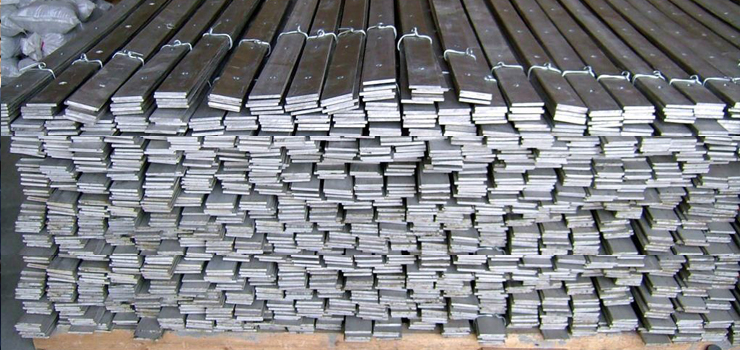
European stainless steel flats demand restarts
European stainless steel flats demand restarts European stainless steel flats demand is coming back to the market after a very long period of deadlock during which prices weakened and buyers purchased only small volumes. While producers in Europe and around the world are mothballing their plants due to the high costs of energy, demand from buyers has been surging over the past weeks, Kallanish hears from market sources throughout Europe.
Service centres and re-rollers forecast that the price slide in European stainless hot and cold rolled coils has come to an end and values are expected to increase in the coming weeks. Some producers have already started pushing up their values although stocks throughout Europe remain high.
Most steelmakers are not quoting coils for October delivery. In August, European CRC values reached an average of €3,000/tonne ($2,993) and approximately €2,700/t delivered for HRC. These levels, however, are now passé and no longer available. Some producers have already started quoting €3,300/t delivered for CRC with a second half of October lead-time. A large service centre says that “two weeks ago the market was dead but now everyone is looking for material.”
Asian producers are also increasing their coil prices. Some Chinese sellers quote about €3,300-3,350/t cfr northern European port for CRC but some other steelmakers in countries like India and Korea are not quoting.
Because coil output is been reduced globally, overcapacity will gradually fade away and stocks will deplete fast, sources forecast.
Stainless steel producer Aperam is extending its scheduled summer production stoppages into September at its steelworks in Genk, Belgium, due to the unsustainable cost of energy. In Spain, Acerinox is also implementing a temporary lay-off scheme. Outokumpu announced this month it will delay the restart of one of its three ferrochrome furnaces after a planned maintenance break due to record-high electricity costs. In Asia, the Pohang plant of South Korea’s Posco Steel burst into flames earlier this month. Two fires took place at the Second Stainless Steel Factory and the Second Hot Rolling Factory (see Kallanish passim). The company is also not quoting and has suspended production. A large Chinese producer is also said to be reducing output by 30-40%.
Natalia Capra France

Russian-Ukrainian war impacts European coke market: Eurocoke
The Russian invasion into Ukraine has had a negative impact on Ukrainian coke production, which has also impacted the European coke market, says director of the Polish Institute for Chemical Processing of Coal Aleksander Sobolewski at Wednesday’s Eurocoke Summit in Dusseldorf.
Ukraine had 14 major coke plants before the war and most of them are located in East Ukraine, where the main fighting and destruction are. They produced 19 million tonnes/year of coke.
“The leading producer was Metinvest’s Avdeevka coke plant with 4m t/y capacity, which now doesn’t work due to the destruction during hostilities and Russian occupation,” Sobolewski noted at the event attended by Kallanish. “According to the latest data, this year coke output in Ukraine will be only around 9.5m t/y, down by almost 50% on-year or even less.”
Before the war, Ukraine’s steelmakers purchased 15m t/y of coking coal from domestic producers, imported 7m t/y from Russia, and 4m t/y from other countries like Kazakhstan.
“Today, Ukrainian plants purchase only 3.6m t/y, less by more than five times on-year,” he observed. “The major Ukrainian state company and institute for the coke Industry Hiprokoks was also destroyed in the city of Harkiv. The lost of such skill specialists lead to even more negative consequences for the coke industry in Ukraine.”
The European coke market will have to reorganise due to the lack of coal and coke from Ukraine, he adds.
Last week, Ukraine’s government introduced a ban on exports of coal in order to ensure supply for the heating season that will influence the activities of steel companies in the country (see Kallanish passim).
Ukraine’s Zaporizhkoks plant, part of Metinvest, decreased production of blast furnace coke in January-August to 466,700 tonnes, down by 19.3% on-year following raw material shortages.
In August, Kazakhstan introduced a ban on exports of coal by road for six months, effective 1 August (see Kallanish passim).
Prior to the Russian invasion of Ukraine, ArcelorMittal Kryvyi Rih (AMKR) purchased 350,000 t/month of coking coal, with the main supply coming from ArcelorMittal’s Kazakhstan-based Temirtau steelworks. Previously, the plant received 30% of the required coal from Kazakhstan, which was shipped by rail through Russia. Now, this option has been removed.
Svetoslav Abrossimov Bulgaria

ResponsibleSteel releases new, tougher accreditation standards
The ResponsibleSteel accreditation coalition has released a new set of environmental, social, and governance standards to help the industry meet its long-term sustainability goals, Kallanish learns from an organisation release.
The revised and more stringent standards will “provide leaders in the steel industry with an immediate opportunity to showcase how they are driving down emissions, whilst tackling other urgent issues such as the impact of mining, water use, labour rights, air pollution, and diversity,” ResponsibleSteel says.
The coalition has so far certified 41 steelmaking sites on four continents, representing about 48 million tonnes of production out of the total global production of about 1.8 billion tonnes. Another roughly 50mt of production is currently under audit and awaiting certification.
Flagship members include ArcelorMittal, Bluescope, POSCO, Tata Steel, thyssenkrupp, US Steel and voestalpine.
Global steel industry CO2 emissions must fall by at least 90% by 2050 to hold global warming at 1.5 C, ResponsibleSteel says, citing the International Energy Agency.
“Time is short, in other words, and for the industry to be on track this will require substantial emissions reductions within this decade,” it says.
ResponsibleSteel ceo Annie Heaton adds that the new standards come at an historic political and market juncture.
“ResponsibleSteel’s new international standard comes at a critical time, with the unfolding energy crisis alongside the climate crisis only magnifying the need for a global scale transition to a decarbonised economy,” she says. “The standard enables anyone that’s either buying or making steel to demonstrate they are not only driving down emissions, but also thinking responsibly about impacts on people and nature right across the value chain.”
Dan Hilliard USA
German fabricators face ‘the abyss’
Germany’s steel and metalworking sectors are deeply alarmed over the seemingly endless increase in energy prices, which threatens to profoundly disrupt the value chain.
“We are in a substantial industrial crisis. Companies are cutting back on production. Every day we are losing added value that will not come back,” says Christian Vietmeyer, managing director of steel and metal fabricators federation WSM. He calls on the government to make quick amendments to the relief package it recently announced, and which was criticised by many sides as insufficient.
“We are facing the abyss,” he warns.
WSM thus echoes the call made by several automotive supplier sectors, which admonish that the traditional supply relationship between themselves and OEMs might no longer work (see Kallanish 12 September).
Current economic figures show how production at Germany’s steel and metalworking industries is losing more and more momentum. In July, it fell by another 2% year-on-year.
“The volume of orders is shrinking enormously, by 14.1% y-on-y in July, by 11.4% in the second quarter,” says Holger Ade, head of energy policy at WSM. Vietmeyer adds that “business expectations for the next six months are sinking to the level we experienced during the pandemic outbreak.”
Fabricators feel sharp headwinds from all sides, with supplier mills ceasing production, and electricity contracts expiring with no new offers from energy suppliers for 2023.
“Add to that the gas shortage – no one knows what the allocation will be in the worst case,” Vietmeyer says.
These factors are driving companies closer to the breaking point every day.
“We are already seeing the first insolvencies,” he says.
Christian Koehl Germany
Spain’s contingency plan will support the steel industry
The Spanish government gave guarantees to the domestic steel sector that its contingency plan for the energy crisis will provide a response according to the needs of large consumers of energy. This was understood after the meeting between steelmakers, autonomous communities, and workers unions representatives with the Minister of Industry, Commerce and Tourism, said Reyes Maroto on Monday.
Maroto admitted that energy prices affect the development of all industrial sectors, and especially the steel industry, Kallanish reports.
“The government is working on a contingency plan that should be announced before the end of September, and with which we intend to achieve a European response in accordance with the needs of large energy consumers, such as the steel industry,” Maroto comments. “Last Friday, there was a unanimous agreement in the European Energy Council to enable intervention mechanisms in the wholesale electricity market.”
During the meeting, the minister pointed out that the Spanish government has supported electricity and gas intensive industries with more than €850 million ($863.9m) in recent months to deal with the rise in energy prices as a result of the Russian invasion of Ukraine.
“The government is aware of the importance of the steel sector in the Spanish economy and its contribution. For this reason, we have approved measures to respond to the demand of the industry, such as lowering energy taxes and increasing direct aid, and raising the compensatory for CO2 emission costs to €244m, while working with Brussels to increase the maximum threshold of this aid for future calls,” Maroto confirms.
In May, Spain and Portugal reached an agreement with the European Commission to establish a temporary mechanism, the so-called Iberian mechanism, recognizing the countries as an energy island. The scheme has allowed the implementation of temporary and exceptional measures to reduce electricity prices for end consumers and business.
Since its application, the Iberian mechanism has saved €2 billion for Spaniards on electricity bills.
Todor Kirkov Bulgaria

Hatch to help Tata covert Dutch Ijmuiden steelworks to hydrogen power
India’s Tata Steel said Sept. 13 that management, engineering, and business practice consultancy Hatch will be part of the team to deliver hydrogen to make green steel at its IJmuiden Works located on the Dutch coast.
Hatch has been selected to develop basic engineering for the reducing electric furnace (REF) solution, which, when coupled with a direct iron reduction (DRI) plant, will enable the production of green steel using hydrogen.
The smelting complex will use Hatch technology which uses an electric arc furnace to continuously melt and decarburize DRI and other metallics to make steel.
The hydrogen route project is part of Tata Steel’s commitment to produce steel with zero carbon emissions by 2045.
To achieve that goal, Tata Steel will convert its steelmaking facilities from coal-based to hydrogen-based utilizing DRI technology, in which iron ore is directly reduced using natural gas with progressively increasing amounts of hydrogen, and subsequently melted and refined in large efficient rectangular electric smelting furnaces.
This DRI + electric furnace route allows the production of the same high-quality steel, according to Tata Steel.
“We want to be CO2 neutral before 2045 and … emit between 35% and 40% less CO2 before 2030. This will largely be done via the hydrogen route,” commented in a statement CEO of Tata Steel Nederland Hans van den Berg. “We are replacing the blast furnaces with modern technology that uses hydrogen or gas instead of coal.”
— Ekaterina Bouckley


Klöckner & Co delivers first green steel to Mercedes-Benz
Germany-based independent steel and metals distributor Klockner & Co has delivered its first green steel coil to Mercedes-Benz, it said Sept. 13.
The coil weighs around 20 mt and is “significantly carbon-reduced steel”, the company said.
Emissions from the extraction to the production process were less than 500 kg of carbon per ton of steel, more than 80% lower than the average of around 2.5 mt of carbon per ton of steel produced using a blast furnace, it said in a statement.
The coil was delivered under the company’s new Nexigen brand to the Mercedes-Benz Kuppenheim plant.
Carmakers are increasingly turning to deals with steelmakers that allow them to procure green steel in order to achieve net-zero emissions by 2040. In particular, Mercedes-Benz plans to continue to shift from conventional to green steel in raw material procurement as part of its Ambition 2039 plan.
Klöckner & Co’s Nexigen brand will serve as an umbrella for the entire portfolio of the company’s sustainable products and services. Under the Nexigen brand, the company aims to “provide transparent, carbon-reduced solutions in the three categories of materials, processing and logistics.”
“Our customers are increasingly asking for sustainable steel solutions, Guido Kerkhoff, CEO of Klöckner & Co SE said. “Nexigen means they can easily and reliably source green steel and metal products. With additional advisory services, we are also helping them to make their supply chains significantly more sustainable and make their progress in decarbonization transparent.”
Platts assessed hot-rolled coil in Northwest Europe on Sept. 12 at Eur760/mt ($769.88/mt) ex-works Ruhr, unchanged on the day, according to S&P Global Commodity Insights data.
— Annalisa Villa
Energy intensive industries, including metals, call for clearer EU action over gas, electricity
The series of measures discussed at the EU’s Energy Council Sept. 9 lacked a sense of urgency and required elaboration, associations representing European ferrous and non-ferrous metals producers and miners, among other European groups, said in a joint statement Sept. 13, calling for immediate and precise relief measures.
The association had previously sent a letter from energy intensive industries, signed by Eurofer, Eurometaux, Earomines and Euroalliages, among others, to the EU presidency Sept. 6 calling for urgent and effective action at EU level on gas and electricity prices.
While the Energy Council acknowledged the pressure increasing electricity and gas prices had on inflation and the EU economy and the threat to the competitiveness of European companies, the associations said many of the measures discussed required further elaboration, as they were worded in broad and sometimes vague terms and were unclear in their application to industry.
“We call upon Europe’s leadership to provide industry with immediate and precise relief measures that can be implemented swiftly to ensure the continued viability of the operations in Europe,” the associations said.
In the previous letter, the energy intensive industries had referred to the destructive consequences of high energy prices. which had already caused the reduction or closure of production at a number of plants in different sectors.
The Dutch TTF gas spot price peaked at Eur334/MWh three weeks ago, which the associations pointed out was 15 times higher than its pre-crisis level, 10 times more than US prices and much higher than prices in Asia.
“With every day that goes by, the situation grows worse with potential irreversible consequences on investments in Europe,” they said Sept. 13.
A number of steelmakers have been impacted, with Slovakia’s US Steel Kosice idling one of its three blast furnaces for 60 days for maintenance, long steel maker Stahl Gerlafingen in Switzerland reducing operating hours during October to December and ArcelorMittal temporarily shutting three blast furnaces — in Bremen, Germany, Gijon, Spain and Dunkirk, France.
In the aluminum sector, several European producers have been impacted, with shutdowns taking place at Norsk Hydro’s Slovalco smelter in Slovakia, Alro’s alumina facility in Romania and Damco Aluminum Delfzijl Cooperatie’s Farmsum plant in the Netherlands.
There has also been a 33% curtailment at Alcoa’s Lista smelter in Norway, a 20% production cut at France’s Aluminium Dunkerque, a 59% production cut at Speira’s Rheinwerk smelter in Germany and reduced output at Alcoa’s San Ciprian alumina refinery in Spain.
Hydro also decided to keep smelting pots at its Husnes and Karmoey plants in Norway offline after normal maintenance due to lower aluminum demand.
— Jacqueline Holman