

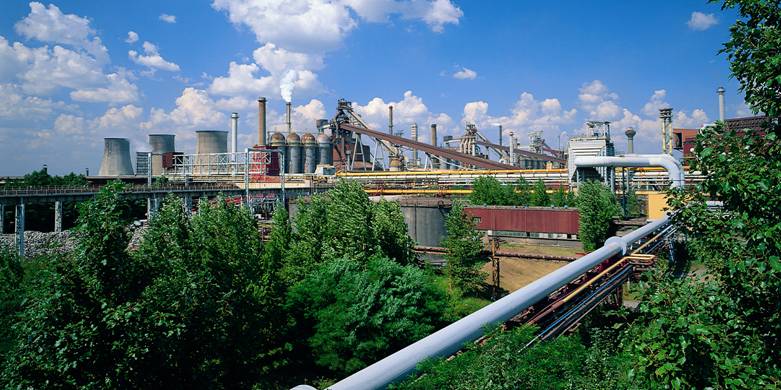
Steelmaker ArcelorMittal moves to idle fourth blast furnace in EU this month
ArcelorMittal Poland said Sept. 8 it is temporarily suspending operations at one of its blast furnaces due to the market environment and high energy prices.
At the end of September, the company will stop blast furnace No. 3 — one of two blast furnaces, both installed at its plant in Dabrowa Gornicza, southern Poland. These are ArcelorMittal Poland’s only remaining operational blast furnaces after it permanently shut the blast furnace at its Krakow mill in 2020, a spokesperson for the company told S&P Global Commodity Insights.
The management of ArcelorMittal Poland decided to reduce metal production at Dabrowa steelworks after an in-depth analysis of the deteriorating market environment in recent weeks.
“We are observing a decrease in demand, and the order portfolio is below the level of technological operation of at least two blast furnaces,” ArcelorMittal Poland CEO Frederik Van De Velde said in a statement.
ArcelorMittal Poland does not disclose the capacities of individual furnaces, but the company’s factbook for 2014 says the mill in Dabrowa Gornicza has 4.4 million mt/year of pig iron capacity, meaning that taking one of the two furnaces offline will likely halve this potential maximal output.
ArcelorMittal Warszawa — another division of ArcelorMittal in Poland — does not have any blast furnaces; it has one electric arc furnace and this continues to operate normally, a spokesperson for ArcelorMittal Warszawa told S&P Global.
Aside from a slowdown in economic activity in Europe, the company also listed growing steel imports into the EU, record high prices of CO2 emission permits, and an increase in gas and energy prices, as the other reasons behind the decision.
In August, the EU Emission Trading System price for CO2 reached Eur99 ($98)/mt.
And earlier this month, ArcelorMittal said it would temporarily shut three blast furnaces at its mills in Bremen, Germany, in Gijon, Spain, and in Dunkirk, France, also citing weak demand and surging energy and emissions costs.
Eurofer, the association representing the European steel industry, was among a few associations to send a joint letter to European Commission President Ursula von der Leyen on Sept. 7 urging her to take decisive EU-wide action on gas and electricity prices.
— Ekaterina Bouckley

EU industry demands gas price cap, electricity reform
Representatives from across European industry have written to the European Commission asking for the swift imposition of a cap on gas prices and their decoupling from electricity rates.
The letter, signed also by European steelmakers association Eurofer, underlines that gas prices peaked recently at a level 15 times higher than pre-crisis rates. It also indicates that European prices are ten times higher than in the US, as well as above Asian prices. “It is clear that the relation with a normal market is lost,” the letter explains.
“Against the background of the State of the Union address of 14 September and ahead of the Extraordinary Energy Council of 9 September, we call on the European Union to urgently introduce EU-wide measures aimed at limiting the price of natural gas and also measures designed to disconnect electricity prices from gas prices. The temporary crisis state aid framework also needs to be adjusted to this new reality,” the letter seen by Kallanish concludes.
Emanuele Norsa Italy


Europe longs: Import demand surges
London, 7 September (Argus) — European demand for imported longs has risen substantially since late August as high energy costs have pushed local prices upwards.
The Argus weekly Italian rebar and drawing-quality wire rod assessments rose by €50/t today, to €950/t ex-works and €990/t delivered, respectively.
In the rebar market offers were over €1,000/t ex-works, with some saying costs were approaching this level, but most sales were heard done in the range of €940-960/t ex-works. But at the moment customers prefer to stay in a wait-and-see position to understand what will happen in the next few days.
In the Balkan market one regional producer was heard offering €820/t ex-works, but import material was available from local traders well below this level. The lowest levels were reported in non-EU European countries at €725-755/t delivered, which was €20/t above the levels in late August.
Many customers booked large volumes at previous prices in late August-early September, but demand was coming mainly from private-sector construction while demand from the public sector was on hold because of the elections, a Balkan participant said.
European producers were considering introducing €150-300/t surcharges to cover higher production costs. But some of them had to switch off their blast furnaces and turn to import billets. A 30,000t lot of Indonesian billet was reported to have been sold late last week at $515-520/t fob, with shipment to German and Polish ports, along with another large tonnage booked at $510-515/t fob booked to the Middle East and north Africa region.
Along with this, multiple sales of overseas wire rod have been reported to different European countries since last week. Malaysian material was heard booked at $670-700/t cfr, with Algerian wire rod booked in a range of $695-710/t cfr last week. But this week offers were heard up to $750-760/t fob for Algerian wire rod, with rebar quoted at $715-720/t fob from this destination. Other north African suppliers sold wire rod at $720-735/t fob, with further negotiations for Egyptian material underway. Turkish suppliers have also seen a rise in requests from the EU, indicating prices at $700-760/t fob depending on the mill and grade.
In the local European market, wire rod in Poland, Germany and Italy was quoted over €900/t delivered. In particular, in the domestic market Italian drawing wire rod was available at €980/t ex-works, while Polish mills quoted from €910/t delivered to up to €980/t delivered depending on the quality. Italian offers to export markets were at €900/t ex-works for drawing quality material and €880/t ex-works for mesh quality material, with Czech wire rod heard available at €850-870/t delivered to Poland. Ukrainian material was quoted well below this level, but sales have not been reported yet. Some bids were reported as low as €820-830/t delivered in Germany and Poland, while in Italy customers started purchasing gradually at new levels.


European HRC producers maintain offers despite limited trading
European hot-rolled coil prices moved up slightly on Wednesday September 7 even though trading remained subdued, sources told Fastmarkets.
The number of HRC transactions was limited in both Northern Europe and Italy, but sources said they expect to see a pick-up in activity in the coming weeks.
“Buyers have started to ask for tonnages,” a mill source in Germany said. “If they continue without any restocking in September, they will need to replenish stocks in October, when availability of coil will be limited because of all the production cuts [that have been made].”
The gap between offer prices and bids was still too high, but several trading sources suggested that mills would be able to achieve price rises gradually.
Fastmarkets calculated its daily steel HRC index, domestic, ex-works Northern Europe, at €770.00 ($764.46) per tonne on Wednesday, up by €5.00 per tonne from €765.00 per tonne on Tuesday.
This was also up by €6.67 per tonne compared with €763.33 per tonne on August 31, but down by €55.83 per tonne from €825.83 per tonne on August 7.
Official offers of HRC in the region have been reported at €800-850 per tonne exw, but buyers were looking to pay closer to €750-770 per tonne exw.
Several trading sources said that some mills were ready to accept a price of €780 per tonne exw for HRC on a firm bid.
Fastmarkets’ calculation of its daily steel HRC index, domestic, exw Italy, was €761.67 per tonne on Wednesday, up by €9.17 per tonne from €752.50 per tonne the previous day.
This was up by €21.27 per tonne week on week from €740.00 per tonne, but down month on month by €14.58 per tonne from €776.25 per tonne.
HRC offers from Italian mills were reported at €800-820 per tonne exw and €780-790 per tonne exw for bigger volumes, sources said.
One re-roller reported a sale of a small tonnage of HRC at €800 per tonne exw, but most buyers put the tradeable level for domestic HRC in Italy at no more than €750 per tonne exw.
Despite minimal trading activity, local mills were said to have no intention of reducing their offer prices due to the higher energy costs and production cuts.
Arvedi, one of Italy’s major steelmakers, has been reducing output at its Cremona plant and will be stopping the hot flow of metal for one week in every four. If market fundamentals remain bad, the company will extend the closures to two weeks in every four, sources said.
Market participants said there were two major factors constraining growth in local HRC prices: one was poor apparent steel demand; the other, competitive imports.
Some overseas coil suppliers, however, have started to push for higher prices over the past week. Notably, HRC offers from Asian suppliers, for delivery in the late fourth quarter this year or early in the first quarter of 2023, were reported at €670-680 per tonne cfr Italy. But the long lead times in a highly volatile market were limiting buying interest in Asian material.
After a typhoon struck South Korea earlier this week, major steelmaker Posco was forced to stop production at its unit in Pohang, with market participants estimating that the mill will be out of action for at least two months.
HRC offers from India and Turkey to Italy were reported at higher-than-usual levels of €720-740 per tonne cfr, sources said.
Published by: Julia Bolotova


EU HRC market sees limited acceptance of higher prices as mills hold strong
Transactional activity remained low in the EU HRC market Sept. 7 because of high buyer stock levels and a wait-and-see sentiment from distributors.
Prospects for demand recovery were cautiously positive on the day, however, as some smaller buyers had already returned to the market for deals at limited tonnages.
“Big customers don’t mind waiting — their inventories are strong — but some smaller customers are in urgent need of material and are willing to pay these higher prices,” a trader source said.
Indeed, discounts on the new Eur800/mt offer level, ex-works Ruhr, were heard as no longer available on the day, with the tradable range moving up in kind. A trader source said requests to book additional tonnages, settled at Eur760/mt in the week ended Sept. 2, were no longer accepted by the receiving mill.
S&P Global Platts assessed hot-rolled coil in Northwest Europe up Eur20/mt Sept. 7 at Eur790/mt ex-works Ruhr.
Mill sources generally reported a firm Eur800/mt ex-works offer and tradable level, with the lowest sell-side indication heard at Eur780/mt ex-works Northern Europe on the day.
Distribution sources expected to achieve prices of Eur780-800/mt ex-works Ruhr and Northern Europe, with small tonnage deals reported at Eur790-800/mt ex-works Ruhr.
Buyers were reported as reluctant to accept higher prices, but mills seem to be holding strong in refusing to further discount volumes, instead preferring to reduce output.
“Mills aren’t giving new offers this week or extending availability of last week’s offers — all in the hope of changing the direction of the market,” a trader source said.
Import offers into Northern Europe were heard higher on the day, with some deals booked at Eur720-725/mt CIF Antwerp ex-Far East.
In Italy, reported prices also moved higher, with most reporting the Eur760/mt ex-works level as gone, or limited to special deals for high tonnages.
Market participants reported the tradable range as circulating Eur780/mt ex-works Italy on the day, rising alongside import prices.
While new import offers were yet to solidify in the market, trader sources expected Far Eastern mills to raise prices to Eur700-710/mt CIF Italy.
Platts assessed domestic hot-rolled coil in Italy up Eur15/mt Sept. 7 at Eur780/mt ex-works. Import HRC was up Eur5/mt on the day, at Eur700/mt CIF South Europe.
Platts is part of S&P Global Commodity Insights.
— Benjamin Steven

European CRC, HDG costs rise, Italy makes first move for higher pricing
Downstream coils prices moved higher in South Europe as mills pushed for increases Sept. 7, while North European CRC and HDG saw slight decline on weaker automotive demand and high distributor stocks.
In Northern Europe, cold-rolled coil was down Eur35/mt on the week, assessed at Eur860/mt ex-works Ruhr. Hot-dip galvanized material also moved down Eur10/mt to Eur890/mt ex-works Ruhr.
For CRC, indications were heard in a range of Eur850-870/mt ex-works Northern Europe, with the Platts assessment settling in the middle of the range. A mill source said current price levels were below the targets for sustainable margins on rising energy costs.
“We’re currently seeing levels of around Eur850/mt on CRC and Eur870/mt on HDG, but these really need to be at least Eur30/mt higher on current costs,” said the source. “These levels just aren’t sustainable.”
Distribution sources attributed softer pricing to excess material in service centers and ports, as well as insufficient automotive demand. While the automotive sector is signaling more positively for the current and future months, demand is still below expectations and the required level to support higher pricing, sources said, with one distributor expecting prices to remain under pressure for few weeks.
“There are signs of recovery for automotive but at the moment this remains on the books, it’s yet to be seen what levels will actually manifest as physical requests,” said a service center source.
Buyers seemed to be increasingly looking to imports for cold-rolled volumes, with a deal heard on the day at Eur800/mt CIF Antwerp ex-Taiwan. The full impact on the import market of the recent events at POSCO’s Pohang plants have yet to be confirmed however, with some sources expecting this to create upward pressure on downstream imports in the near-term.
In contrast to the North European market, South European CRC and HDG prices moved up Eur40/mt on the week, to be assessed at Eur900/mt and Eur910/mt for ex-works CRC and HDG, respectively.
Italian mills were heard as pushing for higher prices Sept. 6-7, driven primarily by higher energy costs. The targeted increase across the Italian market was cited by a mill source at around Eur50/mt.
Higher pricing in the Italian market, in comparison to North Europe, was motivated by energy costs, mill closures, and an increased responsiveness of Italian mills to cost drivers, said one distributor, expecting Northern mills to follow the increase.
A mill source agreed, “I think all the mills need to increase, it’s hard to say how much as demand really isn’t recovering to desired levels, but at the very least its obvious costs are too high to sustain these prices.”
While integrated blast furnace route producers can recycle gas emitted during production – even using it for electricity production – as well as skip reheating stages to reduce energy costs, South European re-rollers and EAF steelmakers must source their own gas for production, a particularly expensive cost further downstream on CRC and HDG supply.
Some sources even speculated that Northern producers may be achieving high profits on selling hedged energy back into the market at currently inflated levels, making idling sites even more profitable than producing in the low-demand market.
Platts is part of S&P Global Commodity Insights.
— Benjamin Steven
Czech industry proposes urgent energy cost mitigating measures
Representatives of energy-intensive industries in Czech Republic, including steelmakers, have asked Prime Minister Petr Fila to implement six measures to mitigate soaring energy prices and prevent industry from collapsing, Kallanish notes.
The share of industry in Czech GDP is about 30%, which ranks the country among the most industrialised in the world. Extreme energy prices threaten the foundations of the Czech economy and social stability, the industry representatives say in an open letter to Fila. The situation is particularly dramatic in energy-intensive industries that supply products to thousands of companies in downstream industries, from construction to agriculture and engineering.
Czech industry faces the threat of being unable to compete from third countries from outside the EU that have affordable energy, but also with firms in other EU countries that have introduced reforms sooner.
“We want the government to look for a domestic solution to the energy crisis. At the same time, we are anxiously awaiting the results of the meeting of [EU] energy ministers, which takes place on 9 September. We must certainly be active at the European level as well and support a reasonable and gradual path to a low-emission economy,” says Czech and Slovak steel association Steel Union chairman Daniel Urban.
The proposed measures include capping energy prices as quickly as possible, and introducing an incentive for large consumers to save natural gas by offering financial compensation in the form of auctions for voluntary reductions in consumption. Also proposed are the start of a European debate on suspending or changing the system of trading emission allowances, and approval of the programme to help companies according to the temporary EU state support framework.
Finally, short-time working packages should be activated in the event layoffs occur, and there should be an intensification of support for the technological and climate transformation of Czech industry, the industry representatives say.
Adam Smith Poland
Swedish steel receives EU support for decarbonisation
Sweden will receive €155.7 million ($154.5m) in EU grants through the Just Transition Fund (JTF) Programme to help industries, including steel, achieve climate neutrality by 2045, Kallanish notes.
The country will mobilise a total investment of €311.5m to ensure this transition does not disadvantage anyone in society.
“Sweden’s aim to be climate neutral five years ahead of the EU target is truly commendable,” says Frans Timmermans, executive vice president for the European Green Deal. “The support from the Just Transition Fund agreed in this plan will help Sweden meet its targets in an inclusive and fair way, offering new perspectives to workers in the country’s most industry-heavy regions.”
“The JTF support will help Swedish industry transition to climate neutrality, while maintaining competitiveness and sustaining economic and employment levels in the counties of Norrbotten, Västerbotten and Gotland,” says a European Commission note.
Industrial emissions account for 32% of Sweden’s total greenhouse gas emissions, meaning the transformation of the steel, mineral and metals industries, the main greenhouse emitters, will have an important socio-economic impact. The JTF will help alleviate this impact by investing in research and innovation, and in the retraining and reskilling of workers, it adds.
Because of the scale of the decarbonisation challenge, the JTF will also support targeted investments to reduce greenhouse gas emissions in activities covered by the Emissions Trading System, such as steel and cement production.
Sweden’s steel industry is at the forefront of decarbonisation among peers in other countries. The Hybrit and H2 Green Steel projects each aim to commission fossil-free iron and steelmaking in the middle of this decade.
Adam Smith Poland
Stahl Gerlafingen goes for short working hours: reports
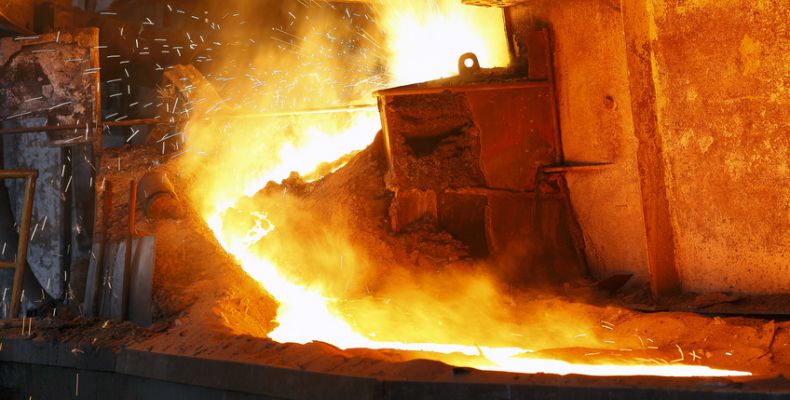
Swiss long products maker Stahl Gerlafingen is preparing to reduce its output in the following months because of rising energy costs. According to Swiss press reports, it has filed with the state government of Solothurn for support to introduce shorter working hours.
“The high energy prices are threatening our existence,” national daily NZZ quotes managing director Alain Creteur as saying. The paper cites an annual consumption of 360 gigawatt hours of power per year for the liquid phase in the electric arc furnace, plus 450 GWh/y of gas for the rolling process. In October alone, the mill would have to pay CHF 45 million ($46m), which is more than the annual cost in normal years, NZZ writes.
Such costs cannot be handed down to customers in the construction industry, which will try to import from neighbouring countries like Italy, France and Spain, Creteur warns. According to other reports, Stahl Gerlafingen is one of Switzerland’s biggest energy consumers, and the first big company in the country to file for short working hours. This has been approved and will initially last from October through December.
Neither Stahl Gerlafingen nor its parent, Beltrame Group, commented on the reports when approached by Kallanish. The Swiss mill makes merchant bar, sections, wide flange beams and rebar, rings and wire mesh. In 2019, it achieved revenue of CHF 370m, with an annual production of around 650,000 tonnes of finished products.
Christian Koehl Germany
Ascometal to stop production on skyrocketing energy: sources
Ascometal, part of Swiss Steel Group, will implement production stoppages in November and December at its two sites in France, in Fos-sur-Mer and Hagondange, market sources tell Kallanish.
The company told unions last week that production will stop for three weeks at each site. Fos-sur-Mer site director Hervé Hansen told French press the firm is being forced to stop output due to skyrocketing energy prices. Le Parisien reported that Ascometal typically pays about €50 ($49.8) per megawatt-hour for electricity in August each year. However, this year the figure ballooned to €850/MWh.
The company plans to pay some €80 million for electricity in 2023 versus €8m in 2022.
Swiss Steel did not respond to request for comment before press deadline.
Natalia Capra France