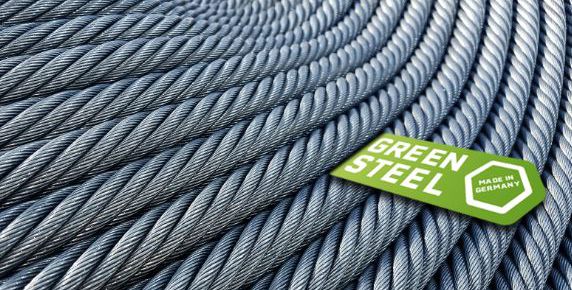
The Circular Metals Association (CMA) – formerly BDSV & VDM – and BVSE are calling for the European Commission to create a credible European green steel label. This is to make tangible climate benefits visible, strengthen the circular economy, and provide reliable guidance for customers, investors, and public procurement.
The two associations also strongly warn against the introduction of the sliding scale as the basis for defining green steel, Kallanish notes.
According to the associations, a green steel label must follow a simple principle – it must be steel with low, traceable, and verifiable emissions.
“The decisive factor should be the actual product carbon footprint, not the question of which production route a steel product originates from or how difficult the transformation of individual plants is,” they add.
“The sliding scale fails to meet this requirement and it adjusts emission limits to the proportion of scrap steel used. The higher the recycling rate, the stricter the limit becomes,” the associations say.
“Conversely, production routes with lower use of recycled raw materials are granted more lenient thresholds. This allows steel with higher actual emissions to receive a favourable ‘green’ classification, while recycling-based production methods, which are already significantly lower in emissions, are subject to stricter requirements. A green steel label must not lead to higher emissions being methodically masked,” they continue.
CMA and BVSE are particularly critical of the potential consequences on leading markets and public procurement.
“If products with significantly different actual CO2 footprints are classified into comparable performance categories, the label loses its function as a guide. Public funds could then flow into products that only appear ‘green’ due to methodological adjustments. This would not contribute to effective climate policy, but rather represent a considerable risk of greenwashing,” they note.
The associations instead support the approach of further developing the methodology within the framework of the European Ecodesign Regulation for sustainable products.
The basis developed by the European Commission’s Joint Research Centre rightly focuses on the Product Carbon Footprint and comparable environmental performance classes. This approach should be retained but made more ambitious so that the label actually promotes decarbonisation and does not merely certify the status quo, they add.
At the same time, CMA and BVSE warn against linking the debate on green steel with demands for export restrictions on recycled steel.
Author: Svetoslav Abrossimov