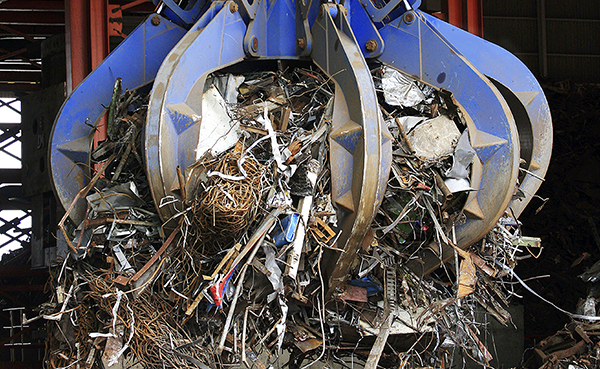
Turkey’s January-September scrap imports hit 16 million mt, up 15%
Turkish mills’ scrap bookings from their global suppliers increased year on year in the first three quarters of 2020, with imports especially from the US rising significantly with the support of demand recovery as of July. The on-year rise was despite some mills’ temporary stoppages and output cuts during the second quarter due to the COVID-19 pandemic.
Turkish mills’ crude steel output rose by 2.6% on year to 25.9 million mt in January-September, as the rise in crude steel production reached as high as 16.6% on year, with a strong market recovery as of June.
Turkish mills’ imports of ferrous scrap totaled 16.1 million mt in the nine-month period, 15% higher on year. The US remained Turkey’s largest scrap supplier by far in January-September at 3.4 million mt, 27% higher than the same period the previous year, S&P Global Platts observed from the latest Turkish Statistical Institute (TUIK) data.
Turkish mills’ scrap imports from the Netherlands rose by 19% year on year to 2.18 million mt in the first nine months of 2020, while imports from the UK totaled 1.69 million mt, slightly higher than the 1.67 million mt imported in the same period of 2019.
Turkish mills also imported 1.72 million mt of ferrous scrap from Russia in January-September, higher than 1.55 million mt imported in the same period the previous year.
Imports from Belgium totaled 1.22 million mt through September, while imports from Romania and Lithuania totaled 865,600 mt and 689,000 mt, respectively.
Denmark shipped 566,600 mt of ferrous scrap to Turkey in that period, while France exported 401,000 mt.
Other ferrous scrap suppliers to Turkey in January-September were: Germany (367,200 mt), Bulgaria (259,900 mt), Israel (279,400 mt), Sweden (264,400 mt) and Italy (202,300 mt), the latest data showed.
— Cenk Canf


EU steel sector weighs new covid restrictions
European steelmakers are still weighing the effects of the new coronavirus lockdowns that were put in place in most European countries. This week Germany and Italy joined Belgium, France and Spain in the list of European countries that have declared second lockdowns.
Restaurants, bars, cultural and leisure centers have been shut down to curb a second coronavirus wave, but factories have been kept open. Executives of steelmakers that have large production sites in different countries noted that so far the mills mostly affected are the one where virus levels are higher, as in France and Spain. However, “the disruptions are not close to March levels,” a Spanish source said.
“If we look at the restriction across most of the European countries, the steel sites and in general industries are still open. The problem is in the day-to-day work if a few workers test positive a line can stop. Most of the steel plants have put in place a safe environment in which people can work but workers have families and their lives outside the steel sites and they can become infected [and then] a line can stop suddenly, disrupting orders,” an executive from an Italian mill commented.
“We still have enough people at the plant, not a lot of shifts are full and that could have an effect on the shipment of material so a shorter workforce is bad – this will extend lead times, but we are better prepared. In February-March we didn’t know what was happening, what we could do. Everyone panicked a little bit. This is less the case now,” a source from a Belgium-based mill commented. “Most of the companies are seeing what very big financial [risks] you need to make to shut down production so everyone starts to be more creative than in the first days. in my view a second wave will have an effect on production but not as much as the first time.”
Overall, market sources are cautious about the coming weeks. They do not expect the huge supply chain disruptions from lockdowns and transportation blockages in transport across the EU countries as seen in March, but doubts about steel demand are starting to rise.
Steel order bookings are reported to be still relatively good but it’s not yet clear this will last. “We had two good months in September-October and were worried about the COVID evolution and the lockdown situation and they’ll have an impact on steel consumption for sure – its already a big question,” a Benelux service center source commented.
“We are fully open and working – we were working really at 100% and more. We are terribly busy but we’ll need to see what the next weeks will bring. This isn’t clear. Sales might go down slowly. It’s unpredictable but we’re ready to continue. We are still active so we’re ready to serve customers but if they close down then we’ll need to adapt to this. At this moment we’re ready to work at 100%.”
In the automotive sector, one of the key industries for steel, demand for new cars is expected to remain low at least until the macroeconomic picture and consumer disposable income situations improve, as the main car producers see auto sales falling this year, European steel federation Eurofer said in its latest outlook.
German luxury carmaker BMW warned on Nov. 4 that new pandemic restrictions would “severely” hit business in the months ahead. “The level of risk due to the negative impact of the pandemic is assessed as high,” it said. “If the corona pandemic takes an even more serious course and the global economy experiences a perceptible downturn, the risk exposure could be considerable, particularly on the demand side.”
As underlined by the World Steel Association in its recent outlook, the construction sector remained more resilient to the COVID-19 shock as many governments focused on implementing public projects. European long steel producers said that demand construction-oriented rebar and wire rod has been good, also considering the seasonal factor, but again it is not yet clear how long this positive momentum will last.
— Annalisa Villa, Amanda Flint
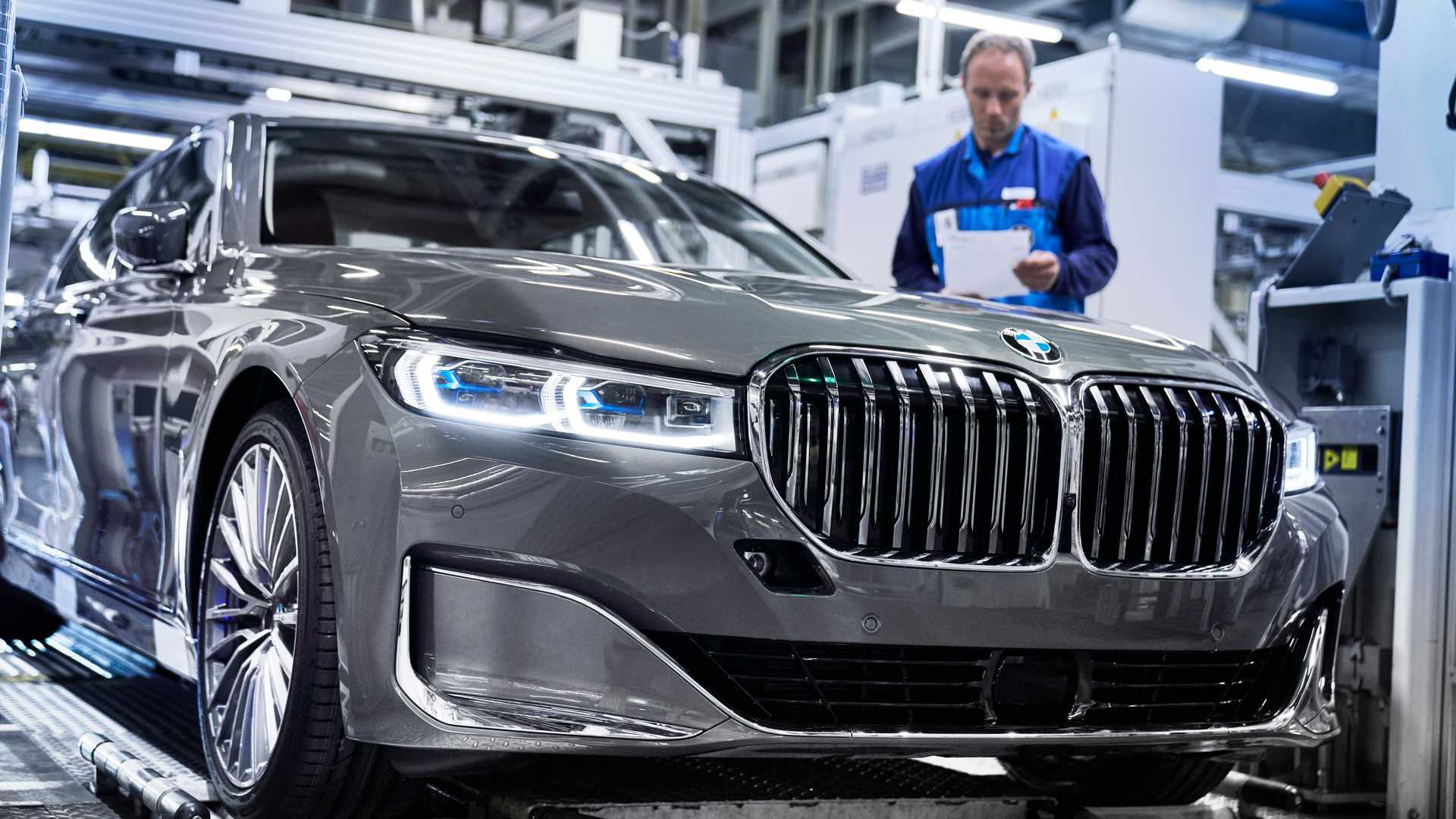
BMW sees renewed coronavirus risk to Q4 sales after strong Q3
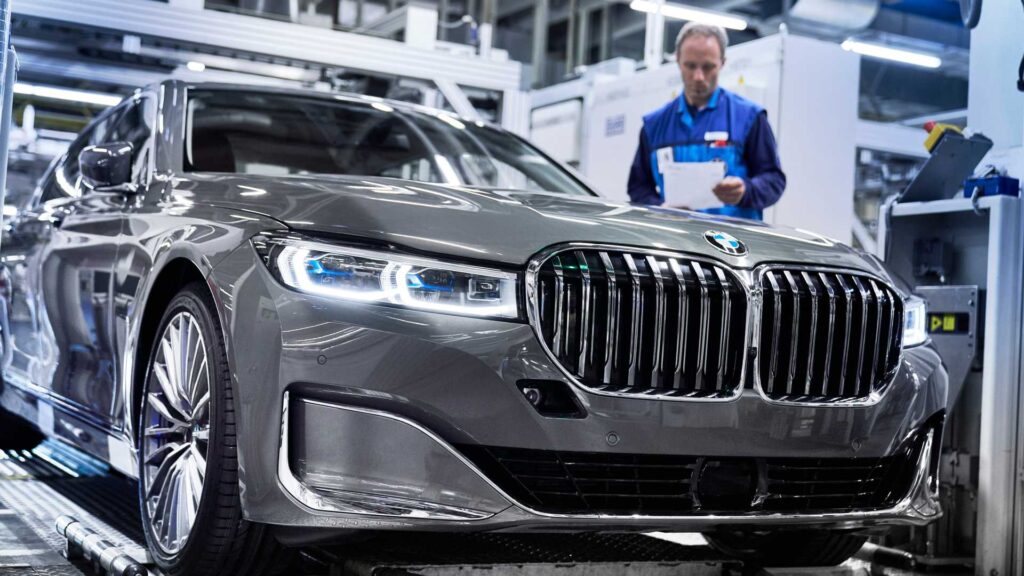
BMW Group said Nov. 4 its vehicle sales increased in the third quarter but warned that a resurgent wave of coronavirus infections is the biggest risk for the global economy and will impact its business into 2021.
BMW said auto sales increased 8.6% in Q3 to 675,592 units from the year earlier, while nine months sales fell 12.5% to 1.64 million units, in an earnings report. Against the general trend was BMW’s 37% increase in electrified car sales over the first nine months of the year.
Europe, BMW’s biggest auto market, saw a 19.7% decline in overall auto deliveries over the nine-month period, with the US down 26%. China, where the group operates through joint venture BMW Brilliance Automotive, was up 6.4%.
The auto industry, a major user of steel and aluminum, as well as a growing consumer of battery metals, has seen sales hit by lower demand this year across many regions and segments. BMW expects potential for weaker fourth-quarter sales due to coronavirus-related disruptions, and full-year sales to be lower than in 2019.
“The coronavirus pandemic is far from over, the current rate of infection, especially in Europe, makes this abundantly clear,” BMW CEO Oliver Zipse said in a statement. “The virus will remain the biggest of many risks for the global economy in the foreseeable future. New lockdowns could severely impact our business development in the fourth quarter and early 2021.”
Prior to the coronavirus outbreak, BMW envisaged a slight increase in auto sales in 2020, and the spread of the coronavirus slowed BMW’s worldwide vehicle sales.
“We now expect global sales in 2020 to be much lower than last year,” BMW added.
Lower vehicles production and sales led European flat steel prices to fall earlier this year, as declines in productivity weakened demand for premium steel raw materials such as iron ore pellets and higher quality met coke and coking coal.
Volkswagen Group on Oct. 29 said auto deliveries fell 18.7% to 6.5 million units in the first nine months of 2020, and full-year sales would be “significantly below” 2019’s 11 million units.
VW did not break out Q3 deliveries in its interim report. Calculations by Platts using earlier company data may have seen group volumes little changed on Q3 2019 deliveries.
Daimler AG on Oct. 23 said group unit sales fell 8% to 772,700 units in Q3, from the year earlier, and highlighted a significant decrease in all of its auto categories for the full year.
Groupe Renault said Oct. 23 it sold 806,320 vehicles in Q3, down 6.1% from a year earlier.
PSA Group saw consolidated sales 12.7% lower at 589,000 units in Q3 on a year earlier, mainly due to a slowdown in Europe, in a Oct. 28 report.
— Hector Forster
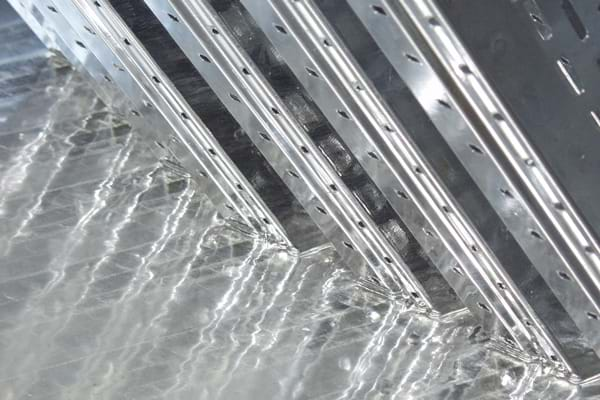
HDG market up on supply shortage, automotive demand uncertainty
The European hot-dipped galvanized market was heard higher Nov. 4 as limited supply and further offer increases from mills props up prices, although automotive demand has had some market participants scratching their heads due to poor car sales among European consumers, sources told S&P Global Platts.
The Platts TSI HDG index was assessed at Eur621/mt ex-works Ruhr Nov. 4 Eur16/mt higher week on week and in Southern Europe, HDG rose Eur6/mt on the week and was assessed at Eur586/mt ex-works Italy.
An Italian mill source was not confident that automotive production would be able to align with the lack of car sales seen during the pandemic, and said the industry was overproducing.
“This is the question we’re asking – the sales just don’t match the production rates,” the mill source said, adding that even with automotive producers offering large discounts on the purchase of electric vehicles, he didn’t see this boosting car sales.
“Car sellers are trying to push sales through [subsidized] leases, so customers don’t need to take out 20,000-30,000 euros,” the source said.
In the construction sector, the same mill source said producers were struggling amid a lack of long-term contracts.
“[The construction sector] recognizes there is no material available and they know lead times are long — I heard that mills are talking between January and February,” the same source added.
An Italian trading source said demand was normal, except for the automotive industry which was “hysteric”. The source attributed higher prices to a “lack of offers, no import, big delays and long delivery times.”
A market-leading European mill was heard to have offered over Eur640/mt ex-works for first offers of 2021.
A Benelux service center source said that automotive demand was still strong but was not certain if it was progressing at the same pace as it had in the last two months.
A European mill source also cited tradable values between Eur610-615/mt ex-works Ruhr for hot-dipped galvanized material, quoting tight supply and full mill order books for the end of the year.
“We’ve seen the schedules for April – we’re completely booked. There’s not a lot of open tons to sell and [the price] should reflect that,” the source said.
— Amanda Flint
EU demand boosts Turkish pipe exports in September
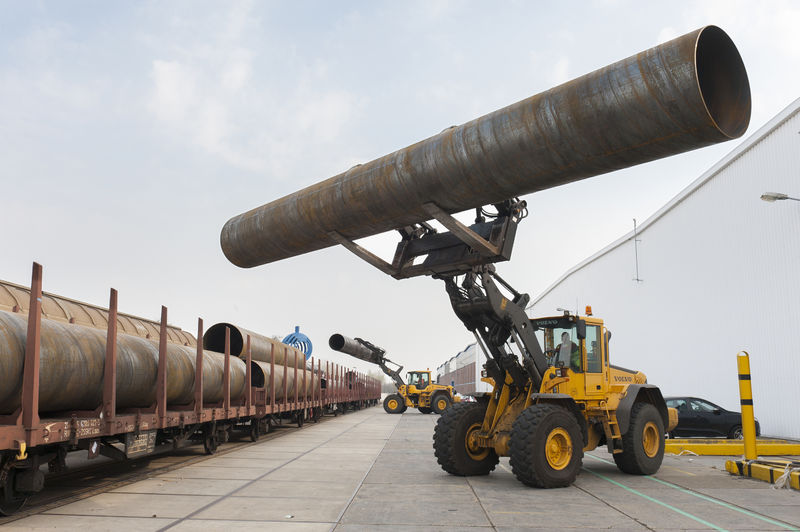
Turkish welded pipe exports increased 27.5% on-year to 219,788 tonnes in September, according to Turkish Statistical Institute (TUIK) data monitored by Kallanish. This was also up from 139,328t in August. Their average value, however, dropped to $630/tonne from $695/t in September 2019 and $637/t in August 2020.
The most-exported product was rectangular hollow sections whose shipments increased 48% on-year to 118,803t. Romania was the largest destination with more than trebled intake on-year at 41,085t. Iraq sourced 18,545t, up 31.5% on-year. The UK took 16,705t in September, up 22% on-year, and Belgium sourced 7,909t, up 35.5%.
Georgia sourced 4,243t, down -8.4%, and Israel sourced 3,276t, up 42.6% on-year. The Netherlands took 3,220t and Spain took 2,678t, up 0.6% and 29.2% respectively. Yemen sourced 2,476t in September versus zero last year. Germany’s intake increased from 1,325t last year to 2,171t in September.
Exports of welded tube under 406.4mm diameter meanwhile increased 23.2% on-year to 63,086t in September. Romania was again the largest destination, with more than doubled intake at 12,730t. The UK took 5,795t, down -4.3%. Italy’s intake was more or less flat at 3,788t. Belgium almost doubled its intake to 3,768t. Iraq more than doubled its intake to 3,465t.
Germany took 3,382t, down -4.2% on-year. Greece sourced 2,818t in September, up 84.4%. Israel took 2,727t, down -6.2%, and Poland sourced 2,222t versus 1,975t last year. Algeria, which sourced almost zero last year, took 2,139t in September.
In January-September, Turkish welded pipe exports increased 4.3% on-year to 1,314,535t. Rectangular hollow sections had the largest share in welded pipe exports with 602,116t.


Organisers write off 2020 Wire+Tube show, eye 2022
The Wire+Tube twin fair, which was rescheduled from April to December, has now officially been cancelled altogether.
Normally, the fair takes place in early spring on even years in Düsseldorf. After this year’s event was cancelled due to the anticipated Covid-19 lockdown in April, organisers soon decided to give it another try in December. However, several big German players like thyssenkrupp and Böllinghaus called off their attendance weeks ago. The announcement of a second lockdown in Germany in November was the final blow.
“Our hygiene and infection protection concept gave the hope for a successful event,” explains Wolfram Diener, chief executive of Messe Düsseldorf. “Due to the increasingly critical pandemic situation in Germany and our neighbouring European countries, however, the situation had to be completely re-assessed.”
The events will return to their normal schedule from 2022, the official announcement of Düsseldorf Messe company reads. A spokesman from an interest group of German wiremakers appreciated the decision. “Any trade fair means effort and extra work for a participating company, so it’s hard to remove fairs from their regular time slot, and move them too close to other fairs,” he tells Kallanish.
New lockdowns spare European steel operations, for now
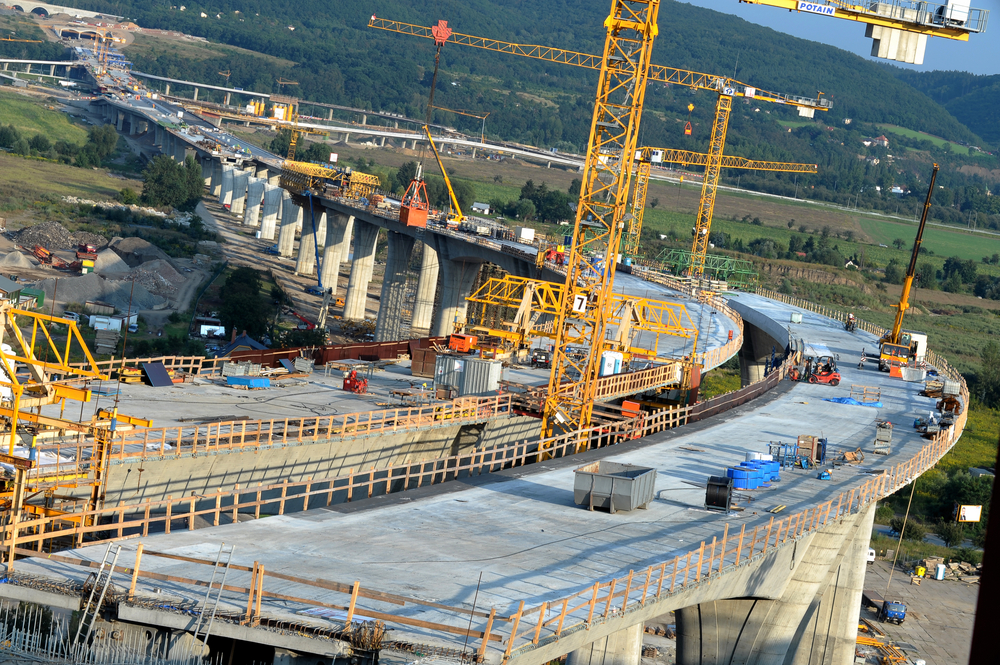
As of this week, most of Europe’s largest economies have entered a month-long soft lockdown, to tackle the ongoing second wave of the coronavirus pandemic, Kallanish notes.
While demand from end users is expected to be hit by the new limitations, steel producers are yet to be directly impacted in any of the major European countries.
German, Italian, French, Spanish and British authorities are all implementing restrictions in their countries. However, they are targeting as little economic disruption as possible after the first lockdowns in March/April caused considerable economic damage. Construction, manufacturing and overall industrial operations should continue.
The first lockdowns brought some steelmaking and processing operations in Europe to a standstill. This time around, this is not expected to happen.
Last time around, a number of steelmakers temporarily idled blast furnaces and steelmaking activities to align output to demand. Since then, production has recovered in line with demand and order books at steelmakers and processors seem to be strong enough to sustain production throughout November.
A northern European steel trader said the new lockdown is likely to be less strictly followed as compared with the last one, as “…there seems to be a high level of Covid fatigue around.” He added that the lockdown “…will have less of an impact on scrap collection this time around. However, against that we are anyway entering winter which will impact in Europe but more strongly in the Baltic which has been an active scrap exporter over the summer.”
Despite indications the steel sector should not be directly hit by the limitations, uncertainty remains over future end-use demand. In southern Europe, for example, scrap dealers confirm that mills are continuing to buy only the minimum volumes needed to operate, avoiding any sort of stockpiling due to uncertainty.
In France, the first country in Europe to go into soft lockdown, general demand for steel remains at good levels. In Italy, on the other hand, the market has been extremely slow during the last two weeks as the country went into wait-and-see mode in anticipation of the lockdown. However, a serious supply shortage for flat products is sustaining prices and demand in Italy.
As for the steel using sectors, construction activity is not set to be hit by the new limitations. In fact, more and more public spending in European countries will be pumped into the sector to fuel the recovery. As for automotive demand, this could take a new hit at end-use level, therefore further impacting the steel and manufacturing sectors in the first quarter of 2021.
Alessandro Sciamarelli, director for market analysis at Eurofer, noted last week that a rebound in market confidence was tangible in June and July, but a further slowdown was expected in October due to the second pandemic wave. Eurofer lifted its outlook for steel demand in Europe last week to a -14.6% year-on-year drop for 2020, but confirmed that many factors are still uncertain and the recovery going into 2021 could be slower than anticipated.
EU to start Turkish HRC import registration
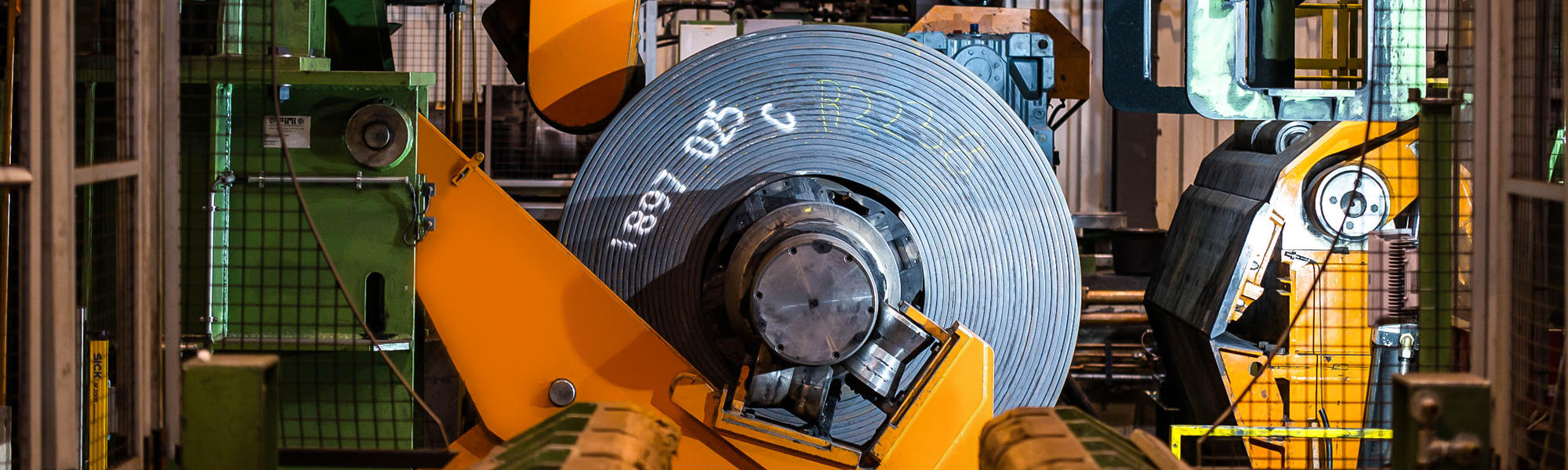
The European Commission will soon announce that Turkish hot-rolled coil imports are subject to registration.
The move is a prerequisite for the imposition of retroactive anti-dumping duties, should the continuing investigation into the country show dumping practices have occurred.
A pre-disclosure of the investigation decision is expected by 23 December, with any provisional measures to be applied from 14 January, although a retroactive duty can be collected on previously imported material from the moment the commission begins registering the imports. The deadline for a definitive duty is 13 July 2021.
Market participants this week said that if a provisional duty is imposed — as it is in most cases — it is expected to be around 8-9pc, with some saying each Turkish mill will have a different rate. There has been talk that sellers have offered to pay the duty, partially or in full, to entice purchases by European buyers.
The move could exacerbate the supply tightness in Europe further and will aid European mills in the continuing contract negotiations.
Turkey is also subject to an anti-subsidy investigation at the moment, the outcome of which is expected by 18 February with any provisional measure to be applicable from 12 March.
By Lora Stoyanova