

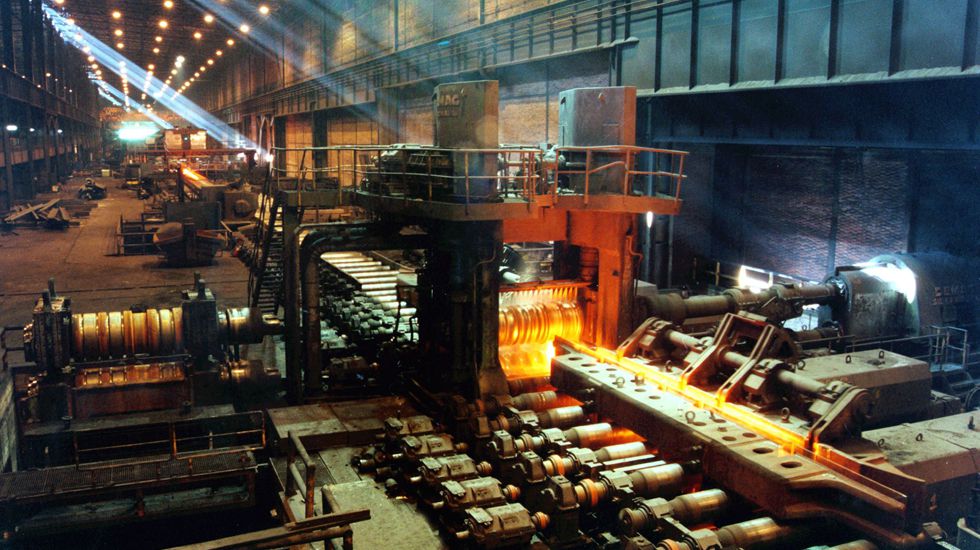
ArcelorMittal sees boost to steel production at Sestao, Spain
ArcelorMittal expects to further hike steel production from its Spanish Sestao site to around 70,000 mt/month by the second quarter due to a favorable demand outlook, the company’s Spanish subsidiary said Feb. 15.
The increase follows an initial target that was set a month ago to reach 45,000 mt/month. The plant has the capacity to produce 1 million mt/year of steel, or 83,000 mt/month.
The electric arc furnace at Sestao was restarted in September 2020 after being halted by the COVID-19 pandemic in April 2020, with an initial objective of hitting 40,000 mt/month production.
In its other operations, the company also restarted its A Sinter in Gijon on Jan. 4, which had been halted since April 2020, while its furnaces at Gijon, with a combined capacity of 5 million mt/year, the integrated sheet steel production site at Aviles, and the coking batteries are all in operation.
— Gianluca Baratti

Tribunal orders Taranto hot-end area closure
The Apulia regional tribunal has given ArcelorMittal Italia 60 days to shut down the hot-end area at the Taranto steelworks due to excessive carbon emissions, Kallanish learns from the tribunal’s ruling and sources at the company.
Explaining its decision, Tribunale Amministrativo Regionale (TAR) Puglia says emissions from the steelworks are “out of control” and present a danger to the lives of the citizens of Taranto.
“In relation to the ruling issued by the TAR of Puglia, ArcelorMittal Italia announces that it will immediately appeal to the Council of State against the closure of the hot area of the Taranto plant,” ArcelorMittal Italia says.
Local authorities and unions who have condemned the tribunal decision have asked Mario Draghi, the new Italian prime mister, for an urgent meeting with all parties in order to speed up the decision-making process.
Meanwhile, steel producers’ association Federacciai has expressed concern over the TAR ruling and says it hopes it will be suspended. “The fear is that such action could stop or slow down the relaunch of the steelworks,” says association president Alessandro Banzato. Environmental improvement works and production recovery are ongoing at the site, he adds.


UK quota for other country rebar becomes critical
UK tariff rate quotas for the first quarter for rebar from other countries have reached a “critical” level, UK steel distributors’ association NASS informs Kallanish.
Q1 quotas for stainless wire rod from Taiwan and tinplate from China remain critical, as they were a week ago.
The quota used for other welded tube from Turkey has risen to 97%, for merchant bar and light sections from Turkey to 72%, and for gas pipes from Turkey to 60%.
Organic coated sheets from South Korea and category 4A metallic coated sheet from South Korea usage remains unchanged at above 60% from last week (see Kallanish passim).
The HMRC monitoring system is still experiencing delays in updating of around two working days.
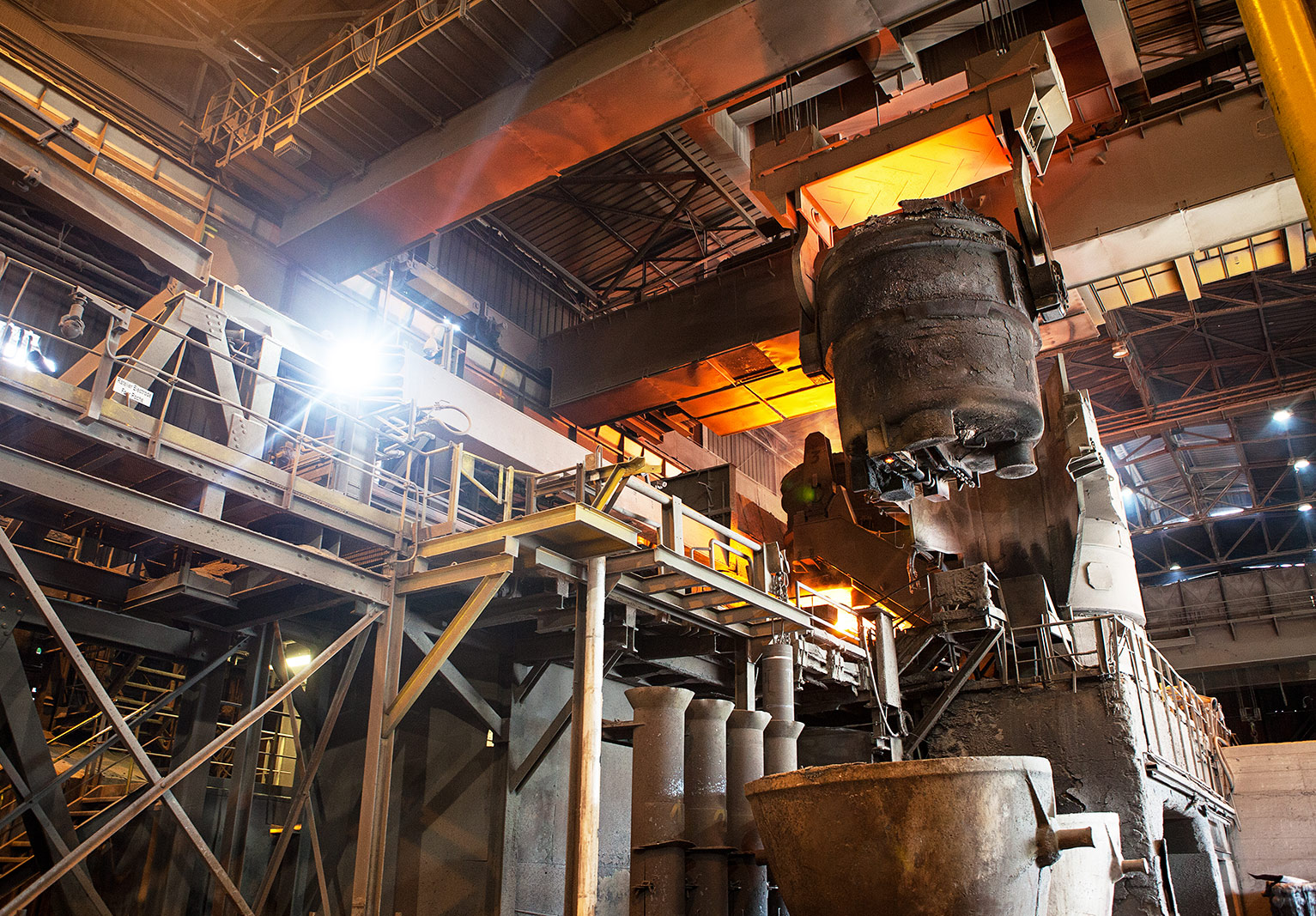
Weather leads to FM at German steelmaker Salzgitter; disruption at Thyssenkrupp
Salzgitter, Germany’s third largest steelmaker, has declared force majeure due to inclement winter weather conditions which have impacted transportation of its steel deliveries via road, rail and inland waterway, the company confirmed to S&P Global Platts Feb. 15. Thyssenkrupp, Germany’s largest steelmaker, said it was facing plant disruption due to the weather “aggravating conditions”.
A Salzgitter spokesperson confirmed a letter to customers from Feb. 10 that there have been “dramatic” weather conditions with no relief on shipments yet.
Both Salzgitter and Thyssenkrupp have been impacted by snowfall and strong winds as extreme winter weather conditions have hit Germany in recent days.
Salzgitter’s letter to customers stated that the Salzgitter-Beddingen freight station, which is important for the rail transports of several Salzgitter Group companies, could not be accessed at this moment, with train congestion throughout the entire rail freight network.
“Since the continuous supply of raw materials and inert gases, which is absolutely necessary for our plant, has come to a standstill in the meantime, we can no longer exclude production disruptions in the next few days. Until further notice, it is not possible to ship goods by rail or inland railway,” the letter said.
A source close to the matter said customers have been informed of the disruption in the supply chain due to weather conditions out of the mill’s control.
“It is a precautionary measure, as last week has seen all the weather-related road and railway blockages; so far we have only seen a few not that significant deliveries,” a German trader said. “For the next days higher temps are forecast, even up to 10-13 degrees, this could cause issues with water levels and some isolated flooding remains to be seen.”
The same source said that the weather in Dusseldorf was expected to turn warmer in the coming days.
S&P Global Platts assessed Northern European hot rolled coil prices at Eur730/mt ex-works on Feb. 12, up Eur10/mt on the day and their highest level since Sept, 1 2008, on tight supplies in a market where demand is now widely recovering from the impact of last year’s coronavirus restrictions.
Thyssenkrupp – some easing
Steelmaker Thyssenkrupp also sent a customer letter Feb. 11 declaring an “aggravation of the supply situation”. A Thyssenkrupp spokesperson told Platts that starting Feb. 15 the steelmaker was seeing some easing of the supply situation.
In the customer letter, Thyssenkrupp said that on top of demand outpacing production since summer 2020 which has led to production delays, the producer is facing disruptions within the plants caused by the weather conditions. “We are currently not able to foresee the full impact of these exceptional circumstances. We expect this to delay the normalization of the supply situation significantly.”
“As the only region in Germany we have not only been facing the complete stoppage of public railroad lines, but also the first-time ban on the transport of hazardous goods on public roads. The supply of materials that are necessary for our production is still not secure due to the interruption of supplies – for example of hydrogen.”
Thyssenkrupp said it would attempt to increase production by purchasing pre-materials, “despite the economic disadvantages this involves”.
In recent days, German steel deliveries have been hindered by blocked railway tracks and rising water levels on the Ruhr and Rhine rivers after Storm Darcy hit northern Germany Feb. 7.
Shipping was halted for a few days due to the water levels, but was able to resume Feb. 8 with all vessels loaded at just 50-60% capacity and buyers needing to pay extra for deliveries.
Thyssenkrupp has a crude steel capacity of 11 million mt/year. Salzgitter produced 6.6 million mt of crude steel in 2019.
— Amanda Flint, Laura Varriale

Winter triggers force majeure in Germany
Temperatures below -20C and heavy snowfall mainly in northwest Germany have caused Salzgitter to declare force majeure to their customers, a company spokesman tells Kallanish.
“At the moment and until further notice, it is not possible to ship goods by rail or inland waterway,” the company writes in the communiqué. It notes that truck transports can still be handled, but depending on the route, carriers are increasingly struggling with closed, blocked or poorly passable roads, traffic jams, and other related impairments.
The mill has its own port to the Mittelland canal, which froze last week. That did not cause much of an issue because the waterway plays a lesser role than the railways, which have been subject to massive delays in recent days, the spokesman says.
Thyssenkrupp Steel states that its supplies have been throttled by the winter conditions as well, but that it has not declared force majeure. In addition to impairments for trucks and trains that have caused shortages, certain hazardous freights are banned from roads, meaning that, for example, oxygen and hydrogen cannot be transported as usual. Like Salzgitter, tk Steel had to scale down production because of the shortcomings, a group spokesman says.