

Klöckner foresees demand rising 10% in 2021
Germany’s Klöckner & Co has entered the new year with optimism that its net loss reported last year can be turned around, helped by steel demand recovery and the digitalisation of the company.
Shipments fell by 7.7% on-year in 2020 to 4.8 million tonnes. This, combined with falling steel demand in the group’s main markets of Germany/Europe and the US, slashed revenue by 19% to €5.1 billion ($6 billion). Ebitda decreased by 10% to €111 million. The year ended therefore with a net loss of €114m.
The company foresees an increase in steel demand in Europe of about 5-10% this year due to housing and infrastructure construction. US demand will grow about 10% on-year due to shipbuilding and construction. Klöckner also expects more steel demand in Germany, mainly due to shipbuilding. For the first quarter of 2021, an extraordinarily high Ebitda of €110-130m is expected.
“Every crisis is also an opportunity, so we do not look back over the past year with a solely negative perspective,” chief executive Gisbert Rühl said during the firm’s earnings call. “With the Surtsey project launched immediately after the onset of the pandemic, we gave an additional boost to our digital transformation” (see separate Kallanish story).
As part of restructuring measures, more than 80% of the planned reduction in the workforce by a total of some 1,200 positions in Europe and the US has already been implemented, representatives of the company tell Kallanish.
Svetoslav Abrossimov Bulgaria

Turkish steel exports to the EU see sharp decline
The declining trend in Turkish steel exports seen in 2020 continued in the first month of 2021 as exports to the region declined by 36.6% on year due to EU trade barriers against Turkish steel, Turkish Steel Producers Association (TCUD) said, without citing the tonnages.
“Protection measures in global markets and signs of China’s return to export markets are showing that Turkish steel exporters will face obstacles also this year,” the association said, adding that Turkey’s steel exports to its largest export destination, the EU, which declined 40% in 2020, continued this trend in 2020 due to EU’s protectionist attitudes.
“Turkey should answer these moves with counter measures,” it said.
Turkey has officially started a dumping investigation against hot-rolled coil imports from the EU region and South Korea with a presidential decree published in the country’s official gazette on Jan. 9, 2021, as Platts has reported. The result of the investigation is expected to be announced in the coming months.
The investigation decision was announced just two days after the EU imposed provisional antidumping duties of 4.8%-7.6% on imports of HRC from Turkey.
Despite the decline seen in their export volumes, Turkish steel mills increased their output notably in January, with the support of the rise seen in domestic steel consumption.
According to the latest Turkish Steel Producers Association (TCUD) data, domestic steel consumption in Turkey rose by 15.1% on year to 3.1 million mt in January.
Turkey’s long steel consumption increased especially sharply by 32.9% on year in that month, while flat steel consumption rose by 2.2%.
Turkey’s crude steel output increased by 12.7% on year to 3.4 million mt in January, TCUD data showed.
— Cenk Can

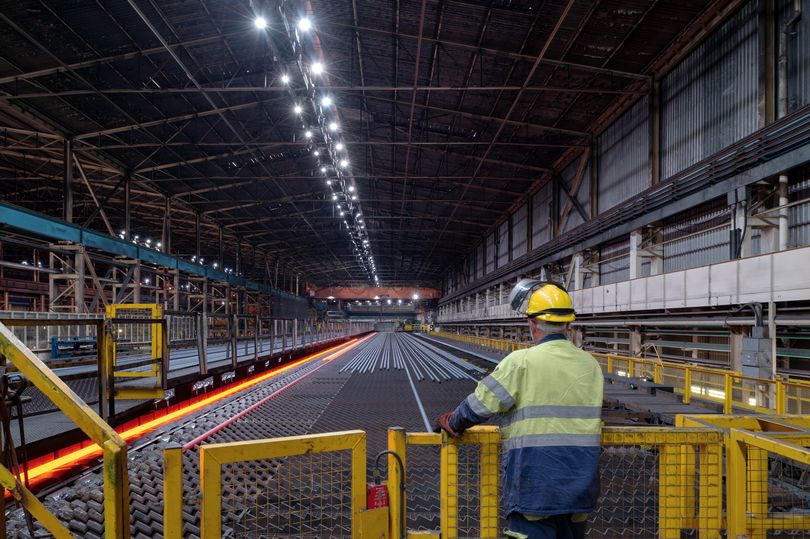
Some GFG UK units to operate ‘intermittently’ amid finance squeeze
GFG Alliance, the owner of Liberty Steel Group, said late March 10 that some of its UK businesses will be operating intermittently.
The company’s statement follows market indications that production at some Liberty works may have been reduced due to a cash squeeze following the entry into administration March 8 of GFG Alliance financier Greensill Capital (UK) Ltd. This is understood to have hit raw material supplies to some steel works.
“Some UK businesses will be operating intermittently, which can and will be achieved without compromising the condition of the plants,” a GFG Alliance spokesman said in an emailed statement. “We are working closely with the trades unions and will be making use of the government furlough scheme for employees where possible in those circumstances.” The statement is understood to refer to GFG’s steel operations only. The group also produces aluminum in the UK.
A spokesman for the UK’s GMB union said that following “positive and constructive” talks March 9 between a group of UK steel trade unions and GFG Alliance executive chairman Sanjeev Gupta further talks between Liberty and the unions occurred March 10 and will continue March 11, when a new union statement will be made.
The GMB spokesman told S&P Global Platts that the unions are continuing to support Liberty in an effort to overcome the crisis.
Liberty Steel UK is the third largest steelmaker in the country, with nine sites across England, Scotland and Wales, producing both flat and long products. It employs nearly 3,000 people and has an annual steel rolling capacity approaching 3 million mt/year.
Special Steels
Market sources told Platts that operations at Liberty’s Speciality Steels stopped production March 8 and that its employees have been put on furlough till the end of March.
The operation failed to buy any ferrous scrap, the principal raw material for its electric-arc furnace, the sources said. The company is understood typically to buy 40,000 mt-45,000 mt of scrap per month.
Larger companies are reported in the market to have struggled to acquire suitable insurance and so have stepped back from supplying Liberty Speciality Steels UK, which has sites at Stocksbridge and Rotherham. In addition, there is talk that the Speciality Steels operation had switched some production to making lower quality steel, including Liberty’s “green rebar” at Rotherham due to a recent fall in demand for aerospace grade steels.
GFG Alliance did not comment on the market talk.
According to Liberty’s website, the UK business has plans to create a “GREENSTEEL” hub at its Newport site in Wales using renewable energy from sister company SIMEC Atlantis’ Uskmouth biomass plant to power a new electric-arc furnace.
Earlier this week GFG Alliance had said the UK Speciality Steels business had seen demand for some products fall by 60% following the downturn in the aerospace sector due to COVID-19.
Regarding GFG Alliance’s European steel operations outside the UK, a Liberty Steel Group spokesperson said: “We can confirm there has been no significant impact on our supply chain across continental Europe. We continue to engage with suppliers on a regular basis to ensure we are able to continue to supply our customers with the products they require.”
— Diana Kinch, Viral Shah and Annalisa Villa

Spain’s Naturgy, Sidenor sign 10-year renewable power deal
Spanish steel group Sidenor has signed a 10-year deal to buy 350 GWh per year of renewable energy from Naturgy, the companies said March 10, the second deal of its kind agreed by a Spanish steel group.
Naturgy will directly supply energy produced by its solar and wind and solar plants for use in Sidenor’s production facilities.
According to an estimate by S&P Global Platts, the energy being supplied is the equivalent required to produce around 600,000 mt/year of steel. The companies did not disclose financial details.
Sidenor specializes in long steel products and operates four steel production units in the Basque and Cantabria regions of Spain with over 1.5 million mt/yr capacity as well as a forging unit, two bright steel units and two scrap collection and processing units.
The deal between the two is the second direct PPA announced in Spain and comes nearly two years after a previous 10-year deal announced between ArcelorMittal and Foresight for 9 GWh/yr.
Spain’s iron and steel sector is the largest single consumer of energy in the country, responsible for about one quarter of all industrial demand.
— Gianluca Baratti
Turkey’s Kardemir opens sections order book, sells notable tonnage
Turkey’s largest integrated long steel maker Kardemir, which opened its order books for sections on March 15, reclosed it the afternoon of the same day after receiving notable orders from the domestic market, S&P Global Platts learned from market sources.
Kardemir put its new sales price for IPE-NPUs 160-550 mm sections at Lira 5,625-5,775/mt ($740-$760)/mt ex-works, while prices for HEA-HEBs 120-500 mm sections were at Lira 5,700-6,275/mt ($750-$825)/mt ex-works. The exchange rate was 7.60/$1.
The company sold around 80,000 mt of sections to the domestic market within a day, a manager of a trading company told S&P Global Platts, saying the prices were reasonable considering the current market situation and exchange rate.
The manager also said he doesn’t expect further declines in scrap prices. Most of the markets remained strong and some Turkish mills – especially some flat steel producers like Colakoglu – will enter into maintenance in May. Some producers are trying to evaluate this period, so this could be a temporary movement, he said.
Turkish deepsea import ferrous scrap prices fell notably on March 9, following a rising trend, as mills booked US-origin cargoes at lower levels, as Platts has reported.
S&P Global Platts assessed Turkish imports of premium heavy melting scrap 1/2 (80:20) March 9 at $455/mt CFR, down $7.50/mt on day.
Despite some adjustments seen in Turkish mills’ lira-denominated rebar list prices on March 10, due to exchange rate fluctuations, mills’ rebar prices have remained largely stable in the range of $642-$655/mt ex-works on a dollar basis, depending on region and tonnage.
— Cenk Can
European HRC market contends with short supply
European hot-rolled coil prices were heard higher in the market March 10, as buy-side customers and traders grow more discontented with the chronic lack of steel available amid bullish predictions of even higher prices in the next week, sources told S&P Global Platts.
A German distributor was still waiting for steel suppliers to respond with valid offers for Q3, when delivery can be expected no earlier than September-October.
“There is pressure from the buying side. The force majeure issues still have not sorted out what the mills have lost,” the source said. “[A German mill] emphasized how they’re trying to keep customers happy but they’re still contending with delays.”
Sources said the current market dynamic has fostered discussions about prices without an understanding of the tonnage needed to support such arguments.
Buyers were heard to be actively taking from imports, with India having returned to the imports market offering CRC at Eur940 FCA Antwerp
Vietnamese sellers also made a reappearance, offering HRC at Eur725/mt CIF Antwerp, June-rolling with delivery expected in September, the same distributor source said.
In the Italian market, an Italian trader noticed a “new wave of panic” in the last week.
“No import offers, eventual stop of Ilva mill, good demand, probable prolongations of safeguard measures, long delivery times and big delays from several mills,” the trader said. “Service centers are low in stocks and have had to increase prices.”
One European trader insisted the main issue in the current market was the supply shortage. He said HRC at Eur740/mt EXW Italy would be possible, but that it depends on what material the mill is “willing” to provide. “If you buy what they have then, yes, that price is workable. If you ask what you need, then you don’t get anything,” said the trader, suggesting the market has turned heavily one-sided, with mills having the upper hand.
He said buying imports is similarly difficult as agreed prices for orders have been put back on the table by some Asian mills, a headache for back-to-back business.
— Amanda Flint, Laura Varriale
European HDG prices rise, additional capacity not expected until after summer
The European hot-dipped galvanized market saw further gains leading up to March 10, with supply scarcity and higher offers from mills leaving buy-side customers with little option but to buy back-to-back and accept the higher prices, sources told S&P Global Platts.
North European HDG prices were assessed up Eur22/mt to Eur882/mt ex-works Ruhr March 10, while HDG prices in Italy were assessed up Eur15/mt to Eur880/mt ex-works Italy.
An Italian mill source noted the lack of material in Europe and demand was “pretty strong”, with a lot of demand for Italian material coming from other European markets.
“I have the feeling they are panicking. If you offer some steel at whatever price, it is the trend. I will not be surprised if cold-rolled and hot-dipped galvanized will touch Eur900/mt in the next week or so,” the mill source said.
A German distributor expected the ArcelorMittal target of Eur790-800/mt for HRC to translate to CRC and HDG products.
“It’s all coming from slab and iron ore climbing again,” the source said.
Import prices were heard from Vietnam at Eur900 CIF Antwerp, with expected delivery in September.
The same distributor said there was recovery seen across the automotive, agricultural and white goods industries with very limited offers on the market.
“I don’t see material coming back until after the summer. I expect problems to roll over into Q3,” the distributor source said. “We are not finished yet, mills putting pedal to the medal trying to reach new heights.”
A Benelux buyer was also finding it difficult to commit to orders, following a surge in customer inquiries for HDG.
“People are trying to buy back to back, our biggest business is from stockists. Hopefully [material] will arrive at some point in the summer, it’s a challenge,” the buyer said.
— Amanda Flint
Thyssenkrupp cuts more jobs on Covid-19 impact
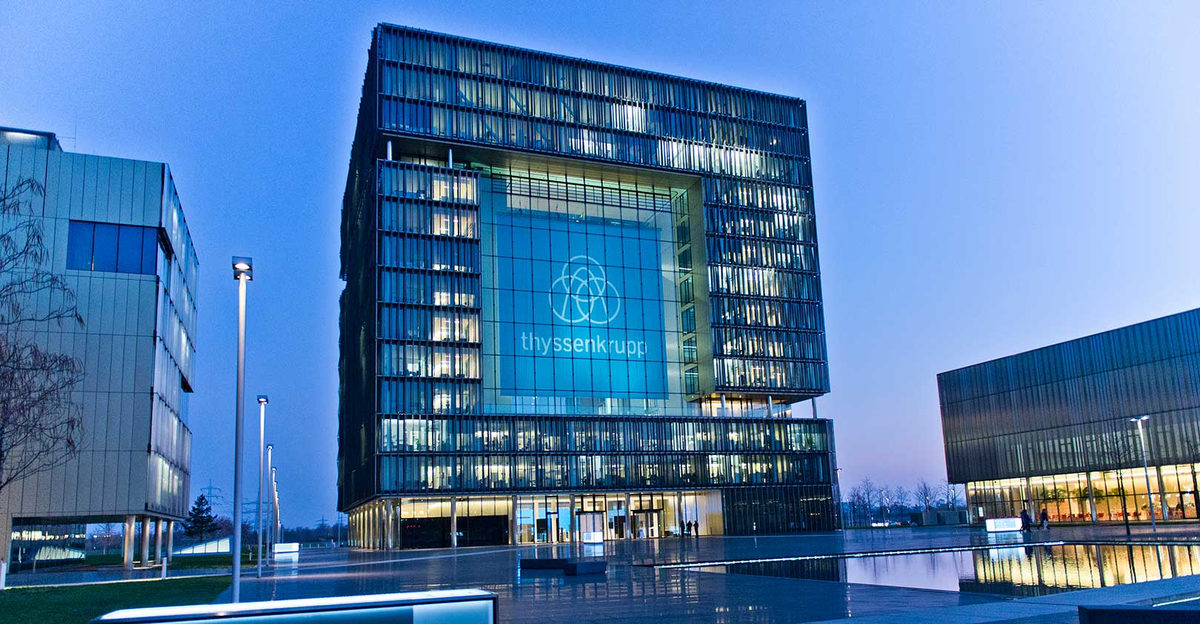
Thyssenkrupp will cut up to 750 additional jobs in administration and production-related areas of its Steel unit, in addition to cutbacks announced shortly before the advent of Covid-19.
The group has to that purpose reached a new agreement with union IG Metall and representatives of the workforce, Kallanish learns. Last year’s “Future Pact for Steel” deal covered 3,000 jobs, which will be gradually reduced until 2026. “The Future Pact for Steel concluded in March 2020 was made at the beginning of the pandemic and did not reflect its economic consequences,” the company states.
“This joint effort is imperative as a result of the coronavirus pandemic,” says Markus Grolms, labour director at thyssenkrupp Steel. “The clear message now is: We are moving forward together and want to secure the best possible position in the European market to safeguard many good jobs at Steel over the long term.”
The group sees the future of steel activities in premium, higher-strength products, further optimised coatings and thinner, more efficient products for e-mobility. “We are therefore systematically addressing our focus markets in the automotive and high-end industrial segments,” says tk Steel ceo Bernhard Osburg.
The group recently announced a major investment in the conversion of the Duisburg casting-rolling line and the facilities in Bochum. “In the future, as part of the transformation to climate-neutral steel, we plan to offer all products in ‘green’ as well,” Osburg notes.
Christian Koehl Germany
Klöckner looks for investors to expand to Asia
Klöckner & Co is looking for investors from Europe and Asia to expand its operations to Asia, says ceo Gisbert Rühl.
“Our efforts in that direction will increase in the second half of the year,” Rühl noted during a conference call on Wednesday attended by Kallanish. “After our presence in the US and Brazil, we want to expand to Asia and this requires financial resources.” There is already interest from different investors and the company expects to have results in the next months, he added.
Last year Klöckner received an acquisition proposal from UK-headquartered steel trader Apollo/Swoctem, but a real proposition never materialised. The company does not expect any future development in that matter for the moment.
Klöckner continues to implement the Surtsey project, which is focused on accelerating the company’s digital transformation and fostering restructuring initiatives.
Digital sales share increased considerably to 45% of overall sales in the fourth quarter of 2020. Digitalisation and further optimisation measures associated with Surtsey should contribute over €100 million ($119m) to earnings by the end of 2021.
Klöckner is well on track to generate over 60% of sales via digital channels in 2022, Rühl said.
Svetoslav Abrossimov Bulgaria
LME scrap contract faces some challenges: Colakoglu
The scrap futures contract on the London Metal Exchange dedicated to Turkish imports continues to face some challenges despite support in the market from key players.
At Wednesday’s Kallanish International Steel Scrap virtual conference, Koray Gunay, purchasing manager at Turkey’s Colakoglu, noted that his company is still supportive of the idea of having a futures contract that can be used to hedge the physical market. However, there have been obstacles, he added.
“Last year we only hedged 30,000 tonnes of our scrap with the contract, a very limited amount,” Gunay said. “The problem is the volumes traded are quite small and we see a $10/tonne difference between buy and sell. If you try to sell many thousand tonnes, the spread between buy and sell is reaching such a high level that it becomes difficult to use the contract. We hope more volumes traded will mean a better contract and lower spreads, but problems are now still existing.”
Last year the equivalent of over 2.8 million tonnes of scrap was traded using LME scrap steel futures. The level was some 400,000t below 2019 figures and still only a fraction of the 22.5mt of scrap physically imported by Turkey in 2020.
In January this year volumes traded surpassed the equivalent of 300,000t, the highest number seen since May 2020, according to data from the LME.
Emanuele Norsa Italy