

Steel e-commerce comes with complications: conference
Digital solutions for the steel industry can only be partly copied from established ventures, steel IT start-up representatives said at the “Zukunft Stahl” conference held last week by Handelsblatt and Euroforum.
“I don’t see any horizontal platform like an ‘Amazon for steel’ coming,” Simon Zühlke of Berlin-based online trading platform Vanilla Steel said at the even attended by Kallanish. On the one hand, steel is too complex a product, he argued. On the other, it takes a domestic platform to win trust. “The industry won’t accept a platform that was initiated outside of Europe,” Zühlke observed.
He does not however argue with Vanilla Steel, which specialises in excess and cut-out material, being nicknamed “an Ebay for steel”. “What we saw with, for example, Zalando in the B2B sector will also happen in the B2C segment, where steel is sold: there is a change of generations happening, and it has been accelerated by Covid-19,” he commented.
He concedes that online trading will not replace offline negotiations altogether. The more complex a product is, the less it is suited to be sold online, which will be the case for much automotive steel, he pointed out. “But it will be different for commodities on a spot basis,” of which more than two thirds are still sold offline today. “For these, the e-commerce platforms will prevail as the market place,” he concluded.
Christian Koehl Germany

ArcelorMittal accelerates ‘green’ steel certification
ArcelorMittal is accelerating its commitment towards becoming a zero-carbon emissions steelmaker by 2050 with the launch of a decarbonisation initiative called “XCarb”.
In a virtual conference on Wednesday attended by Kallanish, chief executive Aditya Mittal said XCarb responds to the necessity to bring all the company’s decarbonisation activity together “under a new global umbrella brand”.
ArcelorMittal is working to create its XCarb “green” steel certificates through the primary blast furnace route. It will also issue a new labelling for XCarb recycled and renewable steel made from scrap and renewable energy through the electric arc furnace route.
The steelmaker is looking at two technology routes for decarbonisation, the “Smart Carbon” and “Innovative” DRI route. Smart Carbon involves the use of bio-mass, bio-waste and carbon capture utilisation and storage technology. The two options are not competing and are both being considered, Kallanish notes.
The decarbonisation initiatives in ArcelorMittal Europe range from transforming biomass into bio-coal to projects such as Carbalyst. This converts blast furnace waste gas into bioethanol and reinjects waste gases from the steelmaking process into the blast furnace to reduce coal use.
These investments will be transformed into XCarb green steel certificates using “a conversion factor that represents the average CO2 intensity of integrated steelmaking in Europe”, Mittal explained.
The scheme therefore provides customers with the opportunity to buy certificates attached to their physical orders of steel, enabling them to report a reduction in their Scope 3 carbon emissions, he added. By 2022 ArcelorMittal will be able to sell 600,000 tonnes of green steel.
The other initiative involves labelling recycled and renewable steel with “XCarb recycled and renewably produced” products for customers. This will apply only to flat and long steel products made through EAFs from scrap, and using renewable electricity, resulting in a footprint as low as 300kg of CO2 per tonne of finished steel.
XCarb stands for decarbonisation, or excluding carbon, Mittal revealed.
Natalia Capra France
ArcelorMittal studies DRI production in France
ArcelorMittal is also considering decarbonising its French facilities by using the direct reduced iron route, new chief executive Aditya Mittal during a virtual event on Wednesday. The group said earlier this month it plans to build DRI plants in Germany.
“With natural gas DRI steelmaking, your carbon footprint is much lower,” Mittal commented at the event attended by Kallanish. “You do have a cost saving relative to the emission which is significant. At this point in time, we are looking at various DRI projects both in Germany and in France where we can feed DRI into our existing installations, reducing the carbon footprint … We do believe that those projects should be economically viable.”
The project feasibility will also depend on how much government funding the group can obtain. “We do believe there is an economic case for installing DRI based facilities in our existing locations,” Mittal added.
The company is working on both innovative DRI routes and the “Smart Carbon” route to decarbonise its steelmaking. These technologies, however, are in the process of development. “If there are technology breakthroughs in the Smart Carbon route then perhaps the discussion will shift and we will realise that we can do much more on the Smart Carbon route, but where we stand today, we are investing in both routes,” Mittal explained. “At this point in time it is too early to call which route will dominate the decarbonisation process of steelmaking.”
In France ArcelorMittal is working with Air Liquide to develop a DRI and hydrogen connected carbon capture and storage facility in Dunkirk, Mittal added.
ArcelorMittal Germany intends to build a large-scale industrial DRI plant in Bremen and what it calls an innovative DRI pilot plant in Eisenhüttenstadt, in combination with electric arc furnaces. Using green hydrogen, a capacity of up to 3.5 million tonnes/year of steel will then be produced with significantly fewer CO2 emissions (see Kallanish 5 March).
Natalia Capra France
TK to maintain quality with DRI process; uncertainty lingers for green steel
German steelmaker Thyssenkrupp will be able to produce the same steel qualities with the company’s low-carbon-emission steelmaking processes, but regulatory uncertainty in green steelmaking persists, the company said March 17.
Thyssenkrupp published the findings of an external study conducted by RWTH Aachen University on the company’s model for integrating the direct reduction process into the existing metallurgical network in Duisburg.
The study showed that the steel mill can be decarbonized while the entire portfolio of grades can be produced “climate neutrally, including all premium grades.” The adapted plant configuration will enable the company to reduce its CO2 emissions by 30% by 2030.
“We now have to dispel existing uncertainties in the framework conditions, especially with regard to funding and the regulatory framework,” Bernhard Osburg, CEO of Thyssenkrupp Steel, in a statement. “First of all, we need planning security to establish a robust and competitive business model for green steel.”
European mills have called for the need of more frameworks and regulation in green steel making, especially surrounding higher production costs as well as meeting the need for more hydrogen commercially available.
German steelmakers Dillinger and Saarstahl, both part of Stahl-Holding-Saar, also said March 17 that more time will be needed to ramp up the availability of green hydrogen for industrial use in green steel production and that more environmental measures such as dedusting will be enforced at the sites until the commercial availability of large-scale volumes of hydrogen.
Rogesa, the German pig iron producer co-owned by Saarland-based Dillinger and Saarstahl, installed a new dedusting system at its sinter plant No. 3 to curb carbon emissions, the steelmakers said in their own statement.
The heat recovery generates an additional energy benefit of 82,000 MWh, which equals a reduction of carbon emissions of 25,000 mt/year according to the steelmakers.
The investment value of the new dedusting system for the circular cooler with an integrated heat recovery system at the sinter located at the Dillingen site, is worth Eur28 million.
“The energy gained from heat extraction reduces carbon emissions and generates more electricity that does not need to be purchased,” said Martin Baues, chief technical officer of Dillinger and Saarstahl.
— Laura Varriale

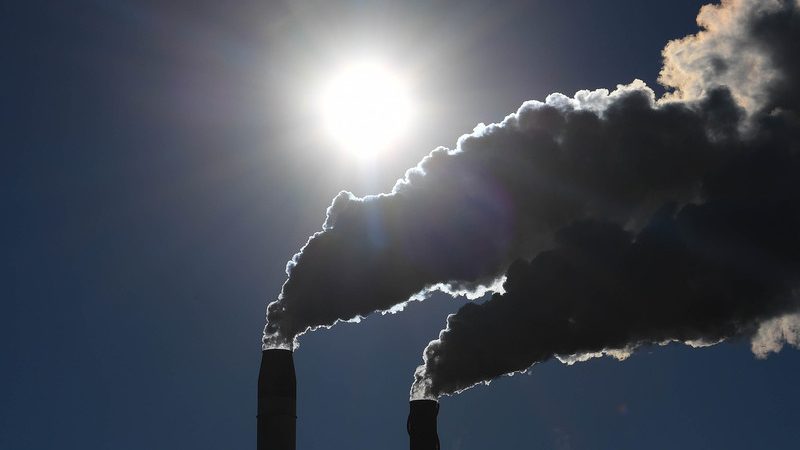
Carbon border adjustment debate divides EC, steelmakers
European Union steelmakers may be at loggerheads with the European Commission on how a Carbon Border Adjustment Mechanism can be introduced in Europe, according to views expressed during a European Steelmakers’ Association March 17 webinar that focused on EU climate policy.
Introduction of a CBAM on top of the EU’s current Emissions Trading System would be an “overcompensation” in terms of ensuring a fair market for clean steel and risks not being compatible with World Trade Organization policies, Mette Koefoed Quinn, the European Commission’s head of unit, ETS Implementation and IT, DG Climate Action, told industry representatives on the Eurofer webinar. The ETS currently offers some free allocations to steelmakers to avoid carbon leakage.
Eurofer’s members are meanwhile pressing for the ETS to continue for a transition period of eight years after the CBAM is introduced, during which time free ETS allocations would continue to be made to EU steelmakers, the association’s director general Alex Eggert said.
This transition period should run until a sustainable market for “green” steel is fully formed in 2030, according to the association.
“We’ve had intense discussions with trade lawyers who all confirm that carbon border measures are absolutely compatible with WTO….. and even a combination of the two (CBAM and the ETS) to cover the delta between free allocations and carbon costs at the border is compatible,” Eggert said. Europe’s steel industry has already suffered a competitive disadvantage – estimated to have cost the sector some Eur3 billion in 2018 at current prices – due to the ETS system, where the shortage of free ETS allocation to the sector is currently put at around 20%, he said.
The EU is extremely exposed to international competition, with a high cost susceptibility because the EU imports around 30 million mt of steel a year and exports some 20 million mt/year, according to Eurofer data.
CBAM may be implemented in 2023
The European Parliament March 10 approved the principle of setting up a CBAM and the EC is expected to move ahead with a legislative proposal for its introduction in June, for possible implementation in 2023. Andrei Marcu, founder and executive director, European Roundtable and Climate Change and Sustainable Transition, said that so far the only place that a CBAM has been applied is in California. However, US President Biden is understood to be considering one at national level.
WTO Deputy Director-General Alan Wolff said last month that cooperation between nations will be essential to avoid disputes around carbon border taxes. On March 5 the WTO launched a Trade and Environmental Sustainability joint initiative group with 53 member countries, which is expected to be a forum for the discussion of carbon border taxes.
Under the European Green Deal, the EU steel industry needs to reduce its carbon emissions by 55% from 1990 levels by 2030, and achieve net-zero carbon production by 2050. According to Eurofer’s climate and energy director, Adolfo Aiello, this may involve investments of Eur144 billion including in breakthrough technologies which could increase steel production costs and prices by between 35% and 100% above current levels, as a well as supplies of up to 400 TWh of climate-neutral electricity, seven times more than what the sector purchases from the grid today .
The investments required are expected to come from steel sector companies themselves, public sector bodies such as the EU Innovation Fund, and ETS revenues, around 80% of which are currently being used for “green” actions, according to the EC.
“We support climate ambition but it needs to be achieved in the most cost-efficient way: higher climate ambition means and needs better carbon leakage protection, and more support for low carbon technologies,” Aiello said. Carbon is currently priced in the EU at around Eur40/mt, having risen dramatically over the past three years after hovering around Eur7/mt for several years. This decade carbon prices might even rise to “three-digit” levels, he said.
“Fair burden-sharing is needed between ETS and non-ETS sectors,” he said, adding the commission needs to redirect more of the ETS revenues to industry.
EC considering six options
The EC is looking at six different options to decarbonize, but does not consider that a CBAM could be complementary to the ETS system, Quinn said. It would be an alternative, she said.
Phase 3 of the EC’s ETS allocation system has just finished, without carbon leakage having been seen, she said. In Phase 4 of the ETS, designed to cover the January 2021 to 2030 period, free allocations to companies are now being calculated.
The overall structure of the ETS is being reviewed: there will be sufficient free allocation, to the benefit of steelmakers, Quinn said. “The current system foresees the sufficient allocation of free allowances until 2029-30: giving adequate carbon leakage protection. However, we’re now looking at whether to introduce CBAM… the commission says it’s either CBAM or free allocation, you can’t have both because that’s a risk of double compensation…. but a transition period might be needed and that’s one of the alternatives we’re looking at,” she told the webinar.
While ETS free allocations are currently giving adequate carbon leakage protection, they are reducing the incentive to go for quick decarbonization: “The pricing is not coming through as it should into the products and this is a problem,” Quinn said. CBAM could provide a useful incentive to the steel industry to decarbonize within Europe and externally, she said.
— Diana Kinch