

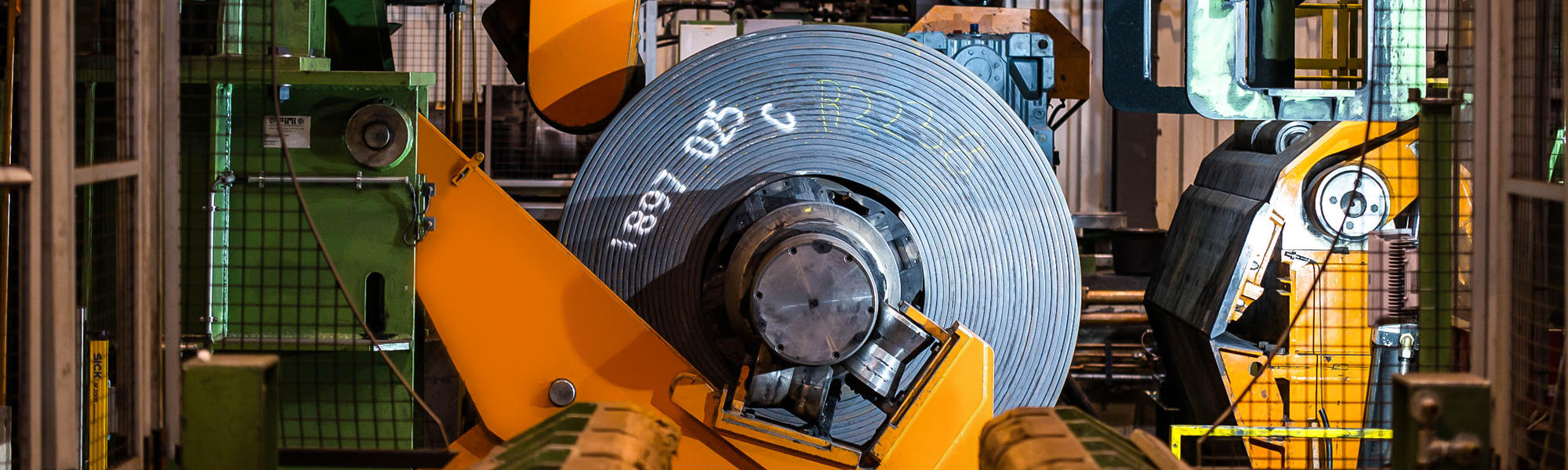
Greek coil re-roller delays restart
Hellenic Steel, the Greek coil re-roller that was acquired by Jordan International at the end of 2019 is yet to re-start production, Kallanish learns from sources.
When the acquisition was finalised, the company had planned to re-launch output during 2020, but the target could not be achieved. Now the priority is to relaunch first the tandem rolling mill during the second half of this year.
The plant should have the capacity to manufacture 350,000 tonnes/year of finished products. It has the capacity to produce cold rolled coil, hot-dip galvanized coil and tinplate using hot rolled coil as the feed material.
Emanuele Norsa Italy

German processors stand defiantly against safeguards
In a statement to the EU Commission, the German associations of sheet formers IBU and cold rollers (FVK) are protesting against a possible extension of safeguard quotas for steel imports.
“The feared flood of imports has not realised, import quotas are falling, global steel capacities are manageable. There is no danger for the EU steel industry – it is even benefiting from the steel shortage,“ the associations say in a release seen by Kallanish.
“Continuation would not be WTO-compliant, as there is no ‘threat of serious injury’ to the industry,” says IBU Managing Director Bernhard Jacobs. “The steel industry’s arguments are based on misinterpretation and non-consideration of data,” he argues.
The statistics show a low for rolled steel imports in 2020, and the declines were already apparent before Covid-19 arrived, Jacobs and Martin Kunkel, managing director of FVK, argue.
The member companies of IBU and FVK produce around 7.5 million tonnes of steel components annually. The German steel processing sector encompasses some 3.5 million jobs – 10 times more than the mills, the associations point out. “It cannot be the EU’s interest that we are at risk simply because we cannot meet our needs through freely traded imports,” they say in their joint stament.
Christian Koehl Germany

Turkey further increases scrap imports in February
Turkish scrap imports continued to rise in February by 16.4% on-year to 2.07 million tonnes. February imports, however, did not differ much from January imports at 2mt, according to Turkish Statistical Institute (TUIK) data monitored by Kallanish.
Almost 95%, or 1.97mt, of the February imports were obsolete scrap. The Netherlands was the main supplier at 432,447 tonnes, up 50.7% on-year. The US followed with 271,672t, down 29.6% on-year. Belgium more than doubled supply to 184,995t in February. Despite the increased export duty on scrap from 31 January, Russia provided 141,227t in February, up 11% on-year.
France delivered 194,927t, down 38.2%. Lithuania more than doubled supply to 115,876t in January. Romania sourced 106,975t, up 30.2%, and Belgium supplied 98,063t, down 44.2%. France delivered 128,444t, up 4.2% on-year versus only 6,574t last year. Denmark sourced 104,825t in February, versus only 31,146t last year. Romania’s supply remained almost unchanged at 88,371t. Israel almost doubled supply to 77,080. Lithuania supplied 61,402t and Germany sourced 53,614t, down 40.5% and 22.4% respectively on-year. Croatia increased deliveries significantly by 82.9% to 53,099t in February. Bulgaria delivered 52,333t versus only 15,502t last year.
The average value of total scrap imports increased to $406.5/t in February from $294/t in February 2020 and $338.7/t in January.
In January-February, Turkish scrap imports increased 17.2% on-year to 4.08mt. The Netherlands was the largest supplier with 641,498t, up 22.5% on-year. It was followed by the US with 466,663t, down 33% and the UK with 419,372t, up 36%. Russia supplied 352,534t, up 41%.
Turkish imports of HS code 720711 billet, meanwhile, more than trebled to 389,862t in February. This was, also, up from 149,781t in January.
Russia more than doubled supply to 185,628t in February. Ukraine followed with 104,645t versus only 33,103t last year. Qatar, Oman and Azerbaijan sourced 48,000t, 37,343t and 6,484t respectively versus zero last year. Albania, which provided almost zero last year, delivered 4,792t in February.
Two-month HS code 720711 imports more than doubled to 539,643t. The largest supplier was Russia with 294,042t.
Turkish rebar exports surged 25% on-year to 573,291t in February (see Kallanish passim).
Burcak Alpman Turkey
Turkey’s steel exports to EU fall 20%, exports to the US slump
Turkish steel exports to the EU, one of their main markets, declined 20.2% on year in the first two months of the year, due to ongoing protection measures, while exports to the US declined more sharply, by 48.5% on year, amid Section 232 tariffs, the Turkish Steel Producers’ Association (TCUD) said, without citing tonnages.
The European Commission opened an investigation at the end of February to determine whether the current system of EU steel import safeguards should continue after June 30, as reported.
TCUD said the removal of EU import safeguards and the US tariff is crucial for Turkish steel exporters.
Despite Turkish steel producers’ attempts to diversify their export destinations, mills’ overall steel exports declined by 9.4% on year to 2.6 million mt in the first two months of 2021, while revenue generated from these exports increased by 9.1% on year to $1.6 billion, amid higher steel pricing globally.
Despite the decline seen in Turkish mills’ export volumes, steel import volumes into Turkey, rose notably in February amid the sharp increase seen in domestic steel consumption.
According to the latest TCUD data, domestic finished steel consumption rose by 15% on year in February to 2.8 million mt, while steel imports increased 19.5% on year to 1.3 million mt. The value of these imports reached $874 million, up by 40.5% on year.
This increase raised Turkish steel producers’ concerns about the protection of the Turkish steel market from imports.
As a counter measure to the EC’s imposition of provisional antidumping duties of 4.8%-7.6% on imports of HRC from Turkey on Jan. 7, Turkey started a dumping investigation against HRC imports from the EU and South Korea on Jan. 9, the results of which are not expected to be announced until H2.
— Cenk Can

Der strauchelnde Stahlmagnat
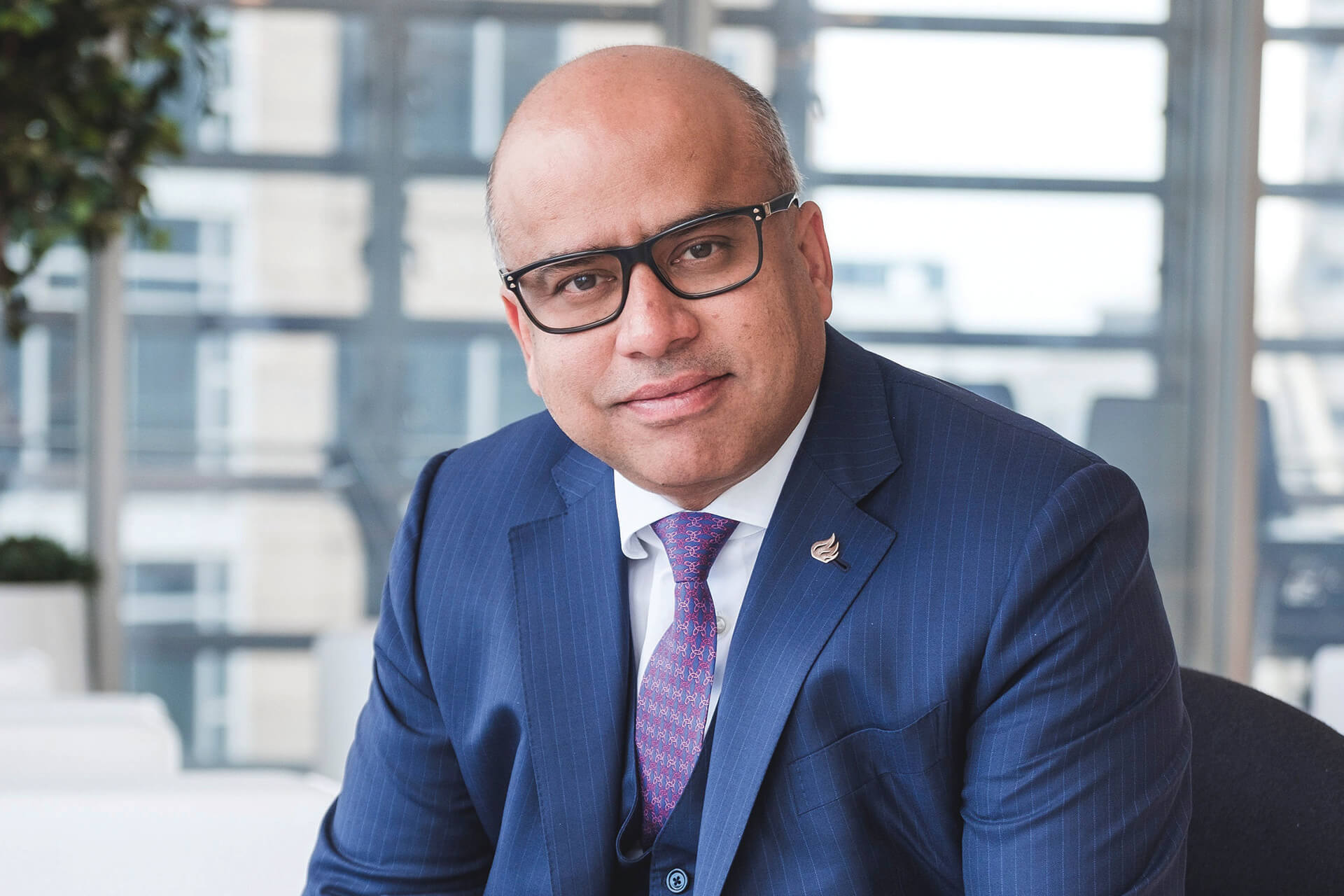
Einst als „Retter der britischen Stahlindustrie“ gefeiert, kämpft Sanjeev Gupta gegen den Kollaps. Um die Greensill-Pleite kommen neue Ungereimtheiten auf.
Sanjeev Gupta gilt als einer, der aus dem Nichts ein globales Unternehmensimperium geschaffen hat. Doch genau dort könnte es nun auch enden: im Nichts. Gupta dirigiert Stahlwerke und andere Betriebe, insgesamt 35.000 Mitarbeiter in 30 Ländern, aber nun steht er am Rande der Insolvenz. Der Mann, der noch vor kurzem versuchte, die Stahlsparte von Thyssen-Krupp zu übernehmen, kämpft ums finanzielle Überleben. Er droht in den Insolvenzstrudel um Greensill Capital hineingezogen zu werden. Derzeit versuchen externe Berater, den Wert seiner Unternehmen abzüglich der Schulden zu ermitteln. Sie kommen auf mickrige Summen, die britischen Stahlwerke haben sogar einen Negativwert.
Guptas Schuldenberg ist sichtbar geworden, als seine Hauptfinanzierungsquelle Lex Greensill vor ein paar Wochen Insolvenz anmeldete. Greensills Anwälte sagen, dass Guptas Familienholding GFG Alliance Greensill bis zu 5 Milliarden Pfund (5,8 Milliarden Euro) schulde. Andere sprechen von 3 Milliarden Pfund.