


Thyssenkrupp Materials opens new logistics center
German steelmaker Thyssenkrupp’s trading arm, Material Services, has opened a new metals logistics center in Rotenburg, Germany, the company said April 27.
The center will be part of the distribution unit Thyssenkrupp Schulte. Thyssenkrupp invested €60 ($72.5 million) million in the site.
The trading hub can handle 20,000 mt of aluminum, stainless steel and steel, and will primarily serve customers in northern Germany.
Thyssenkrupp Materials had a difficult first quarter of the company’s financial year 2020-21 (October-December 2020) as total shipments were stable year on year at 2.1 million mt, but weak demand in the aerospace industry, as well as lower stainless steel prices, hampered sales volumes. Order intake in Q1 amounted to 2.5 million mt, down 9.7% year on year.
Carbon steel is the main product in the unit’s material portfolio at 33%, followed by nonferrous metals (22%), stainless steel (18%) and raw materials (11%).
The company, however, said it was seeing improvements as an increase in volumes is expected over the course of the year.
— Laura Varriale
Vale mulls base metal spin-off on heated EV market demand
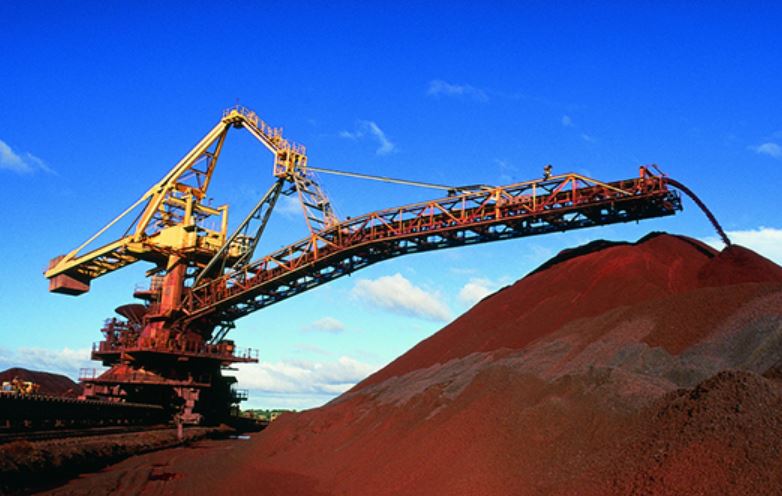
Brazilian miner Vale is evaluating the option to carry out a spin-off of its base metals unit and an eventual initial public offering (IPO) to take advantage of the battery electric vehicle boom.
Company’s ceo Eduardo Bartolomeo said in a call monitored by Kallanish on Tuesday that revisiting the spin-off idea would add value to the business, thanks to strong demand from the energy transition.
“We are analysing this opportunity. We have assets such as those in Carajás that are intertwined with the iron ore assets. We need to find out a way to deal with this,” comments the ceo. “So, there is a pre-condition to do the business that we are studying. We are in the initial phase of going back to that view that we had in 2014 but in a much different way. Now we think we have a better foundation.”
Bartolomeo claims Vale is in a position to be a major supplier of premium metals to electric vehicle manufacturers. Its base metals business includes operations in Canada, Brazil, UK, South Korea, Japan, China, Taiwan, Indonesia and Zambia.
The company has recently sold its nickel assets in New Caledonia to Trafigura. Yet, it describes itself as the world’s largest nickel producer — a key material in EV batteries. Vale’s nickel mining takes places in Brazil, Canada and Indonesia, while refining operations are located in China, South Korea, Japan, UK and Taiwan.
Its EV battery materials portfolio also includes copper and manganese.
Todor Kirkov Bulgaria , Gabriela Farhangi UK


ArcelorMittal joins Shell, Vattenfall in green hydrogen network
ArcelorMittal has joined Shell, Vattenfall and other cross-industry companies to form the so-called Hamburg Hydrogen Network, Kallanish learns from the company.
To curb its emissions and produce green steel, the steelmaker will rely on the supply of green hydrogen from the Hamburg Green Hydrogen Hub — initially proposed by Vattenfall, Shell, Mitsubishi Heavy Industries and Wärme Hamburg. Details on the potential offtake agreement have not been revealed.
ArcelorMittal’s Hamburg plant is planned to be fully converted to climate-neutral steel production in four stages by 2030 as part of its ongoing H2 for Hamburg (H2H) project. The company will build a hydrogen-powered demonstration plant for the direct reduction of iron ore and upgrade the existing direct reduction plant to replace the long-term use of natural gas with green hydrogen.
“In order to ensure the supply of green hydrogen, we rely on the local hydrogen industry network and a significant proportion of hydrogen from the Hamburg Green Hydrogen Hub,” says Uwe Braun, ceo ArcelorMittal Hamburg.
The Hamburg Green Hydrogen Hub will run a 100-megawatt electrolyser around 2025. The project is based on the conversion of Vattenfall’s Moorburg coal-fired power plant into a green hydrogen hub, powered by wind energy. It will decarbonise industrial production, as well as the transport and logistics sector around Hamburg.
The 12 companies in the network have applied to EU funding to develop a green hydrogen cluster in Hamburg with a view to decarbonise industrial production, transport and logistics in the area. The application represents nine complementary projects around the Port of Hamburg, one of which is ArcelorMittal’s H2H.
In addition to local hydrogen production, the network is also considering imports via sea and pipelines, aimed at reducing CO2 emissions by more than 1 million tonnes/year by 2030.
French unions protest against Aperam’s job cuts
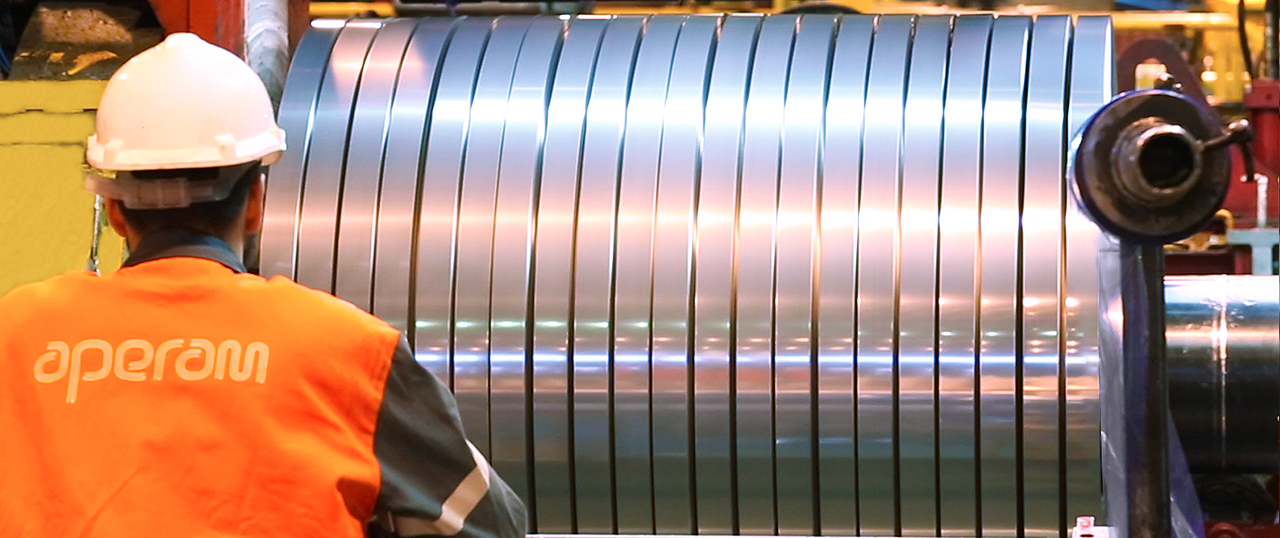
French unions CGT- CFDT are protesting against a restructuring plan at French stainless steelmaker Aperam’s Gueugnon site. According to the unions, the plan concerns 110 job redundancies at the site and 70 at the Pont de Roide facility. Part of the production process will be moved to Aperam’s facilities at Genk in Belgium, Kallanish learns from a member of the unions
Despite Aperam announcing it will invest €33 million ($39) in the Gueugnon facility, workers are urging the company to double the figure to guarantee the development of the French sites and employment. “The position of Aperam is contradictory. They want to invest in Gueugnon but at the same time they are planning to increase production in Belgium to the detriment of French activities and planning job cuts when the European stainless steel market has never been so profitable,” the source says. He adds that the decision may spring from geopolitical strategy and the need to relaunch Aperam’s output in Belgium.
In a note sent to Kallanish, the unions denounce a lack of investment in the French ArcelorMittal sites. They also accuse the company of pursuing a delocalisation strategy to grow in emerging markets such as India and China, while at the same time taking French taxpayers’ money for decarbonisation and digitisation. The unions ask the government to cut financial support for steelmakers which pay out large dividends. The note also labels government support for Liberty Steel, part of GFG Alliance, a “fiasco,” adding that a new buyer for its sites at Hayange and Ascoval may have to be found. The Ministry of Finance “handed over the keys to these two sites last summer to Liberty, despite warnings, in France and in Europe, of the financial opacity concerning GFG and therefore of proven risks of the group’s insolvency,” the note concludes.
At the moment the stainless steel market in Europe is enjoying booming demand, particularly for flat products. Long lead-times and surging prices are the results of short stainless coil supply as the entire value chain is registering strong margin increases (see Kallanish passim). Solicited by Kallanish, Aperam did not respond before press deadline.
Natalia Capra France
Issues continue at Liberty Liege/Dudelange
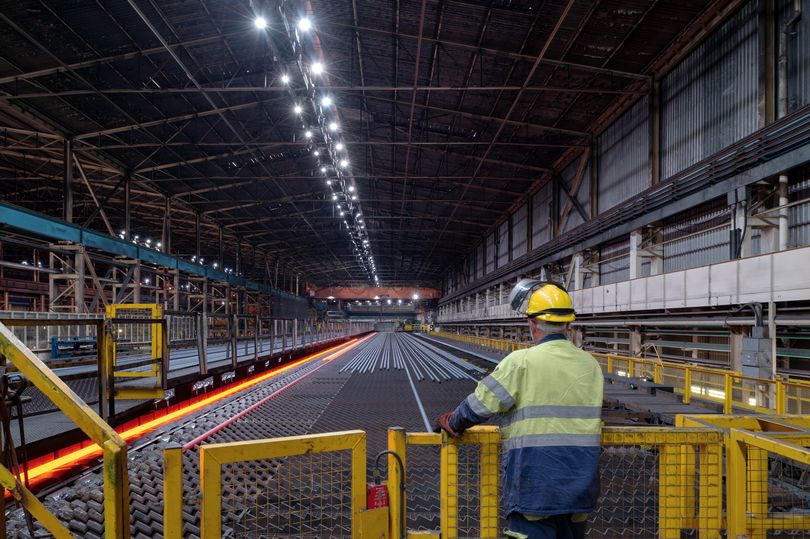
Sources in the steel market have continued to report issues linked to supply from the rolling mills of Liberty Steel located in Liege and Dudelange, in Belgium and Luxembourg respectively.
Earlier in April the company confirmed the mills were producing at less than full capacity, but did not wish to comment further on the latest rumours circulating since last week. Some indicated that production was as low as 40% of the total rolling lines capacity in April.
Despite the very strong demand for coils in the European market, sources are reporting that the company has been cancelling previously received orders in recent weeks and is continuing to struggle with a lack of HRC supplies as feedstock for its rolling mills. Cancellations have been applied to both spot and long term contracts, creating issues in the Benelux supply of rolled CRC and HDG.
The Belgian press reported that 32,000t of Indian HRC were delivered to Liberty Steel Liege in April by river from the port of Antwerp, Kallanish notes.
Emanuele Norsa Italy
EC may marginally reduce AD on Turkish HRC
The European Commission is expected to officially confirm definitive anti-dumping measures on Turkish HRC, Kallanish learns from the latest disclosure document sent by the EC.
In January provisional measures were imposed at a level of 4.8-7.6% depending on the Turkish supplier. Now definitive measures are expected to be confirmed at a level only marginally lower: 4.7-7.3% depending on the supplier.
The investigation was launched in May 2020 following formal requests by Eurofer, the European steelmakers association.
Definitive measures are not expected to change significantly the trade flow of HRC from Turkey to Europe. Most market observers are still waiting nevertheless for more clarity on the possibility that safeguard measures on steel imports could be extended beyond their June 2021 expiry.
Interested parties are still able to comment on the AD HRC disclosure document issued by the European Commission, but significant changes to the proposed measures are not expected to be implemented, Kallanish understands.
Emanuele Norsa Italy
China’s nickel, stainless imports rise in March
China’s imports of nickel ore and ferronickel increased in March. Strong demand for stainless steel also led to a month-on-month increase in stainless steel imports and exports.
Kallanish notes from Chinese Customs data, China’s nickel ore imports in March totaled 1.84 million tonnes, up by 25% month-on-month and 14% year-on-year. Imports from the Philippines increased by 29% on-month to 1.67mt, but almost no nickel ore arrived from Indonesia with the imports of only 100t. In the first quarter, China imported 4.75mt of nickel ore, including 4.03mt from the Philippines.
The imports of ferronickel meanwhile jumped by 18% on-month and 2% y-o-y to 334,400t. This includes 277,800 tonnes from Indonesia, up by 19% on-month but down by 1% on-year. Total imports of ferronickel in Q1 were 972,700t, up by 22% on-year. About 801,000t ferronickel were imported from Indonesia in Q1, seeing an increase of 17%.
As China restarted the imports of scrap from 1 January, imports of stainless scrap saw a rebound. In the first quarter, China imported 16,787t of stainless scrap, 14,068t of which was cleared in March.
Stainless steel inventories have continued to decline in recent months, and strong demand has led to an increase in China’s stainless steel imports. In March 2021, China’s stainless steel imports totaled 168,200t, an increase of 4.54% m-o-m and 173.50% y-o-y. Customs data suggests that China’s total stainless steel imports were 545,500t in Q1, an increase of 159.02% y-o-y. Meanwhile, stainless steel exports were 308,600t in March and 870,700t in Q1, a y-o-y decrease of 16.12% for March but an increase of 7.48% over Q1.
By Kallanish Team
Iron ore tops $190/t as markets fear peak
Seaborne iron ore prices broke new records on Tuesday, supported by portside restocking ahead of the 1-5 May Labour Day holiday. Scrap prices too have increased, but steel markets are concerned that markets may turn weaker before the summer.
The Kallanish KORE 62% Fe index gained $3.84/t to $190.03/dry metric tonne cfr Qingdao, topping $190/t for the first time. The Kallanish KORE 65% Fe index increased $4.09/t to $223.81/dmt cfr, and the KORE 58% Fe index advanced $3.84/t to $168/dmt cfr. 170,000t of Carajas Fines shipped on 13 April sold at $227.8/t.
On the Dalian Commodity Exchange, September iron ore settled up another CNY 13.5/t at CNY 1,150.5/t ($177.35/t), while on the Singapore Exchange May 62% Fe futures settled up $2.72/t at $190.25/t. The same contract for 65% Fe and 58% Fe futures settled up $2.83/t at $225.33/t, and up $2.34/t at $169.42/t respectively.
Chinese ferrous scrap prices have also continued to appreciate, though less dramatically. Variety 6mm+ heavy scrap delivered to mills in the Yangtze River Delta region increased CNY 8/t to CNY 3,540/t on Tuesday. In Tangshan, billet prices were flat at CNY 4,980/t.
Steel traders are beginning to show concerns that demand is starting to peak, and that construction activity could slow by mid-summer. Combined with a looser iron ore market from June onwards, they fear that could mean prices start to slide over the coming weeks.