

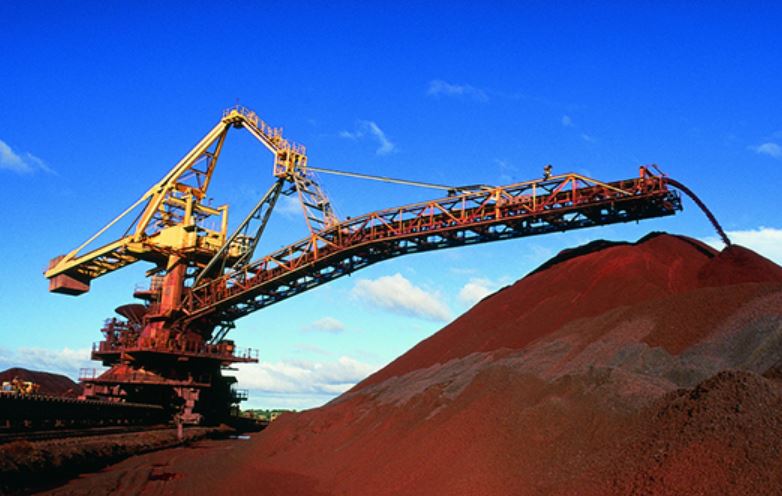
No supercycle for iron ore, says Vale ceo
Iron ore is not starting a new supercycle, according to Vale chief executive Eduardo Bartolomeo. In a Financial Times interview, the ceo estimates that demand will level off in two years.
Bartolomeo says the recent record high in iron ore prices is very different from the boom seen in the early 2000s, which was motivated by China’s accelerated industrialisation.
“In the last supercycle, we had a strong growing construction activity in China,” he is quoted as saying. “It was a structural change. We are not talking about a big shock in demand right now. It’s a small thing.” However, recovery in the world’s major economies and iron ore producers operating close to maximum capacity will sustain prices until 2023.
“Although much is said about cuts, production is still increasing in China and now we have Europe coming back and the US announcing a huge stimulus package. There are also restrictions on supply. This market will be tight for a while,” he comments.
The boosted performance of iron ore has been very good for large producers such as Vale, especially after the tragic rupture of the B1 dam in Brumadinho two years ago, Kallanish notes.
Bartolomeo expects that, at some point, Vale will have to increase production to 400 million tonnes/year because iron ore is a “high fixed cost business, but the company will do this in a very calculated way, carefully and safely”.
According to Vale’s ceo, China will reduce its dependence on iron ore in the medium term because of the increased use of scrap by its mills. Bartolomeo foresees there will also be a move to higher-quality iron ore as the steel industry is turning to new methods to reduce emissions, such as hydrogen-based production.
Todor Kirkov Bulgaria

Concerns mount over EU price sustainability: Kirps
Georges Kirps, a senior European market analyst, believes concerns are mounting over the sustainability of EU steel prices, particularly for coil products.
In a recent analysis sent to Kallanish, Kirps notes that the latest coil price rally in Europe is mainly being supported by suppliers’ delayed response to recovering demand. “In a nutshell, since the third quarter of 2020 a progressive order backlog was building up at EU mills where stock replenishment deliveries by EU mills were drastically failing the supply orders for coils by EU steel service centres (SSC),” Kirps says.
The analyst calculates that in Q1 2021, on average, SSC had little more than 60 days of sales in their stocks, against an average in 2018 and 2019 of between 75 and 80 days. The fall in stocks at SSC started in Q3 2020 and is still continuing.
Low availability of domestic supply, difficulties in importing, and low stocks have triggered the jump in coil prices in Europe. However, Kirps believes EU real consumption is not growing rapidly enough to justify the full extent of such rapid price increases.
“It is a fact that this price bubble is not supported by a significant increase in EU real consumption, as is in other world markets,” he continues. “Presently, real consumption levels in the EU are not in the vicinity of 2018 consumption.”
“Extended mill lead times, dwindling stocks, failing mill supplies, and stringent trade measures have laid the roots for highly volatile price behaviour and price speculation,” Kirps explains. “This is a kind of ‘déjà-vu’ of what was perceived before the steel price bubble of 2008 went bust, leading in the EU market to the spectacular steel market collapse of 2009.”
According to Kallanish price series, north European hot rolled coil prices have jumped by over 160% since July 2020. During the same period iron ore increased by 100% in value and northwen European scrap by less than 80%.
“The question remains open if raw material price hikes are driving finished steel prices or if, on the contrary, finished steel price hikes are heightening the appetite of raw materials suppliers to catch a fair part of the mushrooming mill margin cake,” Kirps concludes.
Emanuele Norsa Italy
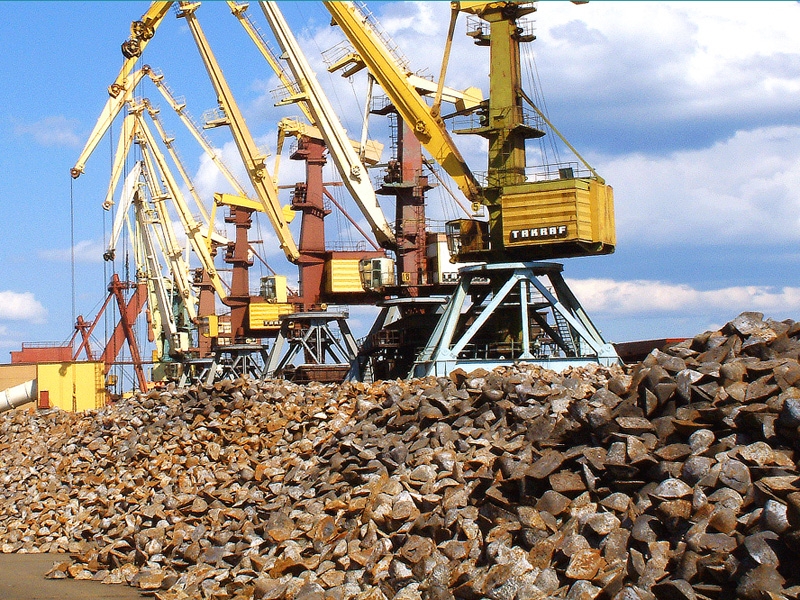
Iron ore rebounds as China sends mixed messages
Seaborne iron ore prices gained again on Tuesday as traders continue to expect a tight market. Scrap and billet prices slipped however as China continues to warn against inflation.
The Kallanish KORE 62% Fe index gained $4.86/t to $219.84/dry metric tonne cfr Qingdao. The Kallanish KORE 65% Fe index increased $4.61/t to $253.62/dmt cfr, and the KORE 58% Fe index inched $1.88/t higher to $188.15/dmt cfr. 170,000 tonnes of PB fines sold for $219.5/t with a laycan in 9-18 June.
On the Dalian Commodity Exchange September iron ore settled up CNY 41.5/t at CNY 1,232.5/t ($191.76/t), while on the Singapore Exchange June 62% Fe futures settled up $6.48/t at $214.01/t. The same contract for 65% Fe and 58% Fe futures settled up $6.40/t at $249.26/t, and up $8.99/t at $182.34/t respectively.
Chinese domestic scrap prices were still inching lower on Tuesday. 6mm+ heavy scrap delivered to mills in the Yangtze River Delta regions dropped CNY 10/t to CNY 3,929/t. In Tangshan, billet prices dropped CNY 70/t to CNY 5,470/t.
The National Development and Reform Commission continued to say China would use regulatory power to limit inflation in a briefing on Tuesday. It added that it expects producer inflation to peak in the middle of the year. The impact on the steel market is still uncertain, however. China now looks less eager to control steel production, as this would raise steel prices further. This will keep raw materials markets tight for the foreseeable future, however, supporting iron ore prices.

Coils (UE) : des incertitudes pèsent sur la viabilité des prix
Selon, l’analyste de marché Georges Kirps, des incertitudes se font jour sur la viabilité des hausses de prix de l’acier en Europe, notamment ceux des coils, lesquels culminent désormais entre 1095 et 1240 €/t départ usine selon les catégories.
L’analyste a en effet mis en exergue le fait que la flambée des prix européens des coils découlait essentiellement de la réaction tardive des fournisseurs face à l’accroissement de la demande. « Depuis le troi-sième trimestre 2020, les retards de commandes s’accumulent dans les usines européennes ».
Georges Kirps a calculé qu’au premier trimestre 2021, les stocks des centres de service représentaient en moyenne plus de 60 jours de ventes, comparativement à 75 à 80 jours sur la période 2019-2019. Les disponibilités des centres de service ont amorcé un repli au troisième trimestre 2020, lequel se poursuit actuellement.
L’explosion des prix des coils trouve son origine dans les tensions sur l’offre à l’échelle européenne, conjuguées aux difficultés à s’approvisionner à l’import, ainsi qu’à la faiblesse des stocks. Toutefois, l’analyste est d’avis que la consommation réelle ne progresse pas assez rapidement en Europe – ce qui n’est pas le cas sur les autres marchés internationaux – pour justifier l’instauration de majorations aussi élevées et aussi fréquentes.
« Outre, l’allongement des délais de livraison, la contraction des stocks, l’essoufflement des réserves dont disposent les usines, et l’imposition de barrières commerciales drastiques ont entraîné un phénomène de volatilité et de spéculation. Cette situation s’est déjà produite avant l’explosion de la bulle des prix de l’acier en 2008, laquelle a conduit à un effondrement du marché en 2009 ».
« La question reste ouverte de savoir si le bond des prix des matières premières dope les prix des produits finis, ou, si, au contraire, c’est l’envolée de ces derniers qui contribue à aiguiser l’appétit des fournisseurs de matières premières, désireux de s’approprier une bonne partie des bénéfices », a conclu Georges Kirps.

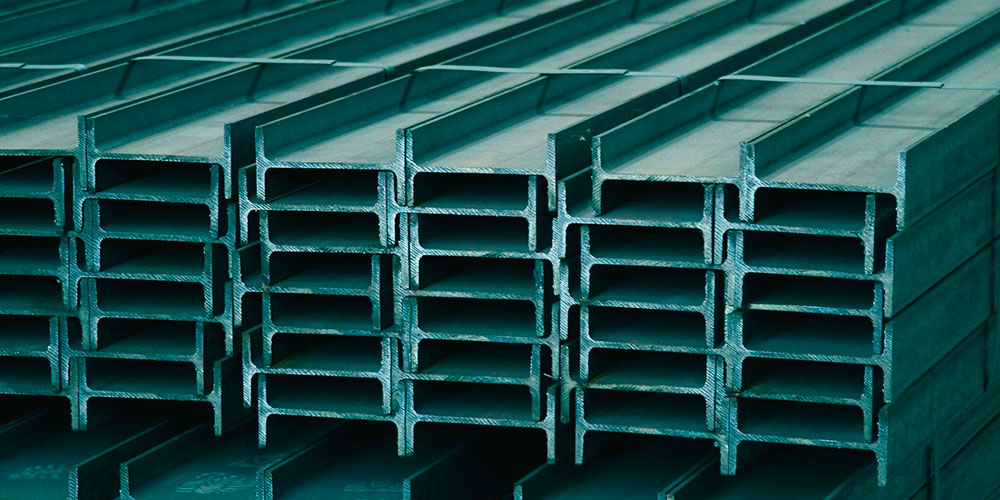
Brazilian flat steel distributors’ April shipments jump 106.7% on year
Shipments by Brazilian independent flat steel distributors and service centers in April increased 106.7% year on year to 343,100 mt, recent data from Inda, the national flat products distributors association, showed May. 18. Shipments were up 1.5% on the month.
Out of the total in April, shipments of hot-rolled coils totaled 208,600 mt, up 127% on year, while zinc-coated flat steel sales volume totaled 61,700 mt, an increase of 38.6%.
Daily shipments by distributors in April totaled 17,200 mt, an increase of 97.7% compared to the year-ago month.
According to Inda’s president, Carlos Loureiro, the last price increase from the mills were between 10%-18% and were totally absorbed by the market.
“The May price increase was fully implemented and absorbed, but market participants are struggling to pass on these higher values,” Loureiro said. “There may be a possible increase in June because some plants are studying this. But there is no definition in this regard. Whether the increase happens will depend on the dollar and the international price.”
Domestic purchases from mills in April were up 92.7% year on year to 345,100 mt, according to Inda. Month on month, domestic purchases increased 1.5%.
Flat product inventories in the Brazilian distribution network stood at 713,200 mt at the end of April, up 0.3% from the end of March, while the inventory-turnover average closed April at 2.1 months of supply. Historical average levels were around three months.
Broken down by product, the inventory-turnover average went down on month for all products, including hot-rolled-coil (1.9 months of supply), cold-rolled-coil (1.8 months), zinc-coated flat steel (1.4 months) and heavy plate (5.2 months).
Flat steel imports in April by distributors totaled 125,400 mt, up 121.9% year on year. When compared to March, imports were down 10.7%.
For May, Inda expects purchases to remain stable and shipments to decrease about 5% compared to April.
— Priscilla Antunes

NLMK Group’s Danish plant supplies heavy plate for wind power project in France
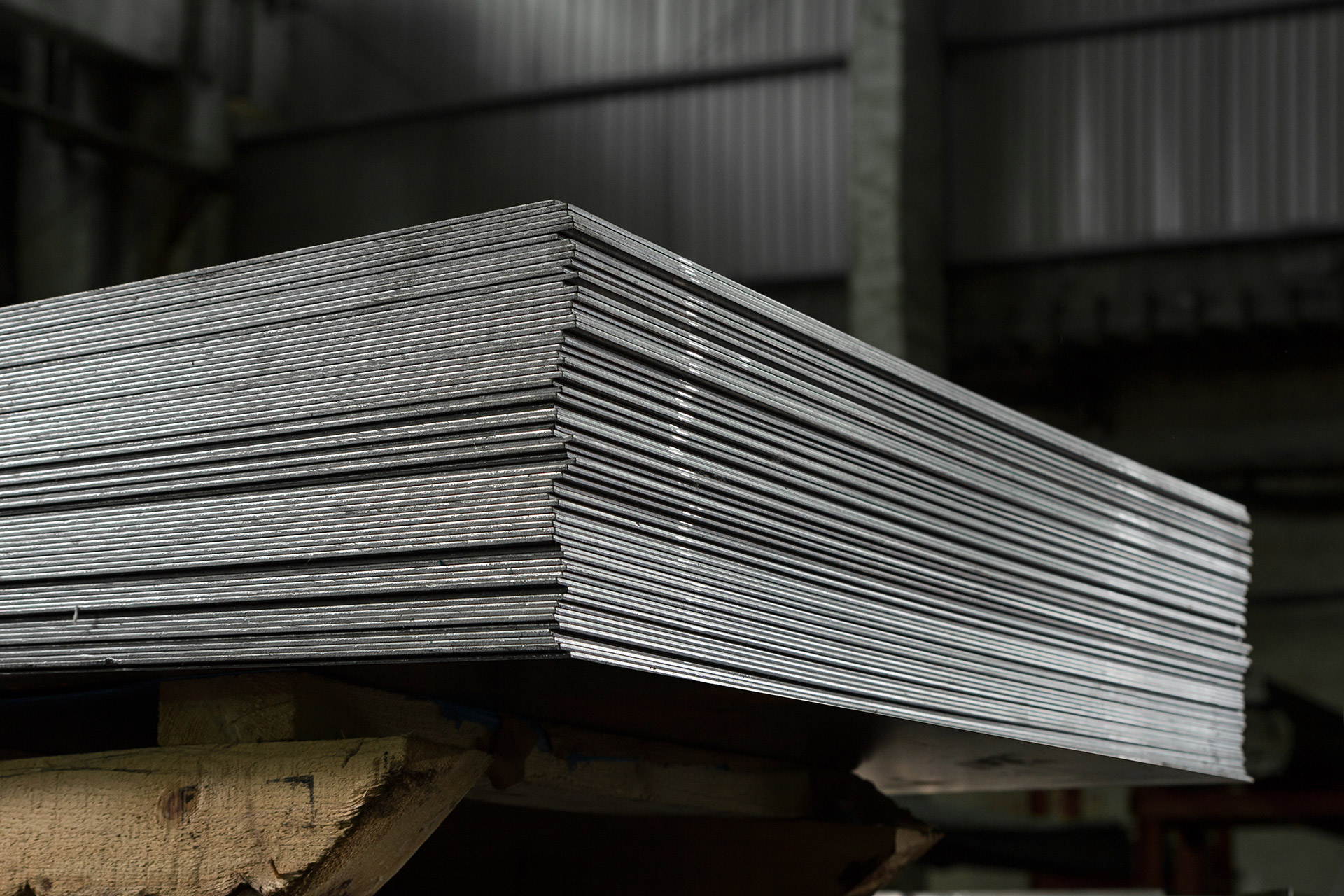
Russian steelmaker NLMK Group said May 18 that its NLMK DanSteel plant in Denmark has supplied heavy plate for the manufacture of components for wind turbine towers in the first major offshore wind farm in France’s Brittany.
The wind farm is located in the Bay of Saint-Brieuc, covering an area of 75 square km. It will consist of 62 wind turbines and its launch is scheduled for 2023.
With the wind farm’s capacity close to 500 MW, there will be enough energy generated to supply electricity to more than 800,000 people, a quarter of Brittany’s population, according to the company statement.
NLMK declined to give any further details on how much steel it will supply when contacted by S&P Global Platts.
The plate market is currently enjoying a recovery in demand, with prices at historical highs, as is also the case with other steel products.
Since the end of 2021, EU benchmark plate prices have risen by Eur330/mt to Eur935/mt CIF Antwerp, according to Platts data.
NLMK DanSteel produces hot-rolled structural steel plates for construction, bridge building, the wind industry, offshore oil and gas, shipbuilding, boiler and pressure vessels, and transport. The mill has a production capacity of 550,000 mt/year of plates.
NLMK DanSteel plans to actively expand its product offering for the wind power sector, with 1.8 million mt/year of steel capacity based in Lipetsk (western Russia) that will send slab to Dansteel to produce plate to make wind turbine parts, marine vessels, oil drilling rings and large diameter pipes.
NLMK Group is the largest steelmaker in Russia.
The group’s steel products are used in various industries, from construction and machine building to the manufacturing of power-generation equipment and offshore wind turbines. NLMK operates production facilities in Russia, Europe and the US. The company’s overall steel production capacity exceeds 17 million mt/year.
— Annalisa Villa
Nearly sold-out European mills start to allocate volumes without price
Buyers of European steel are finding it increasingly difficult to get their hands on products across the supply chain, with several mills now heard out of the market until next year, and the pool of import offers was drying up as uncertainty built around the outcome of a possible EU import safeguard extension come July, sources told S&P Global Platts.
Mills sold out for Q4 were still in contact with those customers keen for allocations for Q4, with volumes agreed between buyer and seller without a price.
“We keep in contact with the customers. There are inquiries for new projects. We’re changing steel grades but not looking for new business,” a European mill source said. “I can tell customers which quantities we have in our forecast for them. I can give this information, but without a price — customer knows at least what he will be promised.”
Those customers the mill source was unable to accommodate for Q4 were told to look elsewhere for material.
More buyers were heard to be exercising back-to-back buying to mitigate risk as uncertainty around prices mounts
A Benelux buyer said risk was high in the stock business, with the outcome of higher prices imminent.
“I waited for two weeks to buy, and the price is only going up. We don’t expect softening,” the buyer source said.
In the Italian market, a mill source said there was “little visibility” about real mill offers around CRC, and Eur1,100/mt ex-works Italy was deemed an acceptable price for HRC.
On safeguards, by which the European Commission will review whether to extend measures that limit the amount of imports in the EU market, a German trader said it was likely those measures would be extended given the strength of the steel lobby in Europe.
“The pressure from the consumers should be pretty strong, as long as the lack of availability persists from EU mills, which will be the case for the end of the year,” the trader said. “But the steel lobby in Europe should be strong enough to fight for the extension of the safeguards.”
— Amanda Flint
EC to suspend extra taxes on imports of US steel, aluminum in ‘spirit’ of cooperation
The EU will temporarily suspend application of “rebalancing” duties originally scheduled to be charged on imports of some US products effective June 1, a European Commission spokesperson confirmed May 18.
The suspension is in the “spirit” of cooperation between the two “strategic partners,” which may have been set back by the actions by the previous US administration, the EC spokesperson said.
“Our joint aim is to put an end to the WTO disputes following the US application of tariffs on imports from the EU under Section 232 under the previous administration,” the spokesperson said in a statement emailed to S&P Global Platts. “The US is a valued strategic partner and we are determined to work closely with the Biden administration to mitigate trade irritants that weaken this partnership.”
The EC introduced rebalancing duties in June 2018 in response to the US imposing Section 232 tariffs of 25% on steel imports and 10% on aluminum imports from the EU, Canada and Mexico in March 2018. The rebalancing duties initially targeted a list of products worth Eur2.8 billion and were scheduled to target a further Eur3.6 billion worth of trade as from June 1, 2021. It is this “second tranche” of rebalancing measures that has now been suspended, the EC spokesperson confirmed.
In addition to steel and aluminum, the rebalancing measures targeted US agricultural and tobacco products, among others.
Some market sources believe the non-application of additional rebalancing measures could herald an easing by the Biden administration of US Section 232 tariffs, particularly in the light of recent skyrocketing steel prices and tight supplies in the US market, in addition to a surge in aluminum prices. Fear of price inflation is growing in the US, where inflation levels of an annualized rate of 4.2% in the 12 months to April were reportedly the highest since 2008. High import tariffs inevitably contribute to product price inflation.
The US Trade Representative’s office and Commerce Department and the EC on May 17 announced they would collaborate on finding effective solutions to address global steel and aluminum excess capacity and to put an end to their World Trade Organization disputes by the end of this year, the EC spokesperson said.
“To ensure a constructive environment for this work, we agreed to avoid changes that negatively affect bilateral trade,” the spokesperson added.
— Diana Kinch