

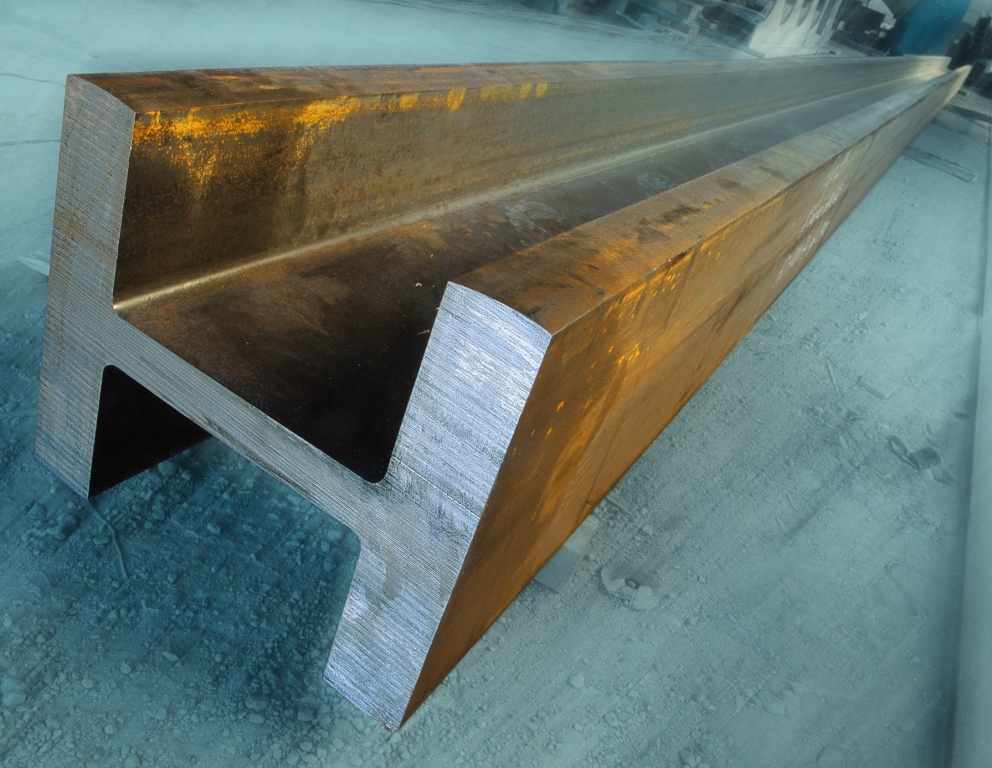
EU steel sections prices jump amid strong demand, limited supply
Amid strong demand and limited supply, European domestic steel sections prices increased significantly in the week up to May 19, market sources told S&P Global Platts.
S&P Global Platts’ European medium sections price (category 1, S235 JR) was assessed at Eur880/mt delivered May 19, up Eur70/mt week on week.
One distributor based in the Benelux region told Platts that prices have been increasing on almost a daily basis for the last two weeks, and it is getting difficult to explain the rise to customers.
The source said it was a combination of higher demand along with supply limitations and scrap prices. As demand increases, mills start buying scrap, so scrap prices go up. And seeing the trend in prices, customers start buying more. So, people perceive that there is huge demand, “but that is not the case, actually,” he told Platts.
The source put mill offers at Eur880/mt delivered, adding that mills refuse to accept any price below this level these days. He also reported a deal for 3,500 mt booked week ending May 16 at Eur820/mt (S235 JR, Cat 1) delivered Benelux, before prices went up. The source expects mill offers to start from Eur900/mt delivered next week.
One European mill source reiterated a mill offer at Eur880/mt delivered, noting deals at the same level as well, adding that German mills were already offering at Eur900/mt delivered. He expected the overall market to reach these levels in the near term.
“Price is moving up really fast because order books are good. Customers need the material, and availability is very narrow,” he told Platts. The source noted that scrap prices are significantly increasing, too, and said they were expected to continue rising in June as well.
Scrap prices continued to increase in the international market. Platts assessed Turkish imports of premium heavy melting scrap 1/2 (80:20) May 19 at $506/mt CFR, up $1/mt day on day.
In Northern Europe, Platts May assessment for Northern European domestic shredded scrap was at a record high of Eur392.50/mt delivered, up month on month from Eur360/mt delivered in April.
— Rabia Arif, Staff

China’s Jingye Group eyeing Liberty Steel UK plants: media reports
Chinese steel producer Jingye Group, owner of British Steel, the UK’s second largest steelmaker, is now eyeing Liberty Steel’s UK plants, UK media reported May 19.
According to The Telegraph and Financial Times, Jingye Group has told the UK government that it would be interested in parts of Liberty, if the company fails to refinance its UK steel plants.
Liberty Steel, part of metals and energy group GFG Alliance, owned by magnate Sanjeev Gupta and his family, is in trouble after its biggest financier Greensill Capital collapsed in March, and is seeking fresh capital. On May 5 the company said that it will “fix or sell underperforming units” in a restructuring and refinancing drive as it recovers from the collapse of Greensill Capital.
Liberty Steel has grown rapidly in recent years, including via acquisition of troubled assets, to become Europe’s fourth largest steelmaker with a 6 million mt crude steel capacity in the region.
Liberty Steel UK is the third largest steelmaker in the country — with nine sites across England, Scotland and Wales — producing both flat and long products.
Jingye completed the acquisition of British Steel in March last year, pledging to invest GBP1.2 billion ($1.69 billion) in the 3 million mt/year UK steel producer which had entered compulsory liquidation in May 2019. The sale was made by the Official Receiver. China-based market sources told S&P Global Platts at the time that the main motive behind Jingye’s purchase was that China had banned net steel capacity expansion in the domestic market, in a move to curb pollution, obliging the steelmaker to look overseas for its expansion.
It is thought possible that Jingye could be interested in further expansion in the UK.
Although the UK government has said that it wants to support the UK steel industry, UK media also reports that the government is thought unlikely to currently be in a position to support a specific company.
Liberty Steel declined to comment when contacted by Platts May 19, while Jingye was not reachable.
— Annalisa Villa

Mills’ coil price hikes continue in northern Europe
Steelmakers are continuing to raise coil prices in northwest Europe, Kallanish learns from sources in the market.
ArcelorMittal, the largest supplier in Europe, has again increased its hot rolled coil offer this week to €1,150/t ($1,401) ex-works base. Hot-dip galvanized coil levels have now been raised to €1,300/t ex-works base.
In recent weeks increases have been communicated to the market on a weekly basis. Availability of coil remains tight in the market and a peak is yet to be reached, Kallanish notes.
Emanuele Norsa Italy , Natalia Capra France


Market anticipates EU safeguard future proposal
A formal proposal from the European Commission on the future of steel safeguards beyond the end of June is expected imminently, Kallanish learns from sources in the market.
Valdis Dombrovskis, a European Commission executive vice president and its trade commissioner, explained in a recent webinar that the Commission is preparing a proposal for late May, but a decision is yet to be taken on the matter.
While he stressed that requests of steelmakers for an extension of the safeguards are being listened to carefully, he also mentioned that extending the measures beyond their three-year period would open the door to possible retaliation from third countries. “Turkey and Russia already made some noises on potential retaliation, so we need to take the potential impact of these into consideration as well,” Dombrovskis said.
He concluded by confirming that a proposal on broad carbon border adjustment is being finalised, which will also surely impact the steel sector, Kallanish understands.
Meanwhile, in the UK, authorities have issued their proposal to extend safeguard measures on some products for three years (see related article).
Earlier this week the EU and US agreed a truce on further trade measures with a view to discussing global steel overcapacity. This could well result in a bilateral agreement over Section 232 measures on steel, which were the initial reason for the European Union to launch safeguard measures three years ago.
Emanuele Norsa Italy
Low-carbon steelmaking faces high initial costs, market risks: Worldsteel
Reducing carbon emissions from steelmaking will likely see high initial costs and steel trade risks as first-mover producers saddled with high conversion costs compete with incumbents, according to industry group World Steel Association
Investments needed for making low-carbon steel with new plants and processes may lead to cost increases, which typical steel production margins would struggle to cover, Asa Ekdahl, head of environment and climate change at Brussels-based Worldsteel, said in a May 19 webinar.
Ekdahl referred to the International Energy Agency data estimating lower-emissions steelmaking would lead to a 10%-50% cost increase compared with traditional steel routes today. The changes to low-carbon steelmaking imply new policies and consumer behavior.
“While this transition to low-carbon steelmaking is happening, the steel produced that way will be competing with conventionally produced steel in the same market,” Ekdahl said. “Because the steel market is very international, a large portion of steel is traded internationally, which means that it’s very difficult to pass on costs to the consumers as prices are set in the international market — this will create a first-mover disadvantage for the steelmakers that make the shift first, and policy support are therefore needed.”
A call for new policies
Worldsteel expects new market-related policies are needed, especially during the difficult initial competitive period to remove first-mover disadvantage around initial investments.
Public procurement using low-carbon steel criteria, use of contracts for differences and feed-in tariffs applied to the sector, and quality assurances and benchmarking — such as being offered by ResponsibleSteel — were highlighted by Ekdahl. She leads Worldsteel’s engagement with international organizations, including the United Nations Framework Convention on Climate Change (UNFCCC) and the Organization for Economic Cooperation and Development (OECD).
Regarding the EU’s proposed Carbon Border Adjustment Mechanism, Worldsteel’s position is to not get involved in trade-related topics, while Ekdahl expected World Trade Organization rules needed to be taken seriously. The CBAM is a proposed mechanism aiming to impose a tariff on the carbon content of certain goods imported into the EU to prevent European industries from facing a competitive disadvantage from regions without carbon trading schemes.
Cost increases for low-carbon steel are expected from the combination of a number of factors, she said. These include the higher operating cost using low-carbon energy, such as green hydrogen and renewables; increased capital expenses such as replacing blast furnaces to hydrogen units and securing energy sources; and capital losses from the early write-off of existing assets, Ekdahl added.
The steel producer group is promoting a global technology-neutral approach in pursuing lower-carbon steelmaking. There is interest in expanding use of biomass, steel scrap, carbon utilization and storage, as well as hydrogen injection into blast furnaces to reduce emissions, rather than focusing on switching to fossil fuel-free processes and recycling.
Costs decrease
“There’s going to be a decrease in costs as we go through the curve,” Andrew Purvis, Worldsteel’s director of technology, environment and safety, said at the webinar.
While alternatives to hydrogen-based direct reduced iron appears to be growing in interest, hydrogen will expand overall in steel usage, and a scale-up in hydrogen supplies is needed, Ekdahl said.
The steel industry expects hydrogen prices need to be below $5/kg, and the IEA expects global hydrogen supplies, depending on region and source, falling to around $2-$2.5/kg, Purvis said.
S&P Global Platts assessed green hydrogen via PEM electrolysis, including related capex assumptions for supply, at Eur5.2635/kg ($6.43/kg) on May 18.
Biomass to provide energy for steelmaking, such as charcoal used at Aco Verde’s operations in Brazil, is potentially able to offset the emissions used during combustion and be climate neutral, although it’s not straightforward to calculate lifecycle emissions, she said.
Steelmakers may increasingly benefit from new revenue streams, reusing waste from steel processes into carbon products, such as synthetic fuels and chemical feedstocks. This approach is being pursued under pilot projects by ArcelorMittal and Thyssenkrupp.
Scrap recycling
Steel users are increasingly being requested to ensure products are suitable for reuse and recycling, so plants can make the most out of scrap metal and limit impurities. Using some scrap with pig iron is common in the blast furnace route in Europe, but higher emissions associated with pig iron could lead to changes. No changes to steel qualities are expected, however.
“Today we can dilute, which means that you are able to decide which scrap qualities you want to use and how much virgin material to put in,” Ekdahl said.
“In the future we might have to be more careful with that.”
Better scrap processing technology in the scrap value chain to keep impurity elements out, such as copper, which can be detrimental to steel qualities, may be needed along with advances in alloying, she said.
The overall ferrous scrap recycling rate is currently estimated at about 85%, which limits room for improvement, the group said.
“There is no single solution to drastically reducing CO2 emissions from our industry, and we believe that individual countries are best placed to assess and implement policy and technical strategies to suit their particular circumstances,” Worldsteel said in a May 17 statement, accompanying its public policy paper on climate change and the production of iron and steel.
“What is absolutely clear is that governments and other stakeholders will need to work with the steel industry to overcome the technological and economic challenges and create the market conditions necessary for the steel industry to transition to low-carbon steelmaking effectively,” Worldsteel’s director general, Edwin Basson, said.
— Hector Forster
European HDG supply forecast bleak, some mills sold out for rest of year
European hot-dipped galvanized steel prices were heard higher in the week ending May 19, as the short supply squeeze gripped the European market with fewer buying options available.
Some mills were heard to be out of the market for the remainder of the year, though some were able to reserve some volume for their long-time customers for the fourth quarter and as late as first quarter 2022.
“I can tell customers which quantities we have in our forecast for them,” an European mill source said. “I can give this information, but without a price — customers know at least what he will be promised.”
A Benelux buyer source also said they were unable to fix volumes for their customers due to lack of offers from suppliers, and said it was increasingly difficult to get import offers.
The same source said they were a frequent buyer of Italian material but were not purchasing at this time because of higher transport costs to the Netherlands.
A German distributor was actively buying from Italian suppliers, with an HDG deal heard at Eur1,350/mt ex-works Italy on May 17.
Northern European HDG prices were heard to be around Eur1,200-1,250/mt, with few offers seen.
The same distribution source said some automotive producers had implemented short working times among their staff due to the ongoing semiconductor shortage, which could have an influence on mills.
“The automotives will call off less material if they don’t need it,” the source said.
In the Italian market, sources were certain of a prolonged bullish pricing period amid thin HDG supply.
“As long as production doesn’t rise or protectionism does not decrease, this situation will last in Europe,” an Italy-based trader said.
In recent weeks, several market participants have noticed a slowdown in automotive demand. A second Italy-based trader said this was not due to a lack of demand, but a result of raw material and semiconductor shortages in Europe.
“Automotive has not succeeded in restocking,” the trader said. “Meanwhile, household appliances and construction sector [demand] is going crazy.”
— Amanda Flint
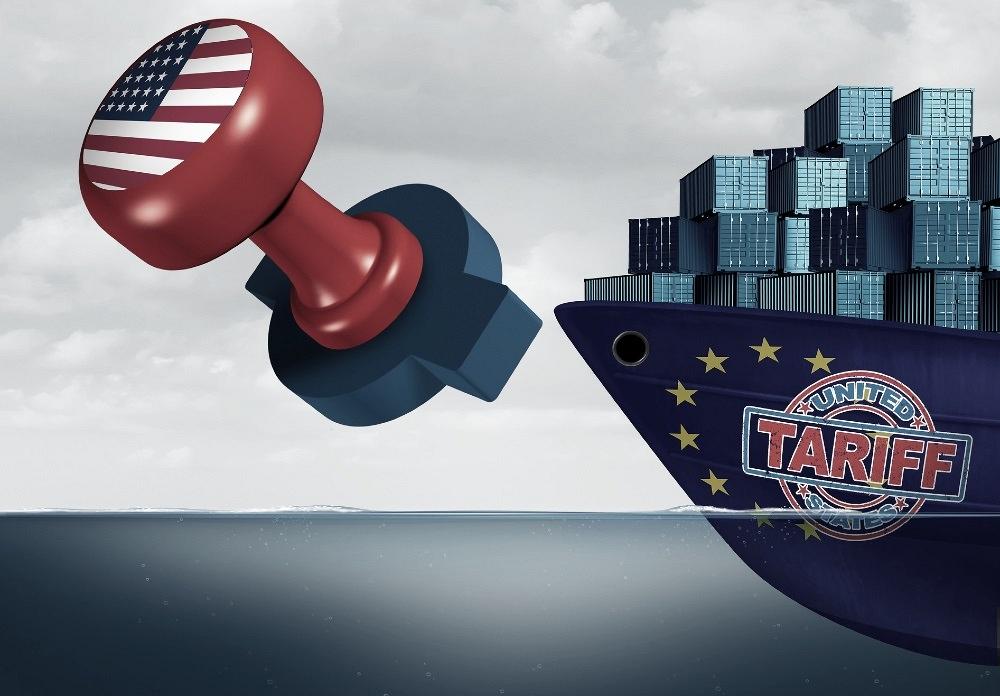
Save the 232 tariffs, coalition begs Biden
A broad coalition of US steel players are pleading with the Biden administration to retain former President Donald Trump’s Section 232 tariffs, Kallanish reports.
The coalition is made up of the American Iron and Steel Institute, the United Steelworkers labour union, the Steel Manufacturers Association, the Committee on Pipe and Tube Imports, the Specialty Steel Industry of North America, the American Institute of Steel Construction and the Alliance for American Manufacturing.
“The tariffs have been a success, allowing our industry to restart idled mills, rehire laid-off workers and invest in the future,” the coalition writes in a letter to President Joe Biden. “Since the tariffs took effect, American steel producers have announced plans to invest more than $15.7 billion in new or upgraded facilities – investments that are now beginning to bear fruit in the form of permanent, family-sustaining steel jobs and economic activity that supports communities across the United States.”
The coalition believes current supply issues are a lingering result of the Covid-19 pandemic that will improve over time. This is the opposite opinion taken by the Wall Street Journal, which argued earlier this week that the tariffs are strangling downstream steel users (see Kallanish passim).
“Indeed, virtually every steel market around the world is experiencing record high prices and long local lead times. Domestic steel supply is responding to market signals,” the coalition writes.
Ultimately, President Trump’s original rationale for the 232 tariffs has not – at its core – changed, the coalition says.
“Given the essential role of the steel industry to the nation’s defense and its critical infrastructure, the tariffs must remain in place,” the coalition says. “Moreover, the American steel industry’s favourable environmental footprint – as the cleanest and most energy efficient of major steel industries – makes it indispensable in the pursuit of our nation’s critical climate goals.”
Dan Hilliard USA

UK proposes to extend safeguards on ten products
The UK government has issued its proposal on the future of steel safeguard measures, which are scheduled to expire at the end of June. The measures are set to be extended for some products, Kallanish notes.
According to the proposal, ten products will see safeguard measures extended for a further three years, with a relaxation applied each year. A duty of 25% will be applied on imports beyond the allocated quotas for these products.
For the remaining nine product categories included in the original UK safeguard measures, the government proposes revoking limitations “as there is no UK production or there has been no increase in imports found, no significant increase in imports, no serious injury, or, in one category, extension would not meet the Economic Interest Test”.
Among the products that will see measures revoked are 4b metallic coated sheets, non-alloyed merchant bar and light sections, rails, non-alloy wire rod and large welded tube.
A proposal from the European Commission on the future of EU safeguard measures is expected soon, possibly by the end of May (see related article).
Emanuele Norsa Italy
French stainless scrap prices increase on costlier nickel
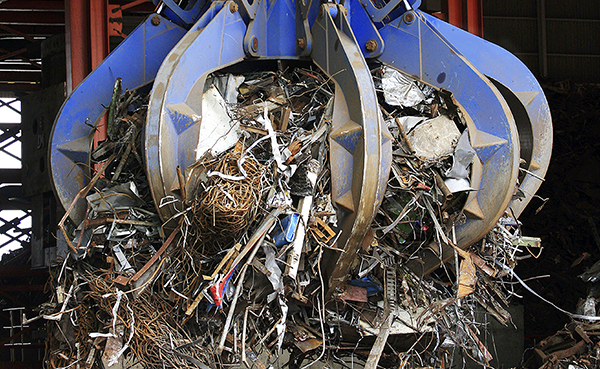
Stainless steel scrap prices in France are increasing in May, after ticking up in April, thanks to high nickel values and in line with all other European countries.
Mills are paying €1,380-1,400/tonne ($1,686-1,711) ex-works for grade 304, up by €60/t ($73) month-on-month. Buyers pay €20-30/t for transport, sources say.
This month, offers for grade 316 are hovering at €1,800-1,830/t ex-works on average. Like last month, this grade is in tight supply and is sold quickly, market participants tell Kallanish.
Meanwhile, nickel prices for cash buyers were at $16,349/t on 5 March and reached $18,142/t on 18 May.
Natalia Capra France