

BIR: Container issues unlikely to ease in 2021
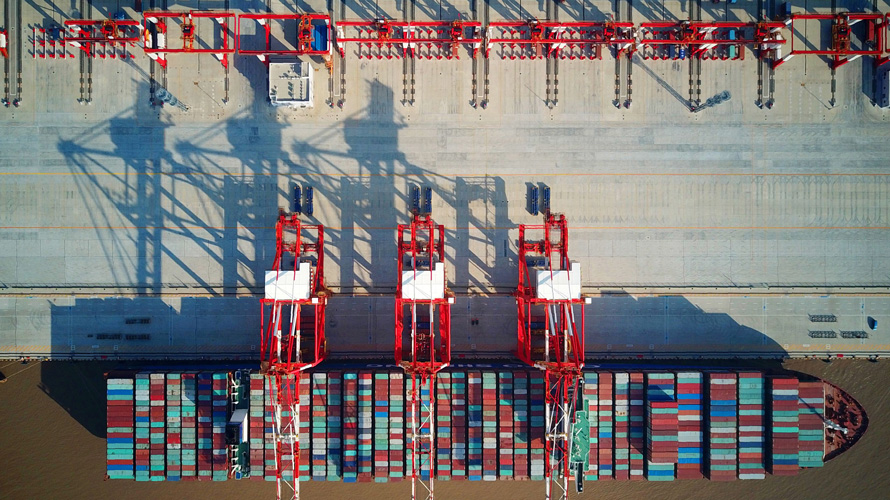
The Bureau of International Recycling (BIR) expects current issues with container shipments to remain until the end of 2021.
The market needs to prepare for more challenging times, as container production is insufficient, resulting in a shortfall of a several thousand containers, said participants at BIR’s annual convention on Tuesday attended by Kallanish.
On the other hand, China’s policy shift is expected to imply major repercussions for global steel scrap flows.
Objectives enshrined in China’s 14th Five-Year Plan include cutting domestic crude steel production capacity and boosting the use of scrap-intensive electric arc furnaces over the more traditional blast furnace route. China’s policy shift implies reducing its reliance on iron ore and increasing its consumption of scrap and billet imports.
Japan exported 31,496 tonnes of steel scrap to China in March alone, equivalent to more than 65% of total imports. One of the attractions was that Japan was able to supply sought-after plate and structural (P&S) scrap in relatively small tonnages suitable for trial cargoes.
A relatively short sailing time was another reason why Japan, and also South Korea, emerged as leading suppliers to the Chinese market, explained Jiak Lim, Senior Trader at Singapore-based Zhejiang Metals and Materials. The choice of Japan was also influenced by the fact that many of its large companies had established offices in China. He advised prospective exporters to China to focus initially on P&S and shredded scrap in 20-foot containers for ease of conforming to the country’s import specification requirements.
China’s policies aimed at reducing carbon emissions “will definitely drive up prices globally for scrap”, he concluded.
Tom Knippel of SA Recycling in the USA pointed to a previously unseen “decoupling” of new steel and scrap prices, adding that the former were “not sustainable in the long term”.
Knippel and Denis Reuter of TSR Recycling in Germany agreed the USA and Europe were witnessing significantly lower generation of prime scrap, partly as a result of production issues in the automotive sector.
Reuter also acknowledged concerns over proposed changes to EU shipment regulations that would potentially limit exports of materials designated as “waste” only to those facilities which operated in accordance with EU standards (see separate story). He insisted: “I do not think it will be realistic that we will see a total ban on exports from the EU.”
The root of the problem, argued Schnitzer, was that steel scrap fell under the “waste” definition in Europe when in fact it deserved proper credit for being a “recycled raw material”.
Burcak Alpman Turkey

Construction company eyes higher stake in Salzgitter
GP Günter Papenburg, a German construction group, has informed Salzgitter that it intends to increase its stake in the steelmaker. GP currently owns 10.10% of the voting rights, which possibly makes it the largest single stakeholder in Salzgitter apart from the State of Lower Saxony, which owns a blocking minority of 25+%.
“Our participation in Salzgitter AG primarily serves the implementation of our own strategic goals,” GP writes in a note to Salzgitter seen by Kallanish. “We can envisage acquiring further voting rights in Salzgitter AG through acquisition or in some other way within the next 12 months, depending on market developments and other economic circumstances.”
One interesting detail is that GP says it has acquired 50% in another company based in the city of Salzgitter, EF Holding, which is active in slag processing at strip-making unit Salzgitter Flachstahl.
While GP could not be reached for comment by press time, the move seems to suggest that construction companies could have a strategic interest in gaining more control at steelmakers. This could give them a better position in securing construction materials – primary materials like plate and sections at Salzgitter, as well as secondary materials like slag.
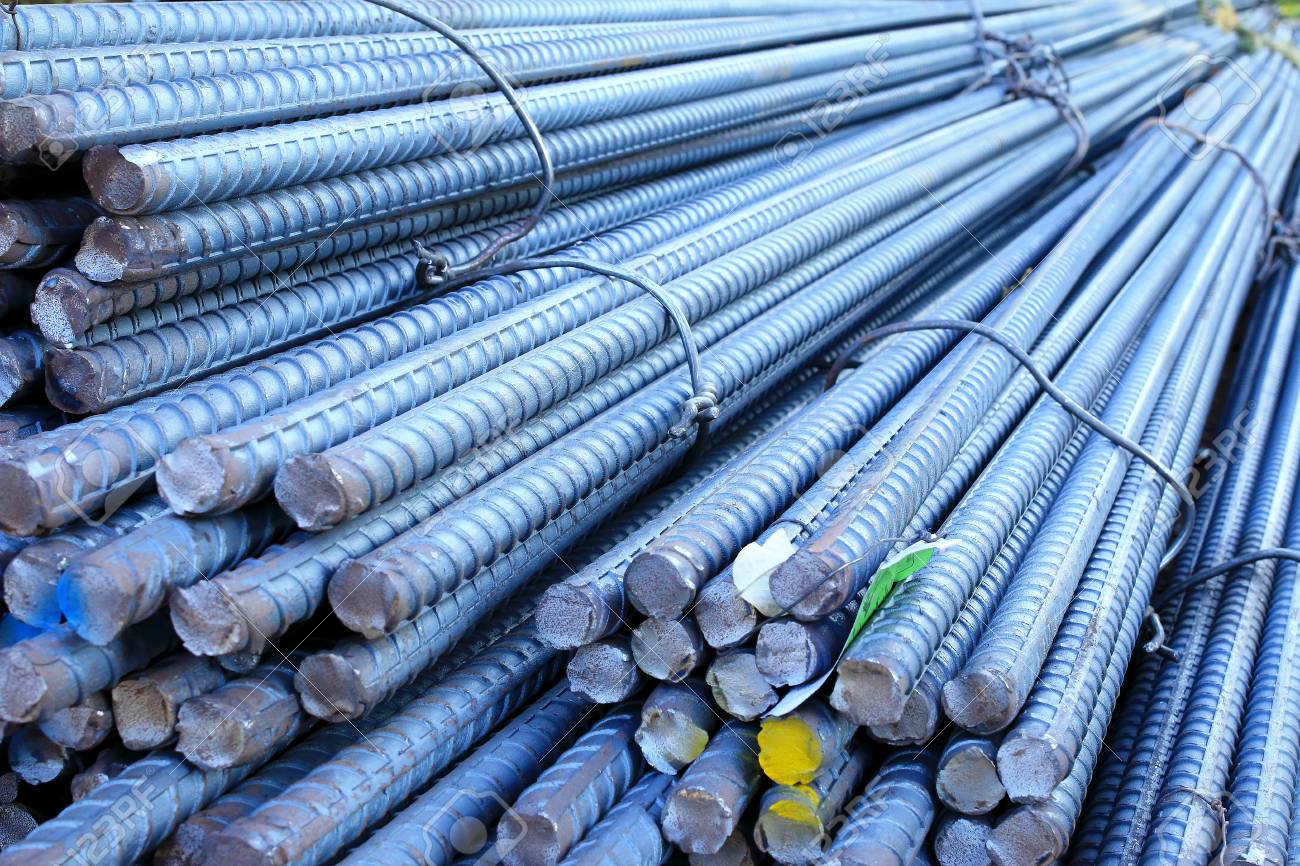
Construction activity has kept largely flourishing in Germany, while many construction materials – steel as well as wood, concrete, insulation – have become critically scarce. The waiting time for rebar, for example, currently extends into August (see separate story).
Christian Koehl Germany
Hierros Añón acquires two Spanish tube mills
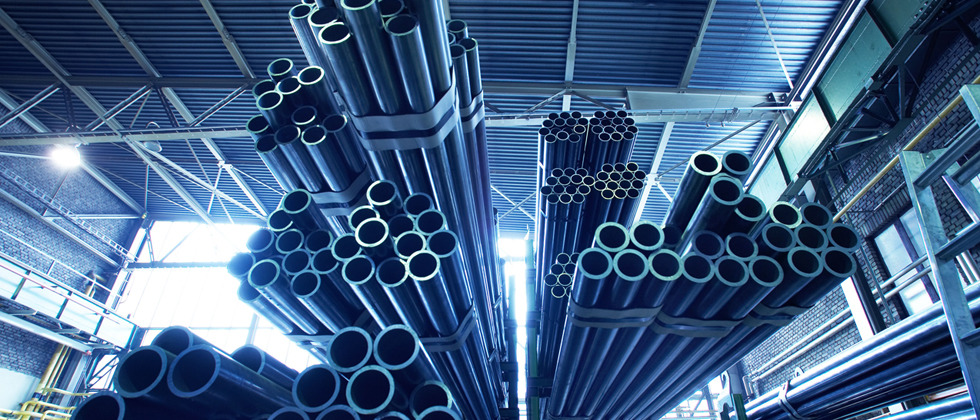
Hierros Añón group tells Kallanish it has completed the 100% acquisition of Spanish tubemakers Tubos del Mediterraneo (Tumesa) and Tubos de Legutiano Automocion (TLA). The deal strengthens the group`s position as one of the main competitors in the Spanish market, Hierros Añón comments. No transaction details were disclosed.
“With the incorporation of Tumesa and TLA facilities in Valencia and Vitoria, Hierros Añón will expand its production capacity to adapt to current market demand, offering a high range of carbon and stainless tubes in the Iberian Peninsula,” says group general director Manuel Añon.
Tumesa is a welded tube manufacturer with an annual production capacity of 150,000 tonnes. The company’s production is destined for the Spanish, French and North African markets. Meanwhile, TLA supplies stainless tube mainly to the automotive industry. The plant has a production capacity of 25,000 t/year.
The steelmaker foresees investments in upgrade and production process improvement at both plants. These are still to be approved.
Hierros Añón group operates eight plants for flat and long steel products in Spain and France.
Todor Kirkov Bulgaria
Turkey/Middle East reversed billet supply roles could continue
Turkey imported 259,777 tonnes of billet from the Middle East and North Africa (MENA) in January-April, representing a reversal of the traditional role of Turkey as billet exporter to this region.
This tonnage was compared to 20,806t in the same period of 2020, according to Turkish Statistical Institute (TUIK) data monitored by Kallanish. Although the latter was affected by the Covid-19 pandemic outbreak, the 2021 tonnage is also much higher than in the years prior to 2020.
Qatar and Oman supplied 97,019t and 92,319t of billet respectively to Turkey in January-April versus zero a year earlier. Qatar has returned to the export market after taking a break for most of 2020 due to unfavourable international competition and pricing, while Oman has seen an increase in steelmaking capacity coupled with subdued demand. Algeria meanwhile supplied 69,208t of the semi-finished product.
Suppliers seen in previous years, such as Libya and United Arab Emirates, were not active in Turkey.
In the opposite direction, Turkey supplied 137,882t of billet to MENA in January-April, down from 223,950t a year earlier.
In full-year 2020 shipments to MENA ended up being 498,632t, similar to those in 2018 and 2017. In 2019 these shipments surged to 983,816t, but were still down from levels exceeding 1 million tonnes seen prior to 2014, with shipments peaking at 3.07mt in 2010.
This all points to traditional net-importer MENA becoming self-sufficient in billet supply following years of large capacity investments. Scrap prices reaching ten-year highs this year have meanwhile encouraged Turkish mills to search for alternative feedstock.
Global scrap supply is expected to remain tight, with China returning to the import market and decarbonisation encouraging the use of the feedstock. Overcapacity meanwhile remains an issue in MENA, barring any mega investments to spur steel demand, currently only envisaged in Saudi Arabia. The reversed roles could therefore continue.
Adam Smith Germany
Simec to double steel capacity at Brazilian longs mill
Betting on the increasing steel demand in Brazil in real estate and infrastructure sectors in the coming years, Mexican steel group Simec announced a plan to double output capacity at its 500,000 mt/year long steel mill plant in Pindamonhangaba, Sao Paulo state.
The local Simec subsidiary, named GV do Brasil, has been operating in the country since 2015 and has been producing rebar and rebar coils.
With investments of $300 million, the group plans to install a new electric-arc-furnace and rolling mill.
To feed the new furnace, Simec will also double the capacity to recycle ferrous scrap to 1.25 million mt/year.
At the site of the current mill, there is already advanced infrastructure, such as land, an energy substation, water network and base for new warehouses. This will allow the expansion to be concluded in 28 months instead of 36 months, according to the company. The expansion is slated to kick off in the second half with the new production capacity expected to start up in 2023.
Since last year, Brazilian long steel consumption has grown, driven by the increase in real estate launches, as well as home improvement like renovations and expansions.
In the past 12 months, Brazilian rebar prices have escalated by 153% as local supply remained detached from demand. Year-to-date, prices have risen 48%, according to Platts assessments.
The Simec group reached the third position in the Brazilian long steel market – with about 8% of sales – three years ago, when it acquired two production units from ArcelorMittal: one in Cariacica and another in Itaúna. The sale was a requirement of the Administrative Council for Economic Defense (Cade) to approve the purchase of Votorantim Siderurgia by ArcelorMittal.
With the two acquisitions, Simec now has an annual capacity in Brazil to produce 1.1 million mt of crude steel and 900,000 mt of rolled products – bars, rebars, wire rods and light, medium and heavy profiles.
— Adriana Carvalho

Uncertain supply weighs on Italian HRC market as more buyers seek imports
The Italian flat steel market remains tense, with prices well above Eur1000/mt and buyers lamenting over shortages, though demand and supply were reported be more balanced in recent days, sources said.
Italian HRC prices were heard as stable June 1 with the market still in the midst of absorbing the most recent round of hikes announced by market leader ArcelorMittal on May 28. Offers rose again by Eur20/mt to Eur1170/mt for hot-rolled coil across Europe, with some sources suggesting the more subtle increase pointed towards a potential slowdown in further price increases, as well as an eventual sign of market softening.
The gradual decline in Chinese steel prices seems to have hindered the usual bullish sentiment in Europe, with some buyers now taking a wait-and-see approach, and those with low stocks left with little choice but to accept higher offers from mills. “The momentum of price increases is coming to an end,” an Italian service center source said. “I don’t expect additional increases from mills.”
“It is still not easy to find domestic materials although there is the feeling that the market is more balanced also because there is less a run towards restocking now. We buy from all sources, even from China. In term of prices, we pay $980/mt FOB Chinese ports with September shipments so it is similar to the Italian prices,” a major trader said, underscoring that the situation is more about availability than price.
One source, among others, said there was better availability from imports, though depending on specifications there could be long lead times and limitations on certain products. “This shortage will continue for many months and it will keep the market very tight,” said the source, citing an HRC import offer at Eur980 CIF Italy Ports ex-Egypt and from Japan at Eur1125/mt CIF Italy Ports for cold-rolled coil; the service center confirmed a deal at Eur1160/mt CIF Italy Ports ex-China.
“There is better availability from the Far East. In China we’ve seen a decrease of steel futures, the [pricing] perception is not as robust there in the Far East as it is here [in Europe].”
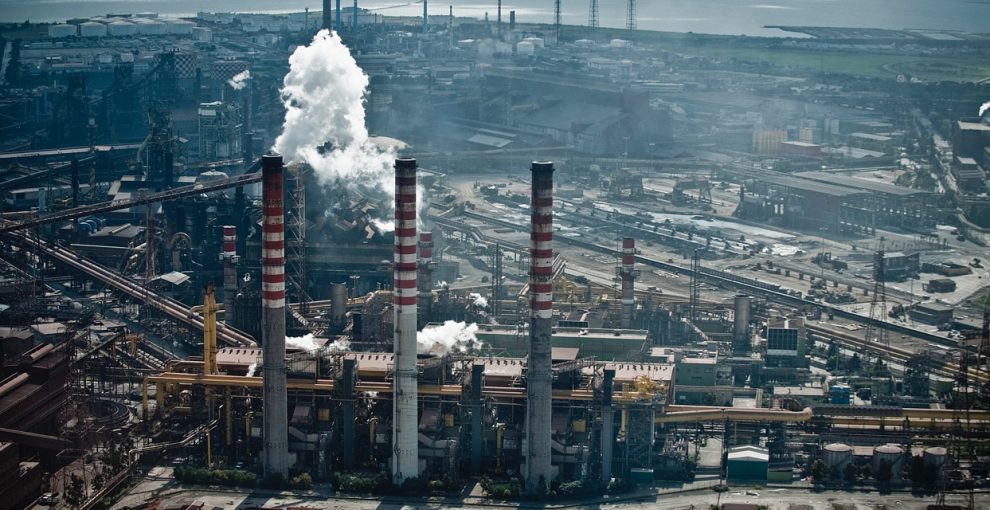
The largest Italian flats producer, the former Ilva now Acciairie Italia, is still working well below its design capacity with two blast furnaces, No. 1 and No. 2, because No. 4 has been temporarily shut for maintenance and should restart in a few weeks. The company is targeting 5 million mt of crude steel production by year-end.
Market sources are still following the legal development of the largest Italian steel producer with concerns after the Italian State Council’s postponed its decision on whether Acciairie Italia could keep producing crude steel. The Lecce regional administrative court said Feb. 13 that ArcelorMittal had to shut all hot-end operations within 60 days at its Taranto plant to curb emissions. ArcelorMittal appealed the decision to the Italian State Council, with a final hearing that was postponed from May 13 to be done by the end of June. Sources said the decision is expected to come any time soon.
In the meantime another Italian court on May 31 ruled to seize the hot end of Acciarie Italia, but this will be only executed if confirmed when the process will move to its third degree level so it will take at least 5 years. The same court sentenced Fabio and Nicola Riva, the former owners of Ilva to 22 and 20 years in jail, respectively, for the “environmental disaster’ caused by the Ilva steelworks in the southern city of Taranto. This legal process is the one that lead the Italian government to take control and then sell the company to ArcelorMittal. In April this year the Italian government, through Invitalia, Italy’s agency for investment promotion and enterprise development, re-entered in the capital of the former Ilva, then ArcelorMittal Italia, and formed a public-private partnership with ArcelorMittal. The company changed its name into Acciaierie Italia.
It is understood now that the Italian government is awaiting a ruling from the Italian State Council to start the next chapter of Italy’s largest steelmaker’s transition to green production.
— Amanda Flint, Annalisa Villa

US HRC prices move higher; new offers emerge at mid-$1,600s
US HRC prices continued rising on June 1 as limited supply options persisted in the market and the majority of recent inquiries were at a minimum of $1,640/st.
The daily Platts TSI US HRC index was up $4.75 at $1,620.75/st on an ex-works Indiana basis.
A trader attributed the current market as “bull market of all times” and cited no signs of weakness in demand. He put the market at a minimum of $1,640/st if you could find a mill with spot availability.
A Midwest buyer, meanwhile, cited an offer at $1,650/st and he thought the mills were establishing a minimum at that level.
A service center source echoed strong demand: “We are trying to pick up more spot as we can still get a buyer prepared to take those tons.”
After getting no quoted by two of his major suppliers, the service center source was able to get an offer at $1,550/st delivered Houston from Mexico with an October arrival time. Despite its long lead time, he was considering of placing an order as he did not see spot availability widen in the short run.
The combined Platts TSI price index uses a volume-weighted-average calculation – according to TSI’s standard – to determine value on an ex-works Indiana basis.
— Ali Oktay
Weekly US steel mill capability utilization jumps to 81.5%
US raw steel capability utilization rose to its highest level since early March 2020 the week ended May 29, the American Iron and Steel Institute reported June 1.
The raw steel capability utilization rate climbed to 81.5%, up from 79% the previous week.
Production increased by 2.4% to 1.836 million st during the week ending May 29, up from 1.793 million st the previous week, according to the data.
Last week’s production was up 50.1% compared to the same week a year earlier, when capability utilization was at 54.6% and production totaled 1.223 million st.
Adjusted year-to-date production through May 29 totaled 35.9 million st, with a capability utilization rate of 78.1%. The total is 9.5% higher than the 32.8 million st produced during the same period last year, when the utilization rate was 69.9%.
Last week’s production totaled 147,000 st in the Northeast, 635,000 st in the Great Lakes region, 187,000 st in the Midwest, 793,000 st in the Southern district and 74,000 st in the Western region.
The tonnage data is estimated, compiled from weekly production data provided by 50% of domestic producers combined with monthly production data for the remainder.
— Ingrid Lexova
Iron ore, scrap rebound as output restrictions ease
Seaborne iron ore prices continued to recover lost ground on Tuesday, tipping over the $200/tonne boundary. Scrap prices, too, have increased as Tangshan has eased its production restrictions andChinese markets appears set to sustain elevated steel prices.
The Kallanish KORE 62% Fe index increased $2.11/t to $200.49/dry metric tonne cfr Qingdao. The Kallanish KORE 65% Fe index gained $1.83/t to $233.21/dmt cfr, and the KORE 58% Fe index jumped $6.23/t to $175.42/dmt cfr.
On the Dalian Commodity Exchange September iron ore settled up CNY 47/t at CNY 1,137/t ($178.43/t), while on the Singapore Exchange July 62% Fe futures settled up $9.43/t at $198.16/t. The same contract for 65% FE and 58% Fe futures settled up $8.81/t at $228.58/t, and up $22.84/t at $174.4/t respectively.
Chinese scrap prices have also been recovering. 6mm+ heavy scrap delivered to mills in the Yangtze River Delta increased CNY 28/t to CNY 3,596/t. In Tangshan, billet prices were flat at CNY 5,000/t.
Australia’s Port Hedland, meanwhile, is to become more expensive. The Pilbara Ports Authority will increase port charges by 25% for the financial year ending August 2022, according to the new state budget of Western Australia. It expects this to raise an additional AUD 195 million ($151m) over four years.