


BIR: EU regulation revision could threaten scrap exports
The European Commission is considering changes to EU waste shipment regulations that could prove to be of “tremendous importance” and potentially highly damaging to ferrous scrap export flows. So said Olivier François of Galloo at the Bureau of International Recycling (BIR)’s World Recycling Convention on Tuesday.
One of the priorities established for the revision of the regulations is to restrict exports of materials designated as “waste”, including many of the high-specification materials produced by the recycling industry. Europe generates surpluses of “quality secondary raw materials” that could not be absorbed by its domestic market and so “we don’t think waste shipments should be restricted even further”, said Julia Blees, Senior Policy Officer at the European Recycling Industries’ Confederation. François agreed that such a move could lead to “tension” given that “many developing countries need the raw material”.
According to both speakers, the key phrase in the new Commission proposals is that users in importing countries should be operating under “broadly equivalent conditions” to those applying to consumers in the EU. This is in terms of both human health and environmental protection.
Aurelio Braconi, Senior Manager – Circular Economy and Raw Materials at European steel association Eurofer described the changes likely on account of the European Green Deal as a legislative “tsunami”. He expressed concern at the potential for a growing gap between practices and standards in Europe compared to the rest of the world. It is important, he said, that countries importing scrap applied “equivalent conditions” in terms of, for example, environmentally sound management.
Describing scrap as “an essential raw material”, Braconi observed: “We want to use more ferrous scrap, to recycle more ferrous scrap into new steel and new products, to increase our resource efficiency.” Many producers were looking at ways to “enlarge their product portfolio coming from scrap”. But to achieve this, it was a matter not just of supply and demand but also of quality, he added at the event attended by Kallanish.
BIR Trade & Environment Director Ross Bartley meanwhile explained BIR would be surveying relevant companies later this year. This will be to assess the cost burden of installing and running systems to detect radioactive metals inadvertently included in consignments arriving at scrap yards. There has to be an appreciation, he said, that the recycling industry was “doing a good job for society” by taking on costs in respect of radioactive sources lost or misplaced mostly by other industries.
Burcak Alpman Turkey


European tight steel supply seen continuing through year-end: Tata
The European steel supply shortfall will likely continue until next year, Chris Wooffindin, manager of price policy and forecasting at Tata Steel Europe, said during a webinar organized by Eurometal on June 3.
The imbalance between demand and supply has been the leitmotif of 2021 and it is likely to continue until the end of this year. Domestic mills have restarted around 95% of their pre-COVID output but as demand was stronger than expected this capacity is struggling to satisfy it.
Wooffindin underlined how a portion of the restarted capacity is currently servicing previously agreed contracts and how mills are struggling to keep up with such strong demand with their bookings nearly full for most of this year “which is very strange to say in the middle of year, a situation that I have never seen before.”
Due to unbalanced demand and supply prices in Europe reached their highest historical level, climbing from the end of last year by Eur665/mt for hot-rolled coil to a record high Eur1,140/mt base ex-works Ruhr in June, according to Platts data. US prices are even higher due to short supply and not expected to ease any time soon.
According to the Tata Europe executive, while Chinese prices are easing a little, US prices continue to be strong and this is supporting global prices, making the US market at the same time very attractive, even with that country’s Section 232 tariffs.
Although the tightness in the European market is expected to ease eventually, some issues remain unresolved. The big uncertainty is linked to Liberty Steel’s finances as well as the political issues of Acciairie d’Italia, the former Ilva, which could lead to more market supply problems if these two players decrease production even further or if some other European steelmakers have some unplanned outages.
Among other factors that could impact future price levels apart from the market imbalance is inflation pressure as all prices have gone up – not just for steel.
— Annalisa Villa


US HRC demand stays strong despite higher prices
US hot-rolled coil prices extended gains on June 3 amid strong demand from end-users despite record-high prices.
The daily Platts TSI US HRC index was up $2 at $1,634/st on an ex-works Indiana basis.
“Business is good if we have the stock but we are not quoting more due to low inventory,” a Midwest service center source said. He added that his inventory levels were 40% below where it should currently be.
“Prices are rising but demand has not taken a hit from that,” another service center source said. “We are trying to get some spot availability from mills but it is really tough to find tons and whatever availability opens up, gets taken so quickly too.”
The market was at $1,820-$1,880/st and an integrated mill was at the upper-end of the range, according to the second service center source. He anticipated no change in pricing environment in the short term as most mills have not been more flexible in their contractual supplies either.
With struggles in finding availability from domestic mills, the second service center source placed an order at $1,560/st delivered Houston from a Mexican mill with a late-September delivery time.
A third service center source also reported a transaction from that mill at $1,550/st delivered Houston with an October delivery time.
The combined Platts TSI price index uses a volume — weighted-average calculation — according to TSI’s standard, to determine value on an ex-works Indiana basis.
— Ali Oktay
EU HRC softens as buyers lay low, market awaits safeguard decision
There was less panic among buyers in the European HRC market June 3, with sell-side sources noting an apparent relaxation in inquiries as more grow cautious with their decision making and look to import material to quell the effects of the domestic shortage, sources told S&P Global Platts.
Mills were also heard to have hastened their delivery of backlogged orders, in turn alleviating some of the supply and demand pressure.
“Backlogs are suddenly gone and mills are running out. It gets better every week,” a Benelux buyer said. “They are catching up now and I’m struggling with transport [logistics] because all of a sudden, material is ready!”
Over the last few days, some have pointed towards an evident lag in demand from the automotive sector, with its production largely hindered by a shortage of semiconductors.
“Automotive have less demand, and now there is material available for other customers,” the same buyer source said.
Meanwhile, a European mill source said demand was slowing down from the buy-side, but producers were not necessarily desperate to sell either due to tepid automotive demand.
“For three weeks we had serious problems – automotive needed more material. Then they needed slightly less because of semiconductors,” the mill source said, though he warned this would not solve the supply-demand imbalance in Europe.
“It has only diminished the problem; it does not solve it. When we once had a lack of 1,300 mt to sell, [today] it is now only 1,200 mt,” the mill source said.
Pricing volatility in China was also having an impact on market uncertainty, with Chinese prices increasing just days after a slight dip.
“China is showing its real face, they just manipulate the prices, curbing inflation,” a second European mill source said. “demand [in Europe] is still good and pricing is stable.”
In Italy, a trader said it was normal for the market to expect 2-3 weeks of weakness after such high increases but emphasized that he did not expect a pricing downturn so long as material remained scarce.
Italian mill offers were heard between Eur1,120-1,180/mt ex-works Italy, with many producers drastically slashing previously agreed volumes to customers.
“A customer of mine begged [Italian mill] for some 4,000 mt cold-rolled coil and hot-dipped galvanized, and [mill] kept him waiting 2-3 weeks only to confirm October delivery for just 400 mt,” the trader said.
Even as more import offers circulate, the same trader said people were still lying low until a decision about import safeguards was confirmed by the European Commission July 1.
“Protectionism is not going anywhere. They will keep safeguards as they are, and increase them by 5% which is nothing,” he said. “the main problem are the duties on HRC material from Iran, Russia, Ukraine and China. These are bif producers of HRC with availability at cheaper prices, but they still have strong duties.”
However, appetite for imports is still there, with the second European mill source confirming there were currently volumes in the port of Antwerp waiting for the new quota period to commence.
— Amanda Flint

Indonesia to become No.2 stainless steel producer
Driven by huge capacities commissioned by Chinese companies, Indonesia is about to overtake India as the second largest stainless steel producer in the world in 2021, according to projections presented at the International Stainless Steel Forum (ISSF) annual conference held virtually last week, Kallanish notes.
Indonesia, which presently ranks fourth in global stainless steel production, will produce 4.2 million tonnes this year, up 75% year-on-year, the Indian Stainless Steel Development Association (ISSDA) said. On the other hand, ISSDA predicts that India’s output is expected to reach 3.5mt this year, an increase of 9.4% y-o-y following 2020’s 17.9% y-o-y decrease.
Indonesian surplus production may be targeted at Indian markets, ISSDA president KK Pahuja said.
“Stainless steel capacity of 5.5 MT is ready in Indonesia. On the other hand, the Chinese government has withdrawn export tax rebate in May 2021, which will restrict the export of stainless steel from China. As a result, exports from China may come down, while exports from the same Chinese companies in Indonesia will rise significantly. We estimate that import intensity from Indonesia will nearly double,”he explained.
By Kallanish Team

Supply issues in EU flats market to continue
The supply issues affecting the European flat steel market are expected to continue until the end of the current year, only to ease slightly going into 2022, Kallanish learns during the latest webinar organised by EUROMETAL, the European distributors association.
Chirs Wooffindin, manager for price policies and forecasting at Tata Steel Europe, notes that in Europe domestic capacity is now the biggest issue – more so than imports. He said that according to his calculation 90% of the capacities idled during the peak of the pandemic are now fully back on stream, but they are still facing delays in supply due to the need to fullfill delayed long-term contracts. Other elements limiting supply have been severe weather conditions, as well the need to catch up with some delayed maintainance works.
While the tightness of the supply is expected to ease, Wooffindin believes it will take time and the situation should improve significantly only in 2022.
The issues with supply are set to continue support prices in the market, Kallanish understands. Many believe the market clearly needs to correct from the record price levels reached, but the correction is not expected to be as sharp as the one seen back in 2008 because the tight supply will continue support prices even if the global market sentiment turns negative.
Going forward, Wooffindin believes one element that could be central in the steel market will be the concern for inflationary pressure on all raw material prices in Europe and elsewhere.
“At some point inflation will become a problem,” he explains, adding that authorities will then need to address the point.
Emanuele Norsa Italy
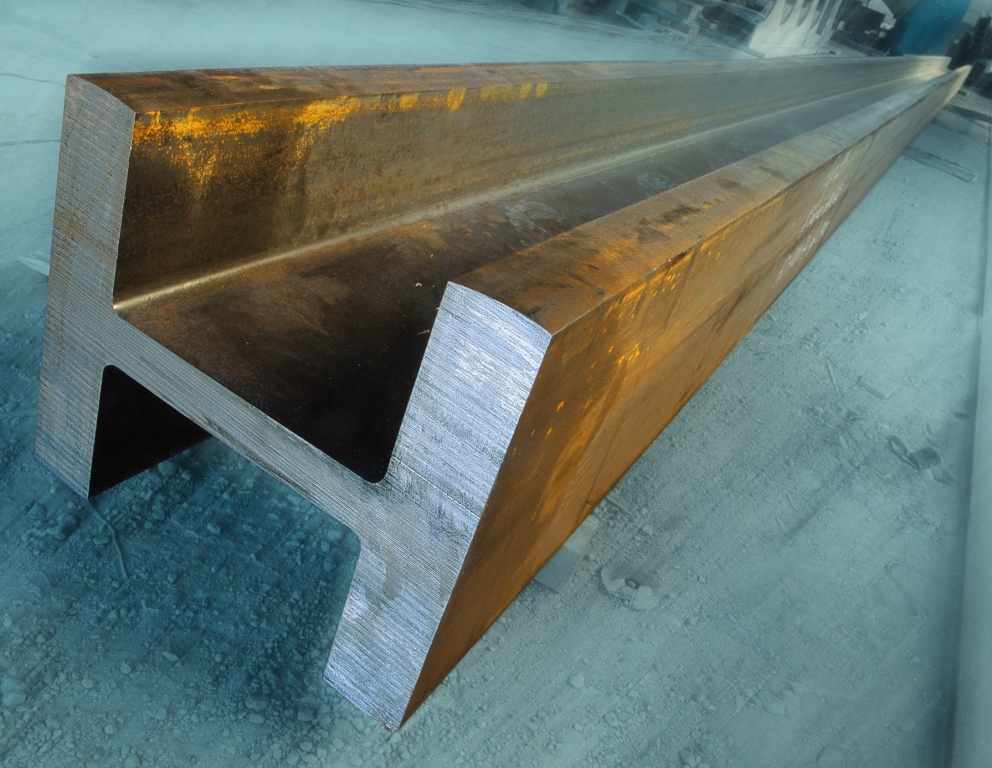
Italian sections prices jump
Italian beam producers are seeking €40/tonne ($48/t) hikes compared to May, due to the current strong demand and increasing values of scrap and all steel products in the country, Kallanish learns from market sources.
Producers are now asking for €520/t base ex-works for the first category of beams. At the beginning of May they were asking €380/t base ex-works. They are said to have full order books and lengthening lead times.
Transactions are currently at €480-520/t base ex-works for the first category of beams but sellers say they are consolidating the high point of the range. Including €385/t average size extras, values are reaching €865-900/t ex-works, the highest levels seen in the past decade. Prices increase by €20/t for each subsequent category, sources suggest. According to sellers, next week a further increase is expected to be implemented on sections.
Meanwhile, Italian merchant bar mills are also increasing asking prices to €450-470/t ex-works on strong export demand (see Kallanish 31 May). This week’s domestic contracts are at €820-880/t ex-works including €420/t size extras, sources say.
Natalia Capra France