

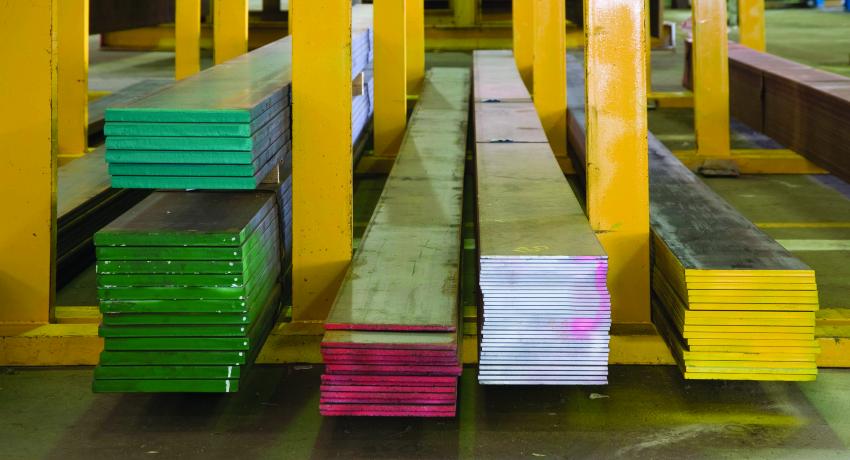
Tariff removal would hinder efforts on steel overcapacity: AISI
The recent joint statement from the US and EU shows that the governments share concerns regarding their domestic metals industries that must be cooperatively addressed, such as global excess capacity, but a removal of the US’ steel and aluminum tariffs on the EU would run counter to such initiatives, American Iron and Steel Institute CEO Kevin Dempsey said June 16.
“There is a desire for the US to find ways to work together with the EU for common issues of concern such as addressing the global overcapacity crisis, and that is definitely worth the effort, but it is not an easy item and can’t be done quickly,” Dempsey told S&P Global Platts in an interview.
“While we are making those efforts, we still need to maintain an effective trade measure to deal with the global overcapacity and the threat of renewed surges.”
A simple lifting of US trade restrictions under Section 232 on the EU will only create a new problem if the two sides come to such an agreement, he added.
The US-EU joint statement, released after an international summit of world leaders June 15, expressed a commitment to resolve tensions arising from the US tariffs on EU steel and aluminum imports by the end of the year.
“It just creates a new way for the steel to flood into the US from overseas because steel is a widely traded global commodity, and it finds its way into every market in the world,” Dempsey said. “The EU recognizes this because they imposed their own global safeguards on steel imports, and they’re considering extending that for another three years.”
Dempsey said the EU views the US tariffs as solely a bilateral issue. However, this perspective overlooks the global nature of steel trade distortions caused by overcapacity in certain parts of the world that have harmed both the US and EU steel industries.
“[The US tariffs] were a global action to deal with the fact that there has been recurring surges of imports coming into the US for a number of years, all growing out of this steel overcapacity crisis,” the executive said. “That kept us at continually low capacity utilization rates that undermined the viability of the industry over the longer term and the tariffs were necessary… and to be effective they needed to be a measure that was global in nature.”
Future of US, EU metal trade talks unclear
Dempsey said it was difficult to predict how negotiations will play out this year between the US and EU regarding overcapacity and tariffs.
“I don’t think the current [Biden] administration has made up its mind on reversing the [steel tariff] approach that was put into place by the previous administration,” he said. “If they wanted to remove that, they could have done that on day one, but they haven’t done that.”
While no clear plan exists for the US and EU to battle excess capacity in other parts of the world, Dempsey said any agreed upon solution must put pressure on countries that overly subsidize their steel and aluminum industries.
“Until countries feel some cost to engaging in these types of behaviors, like subsidizing their domestic industry or intervening to keep uneconomic facilities afloat, they are going to keep doing it,” he said.
Other groups disappointed
US business and trade groups expressed disappointment that the US and EU’s joint statement did not clearly provide details on how the metal tariffs would be handled this year.
“We reiterate the urgency of terminating these tariffs imposed under the previous administration while discussions continue on how best to address China’s oversupply of steel and aluminum,” the Coalition of American Metal Manufacturers and Users said in a June 15 statement.
CAMMU added that the tariffs “should have never been implemented in the first place.”
“They have only served to increase the costs of goods manufactured in America compared to overseas competitors who can simply import the finished product to the US, and thus continue to erode the ability of the US manufacturing sector to compete and survive in the global market,” the coalition said.
In a separate statement, the US Chamber of Commerce expressed a similar desire to remove the tariffs as quickly as possible.
“We had hoped for more movement towards lifting the US Section 232 tariffs on imports of steel and aluminum as well as Europe’s countermeasures,” the chamber said June 15. “Businesses across multiple sectors have felt the pain of these tariffs, and we encourage the working group to move quickly towards resolution.”
— Nick Lazzaro

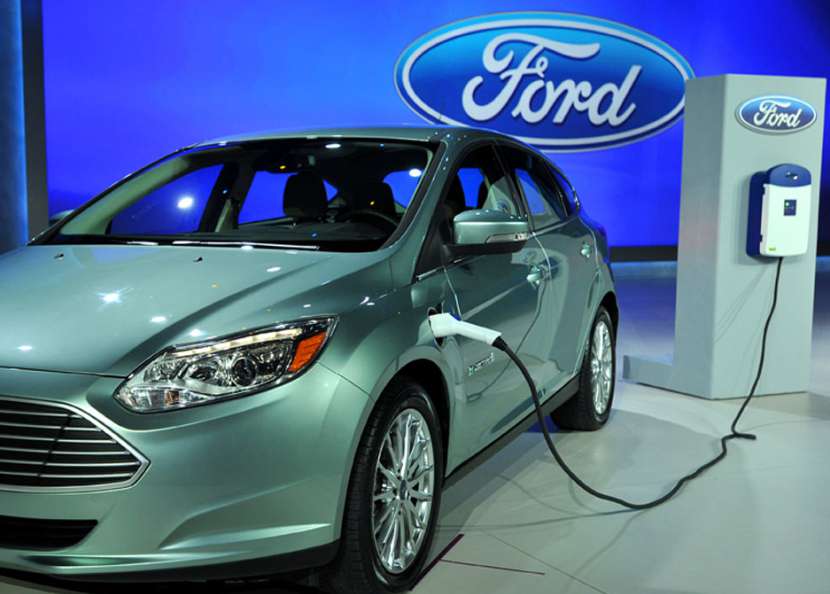
GM, Ford each unveil new EV investments for next decade
General Motors and Ford each announced June 16 new increases to their respective investment programs to boost their production of electric vehicles over the coming decade.
GM said it will invest $35 billion towards EV and automated vehicle production through 2025, a 75% increase from the company’s original investment package proposed in early 2020, according to a statement.
“GM is targeting annual global EV sales of more than 1 million by 2025, and we are increasing our investment to scale faster because we see momentum building in the US for electrification, along with customer demand for our product portfolio,” GM CEO Mary Barra said.
To support increasing EV production, GM said it is accelerating its plans to build two new battery cell manufacturing plants in the US by mid-decade.
“[This will] complement the Ultium battery cell plants under construction in Tennessee and Ohio,” GM said. “Further details about these new US plants, including the locations, will be announced at a later date.”
Meanwhile, Ford said its Lincoln Motor luxury vehicle brand will debut its first global full EV next year, serving as the first step in electrifying the brand’s entire portfolio by the end of the decade.
“By mid-decade, Lincoln expects half of its global volume will be zero-emissions vehicles and plans to electrify its portfolio of vehicles by 2030,” the automaker said in a statement. “This is part of the company’s Ford+ plan and planned investment of more than $30 billion in electrification by 2025.”
Lincoln’s EV will join its lineup of existing hybrid vehicles, which includes the Corsair SUV.
— Nick Lazzaro
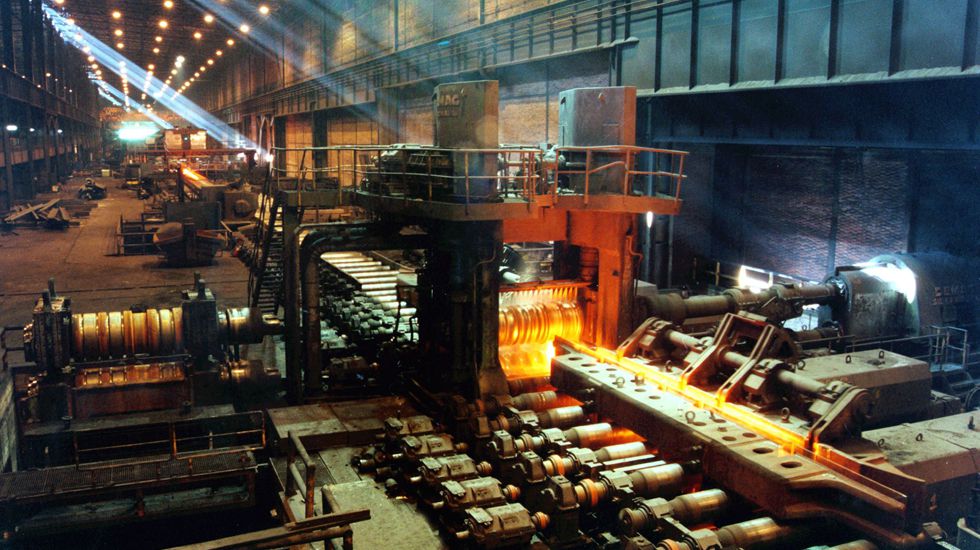
Steelmakers formalize offers for Hayange and Ascoval
Steelmaker ArcelorMittal, Italian long products maker Beltrame and German steelmaker Saarstahl have now all submitted bids to purchase French steelmakers Hayange and Ascoval, put on the market by the troubled Liberty Steel Group, the bidders have confirmed. The deadline to present offers to purchase Liberty’s French units has been reported to be June 15, sources told S&P Global Platts June 16.
Liberty put specialty steelmaker Ascoval and rail producer Hayange on the market together in May amid the metal group’s ongoing financial troubles after its main financier, Greensill Capital, filed for bankruptcy in March. The French government that month loaned Eur20 million ($24.2 million) to the two plants to cover working capital and capital expenditure costs, according to sources. The French government obliged Liberty to refinance operations by the end of May with an additional Eur20 million, or put the two companies up for sale if it could not, sources have said.
Of other steelmakers understood to have shown interest in Hayange and Ascoval, Acciairie Venete declined to comment and JSW did not answer Platts’ requests for comment. Sources said JSW is unlikely to have formalized an offer while Acciairie Venete may have bid for the two French mills.
German long products maker Saarstahl released an official statement June 16 confirming its offer. “This bid supports an industrial project for the future of the two plants, but also for an enduring development of industrial activities in the Nord and Moselle regions,” said Karl-Ulrich Kohler, chairman of Saarstahl’s management board. “In the face of international competition in the steel market, Saarstahl is offering a permanent acquisition of the Ascoval and Hayange plants based on a strong geographical and industrial integration of Hayange and Ascoval into the production network of the current plants of the group.”
Saarstahl’s project would aim to integrate a new rail market into Saarstahl’s commercial and industrial strategy, to diversify its portfolio, adding blooms and rails and to access electric arc furnace technology. “This project is fully aligned with the strategy of our Saarland Group, both in terms of strengthening competitiveness and structural transformation,” said Kohler.
The company has a continuously casting blooming line in Volklingen which could supply Hayange with some blooms in particular sizes that Ascoval doesn’t supply and which are currently supplied by British Steel, market sources told Platts.
Sources said there are however growing expectations that ArcelorMittal could win the bid as it is probably in a position to offer more for the two companies in terms of financial capacity and industrial plans, although there is the caveat that such a deal might not go ahead for competition reasons as the European Commission may consider ArcelorMittal’s existing strength in the rail market.
ArcelorMittal’s assets in the steel rail sector in Europe includes one plant in Spain, one in Luxembourg and two in Poland, which supply key rail markets including high-speed, metro, heavy-haul, urban transport and port operations. Sources said the company is checking if this might pose a problem in terms of already having a dominant market position within the EU. According to a Reuters report, EU antitrust regulators will decide by July 9 whether to clear ArcelorMittal’s bid for Hayange and Ascoval.
ArcelorMittal declined to comment on antitrust issues when approached by Platts, but it confirmed that it had submitted an offer to acquire the Hayange and Ascoval steel plants: “The Hayange and Ascoval plants would benefit from ArcelorMittal’s significant R&D capabilities in products and processes, particularly in the rail business, market knowledge and sales footprint, investment and business development capacity, logistics and storage capabilities. ArcelorMittal would also commit to maintaining employment at existing levels and would leverage its know-how and experience in HR development.”
ArcelorMittal produced approximately 8 million mt of steel in France last year, employing 15,500 people.
Italy-based longs producer Beltrame confirmed its interest. The company already has mills in France with LME (Lamines Marchands Europeens), located not far from Ascoval and has a mill in Romania that could benefit from Ascoval blooms, a company executive told to Platts. Beltrame’s Donalam mill in Romania is a new customer for Ascoval, which shipped 500 mt of blooms as a trial last month, sources told Platts.
None of the companies cited above said how much they had offered for the French companies, or other details.
Acciaierie Venete makes quality long steel products and is owned by the family of the head of the Italian Steel Association, Federacciai, Alessandro Banzato, who was always keen to expand his family business overseas but up until now had not done this, industry sources said. Market sources said that Acciaierie Venete is very solid, has cash and is very keen to increase its production mix so “it could be the right time for them to shop abroad.”
JSW Group produces blooms for rails in India and also produces rails at its steel plant in Italy in Piombino. Union sources indicated however that JSW has slowed down its investment in its Italian mill, which is largely at a halt.
— Annalisa Villa

Russia’s Severstal invests $2.8 mil in steel service center to boost processing
Russian mining and steel company Severstal is investing Rb200 million ($2.8 million) this year in new processing equipment of its Kolpino steel service center in northwest Russia’s Leningrad region.
The modernization will expand the center’s capabilities, increase its productivity and help it move from blank production to sub-assembly at some point in the future.
The center is to get a laser cutting machine designed to cut 1mm-20mm thick sheets and plate. Together with the facility’s existing equipment, this will enable Kolpino to process the entire 1mm-40mm range of flat rolled steel thicknesses.
It will also get a gas-plasma cutting machine, which will ensure higher precision of cutting.
A third piece of new equipment, a coordinate drilling machine, will provide high accuracy in hole marking and drilling.
The edge milling machine will finish plate or blank edges to high precision, and the last unit of the new equipment — a straightening machine — will ensure up to 0.2 mm/meter flatness in steel-made parts and blanks.
As a result of the investment, the company said that the Kolpino center will significantly improve its metal processing capabilities, offering customers new products and delivering larger output quantities, which will help it reduce operational costs and increase profitability.
— Ekaterina Bouckley

European distributors face ‘huge difficulties’, conference told
Caught between limited supplies from domestic mills and limited imports from abroad, European distributors “are facing huge difficulties”, in the words of Daniel Guinabert, director general of EUROMETAL.
Speaking at the Kallanish Europe Steel Markets virtual conference on Wednesday, Guinabert emphasised the issue is not about profitability, but about customer satisfaction. “We just cannot fulfil the service we want and we promise,” he said. The level of inventories has remained low since late last year, and in terms of days-of-sale is still 10-12 days below the level of normal times, he added.
Regarding the extra cost that could come in the longer run from “green” steel on the market, he remained relaxed. “We are prepared to pay more for green steel; what’s worrying is volatility”, along with price differentials from different sources, green and non-green.
On this topic, Dick Sands, managing director distribution at Stemcor said the carbon border tax will in the long run put the future of blast furnaces into question. He conceded that the European Commission’s comprehensive papers on the subject “were much too complicated for me to understand”.
For one part, it seems to remain unclear if the taxation considers the free licences mills have. As an example, he named US mills Nucor and Cleveland-Cliffs; the one operating mainly on electric-arc furnaces, the other on blast furnaces. If, in theory, they would sell steel to Europe, Nucor would be exposed to the same penalty as Cleveland Cliffs, which does not make sense, Sands observed.
Christian Koehl Germany

EU Carbon Border Adjustment could spare stainless, tubes
The European Carbon Border Adjustment (CBA) mechanism could spare stainless steel products, special steels and tubes, according to a recent draft seen by Kallanish.
The CBA is currently being discussed by European authorities and a formal proposal is expected to be released soon. The mechanism is aimed at creating a regulatory framework to calculate CO2 emissions made during the production of goods outside of the EU.
According to the draft, the system should be applicable for a set of cement, steel, fertiliser and aluminium products, but stainless steel grades, special steels and tubes have not been included as of now.
The European Parliament voted in favour of a CBA mechanism back in March; a specific legislative proposal is expected to be unveiled later this month.
“The measure must fill the gap of the carbon cost differential with global competitors and imports instead of replacing or reducing current levels of carbon leakage protection,” Eurofer head Axel Eggert explained earlier this year. “Higher climate ambition for 2030 and 2050 requires strengthened, not weakened, carbon leakage protection. This can only be achieved if the carbon border measure is implemented as a complementary tool to buttress existing carbon leakage measures.”
At the Kallanish Europe Steel Markets virtual conference on Wednesday, most speakers appeared to support the idea of a CBA to reward investments made by European steelmakers into reducing CO2 emissions.
Daniel Guinabert, director general of EUROMETAL, for example, confirmed that distributors fully understand the need to invest in the environmental transition and bare some of the costs involved. He was less supportive of safeguard measures and other trade restrictions.
Emanuele Norsa Italy
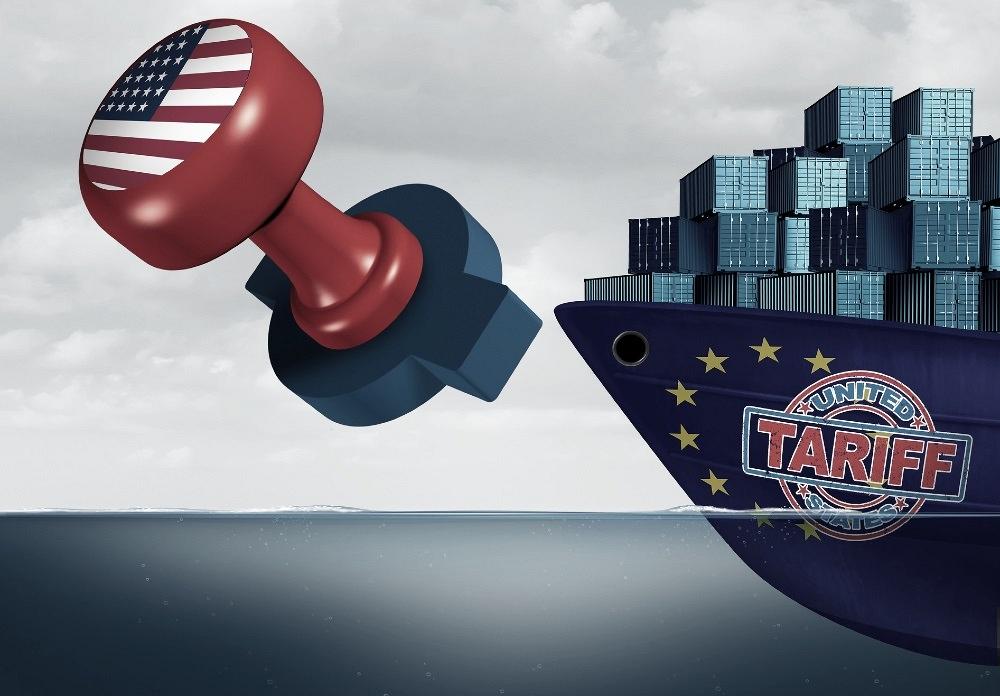
Section 232, unused quotas justify safeguard extension: Federacciai
Italian producers’ association Federacciai has spoken in favour of the European Commission (EC) proposal to extend safeguard duties for three years beyond their expiry date of 30 June.
The association concedes the pandemic and strong recovery stimuli from all governments have created imbalanced supply and demand, and considerable price increases. However, it adds in a note sent to Kallanish: “The extension of the safeguard measures proposed by the European Commission is due to the persistence of the distortive protectionist measure raised by the United States, and cancelling these measures now would be irresponsible.”
The association argues that none of the existing product import quotas have been exhausted since the beginning of the year. This proves, it says, the European safeguard action has not prevented the free import of steel products in this phase of economic recovery.
Italian trade association Assofermet, together with the European Automobile Manufacturers’ Association (ACEA), have expressed a very different opinion. Assofermet believes the safeguard should be scrapped as it will impair the economic rebound from the impact of the Covid-19 pandemic. It will also exacerbate steel shortages, which are causing a slowdown in the downstream steel value chain, as well as the entire economy. ACEA said the move disregards the interests of downstream users of steel amid acute automotive steel shortages (see Kallanish passim).
The EC has notified parties to the investigation as well as the WTO of its intention to prolong steel safeguard measures. The proposal must be voted on and confirmed by EU member states; it is nevertheless not expected that significant changes will be made to the final measures. According to the EC proposal, a relaxation of tariff-free quotas by 3% annually would be implemented during the 2021-2024 period. Consultations on the proposal are taking place between 14 and 18 June.
Natalia Capra France
Eurofer ‘happy’ about EU safeguard extension, says Tachelet
European steelmakers’ association Eurofer is “happy” about EU steel safeguard measures being prolonged for another three years, association president Karl Tachelet told the audience of the Kallanish Europe Steel Markets conference on Wednesday.
Responding to those who claim the extension goes against free trade agreements and keeps the EU steel market overheated, Tachelet stated that, as a trade measure, the safeguard provides a safety net. This protects against market-disrupting trade deflection, primarily caused by US Section 232 measures.
“The function of the safeguard was never to micro-manage or respond to short-term tensions in demand, supply or prices. Rather, by designing liberalised tariff-free quotas, it has shown much restraint reflecting strict respect of WTO conditions and striking a balance between the interest of all operators,” he says.
The safeguard quota’s most ardent critics are European stockholders and end-users, and Turkish suppliers, whose share of European exports have declined considerably during the past three years. The former are claiming continuous low stock levels, despite the recovery of output in the EU, and a huge backlog with mills’ orders.
“We cannot bring enough steel and we have huge difficulties in supply and, therefore, customer satisfaction,” said Daniel Guinabert, EUROMETAL director general. Veysel Yayan, secretary general of the Turkish Steel Producers’ Association, said the extension is unnecessary as the market has already recovered in a big way and is balanced. The extension will keep EU steel prices artificially elevated and goes against the free trade agreement between Turkey and the EU, he added.
With the aim of rebalancing the market, safeguards allow users to deal with structural problems at the policy level, Tachelet said. “It is about capacity. We have fluctuations in demand leading to fluctuations in capacity utilisation, but structural excess capacity remains a problem,” he concluded.
Gestamp sees bumper sales in 2021
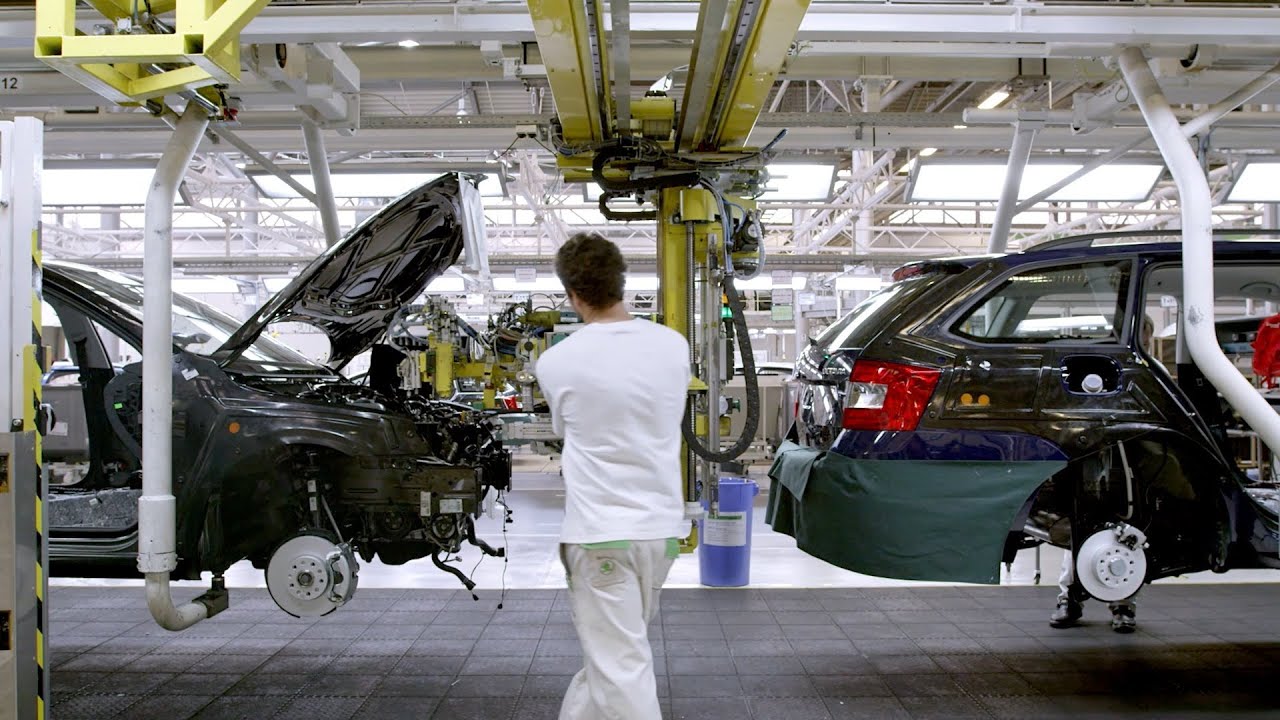
Gestamp, the Spanish-headquartered supplier of components to the global automotive sector, says it has already secured 95% of targeted revenue up to 2022 in its order book.
During its Capital Markets Day presentation, the company said that although the automotive market remains challenging in the short term, it expects its own sales to outperform the automotive industry average, Kallanish notes.
“We estimate strong Ebitda generation reaching 13% of revenue in 2022, through various levers leading to profitability improvements,” Gestamp comments. “The company’s strong presence in the largest growing regions and segments should support our strong market performance in the next years.”
Gestamp is now focused on increasing profitability and free cash flow generation in 2021. The group expects revenue to outperform the global auto production market by a mid-single-digit, while its transformation plan aims to achieve Ebitda margin above 12% by the end of 2021.
Beyond 2022, the company will focus on new opportunities while keeping a prudent financial profile, Gestamp adds.
Todor Kirkov Bulgaria
China, Europe pricing trends may drift apart: conference
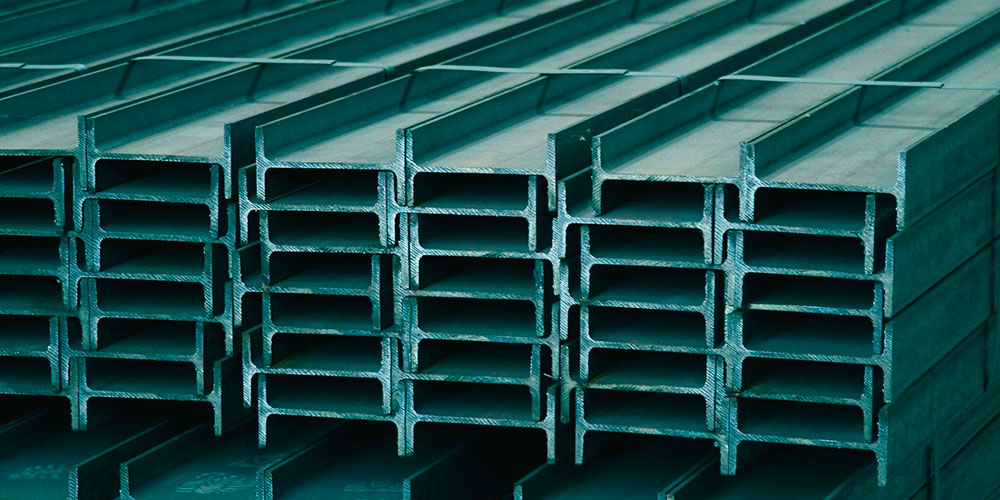
China’s control of its domestic steel industry could create price stability in the country, while in other regions, namely Europe, prices keep rising. This was suggested at the Kallanish Europe Steel Markets virtual conference on Wednesday by both Dick Sands of Stemcor and Kallanish European Editor Emanuele Norsa.
“China is keeping the lid on steel prices because, for them, it’s crucial to keep the local economy stable,” Sands said, with reference to the recent price correction and the taxation of exports. Unlike previously, “the export tax risk is now in the court of the buyer,” he noted.
Such moves can safeguard supply to the domestic market. Only then, China will take the next step – to reduce production internally in the interest avoiding pollution, without undermining the economy, Sands believes. He recounted a visit to the Korean coast years ago, “where the sky was blue when you looked east to Japan, and darkly polluted when you looked west to China”.
On the attitude of mills in Europe and North America, he stated that neither will be massively ramping up production, in the interest of keeping prices up. He believes this could sustain the high level of prices for years to come, a thought also expressed by Antonio Marcegaglia in the conference’s opening session (see separate story).
Looking at the moves of the new US government, he believes US prices should relax somewhat, while European prices may still inch up, “so that they will eventually converge later this year”.
Christian Koehl Germany