


Non-EU steelmakers will follow decarbonisation, hydrogen leads: conference
Steelmakers from countries outside the EU will have to decarbonise if they do not want to pay CO2 charges when supplying Europe in the near future, SSAB vice president of sustainable business Thomas Hörnfeldt said at the Kallanish Europe Steel Markets virtual conference on Wednesday.
“This will also help Asian companies; especially in China, we already see a strong political push for more green steel industry,” agreed Tenova chief executive Stefano Maggiolino. The technology maker is constructing for HBIS the first direct reduced iron plant in China, which will use 70% green hydrogen, scheduled for commissioning in 2022, he added.
More than 80% of China’s steel production is done through blast furnaces and mills there are now looking to a transition to electrification, Maggiolino continued.
Russia meanwhile has the huge advantage of enormous resources of natural gas, and its steelmakers can halve CO2 emissions if they produce hydrogen, he added. Tenova is building with OMK and Danieli a green DRI plant of 2.5 million tonnes/year capacity.
“The energy transition will lead to a higher cost in Europe and other countries due to use of hydrogen, but this gap will be closed over the years because the cost of CO2 emissions continues to go up, from €5/tonne in 2018 to €50/t today,” Hörnfeldtd said. “We believe that the switch to green steelmaking will not only be good for the environment, but it will also produce commercial competitive products.”
Due to the dynamics of the market and the reducing cost of natural gas, flexibility is key, noted Maggiolino. “And soon we will see that the cost of hydrogen will be lower and lower,” he added.
“The supply of electricity is a major question and the goal is to produce as much as possible, also with the help of wind parks and other renewable sources,” noted Hörnfeldt. “Our customers are showing great interest in fossil free steel and they are not disturbed that the costs of steelmaking will increase. Clean energy is a necessity in Europe and other countries, so we believe that the future is hydrogen.”
The steel industry needs to change and adapt to the future, and decarbonisation is the way, Hörnfeldt concluded.
Svetoslav Abrossimov Bulgaria

Supply to catch demand by year-end: Tata’s Adam
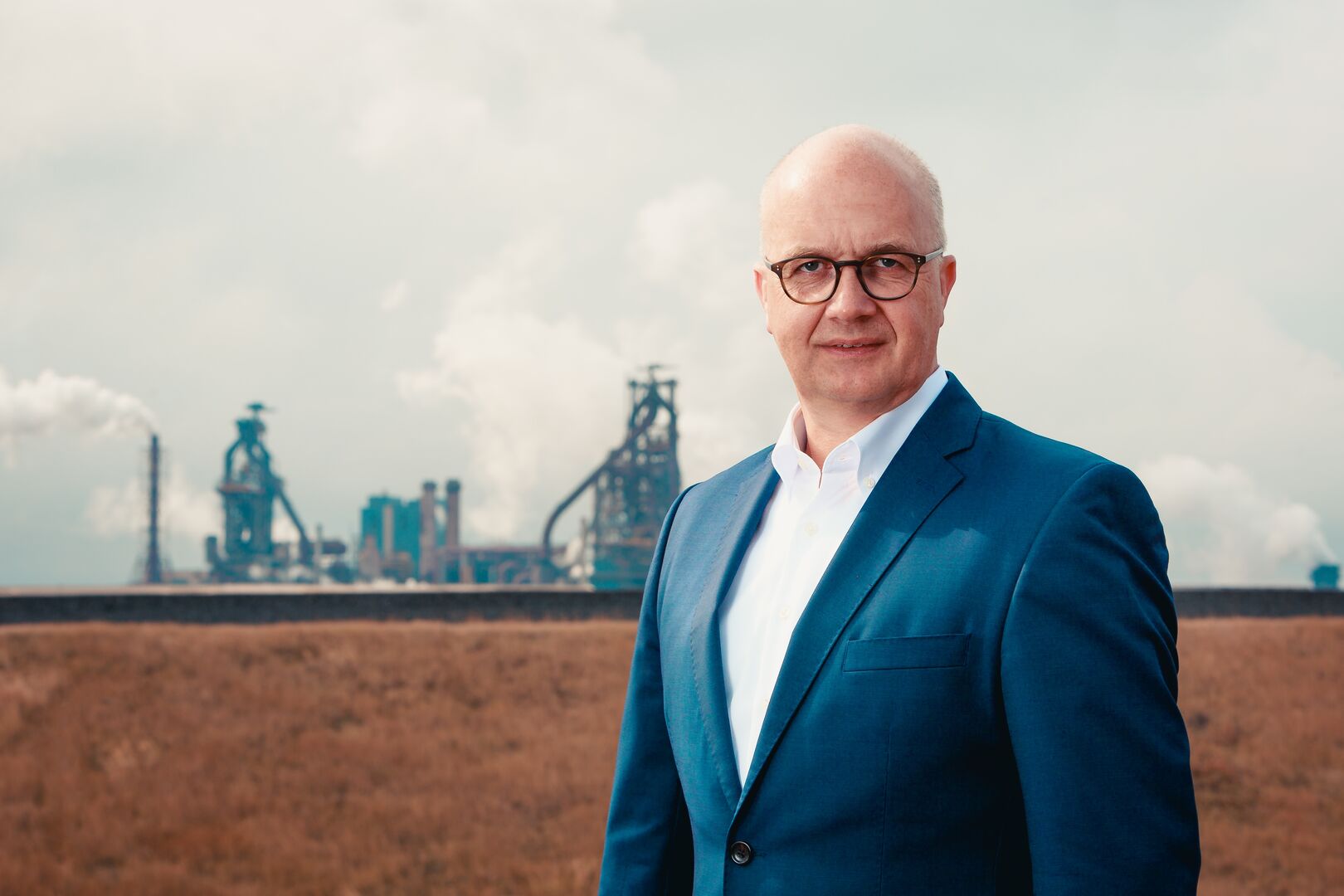
Steel demand and prices are forecast to remain structurally high, while supply and demand should become rebalanced post-Covid-19-impact at the end of this year, Tata Steel Europe chief executive Henrik Adam said at the Kallanish Europe Steel Markets virtual conference on Wednesday.
“Our cost of supply has increased with iron ore being at record high levels … I think the price level will remain high and also with a more local focus after the pandemic,” Adam observed. “The pricing will be at a different level compared to what it was in the past for quite some time.” High steel values are not the result of volatility and speculation but a structural change, he added.
Overcapacity has been halved globally over the last year. It went down from 800 million tonnes/year to 400mt. The pandemic took producers by surprise and reduced demand from some sectors by 90% “more or less overnight”, the ceo commented.
Producers are still struggling to return to a supply-demand balance because the overall supply chain has been shaken by unexpected lockdowns. “Since the beginning of the year we are getting back on track,” Adam observed. “It is not a one-time effort … From one cast of liquid steel we serve different customers and not just one group, so we need to constantly reshuffle our production schedule which is causing delays. We think it will be some time until we go back to a normal performance.”
It may take 6-9 months to rebalance supply and demand after the pandemic market disruption. Towards the end of the year customers should see the beginning of a normal supply situation from most mills, Adam forecasted.
Decarbonisation will also make steel more expensive due to increasing carbon costs and heavy investment to produce “green” steel. Tata Steel has decided to implement a carbon surcharge as a new structural element in its pricing. The CO2 price per tonne has increased from the end of last year from €30/tonne ($36) to €50/t. The surcharge will be applied for every new contract, the ceo confirmed.
Tata Steel is Europe’s third-largest producer with a crude steel output of 12m t/y. It has steelmaking sites in the Netherlands and UK, and distribution sites across Europe and other parts of the world. The company is heavily investing in decarbonisation of steelmaking, including in hydrogen technology, and looking at scrap as a means of decarbonisation to start moving away from iron ore.
Natalia Capra France
Americas becomes Turkey’s top sections export destination
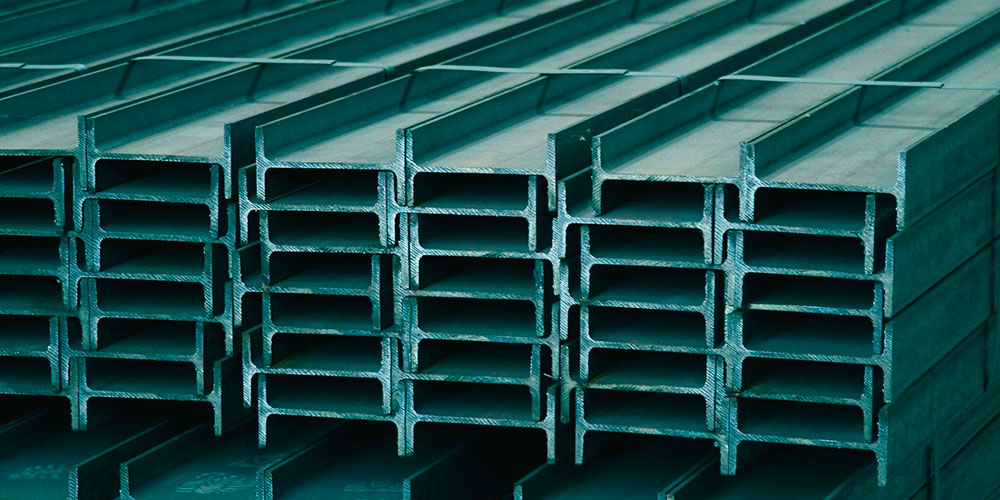
Turkish mills’ sections exports continued their rising trend in April, reaching 193,300 mt, 55,000 mt higher on year, as notably higher demand from South America and Canada, supported mills’ export volumes.
According to monthly Turkish Statistical Institute (TUIK) data, Peru became the largest importer of Turkish sections in April at 19,300 mt, around tenfold higher on year. The country, thus became Turkey’s top sections export market in the first four months of the year at 54,800 mt, more than fourfold higher on year.
Canada was another top sections export destination for Turkey in April at 14,300 mt, while Turkish mills’ shipments to Colombia reached 13,000 mt in that month, although no notable tonnages were shipped to these countries in the same period the previous year.
Turkish mills also exported 10,300 mt of sections to another South American country, Chile, in that month, around tenfold on year.
Turkish mills’ sections exports to the US, which rose more than double on year to 14,100 mt in Q1, however remained low at around 1,000 mt in the month.
Turkish mills’ exported 15,600 mt of sections to Egypt in April, lower than 20,100 mt exported in the same month the previous year, while exports to Malaysia totaled 9,800 mt, up by 75% on year, the latest data showed.
— Cenk Can
