


Export ban to damage EU scrap sector: Assofermet
Italian trade association Assofermet warns that any form of European scrap export ban could trigger a collapse in scrap values and would irreversibly compromise the entire scrap value chain.
In a letter sent to Kallanish, Assofermet invites the European Commission to boost the structural use of scrap as a means of decarbonising EU steelmaking. In Europe, only 42% of crude steel is produced from the electric arc furnace route, while 58% still derives from the integrated and more polluting route.
The association is troubled by a yearly excess production of scrap which is not absorbed by local steelmakers. In 2020, out of a total 101 million tonnes of scrap collected, only 77.8mt were used by European steelmakers, while the remaining 23.5mt were exported to third countries, Assofermet observes.
In order to keep and use the entirety of European scrap output, the EU should proceed to a major restructuring of the local steelmaking sector. This would imply the closure and replacement of most blast furnaces with new EAFs, with significant investments and a well-defined structural medium- and long-term shift for the steel industry.
The association however mentions the Italian market as being unique in Europe. Last year EAFs produced 84.7% of steel in the country versus only 15.3% from the sole integrated producer in Italy, Acciaierie d’Italia in Taranto.
Domestic demand for scrap is approximately 20m t/year, considerably higher than national generation, which forces mills to import scrap from other European countries. In 2020 Italian producers bought 4.9mt of European scrap. Italy also exported 0.45mt to countries outside the EU, Assofermet concludes.
Natalia Capra France

Hopes surface for Magona restart
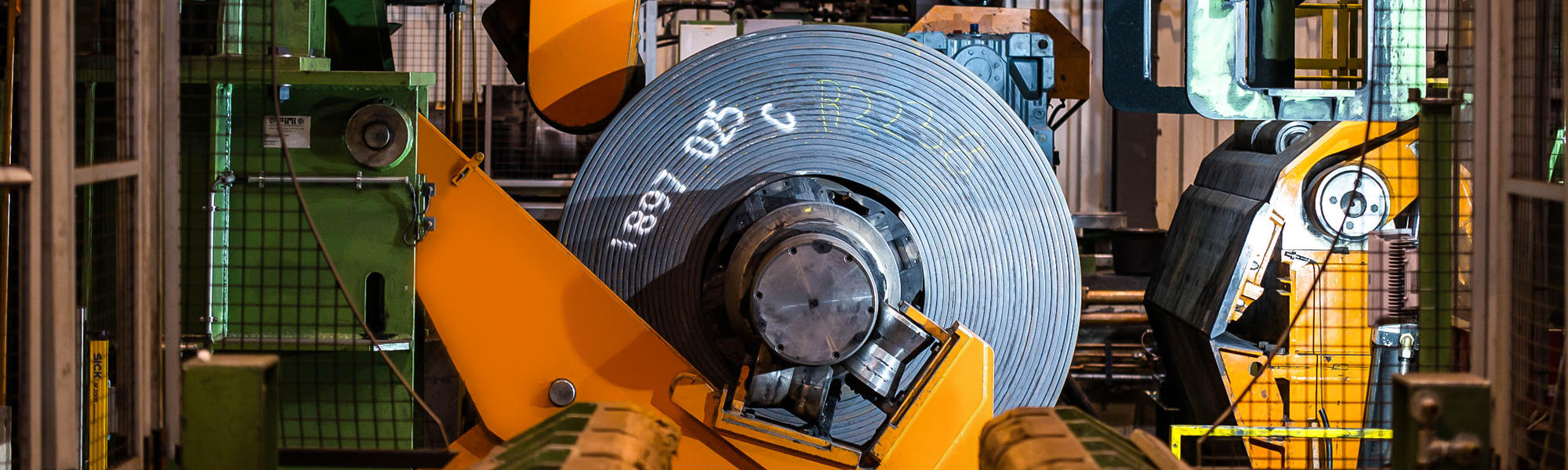
Liberty Steel’s Italian re-rolling plant, Magona in Piombino, is expected to resume some activity by the end of July if the steelmaking group’s restructuring plan is successful.
Liberty plans to merge its Liège-Dudelange and Magona coil processing plants into the Liberty Galati organisation (see Kallanish 29 June). The Romanian steelworks will become their primary hot rolled coil provider, to ensure sustainable feedstock supply.
The idea of creating “a downstream cluster” stems from the strong demand, high margins and full order books that Liberty is registering at all its coil processing units, sources in Italy say. The steelmaker is trying to repay the outstanding debt that Liege has with ArcelorMittal Fos-sur-Mer, so that the latter can resume supplying HRC to its re-rolling plants, including Magona.
The last operational line at Magona, coating line no. 2, will be idled on 30 June as the plant has consumed its entire HRC stocks. Reduced supply from Magona has worsened the hot-dipped galvanised coil shortage in Italy, with prices reaching €1,400/tonne ($1,666) base ex-works for small tonnages and prompt delivery, Kallanish notes.
Meanwhile, Liberty Galati is registering strong financial results and has raised its 2021 production target after it achieved in Q1 its best quarterly performance since 2008. Revenue in Q1 was RON 1.77 billion ($428 million) and Ebitda was RON 256m. In full-year 2020 revenue and Ebitda were RON 4.7 billion and RON 187m respectively (see separate article).
Magona has a capacity of 600,000 tonnes/year. It counts one pickling line, two rolling mills, two galvanising lines and one coating line. One other galvanising line was idled in 2010.
Natalia Capra France
Strike, low output hit Spain’s Celsa Atlantic
Celsa Atlantic, the rolling and processing mill in northern Spain controlled by Celsa group, is suffering this week from a set of strikes affecting overall production.
Local trade unions confirm that almost all workers at the mill participated in the 24 hour-long strike held on Monday. A second 24-hour strike will be implemented on 30 June and further 16-hour strikes have been called for 3 and 10 July.
Unions have called the strikes to demonstrate against the fact that the mill’s management has not agreed a new collective labour agreement since 2019, Kallanish notes.
In a statement, unions also express concerns over the future of the plant as they calculate production is now at 50% of the installed 1 million tonnes/year capacity, despite demand being strong. Market sources have nevertheless pointed out that the current production level has been stable for the last five years at least, indicating therefore that it is not something linked with a strategy change within the company.
“One of the demands of the labour committee is the utilisation of the parts of the facilities that are stopped and a real investment plan that will guarantee the future of the factory,” trade unions say.
Celsa Atlantic produces light long products for the construction sector, rolling mainly billet sourced from the group’s EAF mill in France.
Emanuele Norsa Italy

US Sheet buyers watch another hot-rolled record emerge
US sheet players confirm that hot-rolled coil is now operating north of $1,700/short ton – yet another new, record high, Kallanish reports.
A source at one top-tier mill says “multiple transactions” have been done north of $1,700/st for hot-rolled, as well as at $1,950-2,000/st for cold-rolled coil and galvanised substrate.
A Midwest service centre source believes that published indices will shortly establish that number as a firm floor – especially considering there will be no industry-wide shutdown this Fourth of July holiday.
The twin hammers of Covid-19 and the semiconductor shortage have spurred auto producers to play catch-up since the end of last year, leading to the historic run-up in sheet pricing.
Multiple sources have been predicting a quick, sharp drop over the past several months as record after record falls. As a result, virtually no buying is being done on a speculative basis, a West Coast buyer said late last week.
On Monday, Kallanish raised its hot-rolled assessment to $1,700-1,750/st and its cold-rolled assessment to $1,900-1,950/st. All prices are ex-works, domestic mill, transactional pricing.
Dan Hilliard USA
Kardemir raises third quarter long steel sales target
Major Turkish integrated long steel producer Kardemir is planning to sell 563,000 mt of steel in the third quarter, 10,000 mt higher than its sales target of 553,000 mt for the second quarter.
The company’s Q3 target was, however, notably 84,000 mt lower than its sales target for the same period the previous year.
Kardemir set its Q3 billet sales target at 173,000 mt, up 3.6% on quarter, while the company’s Q3 rebar sales target stands at 142,000 mt, flat on quarter.
Kardemir’s sections sales in Q3 are expected to reach 109,000 mt, while the company’s sales target for wire rod in the period stands at 139,000 mt, both relatively stable on quarter.
Kardemir is in the process of expanding its value-added product range, having placed an order with SMS group for the modernization of its rod mill to produce more compact coils specifically for transport and container shipping. Commissioning is set for the beginning of 2022.
— Cenk Can
