

Europe steel-raw materials spreads continue to rise in June, Q2 hits record
The European hot-rolled coil steel and raw materials price spread continued to rise in June, with higher spot coil pricing and new mill offers compensating rising last month’s rise in met coal, iron ore and scrap costs.
The Northwest European HRC-steel raw materials spread increased to Eur761/mt ($913/mt) in June, from Eur716/mt in May, according to estimates by S&P Global Platts on July 1. In the second quarter, the European HRC spread averaged a new record high Eur695/mt, up 61% from Q1, on the back of record steel prices.
Steel margins have remained strong, building from a low of Eur193/mt in June 2020. Spot-based HRC spreads tracked during much of 2020 were well below operating break-even, based on industry data.
An HRC-raw material spread of Eur250/mt is said to be close to typical operating breakeven for commodity grade steel at regional blast furnace mills, operating facilities at higher capacity utilization. In 2019, the spread averaged around Eur241/mt.
The rise in spot prices for commodity-grade HRC over the second quarter were said to be not yet fully absorbed into sales and deliveries for a range of coils, with steel plate and some long-steel prices lagging coils.
Those factors limited the scope of indicative steel mill margins based off underlying spreads using spot HRC and main raw materials prices, setting mills up for a more cautious second-half due to higher raw materials costs, according to procurement executives.
Iron ore, scrap and coking coal costs delivered in Northwest Europe and basis Rotterdam port rose sharply during the month. Spot HRC prices remained strong, falling in the last few days of June.
Actual steel margins depend on realized steel sales volumes, and the mix of pricing and terms in sales and contracts.
The effects of managing inventory and quotation periods on top of additional costs in running operations after disruptions last year continue to lag on steel company margins and earnings, with company guidance and analysts expecting stronger prices and orders since Q4 2020 to be reflected more in Q2 and Q3 results.
China, US spreads
In China, the spread between HRC export prices and iron ore and coking coal costs fell to $390.94/mt in June, from $478.28/mt in May.
Lower steel prices and high raw materials costs squeezed indicative margins, during a period of steel price volatility in Chinese domestic markets. The China HRC export spread was lower than June’s average at $345.52/mt on July 1.
US HRC to shredded scrap spreads reached a record of $1232.16/st in June, from $1,1164.61/st in May. Stronger US steel prices outpaced a rise in Midwest shredded scrap pricing.
In Europe, higher steel prices continued to outpace a basket of reference steel raw materials costs, with iron ore and met coal costs with scrap per ton of crude steel moving up to Eur397/mt in June, from Eur363/mt in May, according to Platts estimates.
The latest Platts HRC-raw materials spread of Eur761/mt for June was the highest since at least April 2016 — when the spreads were first tracked by Platts. June saw a new record for spot HRC steel, averaging at Eur1,158/mt ex-works Ruhr, up 7.2% from May.
Steel mills increased official price offers on new orders further in June, with reported increases slowing from earlier in the year.
EU mills ran at higher pig iron and steel rates in May than a year earlier and compared with April, factoring in recovery from the COVID-19 pandemic, according to World Steel Association data.
EU pig iron rates were 36% higher at 6.82 million mt in May, and for January-May were 11% up at 32.9 million mt, from a year earlier.
Iron ore prices in China, used as a benchmark for global seaborne contracts, rose to $214.55/dry mt CFR China in June, up 4.3% from the prior month.
Coking coal prices on a delivered net forward basis into Rotterdam rose 31% from May to average at $192.66/mt CFR Rotterdam in June.
With the rebound in Australian prices, Platts estimates took into account changes in price relativities for US coking coals and PCIs to the Premium HCC FOB Australia benchmark for pig iron costs.
Northern Europe
Regional northern European shredded scrap prices rose 10% to Eur432.50/mt delivered basis in June, as European scrap costs rose to a new high, from an earlier peak in May.
Platts steel to raw material price spreads are indicative margins that do not account for inland logistic costs, power, natural gas or other blast furnace and steel-making inputs such as ferroalloys, anodes and refractories. Costs to operate sintering and coke plants are not included.
Break-even levels in Europe are partly dependent on logistics costs and raw material configurations.
Platts European HRC spreads are based on commodity-grade flat steel specifications. Contract steel sales may have additional grade and specification-based premiums, and terms may lag spot indexes.
Producers with higher grade steel portfolios may be less exposed to commodity-grade steel margins against underlying steel raw materials costs.
— Hector Forster

Liberty agrees Ascoval, Hayange sale to Saarstahl
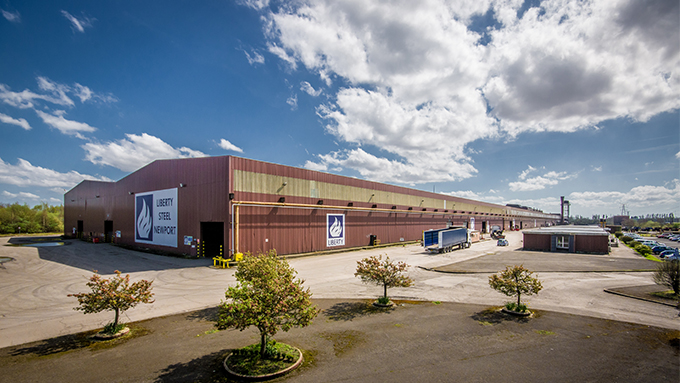
An “agreement in principle” has been signed between Liberty Steel and Germany’s Saarstahl for the takeover of Liberty’s France-based Ascoval and Hayange units, the French finance ministry says. ArcelorMittal and Italy’s Beltrame were also among the bidders.
“This agreement in principle has yet to be strengthened, which is why the government will be very careful to ensure that the elements of securing this sale are provided in the next few hours … [This agreement] creates a new European player and it is very good news for the future of the French steel industry and for the employees of the two sites. It affirms our commitment … to ensure the sustainability of their employment and the strategic activity for the French steel industry,” finance minister Bruno Le Maire says in a note seen by Kallanish.
Both Ascoval and Hayange have faced a significant reduction in working capital support since the collapse of Greensill, a Liberty spokesperson says. “Although we are keen to keep Liberty Steel France (LSF) within the Group, we have also identified two credible buyers, in ArcelorMittal and Saarstahl, who will be able to build on our ambitions for the business,” he tells Kallanish. “LSF’s main stakeholders will now decide the best way to ensure the plants’ employees, customers and other stakeholders can have confidence in the sustainable future of the businesses.”
Ascoval produces continuous cast rounds and forged products at a production facility in Saint-Saulve, France. It recently started the production of blooms and square billet for a variety of applications, including rail blooms, which are supplied solely to Liberty Rail in Hayange.
Liberty parent company GFG Alliance is restructuring to be able to pay back creditors following the collapse of lender Greensill Capital. Among other things, the group has focused on securing feedstock supply for its European downstream coil plants and is selling non-core UK units.
The company plans to merge its Liège-Dudelange and Magona coil processing plants into the Liberty Galati organisation. The Romanian steelworks will become their primary hot rolled coil provider, to ensure sustainable feedstock supply. The closer link to the downstream plants will allow Galati to offer a wider product range to customers in Central and South Eastern Europe. Piombino-based Magona is expected to resume some activity by the end of July if the steelmaking group’s restructuring plan is successful (see Kallanish passim).

British Steel offers new weathering steel sections
British Steel has started offering weathering steel structural sections for the construction market. The steel is produced at its Scunthorpe works and then rolled into sections at its Teesside Beam Mill.
The steelmaker says weathering steel, thanks to its durability, is ideal for outdoor structures in exposed locations, including bridges, buildings and catenary gantries on railway lines. The steel’s corrosion rate is low, meaning structures fabricated from unpainted weathering steel can achieve long lifespans – in some cases up to 120 years – with minimal maintenance.
“It is a high-strength, low alloy steel that defends itself from corrosion by forming a protective oxide patina (layer), eliminating the need for paint or other protective coatings. This makes weathering steel an attractive and economic solution for many structures,” British Steel commercial director Ben Cunliffe says in a note seen by Kallanish.
Last December the steelmaker started offering high-strength structural steel for construction made from the new S460M grade (see Kallanish passim). Earlier this year the firm said it had earmarked £100 million ($139m) for investment in 2021. Among other things, it will build a new billet caster and a scrap pre-heating facility. Xijun Cao became British Steel president in April.
Adam Smith Germany

UK increases second-quarter exports to EU
The UK increased its second-quarter steel exports to the EU by 76,000 tonnes to nearly 500,000t, UK steel distributors’ association NASS informs Kallanish. Due to quota carry-over from the previous quarter, the UK had a much larger overall EU quota size of 966,000t, of which 51% was consumed, compared to 708,000t in Q1, of which 59% was consumed.
The UK had additional quota available to export to the EU tariff-free and although activity has improved compared to the previous quarter, it is still 20% below historical export levels. Only one product category reached critical status, Other Welded Tubes (26) reaching 91% of its allocated 11,874t. Wire rod (16) accounted for the largest volume, with 121,713t exported, using up 72% of its quota.
Similarly on the UK import front, 51% of second-quarter quotas were used-up across product categories and including carry over amount. The only product category where quota was exhausted from all origins was Rail (19), while organic-coated steel (5) also reached critical with 93% of overall quota consumed.
As of 1 July the expanded quotas of the new EU and UK safeguards regimes have taken effect.
UK trade secretary Liz Truss said on Wednesday the government is making new regulations by extending safeguards on another five of the 19 steel products for one year by public notice (seeKallaish passim). These are non-alloy and other alloy quarto plate, non-alloy and other alloy merchant bar and light sections, non-alloy and other alloy wire rod, and finally angles, shapes and sections of iron or non-alloy steel.
Adam Smith Germany
Merchant bar, sections, rod see UK safeguard extension
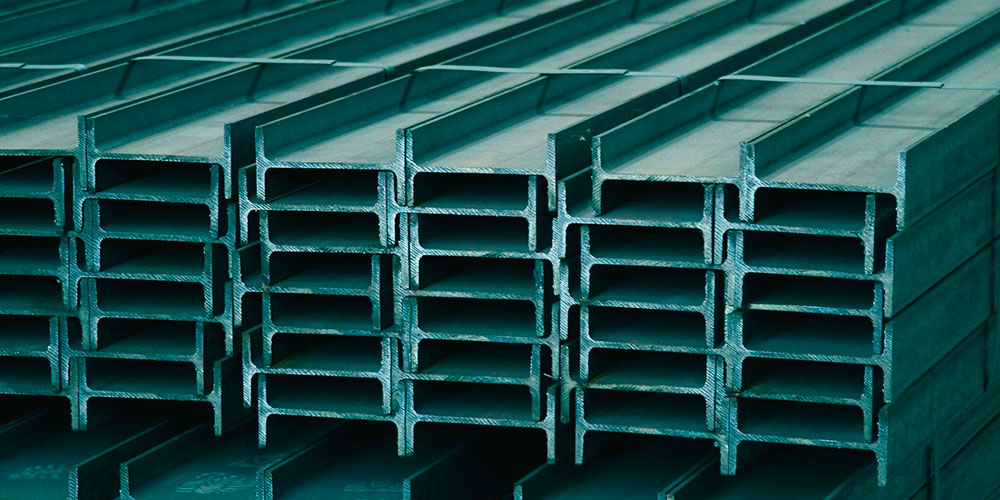
The five products on which the UK will extend safeguard measures for one year using emergency legislation are tin mill products, quarto plate, merchant bar, sections and wire rod.
Specifically, these are non-alloy and other alloy quarto plate, non-alloy and other alloy merchant bar and light sections, non-alloy and other alloy wire rod, and finally angles, shapes and sections of iron or non-alloy steel.
UK trade secretary Liz Truss said on Wednesday the government is making new regulations by extending safeguards on another five of the 19 steel products for one year by public notice (see Kallaish passim). In June the TRA proposed to extend safeguard measures on ten products for a further three years beyond 30 June, with nine slated to be revoked. Truss had to vote on whether to accept the TRA’s recommendation or to reject it, but could not amend it, according to current legislation.
UK Steel has praised the move. Its director general, Gareth Stace, says the government “demonstrated its commitment to the steel sector, by bringing forward emergency measures to ensure free and fair trade is maintained. The Government’s interventions will prevent an anticipated wave of overseas steel flooding our market, that would have cost jobs, investment, and our ability to decarbonise as a sector, threatening the UK’s road to net-zero”.
“The steel sector still faces challenges; crippling electricity costs and a difficult procurement environment and will continue to work with government to address these, but without the action taken by Government today, the sector would have faced a potentially existential threat,” Stace continues.
“It is vital we now work with partners like the EU, and the US to address the underlying issues that are destabilising global steel markets,” he adds. “Safeguards are not a long-term solution, and the ultimate goal here is global market for steel where we all play by the same rules.”
Adam Smith Germany