


Spain’s crude steel production remains firm in June
Spanish steel sector activity has continued its post-Covid-19 recovery, registering in June the second-highest monthly production of the last 12 months.
According to Spanish steelmakers’ association Unesid, the local steel industry produced around 1.31 million tonnes of crude steel in the month. This was 2.4% down on the record output of 1.35mt in May, but 58% higher on-year.
Between January and June, Spanish monthly output ranged from 1.05mt to 1.35mt, data show.
January-June cumulative crude steel production reached 7.45mt. Unesid did not disclose an on-year comparison in its latest report, but taking worldsteel figures into account, the growth is estimated at 35%, Kallanish notes.
Spain used 1.08mt of ferrous scrap for steelmaking in June, the highest monthly volume over the last 12 months, Unesid confirms. Six-month scrap usage was 5.91mt, representing 79.4% of total crude steel production in the period.
Todor Kirkov Bulgaria
EU opens Korea rope anti-dumping exemption review
The European Commission (EC) has initiated a review of existing anti-dumping measures on steel ropes and cables originating from China and South Korea.
The review, launched on the own initiative of the EC, will determine whether South Korean supplier Young Heung can still benefit from an exemption from the existing duties, which were last confirmed in April 2018.
The original duties were levied on China and later extended to product from Korea and Morocco as a result of anti-circumvention investigations. A number of Moroccan and South Korean companies, though, were granted exemptions. Among these was Young Heung, but “there is sufficient evidence that the circumstances on the basis of which the exemption was granted to Young Heung have significantly changed and that these changes are of a lasting nature”, the EC says in a note read by Kallanish.
“On 6 May 2020 Young Heung requested a change of name to Youngwire. However, the documentation provided showed that Young Heung has undergone an important reorganisation, including through the acquisition of the assets of another Korean exporter benefitting from the exemption, Dae Heung Industrial Co. Ltd,” the official document explains.
“It is considered that these significant changes, which have come to light in the context of the name change request, could have affected the company’s entitlement to an exemption from the anti-circumvention measures in force on imports of the product under review from the Republic of Korea,” it adds.
The review will be concluded by next summer.
Emanuele Norsa Italy
Oxygen supply disruption halts NLMK BOF shop No.2
NLMK was forced to halt production at the recently modernised BOF shop No.2 at its flagship Russian Lipetsk works after the pipework supplying oxygen to the shop was damaged in an incident on Monday morning.
The incident has not affected main production equipment or transportation structure, and repairs will take around 48 hours, with an output loss expected accordingly, an NLMK representative says.
With a nameplate capacity of 8.5 million tonnes/year of crude steel based on 2020 output numbers, the production losses during the repair time are currently estimated at 4,657 tonnes, Kallanish calculates based on information supplied by NLMK.
The incident has not affected other production facilities, which continue to operate at capacity levels, NLMK adds.
The firm has recently completed a series of environmental upgrades at the Lipetsk site, reducing dust emissions at BOFshop No.2 by 2.5 times. The shop produces over 60% of Lipetsk’s steel output. BOF shop NO.2 nameplate capacity will have increased by around 15% by the end of 2021 to around 10m t/y, thanks to these upgrades, NLMK says.
MMK Metalurji starts rolling HRC, sets HDG record
Russia’s MMK has completed testing of the entire production cycle, including casting and rolling modules, at its Turkey-based Metalurji works. The EAF, casting and rolling modules have resumed operations and are now ramping up production, the company says.
The firm is planning to produce 200,000-260,000 tonnes of hot rolled coil this year, lifting output to the nameplate 2 million tonnes/year in 2022. So far, 5,800t of HRC was produced, which was used in the downstream production of galvanised coils, contributing to Metalurji achieving a new record-high output of hot-dip galvanized coil.
Output at the two hot-dip galvanising units at Metalurji’s sites in Iskenderun and Istanbul reached 45,219t and 41,221t, respectively, totalling 86,440t in July.
This trumped the previous, January 2021 record of 78,613t, achieved amid difficulties in securing feedstock from the Russian parent company on the back of logistical difficulties, which reflected in lower-than-expected first-quarter HDG output (see Kallanish passim). Output in 2020 increased by 2.8% on-year to 741,000t, with Ebitda at $34 million and profitability at 6.6% after years of negative margins.
Metalurji’s EAF was idled in 2012, on the back of unfavourable market conditions, after a 2009 launch. The complex in Iskenderun also includes a modern seaport capable of receiving vessels of up to 100,000 light displacement tonnage.
TK, SSAB scale up steel shipments; long wait for tariff leniency ahead
The US and EU remain in close negotiations regarding the future of Section 232 steel and aluminum duties placed by the US on imports from the EU and elsewhere. Both sides have “confirmed readiness to find a solution by Nov. 1” after a July 29 meeting between US Commerce Secretary Gina Raimondo and European Commission Trade Commissioner Valdis Dombrovskis, Politico reported.
Other tariff packages imposed by the Trump administration have either been abandoned – as in the case of four Section 232 tariff packages, discussed in Panjiva’s research of Aug. 5 – or under negotiation with US allies.
Matters will be complicated by the EU’s rollout of its “Fit for 55” program and its associated Carbon Border Adjustment Mechanism, which will target the steel and aluminum sectors in its first phase. Similar legislation in the US seems unlikely to get underway in the near term.
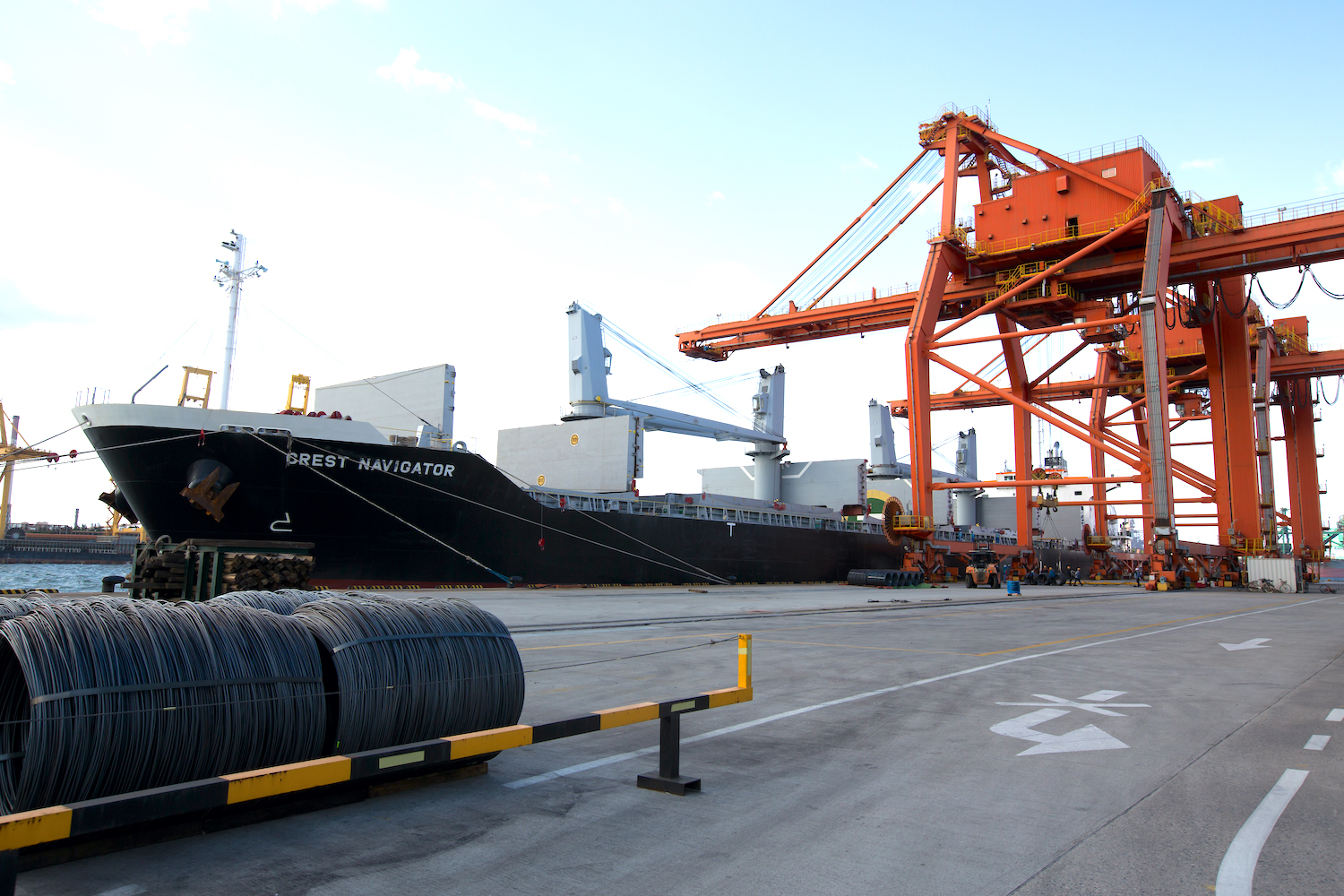
The EU may be keen to increase shipments, given EU steel exporters have been losing ground to suppliers in Mexico and Canada following the latter’s exemption from tariffs as part of the United States-Mexico-Canada Agreement. Panjiva data shows total U.S. imports of steel and aluminum covered by the tariffs increased 15.3% in the second quarter of 2021 versus the second quarter of 2019. Shipments from the USMCA member countries surged 84.7%, while those from the EU fell 17.0%.
Panjiva data shows US seaborne imports of steel and aluminum products from the EU increased 28.3% year over year in July, led by a 113.3% surge in shipments linked to thyssenkrupp AG and a 48.3% rise in shipments associated with SSAB AB. While potentially reflecting a preparedness for reduced tariffs, it is also worth noting that both total shipments and those linked to most companies are still below their 2019 levels.
— Eric Oak, Panjiva Research, S&P Global Market Intelligence


European HRC market prices soften amid slow buying period
European HRC prices showed further signs of gradual decline Aug. 9, with market participants weighing the effects of the Chinese tax rebate removal and what this could mean for future imports arriving into the EU, as well as the recent catastrophic flooding in Europe, and what bullish effect this could have on prices, sources told S&P Global Platts.
The market still saw relatively tepid activity, with few bookings to speak of, though domestic price decreases have been apparent, with the Italian HRC market dropping by nearly Eur68/mt since the start of July.
An Italian distributor said the first week of August was particularly slow, but noted that Eur1050/mt ex-works Italy was possible for HRC orders. Another deal was heard just slightly higher at Eur1060/mt ex-works Italy, with their being more availability on hot-rolled coil than in cold-rolled coils and hot-dip galvanized sheet.
Platts assessed North European HRC prices at Eur1150/mt ex-works Ruhr, down Eur6/mt on the day to Aug. 9. Southern European prices remained stable at Eur1055/mt ex-works Italy.
In Northern Europe, a Nordic buyer said European prices had now reached “their peak” and did not think there would be further increases in the market.
Other sell-side sources said they expected a minimal increase of about Eur50/mt before the end of the year.
“For the coming two months there won’t be a hazard getting material because of incoming imports,” the Nordic buyer said. “German [supplier] delays are now on track. I think a lot of customers have ordered forward.”
There was uncertainty around what would result from the flooding – with several mills still on force majeure – and the future of Liberty Steel Group.
“If Liberty goes down it will be interesting to see who will pick up the slack,” the same buyer said. “With the floods we do have an issue.”
Liberty Steel Group has been seeking to divest some of its assets, particularly those with weak performance, since the collapse in March of Greensill Capital, the major financier of its parent company GFG Alliance, which pushed the group into a cash squeeze, as previously reported by Platts.
— Amanda Flint