

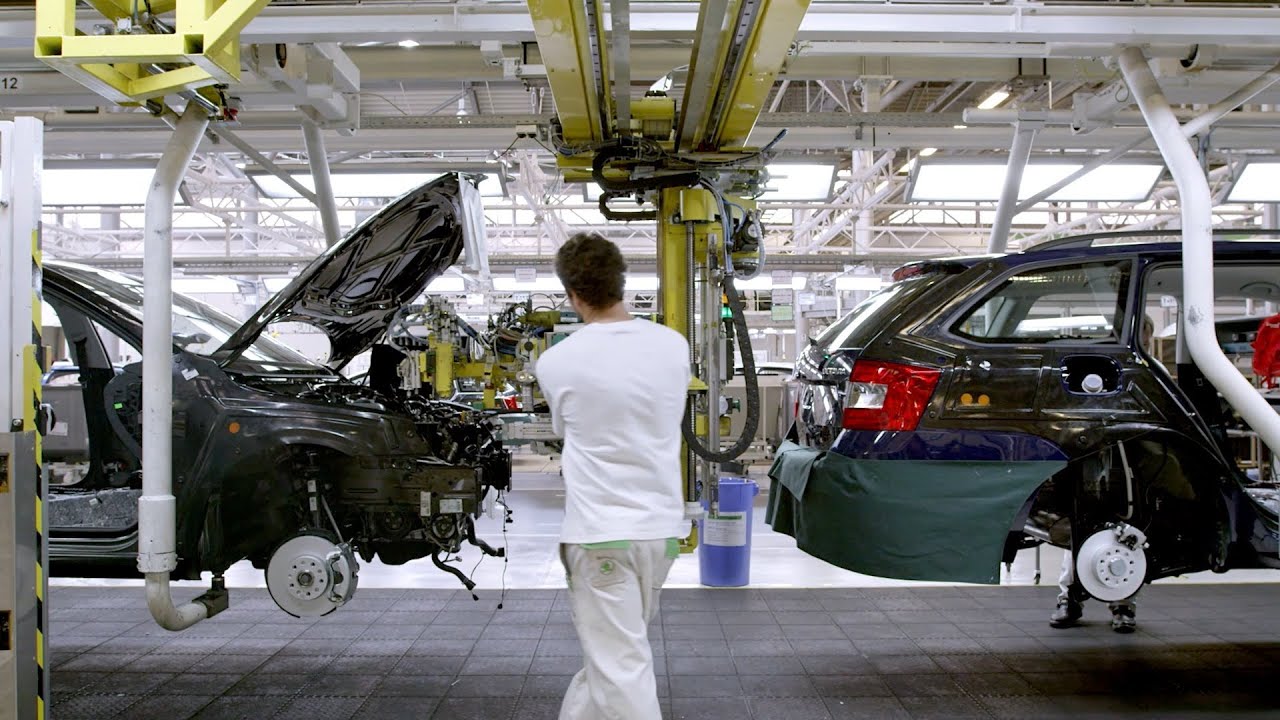
Global semiconductor demand for automotive increases: Fitch
Fitch Ratings has affirmed Japan-based semiconductor manufacturer Renesas’ long-term issuer default rating (IDR) and senior unsecured rating at BBB- and removed the ratings from rating watch negative (RWN). The outlook on the long-term IDR is stable.
“The stable outlook reflects our view that Renesas total debt with equity credit/operating Ebitda will improve to below 3.0x – the level above which Fitch may consider negative rating action – in 2022 on a June 2021 equity issuance and stronger operating performance,” the credit rating agency says in a note seen by Kallanish.
Fitch forecast Renesas’ like-for-like revenue to rise by around 20% in 2021.
“The strong growth will be supported by a recovery in the automotive industry, higher semiconductor content in electric vehicles and sustained strong demand for consumer electronics and industrial goods,” it claims.
The current global chip shortage also supports Renesas’ pricing power, and strengthens its ability to pass cost increases on to customers, the rating agency added.
“Global semiconductor content in the automotive segment is likely to rise on greater adoption of electric vehicles and autonomous driving,” Fitch says. “We believe Renesas could acquire another company in the medium term to expand its technological capability and product portfolio. The proposed acquisition of Dialog will be the company’s third major acquisition within five years, reflecting its aggressive M&A strategy.”
Earlier this month, Renesas said it expects semiconductor shortages for the automotive industry will continue until the middle of next year (see Kallanish passim).
The global semiconductor shortage has also hit this week Toyota Motor, the company says. Japan’s largest carmaker said Thursday it will reduce production in the country by 40% from 22 August to 17 September. The latest problem come after outbreak of Covid-19 infections in chip plant in Malaysia.
This week, Russian carmaker AVTOVAZ resumed some production sites after a hold in July due to semiconductor shortages. However, it said that this problem will likely continue during the rest of the year.
Last week, semiconductor shortages forced Nissan and Volvo to halt some production sites.
Global automotive production could rebound 7-9% on-year in 2021 but will be hampered by supply chain frictions, mainly the lack of semiconductors for OEMs, ING Bank said previously.
The disruption will cost automakers 3.8 million units in lost production in 2021, noted Fitch Ratings.
Svetoslav Abrossimov Bulgaria

Thyssenkrupp’s largest steel mill returns to operation
On Tuesday, thyssenkrupp Steel put its meltshop 2 back into operation after modernisation measures, Kallanish is told by the German company.
The furnace is part of its largest steel mill in Duisburg with an annual capacity of 5.4 million tonnes. It took a downtime period parallel to the ongoing relining of blast furnace 1, the hot metal of which is mainly processed into crude steel in meltshop 2. The scheduled downtime did not cause any additional production losses, the company claims.
The focus of the modernisation was the replacement of the ladle transport crane inside the workshop, which has a dead weight of 830t and transports the ladles filled with 265t of molten steel from the converter to the continuous caster.
With this investment in plant availability, thyssenkrupp Steel keeps optimising its production portfolio to future markets and profitable steel grades. This includes, for instance, ultrahigh-strength multi-phase steels, grades with high surface quality and steels for e-mobility.
Christian Koehl Germany
Iron ore collapses as sentiment overwhelmed
Seaborne iron ore prices collapsed on Thursday, falling sharply below expectations. Weak steel demand, production restrictions and a lack of support from overseas markets have all weighed on prices.
The Kallanish KORE 62% Fe index slumped a record $25.55/tonne to $132.37/dry metric tonne cfr Qingdao, the lowest level since November 2020. The Kallanish KORE 65% Fe index fell $19.35/t to $158.22/dmt cfr, and the KORE 58% Fe index dropped $18.40/t to $115.20/dmt cfr. About 170,000t of Carajas Fines traded on COREX at a floating price.
On the Dalian Commodity Exchange, January 2022 iron ore settled down CNY 46/t at CNY 775.5/t ($119.44/t), while on the Singapore Exchange September 62% Fe futures settled down $18.56/t at $130.60/t. The same contract for 65% Fe and 58% Fe futures settled down $25.09/t at $149.65/t, and down $2.50/t at $122.09/t respectively.
Scrap prices are belatedly responding to the decline in steel and iron ore prices as most mills begin to lower there purchasing prices for scrap delivered to their plants. 6mm+ heavy scrap delivered to mills in the Yangtze River Delta dropped CNY 32/t to CNY 3,726/t. Tangshan billet prices dropped more substantially by 100/t to CNY 4,880/t.
Iron ore sentiment had already been impacted by spreading restrictions on crude steel production, which had first set prices falling. The weaker economic outlook for China in the second half of 2021 was then signalled by the politburo and confirmed with July economic data released last week. Now, combined with the adjustment of expectations within China, the US Federal Reserve has also adjusted its expectations for credit conditions outside China. Iron ore prices could no longer resist the enormous downward pressure.
Now that prices have fallen so dramatically however, traders are not certain where prices will settle. Some expect further declines as the demand situation in China deteriorates. Others however say that prices have dropped too quickly and are due a correction upwards. Chinese steel demand is expected to bottom out shortly, and economic pressure could mean steel output also stabilises, they note.
EU steel buyers fear higher prices from potential US tariff removal
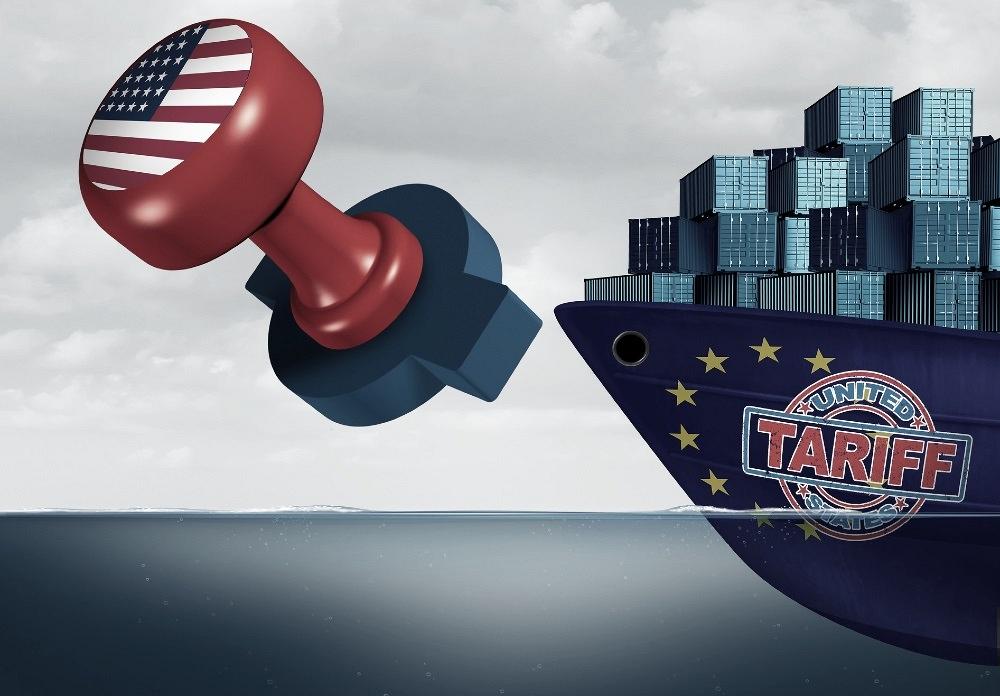
With the summer slow period on its way out, the European market is looking onwards to a possible settlement of the Section 232 steel tariff dispute on November 1, which could restore the flexibility of vital trade routes between Europe and the US, compliant with WTO regulations.
Should the tariff on European steel exports be abolished, domestic buyers fear another surge in local steel prices at a time when hot-rolled coil prices are still above Eur1100/mt ex-works Ruhr, and European domestic stock levels remain exceptionally tight.
The US and EU had previously agreed to work together in resolving a metals trade dispute, following from the former’s Section 232 steel and aluminum tariffs against European exporters by the end of the year, according to a joint statement released following the US-EU Summit June 15.
Reaching a settlement could prove difficult, however, with steel tariffs an integral component of the US steel industry, particularly in heavy-producing states like Ohio, Pennsylvania and Indiana.
There is currently no US steel quota system in place, while steel safeguard measures are firmly entrenched in the domestic European market. From July 1, the European steel safeguards were extended by a further three years and included only a marginal 3% increase to existing quota allowances.
EU steel market reacts, concerns build
Reactions to the potential removal of the Section 232 tariffs have been mixed from sources, with sell-side participants keen to capitalize on the arbitrage to the US, whereas higher domestic prices could spell financial trouble for buyers already struggling to extend credit limits.
“The elimination of 25% import tax for EU material into the US might lead to higher export from Europe and price increase here. All those with access to good logistics would benefit,” a German distributor said.
In the Benelux, a service center source said the Section 232 tariffs posed a “real threat” to Europe, but said higher domestic prices were necessary to finance green steel making.
“I think it’s the ambition of the EU to keep prices high in order to finance the transition to CO2-neutral steel melting; otherwise, the EU and individual states will have to subsidize enormous amounts to keep the steel industry in house,” the source said. The source added that China was watching the situation very closely.
If the tariff were to be scrapped, a Benelux buyer also agreed to the possibility of inflated European prices, but said it was unlikely the Biden administration would be easily swayed.
“I have the feeling [President] Biden has the same policy as Trump – America comes first – only he says it in a friendlier way!” the buyer said.
Former President Trump initiated a 25% steel tariff and 10% aluminum tariff on metal imports from most countries under Section 232 in March 2018. The tariff was imposed following Commerce’s investigation which found that surging steel and aluminum imports posed a national security threat.
Mills were mostly optimistic about the tariff discussions, having chosen to withhold raising their prices in anticipation of a possible Section 232 removal. Regardless, European producers are not in a rush to initiate another pricing surge, with current market dynamics working in their favor, a Benelux distributor source said.
“Mills are maintaining prices. They have good orderbooks, the month of September is sold. So, unless something significant like a decision on Section 232 happens, I don’t expect any change,” he said.
S&P Global Platts assessed North European HRC prices stable at Eur1,145/mt ex-works Ruhr August 19, and in Southern Europe, prices were steady at Eur1,045/mt ex-works Italy.
Since the start of the year, HRC Ruhr prices have climbed Eur480/mt, and in Italy, HRC prices have increased by nearly Eur390/mt.
A Turkish service center manager told Platts he didn’t expect the removal of Section 232 to have a serious upward effect on prices, as bearish sentiment has begun to dominate the global steel market sentiment in recent weeks, amid falling raw material prices.
“The effect of the Section 232 removal on prices could be short-lived amid the easing of the availability issues in the global market. Supply options widened. Indian producers are already in the market and Vietnamese producers are ready to enter both the EU and US with competitive prices. These suppliers could change the game plan,” he said.
US market perspective on Section 232 mixed
US market sources were also discussing outcomes from a potential resolution of the dispute.
“I am not convinced that there will be an immediate impact if EU is excluded from Section 232,” a US based trader said. “Everyone is talking about Nov. 1 for the date of a potential solution, but I believe there would be a 60- to 90-day transition period.”
The trader added that such decision would pull European prices higher but did not see it as a “game changer” for US pricing due to limited European idled capacity that could be brought back online in the short run.
Some buy-side sources, however, doubted the impact would be limited as they started seeing more European volumes getting booked in the US. Early August, buy-side sources started reporting HRC transactions at around $1,600/st and CRC transactions at around $1,800/st from at least two separate European mills. Prices were on Great Lakes DDP port basis with November arrival times.
Those import deals were still at a significant discount to US sheet prices. Platts US HRC index was at $1,901.75/st and CRC index at $2109.50/st on Aug. 18, both on ex-works Indiana basis.
— Amanda Flint, Ali Oktay, Rabia Arif, Cenk Can

Tosyali continues investments to reach 8.5 million mt/year target in Algeria
Tosyali Algerie, which produced more than 2.23 million mt of direct reduced iron (DRI) in 2020, a world record for a single direct reduction module, has continued investments to reach its 8.5 million mt/year capacity target in Algeria, according to Fuat Tosyali, CEO of Turkey’s Tosyali Holding.
Algeria was a net importer of rebar and wire rod when Tosyali started production in 2013 with initial capacity of 1.2 million mt/year of rebar. A 600,000 mt/year wire rod facility was added in 2015 and in 2018, Tosyali added 2.2 million mt/year of liquid steel for the production of billets, two rolling mills, and a 4 million mt/year pelletizing plant.
The company’s rebar production capacity is currently at 3.2 million mt/year. Tosyali also started production in early 2019 at its 400,000 mt/year helical submerged arc welding pipe mill, Tosyali Algeria Pipe.
The company also began the construction of a hot-rolled coil mill in Algeria with a capacity of 2 million mt/year, which is scheduled to start production at the end of 2022.
“Our value-added steel investments at our Algeria mill are continuing. We have already started the fourth phase of our investment plan. When all phases of our investments are completed, we will become a large industrial plant with a capacity of 8.5 million mt,” the CEO said. “We became prominent in the global competition with the technology that we are using. With the DRI technology, we are producing one of the world’s most green and environmentalist steels.”
Tosyali Holding is also continuing its value-added steel investments in Turkey. The company’s new 3.5 million mt flat steel mill is scheduled to start production at the end of 2022, Platts learned.
— Cenk Can

European HRC market more bearish on expectations of greater capacity
More European steel market sources are adopting a stronger bearish outlook on HRC price developments after the summer months, with domestic prices still stable Aug. 19. As more mills return from their maintenance periods and force majeure after the summer, and with automotive not expected to return with acute demand, prices could take a downturn, sources told S&P Global Platts.
More material was said to be available from mills, returning mills and imports, with large mills in Brazil and Serbia also heard to be offering into the EU after a quiet spell.
“The market is very quiet, and imports are a lot cheaper than they were in June – my feeling is that there will come some pressure and prices may decrease,” a European cold-roller source said.
How rapidly prices might fall still depends on the level of demand in the latter half of the year, though sources stood by their doubts about how strongly the automotive and construction sectors might rebound in September.
“Auto still has big problems with semiconductor and chip shortages. Our hope was that OEMs would have higher demand in the second half but [that] will be postponed to next year because of shortages of so many materials,” the same source said, adding that customers in other segments like construction don’t have enough staff.
In the Italian market, activity was quiet on the buy- and sell-sides, with most producers out for the entirety of August.
“The three weeks of August is closed for summer holiday and they have the big maintenance in the year. Consider that all the Italian companies are closed till end of this week,” an Italy-based trader told Platts.
— Amanda Flint