


How can the steel trade secure its competitiveness?
Fired by the corona-related restrictions in 2020, the steel trade is currently experiencing golden times. The steel price has risen continuously since the beginning of the year, and with it is the margin in steel trading. In the meantime, however, the procurement prices for retailers are also increasing and the gap between sales price and purchase price is slowly closing again. It remains difficult to predict precisely at what level a stable market price for steel will settle. For this reason, companies in the steel trade should now think strategically and actively secure the competitiveness of their product range in relation to other materials.
There are three main profit drivers in steel trading: the margin, the costs for the complex intralogistics and the smoothest possible processing processes. The companies have little influence on the margins that can be achieved; a further decrease in the trading range is only ever a matter of time. However, the intralogistics and processing are designed by the companies themselves, so this is where the greatest potential for optimization and thus for sustainable securing of one’s own competitiveness lies. It is essential for steel traders to focus now on the logistical processes and the efficiency in their processing. There is still unused potential for growth of 30% and more, which can be raised in a short time.
In order to facilitate the next step in the direction of strategic further development with the help of digital solutions, KALTENBACH.SOLUTIONS has developed a kind of quick check. With the help of the so-called BoostPILOT, the actual efficiency in the on-site processing is objectively measured in a period of only 5 weeks. The increase potential to be leveraged can then be calculated from the data and benchmarking can be created. Implementation is simple and inexpensive, as there are no costs for project management or employee training. After completion of the trial period, the companies have scientifically proven results that serve as the basis for answering central strategic questions about processing, machine procurement and warehouse logistics. When the measurements start in the 3rd quarter, the results can already be incorporated into the annual planning for 2022.
Further information on the BoostPILOT can be found at: kaltenbach-solutions.com
About KALTENBACH.SOLUTIONS
KALTENBACH.SOLUTIONS GmbH with offices in Düsseldorf and Freiburg strives for long-term cooperation with companies in the steel processing industry. We have set ourself the goal of becoming a preferred partner – for the benefit of both parties.
As a full-service provider with decades of experience in the steel industry, we develop innovative web- and AI-based industry solutions to increase performance in the field of operations. Thanks to many years of experience in mechanical engineering, KALTENBACH.SOLUTIONS has succeeded in connecting the world of steel with the digital world. This unique link guarantees our customers a measurable success and creates sustainable added value.
Press contact:
Nicola Chlench
T +49 800 454 0234
marketing@kaltenbach-solutions.com
kaltenbach-solutions.com
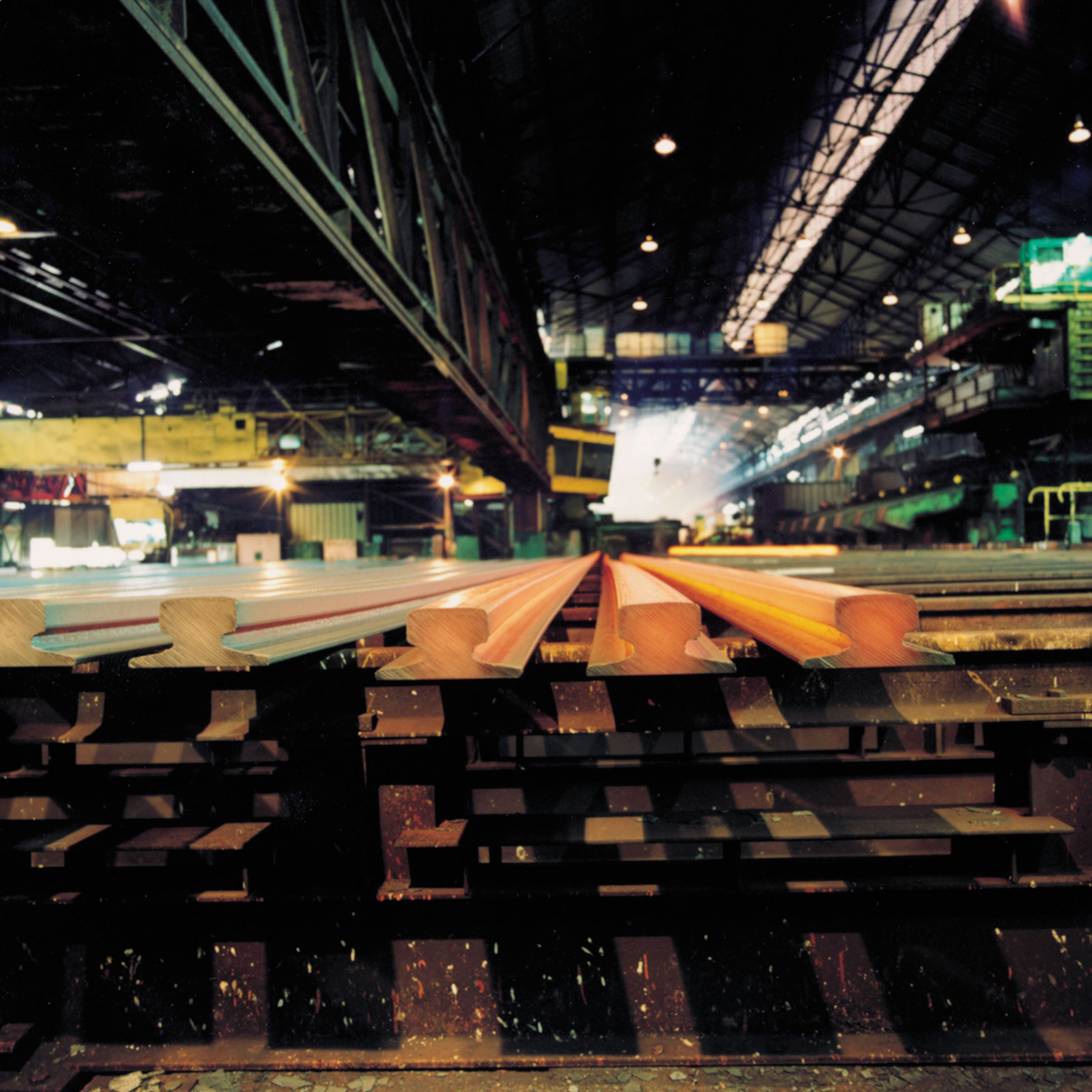
Globale Stahlproduktion stottert, Nachfrage erholt sich weiter
Wie die Commerzbank mitteilt ist die globale Stahlproduktion gemäß Daten des Weltstahlverbandes im Juli im Vergleich zum Vorjahr zwar um 3,3% auf 161,7 Mio. Tonnen gestiegen (5,22 Mio. Tonnen pro Tag). Auf Tagesbasis war dies aber die geringste Menge in diesem Jahr, was auf den Rückgang in China zurückzuführen ist (-8,4%).
Die chinesischen Zahlen wurden bereits letzte Woche vom Nationalen Statistikinstitut veröffentlicht und stellten daher keine Überraschung dar. Der Anteil Chinas an der weltweiten Produktion ist im Juli unter 54% zurückgefallen und war damit so niedrig wie zuletzt vor 1½ Jahren. Außerhalb Chinas wurde die Stahlproduktion um über 20% ausgeweitet, was mit der Corona-bedingt sehr niedrigen Vergleichsbasis zusammenhängt. In den größten stahlproduzierenden Ländern hinter China wurden im Juli bis zu 38% mehr Stahl hergestellt (USA).
Während China die Corona-Delle schon lange ausgebügelt hat, dürfte dies den meisten anderen großen Stahlproduzentenländern im Verlauf dieses Jahres gelingen. Neben der Produktion zieht auch die Nachfrage weiter an, so zum Beispiel in der EU. Der Verband der europäischen Stahlproduzenten, Eurofer, erwartet, dass die augenscheinliche Stahlnachfrage in diesem Jahr um gut 11% auf 143 Mio. Tonnen steigt und damit das Vor-Pandemieniveau nahezu erreicht. Im nächsten Jahr soll sie um knapp 4% zulegen. Das Rekordniveau aus dem Jahr 2018 dürfte laut Eurofer aber verfehlt werden.
Bis ins erste Quartal hinein – Details zum zweiten Quartal hat Eurofer noch nicht bekannt gegeben – waren demnach Haushaltsgeräte und die Automobilindustrie die wesentlichen Treiber der Stahlnachfrage in der EU. Die Preise für warm- und kaltgewalzten Stahl in Europa sind in den letzten Wochen nicht mehr weiter gestiegen und haben sich auf ihren Rekordhochs eingependelt. Ob die Rekordjagd damit beendet ist, lässt sich noch nicht sagen. Warmgewalzter Stahl kostet aktuell gut 1.200 EUR je Tonne, kaltgewalzter Stahl 1.350 EUR
Quelle: Commerzbank AG
27.08.2021 von Angelika Albrecht


LME scrap contracts see strong gains
Scrap futures contracts on the London Metal Exchange saw significant gains over the week to Aug. 26, while the near-term forward curve strengthened.
Platts assessed the August scrap contract up $2/mt week on week at $460.50/mt on Aug. 26, while the September contract increased $10.50/mt to $470.50/mt. The October contract jumped $14.50/mt week on week to $470.50/mt, while the November contract rose $11.50/mt to $465.50/mt.
The contango structure for the August-September portion of the forward curve strengthened week on week, suggesting that futures traders expect physical prices to gain in the near term. The backwardation structure for the September-October portion of the curve shifted into a flat structure, while the backwardation structure of the October to November portion of the curve strengthened slightly.
Spot prices for physical imports of premium heavy melting scrap 1/2 (80:20) dipped $2.50/mt week on week to $447.50/mt CFR Turkey on Aug. 26, as Turkish buyers held back on new purchases or indicated lower price targets that did not match suppliers’ quotations.
Turkish buyers may become more active again in early September, when they will be seeking October shipments. One European recycler said some mills had already started looking for October but were not providing firm bids. The recycler said Turks were unlikely to ease the pressure on scrap prices unless they start to sell significant volumes of finished steel to Asia. “The way they are talking to us it seems they are not getting much action,” he said.
Weekly LME scrap futures trading volumes over the week to Aug. 26 totaled 5,760 mt, down from 16,320 mt recorded the week before.
For near-term rebar futures on the London Metal Exchange , the August-September portion of the forward curve shifted into a slight backwardation from a strong contango the previous week, while the September-October portion of the curve moved into a soft contango. This suggested futures traders expect physical rebar prices to continue to soften slightly in the near term given poor physical steel demand, before gaining some strength as the fourth quarter begins. The October to November potion of the curve shifted into slight backwardation, compared to a soft contango a week earlier.
Platts assessed the August contract up $6/mt week on week at $695.50/mt on Aug. 26, while the September contract dropped $5/mt to $694.50/mt. The October contract was unchanged at $699.50/mt, while the November contract fell $9.50/mt week on week to $695/mt.
Turkish physical rebar export prices fell $9/mt week on week to $670/mt FOB on Aug. 26, as scrap prices softened, and a continuous lack of demand kept pushing workable levels lower. Holidays in Europe, as well as fierce competition from Indian and Vietnamese mills in the Far East, along with high freight rates, continued to significantly hinder the ability of Turkish mills to sell large tonnages to Singapore and Hong Kong.
One European trader told S&P Global Platts that Turkish mills might be able to sell rebar to Europe at higher prices than the general market. “But the matter of fact is that the October quota is well overpassed. So, buying for Europe now means paying the 25% [antidumping duty] or customs clear [shipments] in January,” he said. “So I don’t see the sense in buying for Europe, unless the price plus the 25% is well cheaper than local pricing.”
The source said Turkish mills need to sell below $600/mt FOB to Europe to make it worthwhile, including the 25% duty, or sell to Africa, Asia or South America, since Turkish rebar prices are competitive for those destinations.
The daily outright spread between Turkish export rebar and import scrap was assessed at $222.50/mt Aug. 26, down $6.50/mt week on week.
Rebar futures weekly trading volumes this week on the LME totaled 450 mt, down from 9,060 mt recorded a week earlier.
— Rabia Arif

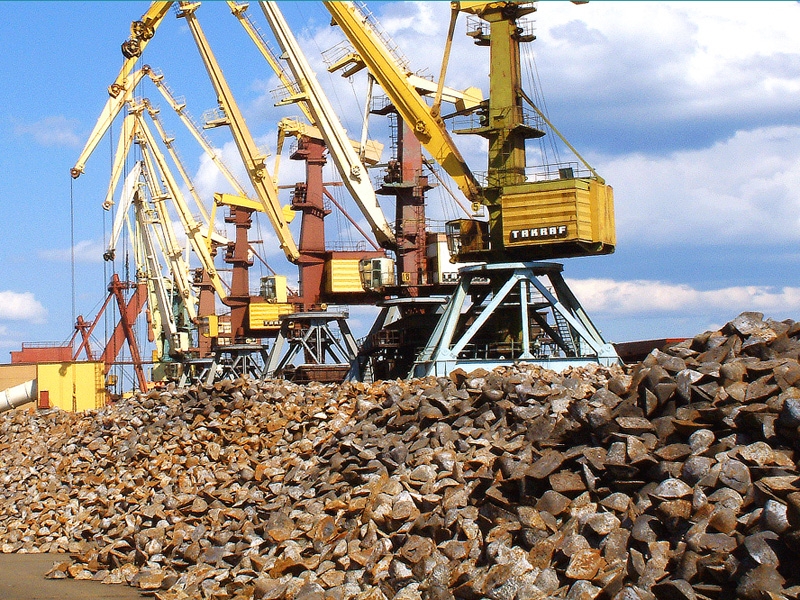
Iron ore gains further despite stock build
Seaborne iron ore prices continued their recovery last week despite rising port stocks. Price enjoyed their first full week increase since mid-July.
The Kallanish KORE 62% Fe index increased $2/tonne on Friday and $13.15/t over the week to $153.88/dry metric tonne cfr Qingdao. The Kallanish KORE 65% Fe index gained $1.92/t on Friday and $12.22/t on-week to $177.70/dmt cfr, and the KORE 58% Fe index increased $2.24/t on Friday and $3.58/t on-week to $122.48/dmt cfr.
On the Dalian Commodity Exchange, January 2022 settled up CNY 1/t at CNY 829.5/t ($128.05/t), while on the Singapore Exchange $4.36/t at $157.63/t. The same contract for 65% Fe and 58% Fe futures settled up $5.05/t at $177.64/t, and up $7.62/t at $126.17/t. In Tangshan, billet prices were unchanged at CNY 4,950/t.
Across 35 ports, iron ore stocks increased another 1.12 million tonnes last week to 121.46mt, according to a count by SMM. Deliveries into port stocks have continued but are still being delayed due to the backlog of shipping at ports as Covid protection measures slow processing. Mills meanwhile have been restocking in limited amounts as the end of the month approaches and are wating to see how prices develop.
Steel market sentiment has not been particularly strong. Traders are increasingly concerned that the seasonal recovery in demand after summer may be slower than expected. For iron ore markets however, there has been some respite as expectations for steel output levels have stabilised.


European stainless coil prices increase again
European stainless steel cold and hot rolled coil, sheet and tube prices are increasing again this month, market participants tell Kallanish.
European mills are quoting CRC for Q1 2022 delivery at €3,600-3,800/tonne ($4,232-4,467) delivered including alloy surcharges, depending on material quality and volumes. This price consists of an average base price from European mills at €1,600/t plus €2,000 in alloy surcharges. HRC is offered at €3,500/t delivered on average. Like last month buyers are not negotiating prices, instead focusing negotiations on delivery times. While some HRC of Asian origin can be found on the import market at €3,400-3,450/t cfr for larger quantities, there is shortage of CRC and no competitive imports are reported.
August has been a slow month for most of Europe due to the August holiday break. This is worsened by a heavy shortage of trucks and logistics disruptions due to the high import volumes of carbon coils, scrap and pig iron reaching Europe. In Italy, major steel ports such as Ravenna, Chioggia and Marghera are said to be congested, with trucks difficult to find as a consequence.
With import supply also impacted by safeguard quotas expiring from regions like Taiwan, coil availability remains tight, sources say.
Meanwhile, coil derivatives’ prices are also hiking significantly in line with stainless coils. Sheets and flat products however are increasing faster than tubes for which demand remains less lively. Stocks throughout Europe at distributors of flats remains particularly low in all European countries, Kallanish hears.
Natalia Capra France