


Higher stainless price increases lift Outokumpu profit expectations
Stainless steel supplier Outokumpu confirms it is expecting third-quarter Ebitda to be above Q2. This exceeds previous expectations.
The supplier notes that stainless steel prices have “increased more than expected”. The company sees delivered volumes growing 8% on-quarter in Q3, with realised prices set to be higher than expected.
“Outokumpu had earlier expected its third-quarter adjusted Ebitda to be at a similar level compared to the second quarter of 2021 (Q2/21: EUR 223 million)”, the company explains.
According to Kallanish reference transaction prices, stainless steel HRC has jumped a further €800-1,000/tonne ($923-1,154) in Europe since June.
Emanuele Norsa Italy

European Commission approves ArcelorMittal takeover of Condesa Tubos
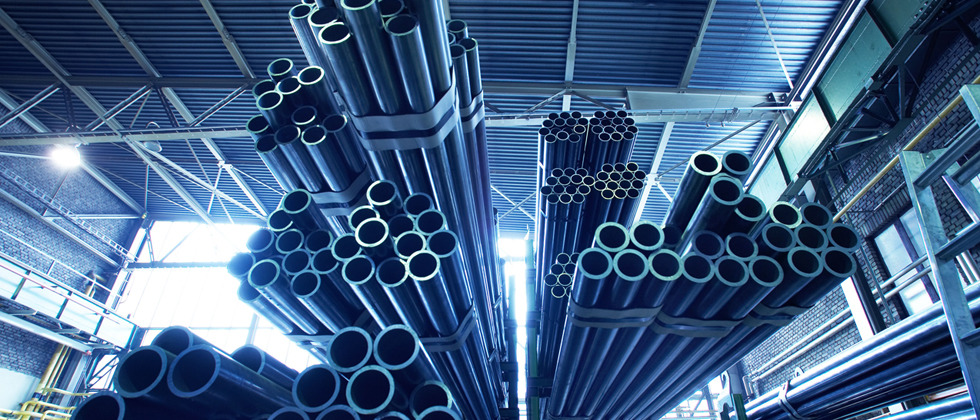
The European Commission (EC) has approved unconditionally the acquisition in full of Spanish welded tube manufacturer Grupo Condesa by ArcelorMittal, Kallanish learns from EU merger authorities.
“The proposed acquisition would raise no competition concerns, given that ArcelorMittal already exerts joint control over Condesa and the companies’ combined market shares are moderate,” says the EC.
The transaction was examined under the simplified merger review procedure, the EU confirms.
ArcelorMittal has had a 33% stake in the company since February 2016, as a result of Condesa’s restructuring within the framework of the so-called “Phoenix Project”. The rest of the shares were owned by banks Santander, BBVA, CaixaBank, Kutxabank, Bankinter, Caja Rural de Navarra and Banco Sabadell.
As part of the acquisition, Spain’s Zalaín Transformados, Cold Profile and Condesa Fabri plants, as well as Germany’s SRW Schwarzwälder Röhrenwerk have become part of ArcelorMittal Europe – Tubular Products.
Todor Kirkov Bulgaria
Volvo presents first vehicle made of fossil-free steel supplied by SSAB
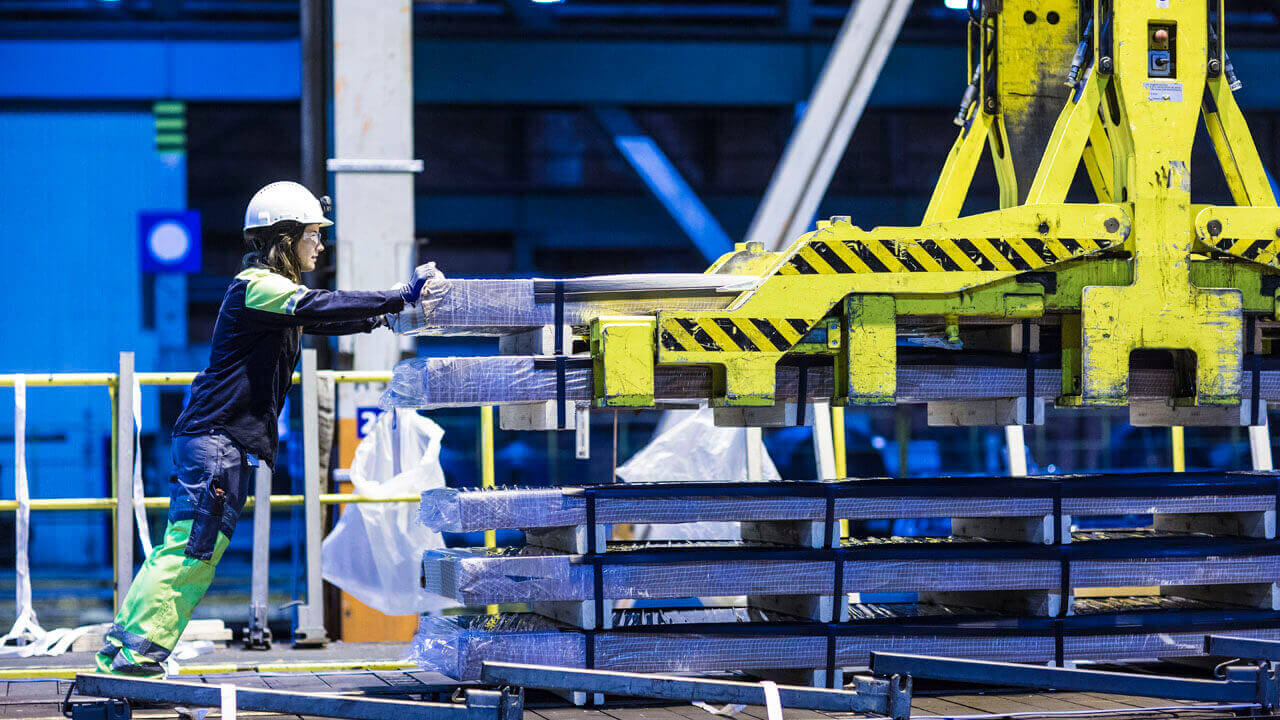
Volvo says it has made the first-ever vehicle entirely of fossil-free steel.
The steel used was supplied by SSAB, which is currently developing new technologies to supply fossil-free steel on a large scale by 2026.
The first vehicle presented by Volvo is a load carrier used in mining and quarrying. More vehicle and machines will follow in 2022.
“Having the world’s first actual vehicle made using SSAB’s fossil-free steel is a true milestone. Our collaboration with Volvo Group shows that green transition is possible and brings results,” SSAB president and chief executive Martin Lindqvist says in a note seen by Kallanish.
“Together, we will continue reducing climate impact all the way to the end customer while ensuring that our customers get high-quality steel,” he adds. “We look forward to continuing to work with Volvo Group in research and development to produce more fossil-free steel products.”
SSAB is converting its Oxelösund blast furnaces into an electric arc furnace operation and planning to use HYBRIT technology. This replaces coking coal, traditionally needed for iron ore-based steelmaking, with fossil-free electricity and hydrogen. This process is a decisive step towards virtually eliminating carbon dioxide emissions in steel production.
The first fossil-free steel plate made from hydrogen-reduced iron produced at HYBRIT’s pilot plant in Luleå, Sweden was revealed in August.
Emanuele Norsa Italy
EU exhausts fourth-quarter Turkish rebar, rod quotas
EU fourth-quarter safeguard quotas for Turkish rebar and wire rod have already been fully used, Kallanish notes from the official system of the European Commission.
These particular quotas are permanently under pressure and are usually exhausted in the very first days of any given quarter. Any further imports of these products from Turkey cleared before the end of the current year would need to pay the safeguard duty of 25%.
Turkey was allocated tax-free quotas in Q4 of around 62,000 tonnes for rebar and 80,000t for wire rod.
Imports from other origins can still be concluded as quotas remain available; nevertheless, Russian quotas for both products have also been used extensively. Russia’s 83,000t wire rod quota has been used by some 90% and the 60,000t rebar quota by some 50%, Kallanish notes.
Emanuele Norsa Italy
EU continues antidumping duties on Chinese steel wire rod
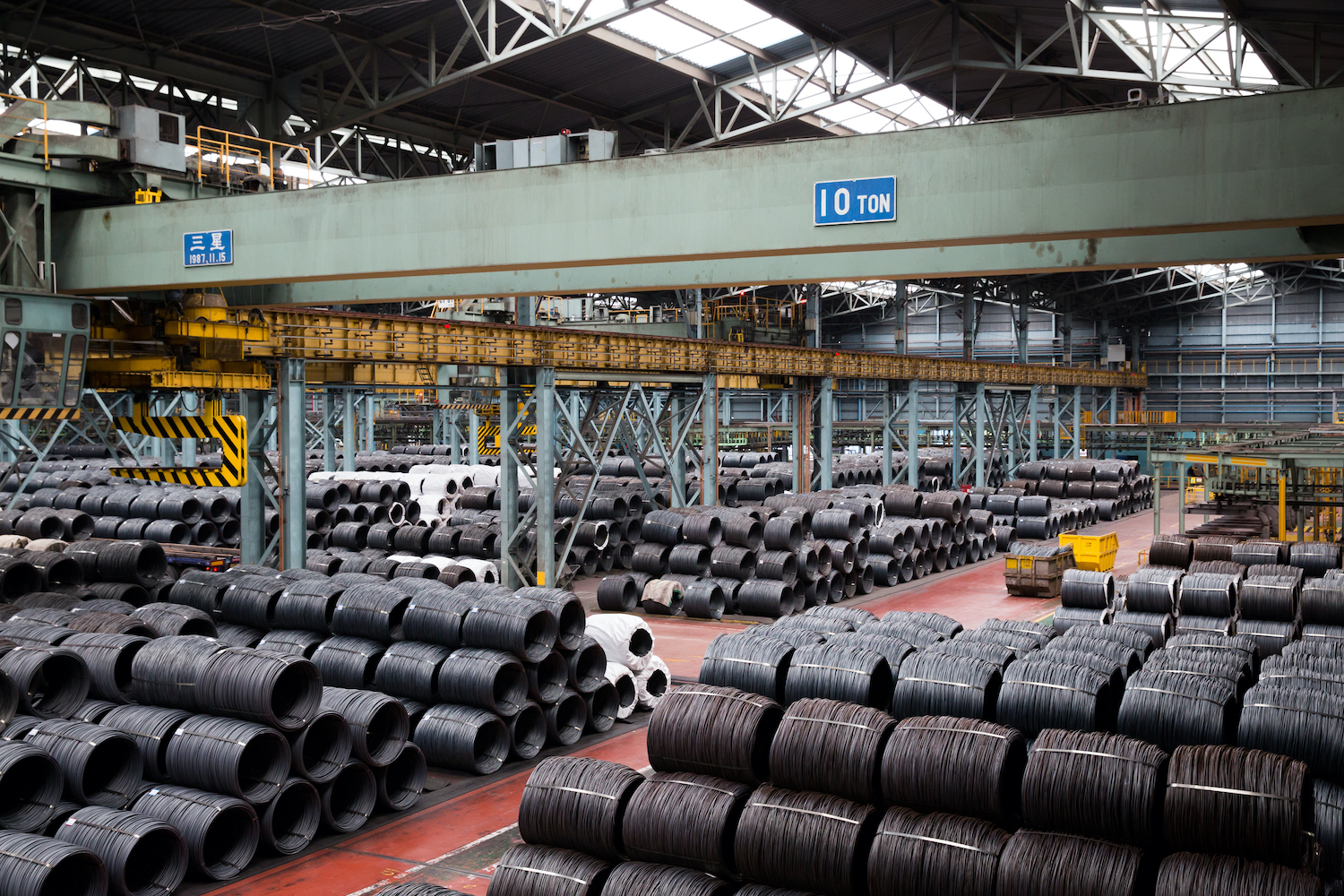
The EU will continue the definitive antidumping duty order on imports of wire rod from China, with the European Commission finding that there is a likelihood that dumping would recur if the current measures were to lapse, it said in a decision notice.
In particular, the level of the normal value established in China, the level of Chinese export prices to third country markets, the attractiveness of the EU market and the availability of significant production capacity in China point to a strong likelihood of recurrence of dumping should the existing measures be removed, the EC said in a notice dated Oct. 12.
The decision follows an expiry review of the current order spanning the period of July 1, 2019 through June 30, 2020.
As a result of the EC’s determination, imports of these products will remain subject to a country-wide duty rate of 24%, with the exception of Valin Group, which is subject to an individual duty rate of 7.9%.
The request for a review was submitted by the European Steel Association Eurofer in July 2020.
— Justine Coyne

European HDG prices stable as auto manufacturers postpone volumes to Q1
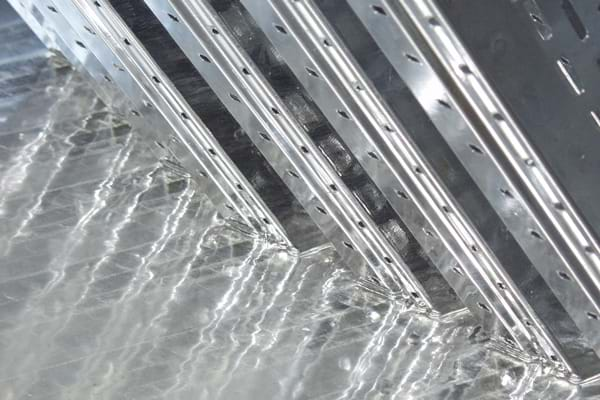
European hot-dipped galvanized steel prices were heard stable Oct. 13 as weakening automotive demand amid short supply has market participants uncertain about pricing development, sources told S&P Global Platts.
“There is no supply, not much material available,” an Italian trader said, adding that there was demand but also a fear of buying at the wrong price. “If mills could give stability, it would be easier for people involved in the supply chain.”
Italy was “more flexible with prices,” a European service center source said. With automotive manufacturers still not taking previously agreed volumes, buyers were looking to discuss reductions.
According to the same Italian trader, the gap between cold-rolled coil and HDG was widening to about Eur30/mt, with prices heard at around Eur1,160/mt ex-works Italy for CRC and HDG at Eur1,190-1,200/mt ex-works Italy.
One market-leading European mill was heard to not be considering prices below Eur1,200/mt ex-works Italy for either product, though sources were convinced for larger orders the producer would be willing to make discounts for Eur10-20/mt ex-works.
Meanwhile, one European mill still had some capacity for December, having finalized a deal for 400 mt of HDG at Eur 1,250/mt ex-works Ruhr.
While some mills had some HDG capacity, service centers and stockholders were having to postpone orders because of untaken automotive volumes
“Auto has no signals of recovery,” an Italian service center source said. “We are just receiving requests from automotive for postponing delivery we are supposed to be shipping in the next few months. [Automotive] is asking to shift from February/March rather than November. We have to manage the situation.”
— Amanda Flint

HRC prices stable as service center weighs alternatives to risky imports
European hot-rolled coil prices were in stalemate for the fourth day in a row Oct. 13 amid a lack of activity in the market from producers and buyers, with no recent deals heard. Prices were heard steady in the vicinity of Eur1,040-1,050/mt ex-works Ruhr as mills worked to finalize yearly automotive contracts, sources told S&P Global Platts.
An Italian service center source said the southern market was still in a “volatile” phase, though he could see some market signals that the decreases would cease as end-user demand returned and availability rose.
The source said he expected prices to therefore stabilize with only minor corrections, and that imports would have little effect on prices.
“I think the perception of EU mills on imports is higher than it actually is,” the service center source said. “Imports are aggressive, Turkey is moving up and down, but buying from imports from some specific countries like Turkey, India and Russia — we are very reluctant to buy due to severe duties, and keeping material at ports is very risky.”
More desirable volumes for imports free of debilitating duties were said to be from Japan, Mexico and Egypt, where risks were minimal.
After several announcements in the last few weeks from European mills about new carbon surcharges, there was market talk of market-leading mill Arcelor Mittal also implementing a gas surcharge because of higher energy costs, though this could not be immediately confirmed.
Tata Steel Europe was the first to announce a carbon surcharge, followed by Voestalpine, Thyssenkrupp, Arcelor Mittal and British Steel, to name a few. The new pricing element comes as mills have decided that the cost of emitting carbon during the production process should be passed on to the consumer.
Platts assessed North European HRC prices stable at Eur1,040/mt ex-works Ruhr, and in Southern Europe, prices were also steady at Eur937/mt ex-works Italy Oct. 13.
— Amanda Flint

EU distribution continues performing well in August
Shipments by European steel distributors continued to perform positively in August, according to the latest release by EUROMETAL.
Flat steel service centre shipments increased 0.5% year-on-year in August. The recovery slowed down somewhat from the 3.4% y-o-y rise in July, but the overall January-August figure showed a rise of 18.3% y-o-y.
Similarly, EU27+UK proximity and multi-products distribution shipments increased 2.4% y-o-y in August. The eight-month recovery was 11.1% y-o-y, according to data seen by Kallanish. Only rebar registered lower eight-month shipments, with other longs, strip mill products, tubular products and stainless steel seeing higher shipments.
Emanuele Norsa Italy

EU27 + UK steel service center flats shipments up 18% in January-August
Shipments of flat steel products from EU27 + UK service centers increased 18% year on year in the first eight months of 2021, service center and distributor association EUROMETAL reported Oct. 13
The Luxembourg-based regional steel distributors’ association said that in August of 2021 compared with August 2020 strip mill products shipments nudged up 0.5% year on year, compared with a 3.4% increase for the month of July.
When expressed in days of shipments, stocks at EU steel service centers (SSCs) reached 89 days in August 2021, compared with 108 days in August 2020, EUROMETAL said.
While EUROMETAL does not specify volumes, the association releases an index for stock levels with the average of 2015 equivalent to 100. On this basis, stocks noted a drop for August 2021 and were at index 79, compared with index 88 in August 2020 (average 2018 = index 100).
Multi-products
The association said that in the first eight months of 2021, EU27 + UK multi-product and proximity steel stockholding distribution only rebars registered lower shipments, while other longs, strip mill products, tubular products and stainless steel registered higher shipments.
In the first eight months of 2021, total steel product shipments increased 11.1% year on year, EUROMETAL said.
“August of 2021 compared to August 2020, “Total Steel Products” shipments increased, year-on-year by 2.4%. All products had a positive trend, except profiles, rebars and galv. & other coated flats,” the association said in a statement.
The stock volumes index of EU27 + UK multi-product and proximity steel stockholding distribution was at 86 in August 2021, compared with the lower index of 82 a year before (average 2015 =Index 100), it said.
When expressed in days of shipments, stock volumes levelled in August 2021 at 78 days of shipments, compared to 82 days in August 2020, the association said.
— Filip Warwick